Phone:
(701)814-6992
Physical address:
6296 Donnelly Plaza
Ratkeville, Bahamas.

Phone:
(701)814-6992
Physical address:
6296 Donnelly Plaza
Ratkeville, Bahamas.

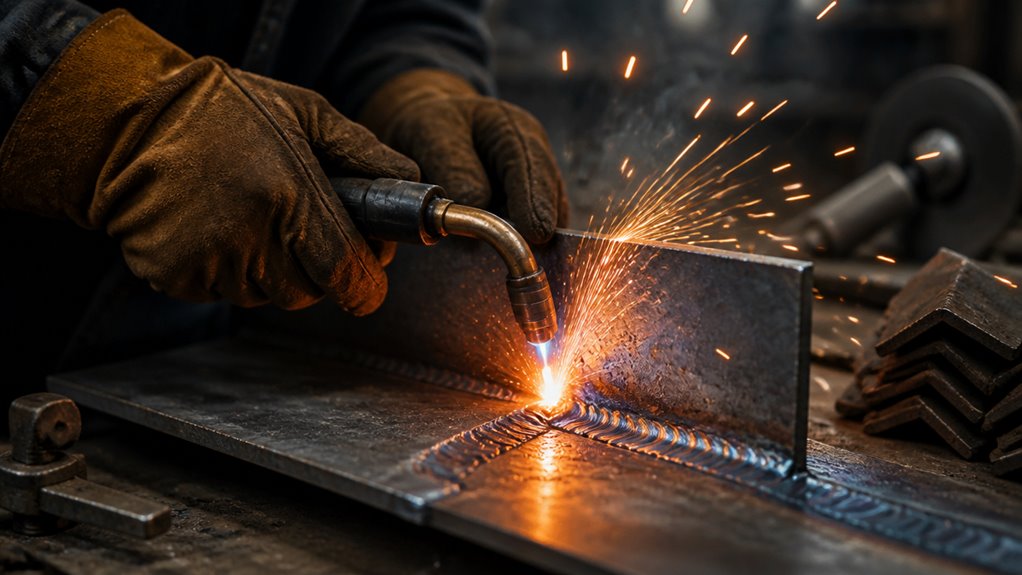
You can build foundational welding skills by fabricating simple projects like tool racks, small storage boxes, and clamp holders using flat bar and sheet steel for easy shaping.
Focus on clean bead runs, precise joint fit-ups, and controlled heat input to avoid warping. Organize your workspace with custom benches and gas cylinder holders made from square tubing and angle iron.
For outdoor durability, choose mild steel and apply weather-resistant coatings. Discover detailed techniques and project ideas to improve your metalwork precision and creativity.
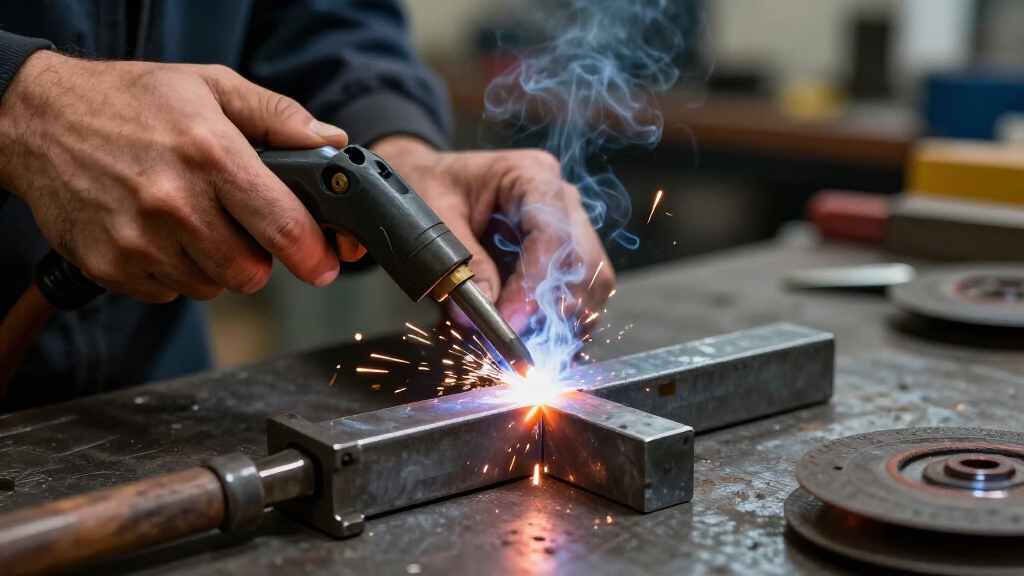
Start by tackling beginner welding projects that focus on developing fundamental skills like short cuts, simple joints, and repeatable welds. You’ll find welding tables and workbenches ideal for this; they demand precise, stable joints and reinforce your ability to align components accurately.
Tool racks, rod holders, and clamp racks provide practical practice in creating consistent fillet welds on straightforward geometries. Small storage boxes and scrap-steel organizers require you to maintain repeatable tack welds and clean bead runs within confined spaces.
Don’t overlook quick decorative projects such as coat hooks and key holders. They sharpen your control over bead uniformity and joint strength. Concentrate on mastering these basic weld types and techniques to build confidence and guarantee solid foundational skills before progressing to complex assemblies.
Always ensure proper surface preparation by removing oxidation and contaminants before welding to improve strength and durability.
When preparing for welding projects, you must choose materials carefully to match your skill level and project requirements. The most common options include square steel tubing, angle iron, flat bar, sheet steel, rebar, and expanded metal.
Select materials based on thickness and weldability to guarantee clean, strong joints. Equally vital is prioritizing safety: always wear a welding helmet with the correct shade lens to protect your eyes from UV radiation.
Use flame-resistant gloves and clothing to prevent burns. Maintain a clutter-free workspace to reduce fire hazards, and ensure proper ventilation to avoid fume inhalation.
Regularly inspect your equipment for damage or wear. Ground your workpiece properly to prevent electrical shocks. Adhering to these material selections and safety protocols will safeguard you while improving weld quality and project success. Proper surface preparation and corrosion-resistant primers are also essential for ensuring strong adhesion when painting welded metal surfaces with enamel paint.
Although organizing your workshop might seem like a secondary task, fabricating custom welding projects such as tool racks, work carts, and adjustable benches directly enhances your efficiency and workspace safety. You’ll improve tool accessibility, reduce clutter, and create stable work surfaces tailored to your needs.
Prioritize strong welds and precise alignment to guarantee durability and load capacity. Proper machine setup and metal preparation are crucial to avoid defects and achieve strong welds.
| Project Type | Key Materials | Functional Benefit |
|---|---|---|
| Tool Racks | Square tubing, angle iron | Tool organization, easy access |
| Adjustable Benches | Steel tubing, plate steel | Ergonomic work height, stability |
| Work Carts | Angle iron, caster wheels | Mobile storage, workspace flexibility |
| Gas Cylinder Holders | Flat bar, channel steel | Secure gas storage, safety |
| Grinding Wheel Stand | Angle iron, flat bar | Steady grinding setup, safety |
Fabricate with attention to joint integrity and load distribution to maximize shop safety.
When it comes to outdoor metal projects, you really want to start with durable materials. Steel is a great choice—think square tubing and angle iron. They’re not just strong; they’ll hold up well over time, which is exactly what you need for outdoor use.
Now, let’s talk about what you can create. You could whip up some functional garden structures like trellises, benches, or even fire pits. These pieces not only serve a purpose but also add a solid, stylish touch to your yard.
Don’t forget about finishes! Applying a weather-resistant coating is a smart move. It’ll help protect your welds and surfaces from moisture and rust, so your creations last even longer. Trust me, a little extra care goes a long way in extending the life of your installations!
For projects like fire pits, using mild steel sheets between 1/8 and 1/4 inch thick offers the best balance of durability and ease of fabrication.
Select durable steel materials like square tubing, angle iron, and plate steel to guarantee your outdoor welding projects withstand weather exposure and mechanical stress.
These materials offer high strength-to-weight ratios and resist deformation under load. When choosing steel, consider:
Ensure precise joint preparation and clean cuts to maximize weld penetration and durability.
Apply weather-resistant coatings post-fabrication to protect steel from oxidation and extend structural lifespan in garden and yard environments.
Proper edge preparation and alignment are critical to achieving full penetration and strong, durable welds in outdoor steel projects.
When you plan functional garden structures, focus on combining durability with utility by using materials like square tubing and angle iron that provide both strength and weather resistance.
Construct garden trellises or plant supports by cutting square tubing to precise lengths and welding clean, perpendicular joints for stability.
Use angle iron brackets to reinforce corners, ensuring load-bearing capacity for climbing plants or hanging planters.
For seating or tables, fabricate frames with rectangular tubing, paying close attention to weld penetration and alignment to maintain structural integrity.
Incorporate cross bracing where needed to prevent lateral movement.
Design gate panels by welding vertical bars between horizontal supports, verifying consistent spacing for security and aesthetics.
In outdoor metal welding projects, applying weather-resistant finishes is essential to protect your work from corrosion and environmental damage.
You want your garden and yard pieces to endure rain, humidity, and temperature fluctuations without rusting or degrading.
To achieve this, focus on these three key finishes:
Applying these finishes properly guarantees longevity, reduces maintenance, and preserves the structural integrity of your outdoor metal projects. Additionally, understanding the role of welding fumes and their environmental impact can guide safer finishing practices.
You’ll dive into some essential metal art techniques that really focus on things like precise bead control, consistent joint spacing, and getting that clean finish in your decorative welding projects. It’s all about honing those skills!
As you get into it, don’t hesitate to experiment with creative welding designs. You can use varied materials like scrap steel and angle iron to whip up some fantastic custom wall art or sculptures.
The beauty of these projects is that they not only sharpen your technical skills but also let you express your artistic side through your layout and weld pattern choices. So, have fun with it!
Remember to always work in a well-ventilated workspace to keep fumes away and maintain safety.
Explore metal art techniques to refine your welding skills while creating visually striking pieces. Focus on mastering bead consistency, joint spacing, and clean grinding to elevate your decorative work.
Begin by selecting suitable materials like flat bar, sheet steel, or scrap metal for ease of shaping and welding.
These techniques sharpen your control, improve finish quality, and prepare you for more complex artistic welding projects. Always ensure your workspace has proper ventilation to minimize inhalation of hazardous fumes during welding.
Mastering metal art techniques builds a strong foundation for tackling creative welding designs that challenge both your technical skill and artistic vision.
When you approach decorative welding projects, focus on consistent bead quality and precise joint spacing to guarantee structural integrity while enhancing aesthetics.
Utilize scrap steel, flat bar, and angle iron for intricate sculptures, wall art, or custom signs.
Pay close attention to weld bead uniformity and grinding finish, as these details elevate the final appearance.
Experiment with layered metal shapes and varied thicknesses to add depth and texture.
You’ll improve control by repeating clean, short welds on simple geometric patterns before advancing to complex assemblies.
Incorporate protective coatings to preserve your work, especially if intended for outdoor display.
This methodical approach refines your craftsmanship while liberating creative expression.
Always perform post-weld inspections using visual and non-destructive testing methods to ensure your decorative projects maintain quality and durability.
When selecting materials for durable welding builds, prioritize those that balance strength, weldability, and availability, such as square steel tubing, angle iron, and flat bar.
These materials provide structural integrity while remaining manageable for cutting and joining.
To ensure long-lasting results, follow these design tips:
Additionally, understanding welding positions and techniques is crucial for achieving strong, high-quality welds in various project scenarios.
To maintain and clean your welding equipment properly, disconnect power first.
Regularly inspect cables and connectors for wear or damage.
Clean welding tips and nozzles with a wire brush to remove spatter buildup.
Use compressed air to clear dust from vents and fans.
Lubricate moving parts as specified by the manufacturer.
Store equipment in a dry, clean area to prevent rust and contamination.
Follow safety guidelines to avoid electrical hazards during maintenance.
The best welding techniques for joining dissimilar metals are TIG welding and MIG welding with proper filler metals.
You’ll want to use a compatible filler alloy to prevent brittle joints.
Preheating thicker sections reduces thermal stress, and post-weld heat treatment relieves residual stress.
Control heat input carefully to avoid cracking.
Also, make sure thorough cleaning and removal of oxides before welding to promote strong metallurgical bonds between different metals.
You might think speeding up welding reduces quality, but with practice, you can improve both.
Focus on consistent joint preparation and clean surfaces to guarantee smooth welds.
Optimize your machine settings for penetration without excess heat. Use steady, controlled travel speed; rushing causes defects.
Practice repetitive motions to build muscle memory, then gradually increase pace while monitoring bead uniformity.
Efficient workspace setup also minimizes downtime, letting you weld faster without sacrificing integrity.
You’ll find MIG welders best for beginners due to their ease of use, versatility, and cleaner welds with minimal slag.
Stick welders offer affordability and work well outdoors but require more skill controlling the arc.
For more precision and thinner metals, a TIG welder gives excellent control but demands practice.
Choose machines with adjustable amperage, solid duty cycles, and user-friendly interfaces to build your skills efficiently without compromising weld quality.
To troubleshoot porosity, check for moisture in your filler material. Clean your base metal thoroughly and ensure proper shielding gas coverage.
For cracking, reduce welding speed and control heat input. Preheat thicker metals if necessary.
Also, verify your joint design supports stress distribution and avoid excessive restraint. Adjust parameters like voltage and amperage to maintain stable arcs.
Regularly inspect equipment connections and cables to prevent inconsistent current flow, which can cause defects.
You’ve seen how starting with beginner welding projects sharpens your skills while emphasizing safety and proper materials.
Remember, welding isn’t just about joining metals; it’s about precision, control, and design integrity.
The theory that “practice makes perfect” holds true here. Consistent, well-planned projects build both confidence and craftsmanship.
By applying detailed techniques and durable design principles, you’ll create reliable, functional, and creative metalwork that lasts.
Keep welding smart and purposeful.