Phone:
(701)814-6992
Physical address:
6296 Donnelly Plaza
Ratkeville, Bahamas.

Phone:
(701)814-6992
Physical address:
6296 Donnelly Plaza
Ratkeville, Bahamas.

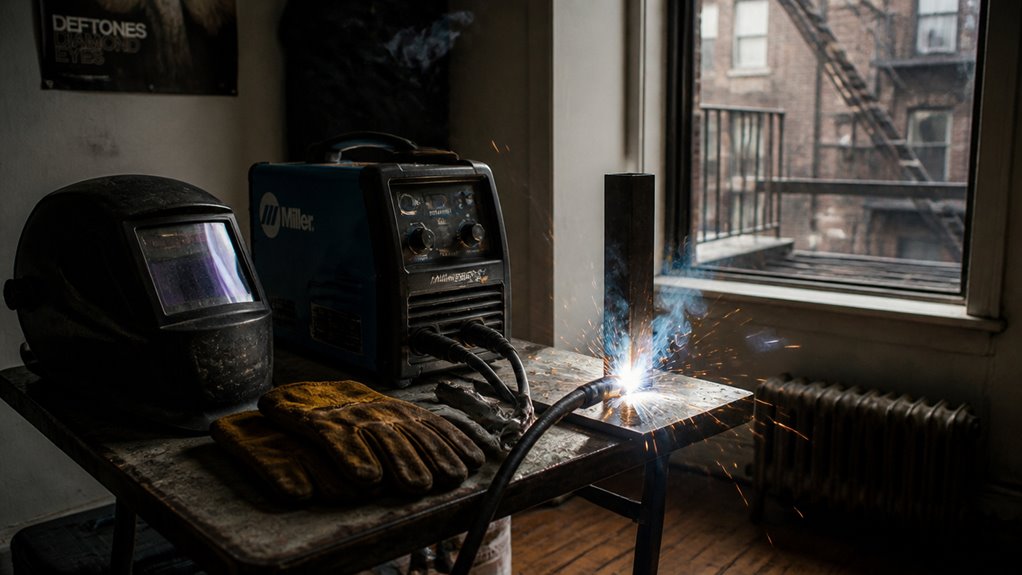
You shouldn’t weld in your apartment due to serious fire hazards from sparks and combustibles.
Poor ventilation can lead to toxic fumes, and electrical system limits risk overloads and shocks.
Most leases and building codes forbid indoor hot work without strict safeguards.
Proper fire safety measures, permits, and landlord approvals are nearly always required but hard to meet in apartments.
Exploring safer alternatives and approved locations for welding can help you avoid these risks and comply with regulations.
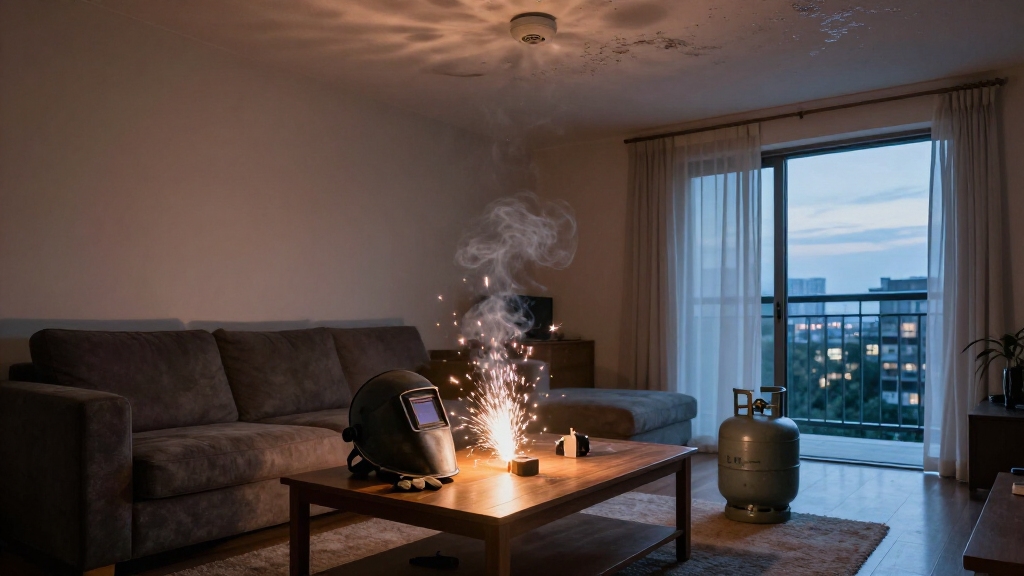
Although welding might seem like a convenient solution for quick repairs or projects, doing it in an apartment carries significant risks and legal restrictions you need to understand.
Welding in apartments poses serious safety hazards and legal challenges that must not be overlooked.
Apartments contain dense combustible materials and confined spaces that amplify fire hazards from sparks, slag, and radiant heat.
The absence of noncombustible barriers and insufficient separation distances makes fire containment difficult.
Additionally, welding fumes accumulate rapidly due to poor ventilation, increasing health risks without mechanical exhaust systems.
Electrical systems in apartments often can’t support welding equipment safely, risking overloads and shocks.
Hot-work fire safety controls, such as fire extinguishers and fire watchers, are challenging to implement properly in these settings.
These factors collectively restrict welding activities to specific, code-compliant environments, making apartment welding unsafe and often noncompliant with fire codes and safety standards.
Proper ventilation and respiratory protection are essential to reduce exposure to toxic fumes, which are difficult to manage in apartment settings.
You’ll want to take a good look at your lease before getting started. Many agreements have specific clauses that either prohibit welding outright or at least require you to get the landlord’s approval first. It’s really important to know what your lease says.
Also, keep in mind that building management often has strict rules. They might even insist on written authorization before you can do any hot work. If you go ahead and weld without getting that permission, you could be risking a lease violation, and nobody wants that kind of trouble—especially the potential for eviction.
Additionally, maintaining proper continuity records for your welding activities is crucial if you want to ensure your certifications remain valid and compliant.
When planning to weld in your apartment, the first hurdle is often the lease agreement, which typically restricts or outright prohibits weldingsand other hot work.
These agreements frequently include clauses barring activities that pose fire risks or damage potential.
Welding generates sparks, heat, and fumes, all liabilities your landlord aims to avoid.
Additionally, many leases mandate compliance with local fire codes and insurance requirements that effectively disallow welding indoors.
Ignoring these terms can lead to penalties, eviction, or liability for damages.
Even if the lease is silent, implied prohibitions often arise from building safety rules incorporated by reference.
Consequently, before considering welding, you must scrutinize your lease language closely.
Recognize that legal constraints often make apartment welding unfeasible without explicit permission or proper safety controls in place.
Moreover, the elevated electrical dangers associated with welding in confined or damp spaces make it especially hazardous indoors.
Securing building management approval is essential before attempting any welding in your apartment. It directly governs compliance with lease terms and local safety regulations.
Management often enforces strict restrictions due to fire code hot-work rules, which frequently prohibit welding in multifamily dwellings without explicit authorization. You must review building-specific policies that typically require designated noncombustible areas or approved hot-work zones.
Failure to obtain approval can result in lease violations or penalties. Additionally, management may demand proof of compliance with local permits, fire prevention measures, and insurance coverage.
Because apartments contain dense combustible materials and limited fire-safe spaces, building management approval guarantees these risks are assessed and mitigated properly. Always submit a detailed welding plan for evaluation before proceeding to avoid legal and safety complications. Downhill welding, which requires strict qualification under governing codes to ensure safety, is particularly sensitive in confined residential environments.
Although apartment leases often outline general prohibitions against welding, obtaining explicit landlord authorization is essential before planning any hot work. Your lease and building rules typically restrict welding due to fire risks and liability concerns.
Landlords require you to submit a detailed plan showing compliance with fire codes, including noncombustible shielding, fire extinguisher availability, and ventilation measures. Many jurisdictions also mandate permits for hot work, which your landlord may insist on seeing before granting permission.
Without this authorization, you risk lease violations, fines, and potential eviction. Even if you secure permission, your landlord might impose strict conditions, such as limiting welding to designated areas or requiring professional supervision.
Always consult your lease terms and communicate transparently with management to ensure all legal and safety requirements are met before welding in your apartment. Proper use of flame-resistant fabrics and protective gear is critical to minimize fire hazards and ensure safety during any welding activity.
Because welding generates intense heat and sparks, fire codes impose strict restrictions on indoor hot work to prevent ignition of combustible materials.
You must make certain the welding area is free of combustibles or shielded by noncombustible barriers. Codes often require a minimum clearance of 35 feet from combustible materials or equivalent protective shielding.
Openings and ducts near the work must be sealed to prevent spark transmission. Portable fire extinguishers with a minimum 2-A:20-B:C rating should be immediately accessible.
Fire watchers and emergency readiness are frequently mandated during welding operations.
Proper fume extraction should also be used to direct smoke away from the breathing zone and ensure adequate ventilation.
| Restriction | Requirement |
|---|---|
| Combustible Clearance | Minimum 35 feet or noncombustible shielding |
| Fire Extinguisher Accessibility | Within 30 feet, minimum 2-A:20-B:C rating |
| Spark Containment | Seal openings, cracks, and ducts |
Follow these codes strictly to reduce fire risk indoors.
When you weld inside an apartment, controlling fumes and gases is critical to your safety and health. Welding generates hazardous fumes that accumulate rapidly in enclosed spaces, making ventilation essential.
Welding indoors requires careful fume control to ensure safety and maintain healthy air quality.
You need a mechanical ventilation system; local exhaust ventilation is best, providing a minimum airflow velocity of 100 linear feet per minute right at the welding zone. If local exhaust isn’t feasible, you must rely on dilution ventilation designed to keep airborne contaminants below exposure limits.
Cross-ventilation alone won’t remove fumes effectively. Make sure ventilation doesn’t spread fumes into other living areas. Proper ventilation minimizes toxic exposure and reduces fire risk from accumulated gases.
Always verify your setup meets local regulations and industrial hygiene standards before proceeding with any welding inside an apartment. Regular inspection and maintenance of ventilation equipment are necessary to ensure adequate fume capture and continued safety.
Proper ventilation handles airborne hazards, but you also need to take into account the electrical demands of welding equipment in an apartment setting.
Residential circuits often can’t support high welding currents without nuisance trips or overheating.
Overloaded outlets, extension cords, and shared circuits increase fire and shock risks.
Moisture and cramped layouts complicate safe grounding, raising shock hazards.
You must verify your apartment’s electrical capacity before welding.
Using breakers sized according to the NEC 200% rule and duty cycle multipliers can help prevent nuisance trips and ensure safer operation.
| Electrical Factor | Risk | Recommendation |
|---|---|---|
| Circuit Capacity | Overload & trips | Use dedicated circuit |
| Extension Cords | Fire & voltage drop | Avoid or use heavy-duty cords |
| Grounding & Moisture | Electric shock | Confirm proper grounding, dry environment |
Assess these limits carefully to maintain safety in your apartment welding setup.
Although welding in apartments poses unique challenges, you must implement strict fire-safety measures to minimize risks.
First, remove all combustible materials within at least 35 feet or install noncombustible barriers to shield sparks and slag.
Remove combustibles within 35 feet or use noncombustible barriers to protect against sparks and slag.
Seal openings, ducts, and cracks near the work area to prevent spark migration.
Keep a portable fire extinguisher rated 2-A:20-B:C within 30 feet and have a trained fire watcher on standby.
Make certain the workspace is isolated by noncombustible partitions and clear combustible waste before starting.
Avoid welding in densely furnished areas; use fire-safe locations whenever possible.
Always confirm compliance with local fire codes, lease terms, and obtain necessary permits.
These precautions reduce fire hazards inherent to apartment welding, but strict adherence is critical given the dense combustible environment.
Additionally, proper ventilation and airflow management are essential to control fumes and reduce fire risk in confined apartment spaces.
Given the complex fire-safety measures and regulatory hurdles involved in welding inside an apartment, exploring safer alternatives can save you time, reduce risk, and guarantee compliance.
Instead of welding indoors, consider mechanical fastening methods like bolting or riveting, which eliminate heat and fire hazards.
Brazing or soldering in well-ventilated, noncombustible areas can also serve as safer substitutes for joining metals on a small scale.
Off-site fabrication is another practical option, allowing you to complete hot work in controlled, code-compliant environments.
If you must perform metalwork near your residence, use dedicated workshops or detached garages designed for proper ventilation, fire protection, and electrical capacity.
These alternatives mitigate fire risk, avoid lease violations, and align better with local fire codes and safety standards than attempting welding inside typical apartment settings.
For any finishing work after metal joining, using appropriate thinning ratios for enamel paint can ensure a durable and smooth coating without compromising safety.
If you’re looking for a good spot to weld outside of an apartment, a detached garage can really be your best friend. It provides a controlled, noncombustible environment that’s perfect for the job. Plus, it usually has better ventilation and fewer fire hazards than working inside an apartment.
Now, if you’re considering outdoor welding, that can work too! Just make sure the area is clear of any combustibles and shielded from the wind—nobody wants sparks flying around unexpectedly.
Oh, and don’t forget to check that your chosen location meets local fire codes and that you get any permits you might need before you dive into any hot work. Better safe than sorry, right?
A detached garage offers a controlled environment that markedly reduces the risks associated with apartment welding. It provides adequate separation from combustible materials, minimizing fire hazards common in apartment interiors.
You can install proper ventilation systems, such as local exhaust, ensuring fume control that’s difficult to achieve indoors. Electrical circuits in garages typically support higher loads, allowing safer operation of welding equipment without nuisance trips or overloads.
You also have more space to establish noncombustible work zones and position portable fire extinguishers within easy reach. Detached garages often allow landlord or municipal approval more readily than apartment units, facilitating compliance with fire codes and permit requirements.
Selecting outdoor welding areas approved for use outside apartments substantially reduces fire, ventilation, and electrical risks inherent to indoor settings.
When choosing a site, ensure it complies with local fire codes and landlord permissions. Many jurisdictions mandate permits and designated hot-work zones.
Outdoor areas offer natural ventilation, minimizing fume accumulation and electrical hazards from overloaded circuits. However, you must still control fire risks by maintaining clear zones free of combustibles and using proper shielding.
Key considerations for outdoor welding include:
These measures keep your welding safe, code-compliant, and efficient outside apartment confines.
You’ll need a welding helmet with the correct shade lens to protect your eyes from UV and IR radiation.
Wear flame-resistant gloves and a long-sleeve jacket made from leather or heavy cotton to shield your skin from sparks and spatter.
Use ear protection to block noise and welding fumes respirators if ventilation is poor.
Don’t forget safety boots and avoid synthetic fabrics that can melt.
Always have a fire extinguisher nearby for emergencies.
You should wait at least 30 minutes after welding to re-enter the area, ensuring fumes have sufficiently dissipated.
Use mechanical ventilation or local exhaust systems to accelerate clearance.
Monitor air quality if possible, aiming for contaminant levels below occupational exposure limits.
If you detect any odor or irritation, extend the wait time.
Prioritize proper ventilation during and after welding to minimize exposure risks and guarantee a safe breathing environment before returning.
You can use battery-powered welding tools indoors, but safety remains critical.
Battery power reduces electrical hazards and circuit overload, yet welding fumes and fire risks persist.
Make sure to have excellent ventilation or local exhaust to control fumes.
Keep combustibles shielded or removed, maintain fire extinguishers nearby, and avoid confined, cluttered spaces.
Always verify local codes and landlord rules before proceeding.
Battery tools don’t eliminate the need for rigorous fire and fume controls indoors.
When it comes to welding-related damages, you’ll want to have thorough general liability insurance that explicitly covers hot work risks.
Don’t put all your eggs in one basket; make certain your policy includes property damage, fire, and bodily injury coverage.
Additionally, if you’re a contractor, a specific contractor’s insurance or a rider for hot work may be required.
Always verify coverage limits and exclusions to avoid costly gaps.
Yes, you’ll find apartment welding is often prohibited during certain hours to minimize fire risk and disturbance.
Local fire codes and building rules may restrict hot work to designated times, usually daytime or business hours.
Landlords or management might impose stricter curfews, especially during nights or weekends.
Always verify specific time restrictions with your building’s policies and local regulations before planning any welding activity in your apartment.
Welding in your apartment is like sparking a wildfire in a dry forest: dangerous and often forbidden. Lease rules, fire codes, and ventilation limits create a tight web of safety you can’t easily cut through.
Instead, think of safer alternatives or approved outdoor spots as your secure harbor. Respect these boundaries, and you’ll keep your home and yourself protected from the unpredictable blaze that indoor welding can ignite.