Phone:
(701)814-6992
Physical address:
6296 Donnelly Plaza
Ratkeville, Bahamas.

Phone:
(701)814-6992
Physical address:
6296 Donnelly Plaza
Ratkeville, Bahamas.

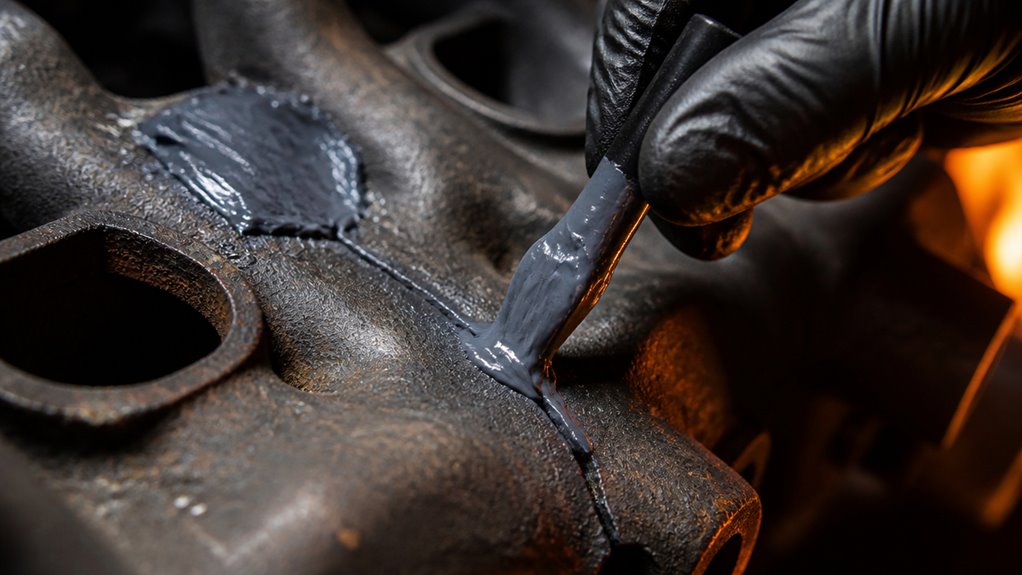
You’ll find J-B Weld ExtremeHeat is a metallic repair paste designed to handle temperatures up to 2400°F. It’s ideal for fixing localized cracks, holes, and surface flaws on heat-exposed metal like exhaust manifolds and heat shields.
It’s not meant for structural welding or heavy-load repairs but excels in patching thin metal sections with proper surface prep and curing. If you want to understand its best uses, application steps, and performance nuances, keep exploring further details.
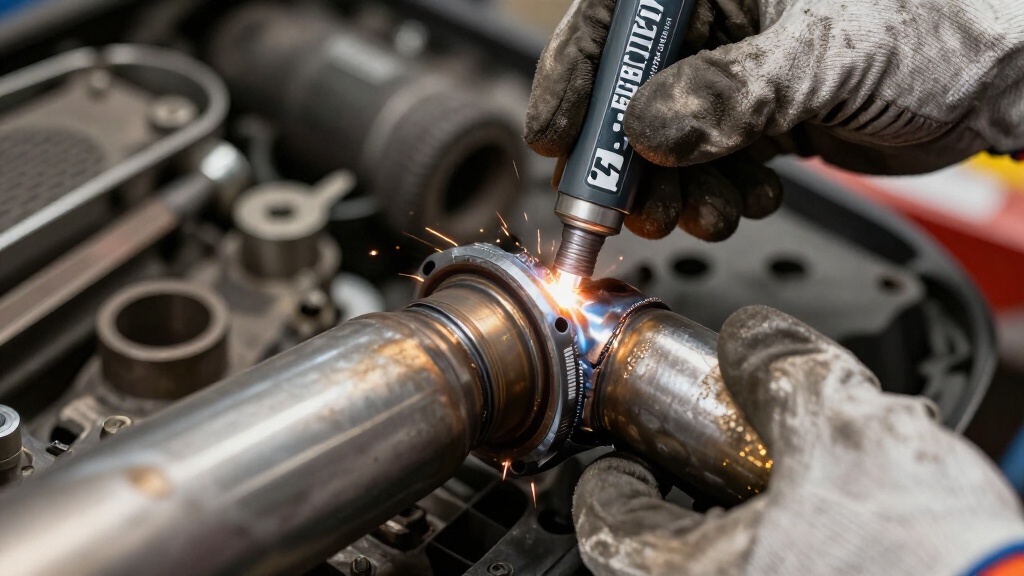
Although many repair products struggle under high temperatures, J-B Weld ExtremeHeat stands out by maintaining integrity up to 2400°F. This makes it ideal for hot metal repairs like exhaust manifolds and heat-exposed engine components.
You’ll appreciate its metallic paste formulation designed specifically for thermal resistance. This ensures the repair withstands intense heat cycles once fully cured.
Applying it to heat-exposed surfaces allows you to address localized cracks and holes where welding isn’t practical. Keep in mind, this product functions as a repair paste, not a structural weld replacement.
It’s best for patching and filling rather than heavy-duty bonding. Proper surface preparation and adherence to recommended curing times are vital to achieve peak heat tolerance and adhesion.
This focus on high-temperature endurance makes it a reliable solution for hot metal repair challenges. Additionally, following the manufacturer specifications is essential to ensure the product performs as expected under extreme heat conditions.
When you need to repair metal parts exposed to extreme heat, J-B Weld ExtremeHeat excels at fixing localized damage such as cracks, holes, and surface imperfections in exhaust manifolds, heat shields, and engine components.
J-B Weld ExtremeHeat repairs localized metal damage in exhaust manifolds, heat shields, and engine parts exposed to extreme heat.
It’s perfectly suited for small-scale repairs where welding isn’t feasible, especially on cast iron and steel alloys commonly found in automotive exhaust systems.
You can rely on it to patch thin metal sections subjected to temperatures up to 2400°F, providing a heat-resistant bond that resists thermal cycling.
Avoid using it for structural repairs or large-scale damage, as it’s designed as a repair paste, not a full weld substitute.
For best results, focus on confined metal defects that don’t bear heavy mechanical loads but require durable heat resistance.
Proper surface preparation and curing are essential to maximize the repair’s longevity and effectiveness, especially under thermal fatigue conditions.
Before applying J-B Weld ExtremeHeat, you’ll need to thoroughly prepare the metal surface by cleaning off any rust, grease, or loose debris to guarantee peak adhesion.
Use a wire brush or sandpaper to roughen smooth areas, then wipe down with acetone or alcohol.
Mix equal parts of resin and hardener thoroughly until you achieve a uniform gray paste.
Apply the mixture carefully, pressing it firmly into cracks or holes, avoiding overly thick layers.
Allow the product to cure at room temperature for at least 24 hours.
You can accelerate curing with gentle supplemental heat, like a hair dryer, but avoid direct flames.
Proper curing secures maximum heat resistance and bond strength.
For best results, ensure full curing occurs to achieve the maximum molecular cross-linking that provides durability and heat resistance.
You can count on J-B Weld ExtremeHeat to withstand extreme temperatures up to 2400°F once fully cured. This makes it suitable for demanding applications like exhaust manifold repairs.
This high-temperature metallic paste is engineered specifically for metal surfaces exposed to intense heat. It provides a durable patch that resists thermal stress without degrading.
However, its effectiveness hinges on proper surface preparation and curing—typically 24 hours—to achieve optimal heat resistance. While ExtremeHeat isn’t a structural weld replacement, it excels in sealing small cracks or holes where welding isn’t feasible.
In real-world conditions, it maintains adhesion and integrity under continuous thermal cycling. But applying it too thickly or skipping the full cure compromises performance.
When used correctly, you’ll find it reliably handles the extreme heat challenges typical of automotive exhaust components. For best results, ensure surface preparation by cleaning and roughening the area before application to maximize bonding strength.
Although J-B Weld ExtremeHeat offers impressive heat resistance and bonding strength, it’s best reserved for small-scale repairs on hot metal surfaces where welding isn’t practical.
You should use it when you need to:
Avoid relying on it for structural weld replacements, large-scale damage, or areas subject to heavy mechanical stress.
Proper surface prep and a full 24-hour cure are essential before heat exposure.
Use ExtremeHeat as a specialized repair paste, not a universal fix.
Its strength lies in targeted, high-heat metal repairs where traditional welding is impractical or impossible.
For best results, ensure the metal surface is thoroughly cleaned and mechanically roughened to promote strong adhesion before applying the product.
You can expect J-B Weld ExtremeHeat to last long-term when properly applied and cured. The key is allowing at least 24 hours to fully cure before exposing it to high temperatures.
Once cured, it withstands heat up to 2400°F and holds up well on localized metal repairs like exhaust cracks. Its durability depends on surface prep and application thickness, so following instructions guarantees the repair lasts under thermal stress.
No, you shouldn’t use J-B Weld ExtremeHeat on food-grade surfaces.
It’s formulated for high-temperature metal repairs, not for direct contact with food or drinking vessels.
The product contains chemicals that aren’t food-safe and can contaminate surfaces.
If you need a repair on cookware or food-contact areas, look for FDA-approved, food-safe epoxy or sealants designed specifically for that purpose to guarantee safety and compliance.
Absolutely, you can paint over J-B Weld ExtremeHeat after it’s fully cured, but don’t expect it to be a flawless canvas.
The surface might remain slightly rough or porous, so you’ll want to sand it smooth first for better paint adhesion.
Use a high-temperature paint compatible with metal repairs.
This step guarantees durability and appearance, especially if the repair faces heat exposure.
Proper surface prep is key for a professional finish.
You can expect an unopened J-B Weld ExtremeHeat container to have a shelf life of about 24 months from the manufacturing date.
To maintain its effectiveness, store it in a cool, dry place away from direct sunlight and extreme temperatures. Avoid freezing or overheating the tube, as these conditions can degrade the chemical properties.
Always check the manufacturer’s date stamp to track the product’s freshness before use.
You won’t turn porcelain into steel with J-B Weld ExtremeHeat. It’s strictly made for metal surfaces.
While it’s an exceptional high-temp paste that bonds strongly to metals like exhaust manifolds, it doesn’t chemically adhere or cure properly on ceramics.
If you try, you’ll get weak, flaky results instead of a durable repair. For ceramics, you’ll need a product specifically designed to withstand thermal shock and bond non-metal materials reliably.
When it comes to tackling high-temperature metal repairs, J-B Weld ExtremeHeat stands out for its strength and heat resistance.
You’ll find it perfect for exhausts, engines, and other heat-exposed parts. Just remember, while it’s tough, it’s not a fix-all; some repairs need welding or replacement.
As the saying goes, “Measure twice, cut once.” Apply it carefully, follow curing instructions, and you’ll get reliable, durable results where it counts most.