Phone:
(701)814-6992
Physical address:
6296 Donnelly Plaza
Ratkeville, Bahamas.

Phone:
(701)814-6992
Physical address:
6296 Donnelly Plaza
Ratkeville, Bahamas.

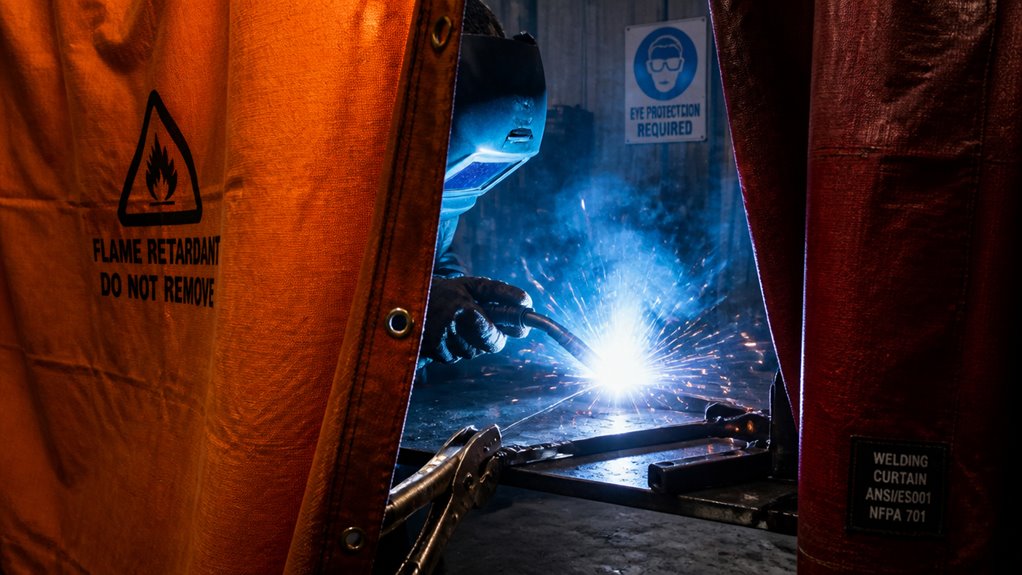
You use welding curtains to protect yourself and others from sparks, molten spatter, and harmful UV and IR radiation emitted during welding.
They’re made from fire-resistant materials that contain fire risks while blocking dangerous rays that can cause eye and skin injuries.
Curtains also help control fumes and keep the workspace organized by isolating welding zones.
They’re flexible, visible, and essential for safety compliance.
Explore how these features combine to create a safer, more efficient welding environment.
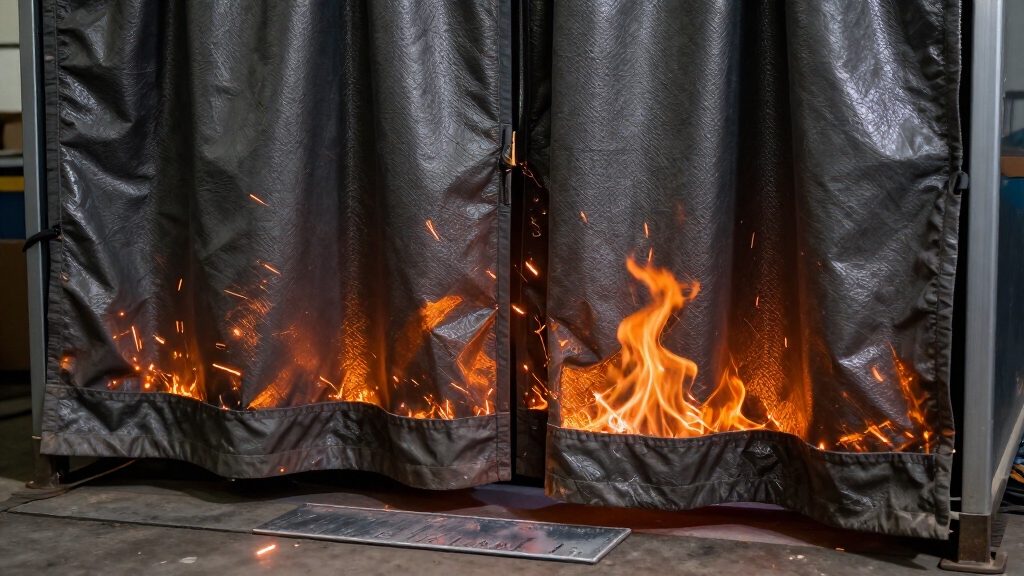
Because welding generates intense heat and sparks, using fire-resistant materials in welding curtains is essential to prevent fires and injuries. You need curtains made from durable, flame-retardant fabrics such as treated vinyl or fiberglass, which can withstand high temperatures without igniting.
These materials act as a critical barrier, containing sparks and molten spatter within the welding zone. Without proper fire-resistant curtains, stray sparks can easily ignite nearby flammable surfaces, putting workers and property at risk.
When selecting welding curtains, prioritize those tested and certified for fire resistance to ensure reliable protection. By using the right fire-resistant materials, you maintain a safer work environment, reduce fire hazards, and protect both welders and bystanders from potential burn injuries caused by hot metal particles escaping the immediate welding area.
Additionally, keeping the workspace organized and free of flammable materials is vital for fire prevention in welding environments.
When you work near welding operations, you face significant risks from intense ultraviolet (UV) and infrared (IR) radiation emitted by the welding arc.
Welding curtains act as critical barriers, blocking this harmful radiation to protect both welders and bystanders.
Without proper shielding, exposure can cause serious eye injuries like arc eye and painful skin burns known as flash burns.
Using semi-transparent, fire-resistant curtains lets you maintain visibility of the welding process while minimizing radiation exposure.
This protection is especially crucial in multi-welder environments or shared workspaces, where multiple arcs operate simultaneously.
By deploying welding curtains, you reduce the risk of radiation-induced injuries, ensuring safer conditions for everyone nearby.
Prioritizing these barriers complements personal protective equipment and supports compliance with safety standards in welding environments.
Welding curtains also help prevent harm from reflected UV radiation, which can affect nearby non-welders without proper barriers.
A welding curtain forms a crucial barrier that contains sparks and molten spatter within the designated work zone. By confining these hot metal particles, the curtain markedly reduces the risk of fire caused by stray sparks landing on nearby flammable surfaces.
It also protects adjacent workers from burn injuries, maintaining a safer environment around the welding operation. Made from fire-resistant materials, welding curtains withstand intense heat and resist ignition, ensuring durability and reliable protection.
When you use welding curtains, you effectively minimize the spread of debris, keeping your workspace cleaner and safer. Incorporating these barriers into your welding area is essential for preventing accidents and protecting personnel from hazards associated with flying sparks and molten spatter. Additionally, maintaining a clean workspace helps eliminate flammable materials and combustible dust buildup, further reducing fire hazards associated with welding. This highlights the importance of fire prevention and housekeeping in welding environments.
Though welding curtains primarily block sparks and radiation, they also play a critical role in controlling fumes and improving airflow around the welding area.
You can rely on these curtains to limit the spread of hazardous welding fumes, helping maintain cleaner air.
These curtains effectively contain hazardous welding fumes, promoting a cleaner and safer air environment.
When combined with proper ventilation, they support efficient removal of contaminants, reducing respiratory risks for you and your coworkers.
Welding curtains also help direct airflow, enhancing the performance of fume extraction systems.
Here’s how welding curtains improve air quality and safety:
Contain airborne particles and welding fumes within the work zone.
Promote controlled airflow to optimize ventilation effectiveness.
Reduce direct exposure to harmful contaminants for all personnel.
Using welding curtains is essential to maintaining a safer, healthier welding environment.
They also assist in workspace isolation, which helps to limit fume spread and protect adjacent personnel from airborne contaminants.
To keep welding zones separate from other work areas, it’s crucial to establish clear boundaries. That’s where welding curtains come into play! They act as a vital barrier, preventing unauthorized access and making sure that only trained personnel can enter those hazardous zones. Welding curtains also help reduce the risk of sparks and UV rays reaching other areas, enhancing overall fire-resistant protection in the workspace.
When welding zones aren’t clearly separated, you risk exposing workers and passersby to dangerous hazards like intense radiation, sparks, and fumes.
Defining welding zone boundaries with welding curtains is essential to maintain a safe environment.
These barriers create clear, visible limits that prevent accidental entry into hazardous areas.
You’ll establish safer, controlled workspaces by using curtains that:
Proper use of welding curtains combined with ventilation and environmental controls significantly mitigates inhalation risks and maintains safe oxygen levels.
Because welding zones expose workers to intense hazards, preventing unauthorized access is critical for maintaining a safe workspace.
Welding curtains act as physical barriers, controlling entry and minimizing accidental exposure to harmful sparks, radiation, and fumes.
By clearly delineating welding areas, you keep untrained personnel at a safe distance, reducing injury risks and ensuring compliance with safety regulations.
The barriers also help maintain work discipline by signaling restricted zones.
| Purpose | Benefit | Implementation Tip |
|---|---|---|
| Block unauthorized entry | Reduce injury risk | Use fire-resistant curtains |
| Define welding zones | Improve hazard awareness | Position curtains visibly |
| Control work flow | Enhance operational safety | Combine with signage |
| Maintain compliance | Meet safety standards | Regularly inspect barriers |
Use welding curtains strategically to keep your workspace secure and compliant. Proper ventilation and removing flammable materials from the workspace further enhance overall welding safety and complement the use of welding curtains by reducing fire and explosion risks in the welding area, emphasizing the importance of workspace setup.
Maintaining clear separation between welding zones and other work areas markedly reduces exposure to hazards such as sparks, fumes, and intense light. By using welding curtains, you create controlled barriers that protect workers and bystanders from welding-related risks.
These curtains help maintain a safer, more organized shop layout by isolating welding activities. When enhancing shop layout safety, focus on:
Implementing welding curtains guarantees you comply with safety regulations while promoting a healthier, safer environment. This strategic separation protects everyone and improves overall workflow efficiency in shared spaces.
Because welding emits intense UV radiation that can cause skin damage similar to sunburn, using curtains is essential to prevent harmful exposure beyond the immediate welding area.
When it comes to welding curtains, flexibility is key. You want curtains that can easily adapt to your workspace, making it simple to reposition them as tasks change. It just makes your life easier, right?
Now, let’s talk about materials. Semi-transparent options are fantastic because they protect your team from harmful radiation while still allowing visibility. This way, everyone can keep an eye on operations and ensure safety. It’s a win-win!
In the end, this combination of flexibility and visibility really maximizes safety without slowing down your workflow. So, you get the best of both worlds! Additionally, materials used in welding curtains must provide adequate UV and IR protection to prevent eye damage and enhance overall workplace safety.
When welding operations shift or workspaces serve multiple purposes, flexible curtain placement lets you adapt safety barriers quickly to changing needs. You can reposition curtains to create effective barriers that protect workers and bystanders without compromising workflow.
This adaptability is vital in environments where welding zones vary or temporary setups are common.
Flexible curtain placement offers key benefits:
Enables quick reconfiguration to isolate welding hazards as tasks change.
Supports multipurpose areas by defining safe zones without permanent walls.
Maintains clear sightlines for supervision while ensuring protection from sparks and radiation.
Additionally, flexible placement helps maintain fire safety by keeping flammable materials at a safe distance during welding.
By combining semi-transparent materials with flexible placement, welding curtains provide critical protection without sacrificing visibility.
You can monitor welding operations safely while shielding yourself and bystanders from harmful UV and IR radiation. Their flexibility lets you adjust curtains for different workflows, maintaining clear sightlines and containment.
This balance enhances safety by preventing eye injuries and burns while supporting efficient supervision.
| Benefit | Safety Impact |
|---|---|
| Semi-transparent view | Enables monitoring without exposure |
| Flexible placement | Adapts to changing work environments |
| UV/IR radiation block | Prevents arc eye and skin burns |
| Spark containment | Reduces fire and burn hazards |
| Mobility | Supports temporary or multi-use zones |
Using semi-transparent welding curtains means you maintain vigilance and protection simultaneously.
Although welding processes pose significant hazards, welding curtains play an indispensable role in helping you meet safety standards. They provide essential shielding from harmful radiation, sparks, and fumes.
Welding curtains are vital for shielding against radiation, sparks, and fumes, ensuring a safer work environment.
These curtains create a compliant welding environment by acting as a physical barrier that reduces exposure risks and supports regulatory requirements.
You’ll find welding curtains help you:
Welding curtains don’t just keep your workspace organized and compliant. They play a vital role in shielding your eyes and skin from harmful welding radiation.
These curtains effectively block ultraviolet (UV) and infrared (IR) radiation emitted by the welding arc. This protects you and others nearby from arc eye and flash burns.
By reducing direct exposure to intense light and radiation, welding curtains prevent painful eye injuries and skin damage. This could result from prolonged or accidental contact.
Semi-transparent curtains allow you to monitor welding activity without compromising safety. This ensures that everyone in a multi-welder environment stays protected.
Using welding curtains as a barrier is an essential step in maintaining a safe workspace. It minimizes health risks while supporting efficient, uninterrupted welding operations.
When you set up welding curtains, you create a controlled environment that markedly reduces exposure to hazards like sparks, radiation, and fumes.
Proper installation is essential to maximize protection and maintain a safe workspace.
Position curtains around the welding zone to fully enclose the area, ensuring they block harmful UV and IR radiation. Use fire-resistant materials and secure curtains firmly to prevent gaps that allow sparks or fumes to spread.
Keep semi-transparent options in mind to maintain visibility without compromising safety.
Key setup considerations include:
Following these steps helps you maintain compliance and reduce injury risks.
Yes, you can use welding curtains outdoors, but you need to choose ones designed to withstand varying weather conditions.
Look for heavy-duty, UV-resistant, and water-repellent materials to guarantee durability.
Keep in mind that wind can affect curtain stability, so secure them properly with sturdy frames or anchors.
Regularly inspect your curtains for wear or damage to maintain safety and effectiveness in outdoor welding environments.
Welding curtains reduce overall workshop lighting levels by filtering out intense welding arcs and bright flashes.
You’ll notice dimmer ambient light around the welding area, which helps protect your eyes and others from glare and UV exposure.
Semi-transparent curtains maintain visibility without compromising safety.
To keep your workspace well-lit, supplement with proper overhead lighting outside the curtain zone. This ensures clear vision and prevents shadows that could cause accidents.
You wouldn’t want your welding curtain to turn into a dragon’s scorched hide after heavy spark and heat exposure.
While welding curtains are designed from fire-resistant, durable materials, repeated intense exposure can degrade their protective qualities.
You should inspect them regularly for holes, burns, or thinning.
If damage compromises safety or visibility, replace the curtain promptly.
Proper maintenance guarantees you keep your workspace safe and compliant without risking hazardous failures.
You need to inspect welding curtains regularly for tears, holes, or burns. Replace damaged sections promptly.
Clean them with mild soap and water to remove dust, dirt, and welding residue. This guarantees visibility and effectiveness.
Avoid harsh chemicals that degrade fire-resistant materials.
Check mounting hardware and adjust tension to keep curtains securely in place.
Proper maintenance guarantees they continue blocking harmful radiation, sparks, and fumes, keeping your workspace safe and compliant.
Yes, you can customize welding curtains to fit funky, fractured, or far-flung workspaces.
Manufacturers offer flexible, fire-resistant fabrics in various sizes and shapes, letting you tailor barriers to your unique layout.
You can hang them from ceilings, frames, or walls, ensuring safe separation without sacrificing visibility or workflow.
You rely on welding curtains to create a safer workspace by blocking sparks, harmful radiation, and fumes.
For example, a manufacturing plant reduced eye injuries by 40% after installing fire-resistant curtains around welding stations, proving their effectiveness.
By choosing quality curtains that meet safety standards, you not only protect your team’s health but also maintain compliance and productivity.
Don’t overlook welding curtains; they’re essential for a secure, efficient welding environment.