Phone:
(701)814-6992
Physical address:
6296 Donnelly Plaza
Ratkeville, Bahamas.

Phone:
(701)814-6992
Physical address:
6296 Donnelly Plaza
Ratkeville, Bahamas.

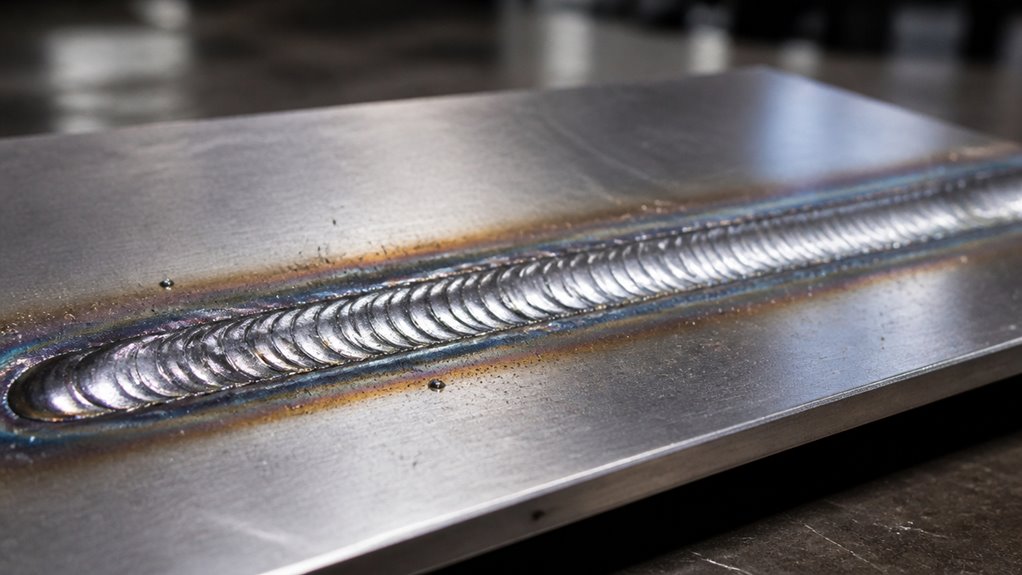
You use seam welding to join overlapping metal sheets by applying pressure and electrical current through rotating wheel-shaped copper electrodes. This process creates a continuous series of overlapping weld nuggets, producing airtight, watertight joints without filler material.
Controlling current, pressure, and speed guarantees strong, defect-free seams suited for thin sheets and leak-tight applications.
Seam welding’s distinct advantages and precise quality measures make it ideal across industries. Explore the types, controls, and key uses next.
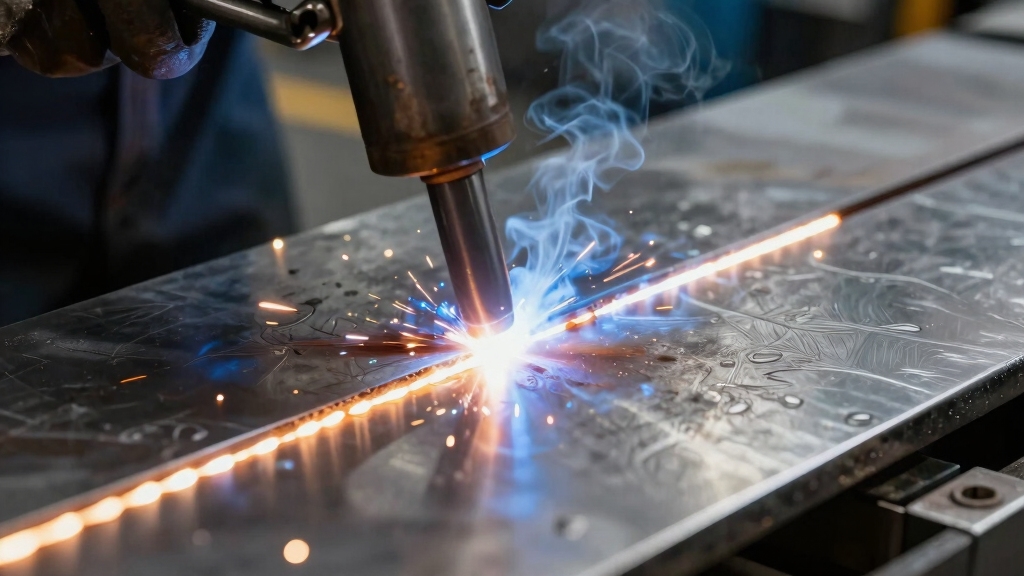
Seam welding joins two overlapping metal sheets by applying continuous pressure and electrical current through rotating wheel-shaped electrodes. This process creates a series of overlapping weld nuggets that fuse the materials along their entire length.
Seam welding fuses overlapping metal sheets using pressure and current through rotating wheel electrodes.
You start by cleaning the sheets to remove contaminants, then position them between copper electrodes. As the wheels roll along the joint, they clamp the sheets tightly, forcing current through the interface.
The electrical resistance at the contact points generates heat, causing localized melting and fusion. The continuous rotation guarantees a consistent weld seam, forming an airtight, watertight joint without filler material.
You control parameters like current, pressure, and welding speed to optimize nugget overlap and seam quality. This precise process results in a strong, uninterrupted weld ideal for leak-resistant applications. Effective current, force, and timing control is critical to minimizing defects and ensuring consistent weld quality.
Understanding the primary types of seam welding requires recognizing the key differences in their mechanisms and applications.
You’ll mainly encounter resistance seam welding and friction seam welding, each suited for specific tasks.
Resistance seam welding relies on motor-driven rotating wheel electrodes to pass current and pressure continuously or intermittently, creating overlapping weld nuggets.
Friction seam welding, on the other hand, generates heat through relative motion and pressure without electrical current.
Key differentiators include:
Resistance seam welding uses electrical resistance and rotating wheels for continuous welds.
Friction seam welding utilizes mechanical friction and pressure to form joints.
Resistance seam welding suits thin sheets and leak-tight applications.
Friction seam welding handles thicker materials and dissimilar metals.
Current flow patterns in resistance welding can be continuous or spot-like, affecting weld characteristics.
Both methods produce a heat-affected zone that requires careful control to maintain joint integrity.
Achieving and maintaining high-quality welds demands careful control of key parameters such as welding speed, current, electrode pressure, and electrode wheel alignment.
You must continuously monitor welding speed to guarantee consistent heat input and avoid defects like burn-through or cold welds.
Precise current regulation is critical to maintain proper fusion without excessive spatter or distortion.
Electrode pressure must be uniform to create stable contact resistance and optimal nugget formation.
Proper electrode wheel alignment prevents part deflection and uneven weld bead profiles.
To measure quality, you can perform destructive tests like peel or tensile tests to verify joint strength.
Non-destructive methods such as ultrasonic inspection and weld bead visual examination detect internal flaws and surface discontinuities.
Maintaining these controls guarantees reliable, airtight, and watertight seam welds.
Additionally, applying steady pressure during welding and holding it briefly after current stops helps maximize nugget formation and weld strength.
Industries demanding leak-proof joints and structural integrity rely heavily on seam welding for assembling critical components. You’ll find seam welding indispensable when you need continuous, airtight seals that withstand pressure and prevent fluid leakage. It’s especially critical in applications where failure isn’t an option.
Key industries where you apply seam welding include:
Automotive: Fuel tanks and exhaust systems requiring durable, leak-proof joints.
HVAC: Radiators and ductwork ensuring airtight, watertight assemblies.
Aerospace: Structural panels demanding high strength and leak resistance.
Food packaging: Hermetic sealing of metal and composite packaging materials.
Structural tubing: Longitudinal seams where consistent weld quality affects performance.
Seam welding’s ability to produce flush welds without visible marks enhances both the aesthetic and functional quality of the finished product.
Delivering continuous, leak-proof joints, seam welding offers distinct advantages over spot welding, especially when you need a durable, airtight seal along the entire length of overlapping materials.
Unlike spot welding, which produces discrete weld points, seam welding creates an uninterrupted, hermetic bond critical for applications demanding leak resistance.
You’ll benefit from higher efficiency since the rotating electrodes roll continuously without lifting, increasing welding speed and consistency.
Seam welding also eliminates gaps between welds, ensuring superior mechanical strength and fluid-tight integrity.
Its ability to weld both similar and dissimilar metals without filler material reduces contamination risks and post-weld finishing.
Additionally, seam welding’s continuous welding process enhances overall productivity by minimizing interruptions and maintaining consistent heat input.
Besides metals, you can seam weld certain thermoplastic materials that respond well to heat and pressure, such as polyethylene and polypropylene.
These plastics soften and fuse when heated, allowing continuous bonding along seams.
However, seam welding is primarily designed for conductive materials, so non-metal applications are limited and require specialized equipment.
You’ll need to guarantee proper temperature control and pressure to achieve a strong, airtight seam without degrading the material.
Seam-welded joints typically last as long as the base materials when properly executed. You can expect durability under normal operating conditions, especially when the weld is free from defects and correctly sized for the application.
Factors like material type, welding parameters, and service environment influence lifespan. With quality control and maintenance, your seam welds can maintain structural integrity for decades. This provides reliable, leak-proof performance in demanding applications.
Yes, you can automate seam welding for large-scale production efficiently.
Automated systems use motor-driven wheel electrodes that continuously roll along the joint, applying pressure and current without interruption. This increases welding speed and consistency, vital for high-volume manufacturing.
Integration with robotic handling and precise control systems guarantees repeatable quality. It reduces operator error and enhances throughput.
Automation suits industries like automotive and packaging, where airtight, continuous welds are mandatory.
Oh sure, just jump right into the glowing, electrified wheels without a care!
But seriously, you’ve got to wear insulated gloves, safety goggles, and flame-resistant clothing to shield yourself from sparks and heat.
Make sure proper ventilation to avoid inhaling fumes. Keep your workspace clean and never bypass grounding or circuit protections.
Always verify that electrode wheels are intact and aligned to prevent accidents.
Safety isn’t optional; it’s mandatory for seam welding success.
Seam welding can impact corrosion resistance by creating a continuous, airtight seal that reduces exposure to moisture and contaminants, enhancing overall protection.
However, the heat affected zone (HAZ) near the weld may alter the microstructure, potentially increasing susceptibility to corrosion if not controlled properly.
You should make certain proper cleaning and post-weld treatments like passivation to maintain corrosion resistance and prevent localized degradation along the welded seam.
Just like a tailor’s stitch weaving fabric flawlessly, seam welding fuses metals into continuous, strong bonds that spot welding can’t match.
You’ll find it essential when you need airtight, leak-proof joints with consistent quality.
By mastering seam welding’s techniques and controls, you guarantee durability and precision in critical applications, from automotive to aerospace.
Embrace seam welding, and you’ll craft metal assemblies as seamless and reliable as a well-stitched garment.