Phone:
(701)814-6992
Physical address:
6296 Donnelly Plaza
Ratkeville, Bahamas.

Phone:
(701)814-6992
Physical address:
6296 Donnelly Plaza
Ratkeville, Bahamas.

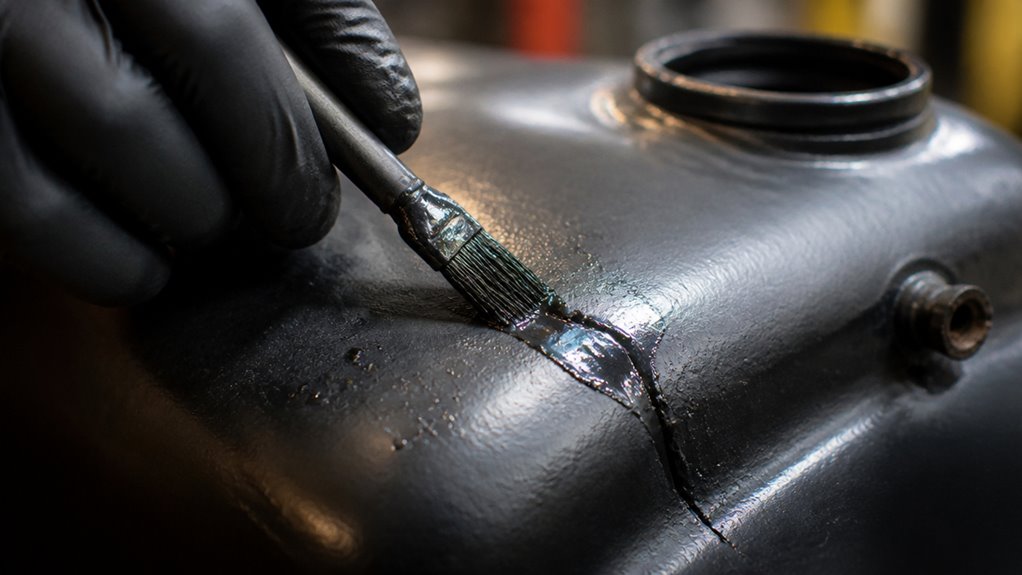
You can trust fully cured JB Weld to resist gasoline and diesel fuel effectively for short-term repairs, provided you mix equal parts resin and hardener and allow 24–48 hours for full curing.
However, it isn’t designed for prolonged immersion, especially with ethanol-blended fuels. Extended exposure weakens the bond and causes degradation.
Heat and fuel cycling further reduce durability. Understanding its chemical resistance and limitations helps you apply JB Weld most effectively for fuel-related fixes.
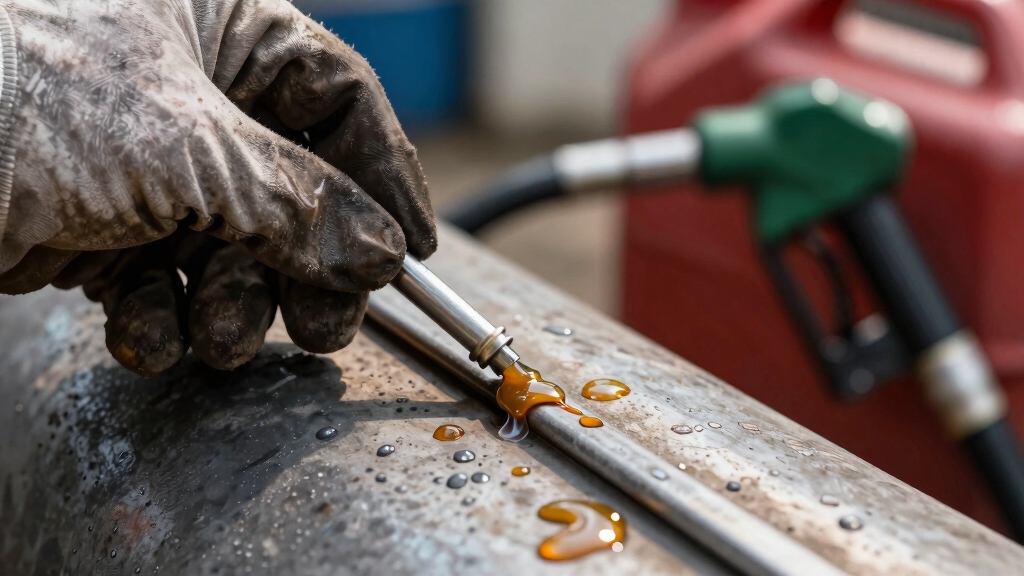
While JB Weld only achieves full fuel resistance after curing completely, you can rely on it to withstand exposure to gasoline and diesel fuel once properly set.
JB Weld resists gasoline and diesel fuel effectively once it has fully cured and set.
JB Weld’s two-part epoxy, composed of resin and hardener, forms a chemically resistant bond capable of sealing small leaks and maintaining adhesive strength against petroleum products.
You must mix equal parts precisely to guarantee structural integrity and maximum resistance.
Official specifications confirm that fully cured JB Weld endures contact with gasoline, diesel, motor oil, and hydraulic fluids without degradation.
Its resistance includes withstanding harsh automotive chemicals and maintaining bond strength under typical fuel exposure conditions.
However, this resistance applies only after the complete curing stage, which guarantees the epoxy’s molecular network is fully established to repel fuel-based solvents effectively.
Additionally, proper surface preparation such as cleaning and roughening is essential to achieve the strongest and most durable fuel-resistant bond.
Typically, JB Weld requires 24 to 48 hours to fully cure and achieve maximum fuel resistance.
During this period, the resin and hardener chemically react to form a solid, durable bond capable of withstanding exposure to gasoline and diesel.
To guarantee peak curing and fuel resistance, you should:
Working within the optimal ambient temperature range of 70°F–85°F helps ensure the fastest and most effective curing process.
Following these steps guarantees JB Weld attains its specified fuel resistance and mechanical strength.
Because JB Weld’s standard formulation degrades under prolonged fuel exposure, you shouldn’t rely on it for permanent fuel tank repairs.
Although fully cured JB Weld resists gasoline and diesel initially, extended immersion causes chemical breakdown, leading the epoxy to weaken and crumble.
Ethanol-containing fuels exacerbate this degradation due to their aggressive solvent properties, compromising the bond’s integrity over time.
The standard epoxy’s molecular structure lacks the necessary long-term stability for continuous submersion in fuels, making it vulnerable to microfractures and loss of adhesion.
While JB Weld can seal small leaks temporarily, its limited durability under constant fuel contact means you must consider specialized products like TankWeld.
TankWeld offers enhanced chemical resistance and structural resilience designed specifically for sustained fuel tank applications.
Proper surface preparation and curing time are also critical factors to ensure maximum adhesion and effectiveness when using these products on fuel tanks, as emphasized by JB Weld’s surface preparation guidelines.
Did you know that JB Weld can hold up pretty well in fuels, even with constant exposure to heat? It stays strong and stable at temperatures up to about 500°F. That’s impressive!
But here’s the catch: if you go beyond that temperature, the bond can start to weaken. This is especially true in engine environments where heat can fluctuate a lot. Always match the right product to specific repair needs to ensure peak durability.
When exposed to high temperatures, JB Weld maintains its structural integrity and fuel resistance up to a constant 500°F (260°C). This ensures reliable adhesion in demanding automotive conditions.
This temperature threshold is critical for applications near engines or exhaust systems where heat fluctuates rapidly. You should note these effects of temperature on JB Weld’s adhesion:
Verification of manufacturer specifications is recommended before high-heat applications to ensure optimal performance.
Understanding these factors helps you apply JB Weld effectively under thermal stress without compromising fuel resistance.
Building on JB Weld’s ability to maintain adhesion under high temperatures, its performance in fuel environments also hinges on thermal stability.
You need to understand that JB Weld resists temperatures up to 500°F (260°C) continuously and briefly withstands peaks near 600°F (316°C).
This thermal tolerance guarantees the epoxy bond doesn’t degrade or soften under typical engine heat, preserving fuel resistance.
However, if fuel exposure coincides with elevated temperatures, the epoxy’s chemical integrity faces greater stress.
Prolonged heat combined with fuel immersion accelerates breakdown, especially with ethanol blends.
Consequently, while JB Weld’s thermal stability supports effective sealing in hot fuel systems, you shouldn’t rely on it for long-term submerged repairs.
For such applications, specialized products like TankWeld offer enhanced thermal and chemical resistance, reducing failure risks under sustained heat and fuel exposure.
Proper surface preparation, including cleaning and roughening, is essential for achieving the best adhesion and durability in challenging fuel-exposed repairs.
When you compare JB Weld to TankWeld and other fuel-specific products, you’ll really start to see some key differences, especially when it comes to fuel resistance and how they hold up over time when immersed.
Now, TankWeld stands out because it offers enhanced chemical stability, making it a better choice for repairs that involve prolonged exposure to gasoline and ethanol blends. This is super important if you’re working on fuel tank repairs.
However, JB Weld Steel Stick is primarily designed for mechanical repairs and does not conduct electricity, which may affect its suitability in certain fuel-related applications.
Although standard JB Weld offers solid fuel resistance suitable for many automotive repairs, you’ll find that specialized products like TankWeld provide enhanced durability for prolonged fuel exposure.
JB Weld’s two-part epoxy resists gasoline and diesel once fully cured but degrades under prolonged immersion, especially with ethanol fuels.
TankWeld, formulated specifically for fuel tanks, withstands extended contact without breakdown.
When comparing:
You should select the product matching repair conditions to ensure peak fuel resistance and bond integrity. Proper application involves mixing equal parts resin and hardener on a clean, disposable surface to ensure effective curing and maximum bond strength.
Since fuel exposure varies in duration and chemical composition, understanding the durability differences between JB Weld and specialized products like TankWeld is essential for selecting the right adhesive.
JB Weld’s standard epoxy formulation offers strong resistance to gasoline and diesel once fully cured. However, prolonged immersion, especially with ethanol-blended fuels, can degrade its structure.
TankWeld, engineered specifically for fuel tank repairs, provides enhanced chemical resistance and durability under continuous fuel exposure. It outperforms standard JB Weld in long-term applications.
Other products like SteelStik also target harsh chemical environments, delivering superior resilience.
When you need a fuel-resistant bond for short-term or external exposure, JB Weld suffices. But for submerged or extended fuel contact, opting for TankWeld or similar specialized adhesives guarantees structural integrity and longevity.
Proper surface preparation before application is crucial to maximize the fuel resistance and bonding strength of any epoxy used.
Understanding the specific application requirements is essential before choosing between JB Weld, TankWeld, or other fuel-specific adhesives. You need to assess the nature and duration of fuel exposure to select the right product.
While JB Weld offers robust resistance after full curing, it’s not ideal for prolonged immersion in fuel tanks. TankWeld, designed specifically for tank repairs, provides enhanced chemical and fuel resistance.
Consider these factors:
Regular inspection and maintenance are recommended to ensure continued performance, especially when JB Weld is used in conditions involving fuel exposure and heat cycles, as its heat resistance can degrade over time.
Choose accordingly for peak durability and safety.
Manufacturer tests confirm that JB Weld exhibits strong resistance to gasoline, water, and various petroleum products once fully cured.
You can expect the adhesive to maintain a tensile strength of 3960 psi and flexural strength of 7320 psi, which guarantees durability under fuel exposure.
The epoxy’s chemical resistance profile demonstrates stability against automotive fuels and oils, validating its use in sealing small leaks and enduring harsh petroleum environments.
However, these tests highlight that such resistance is contingent on a complete 24 to 48-hour cure time and proper resin-to-hardener mixing.
While JB Weld withstands transient fuel exposure effectively, manufacturer data also indicate limitations for prolonged fuel immersion, where degradation may occur.
Consequently, you should consider these parameters when applying JB Weld for fuel-related repairs.
JB Weld chemically resists gasoline and diesel by curing into a dense, cross-linked epoxy matrix that forms a strong barrier against petroleum molecules.
When you apply and fully cure JB Weld, this matrix prevents fuel penetration and chemical breakdown. You should note:
You can use JB Weld on plastic fuel tanks, but you need to make sure the surface is properly prepared and the product is fully cured for peak adhesion and fuel resistance.
Standard JB Weld bonds well with many plastics but isn’t ideal for prolonged fuel immersion.
For plastic tanks exposed to fuel long-term, consider specialized formulations like TankWeld, designed for better chemical compatibility and durability under harsh fuel conditions.
You want reliability, but ethanol-blended fuels challenge JB Weld’s durability.
While JB Weld resists gasoline and diesel once fully cured, ethanol fuels accelerate chemical degradation. This causes the epoxy to break down or crumble over time.
If you’re working with ethanol blends, JB Weld isn’t your safest bet for long-term repairs. Instead, consider specialized formulations like TankWeld, designed to withstand ethanol’s harsher chemical effects and maintain structural integrity.
Humidity impacts JB Weld curing by potentially slowing the chemical reaction between resin and hardener.
If you work in high humidity, excess moisture can interfere with the epoxy’s polymerization.
This may cause incomplete curing or a weaker bond.
Conversely, very low humidity speeds up curing but may cause brittleness.
To guarantee peak strength and fuel resistance, you need to maintain moderate humidity levels.
Allow the full 24 to 48 hours curing time under stable conditions.
You can use JB Weld to repair both fuel lines and tanks, but keep in mind its limitations.
It bonds well to metal surfaces, providing a fuel-resistant seal once fully cured. However, standard JB Weld isn’t ideal for long-term submerged exposure in fuel lines under constant pressure or ethanol fuels.
For fuel lines, make certain the area is clean and dry. Consider specialized variants like TankWeld for enhanced durability in harsher conditions.
When it comes to JB Weld’s shelf life, you’d better not let it sit on the shelf gathering dust for too long.
Unopened, the two-part epoxy typically lasts about two years if stored in a cool, dry place.
Once opened, you should use it within six months to maintain peak chemical integrity.
Proper storage guarantees the resin and hardener components mix correctly, preserving full curing strength and durability for your projects.
When you rely on JB Weld for fuel resistance, remember it’s a sturdy shield, not an impenetrable fortress.
While it can handle gasoline and diesel after curing, typically 15-24 hours, prolonged exposure and heat can degrade its performance.
For long-term fuel tank repairs, specialized products like Tankweld outperform JB Weld.
Understanding its chemical resistance helps you make precise, informed choices, ensuring your repairs hold strong under the pressures of real-world conditions.