Phone:
(701)814-6992
Physical address:
6296 Donnelly Plaza
Ratkeville, Bahamas.

Phone:
(701)814-6992
Physical address:
6296 Donnelly Plaza
Ratkeville, Bahamas.

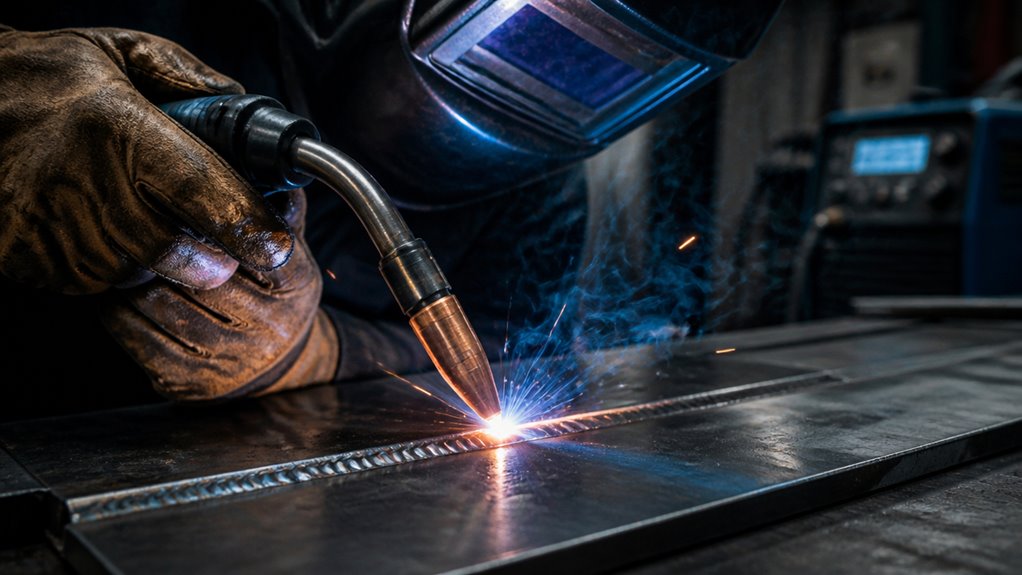
RMD welding uses regulated metal deposition to precisely control short-circuit transfer. This reduces spatter and improves puddle stability.
You’ll get microsecond adjustments to voltage and wire feed for uniform droplet size and consistent penetration, even on thin materials like stainless steel and aluminum.
It requires compatible Miller smart feeders and up-to-date firmware for peak performance.
This process offers higher productivity and easier operation than TIG or pulse MIG.
Explore further to understand materials, equipment, and practical tips to optimize your welds.
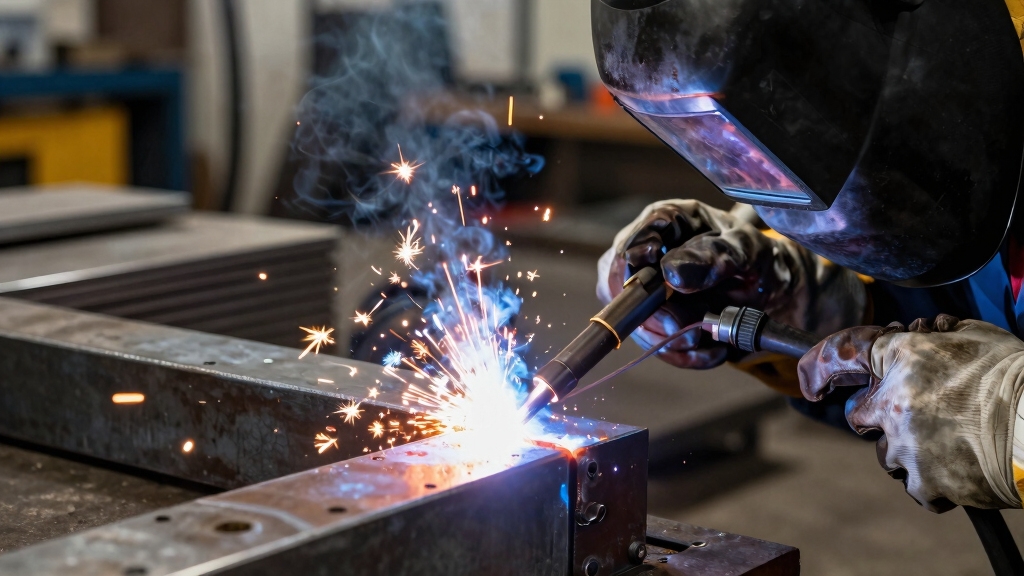
Although it builds on traditional short-circuit gas metal arc welding (GMAW), RMD welding, Regulated Metal Deposition, introduces advanced control mechanisms that dynamically regulate voltage and current to precisely manage molten metal transfer.
RMD operates primarily in short-circuit and spray transfer modes, using software-driven real-time waveform control to maintain consistent droplet size and uniform metal deposition.
This dynamic regulation reduces spatter and minimizes puddle turbulence, enabling superior puddle control compared to standard pulse MIG.
The process targets root pass welding, especially on open-root configurations, and reduces heat input to prevent burn-through on thin materials.
Wire feed speeds range from 250 to 600 inches per minute, with voltage typically between 15 and 35 volts.
This setup allows you to achieve stable arcs and consistent penetration with less operator skill than conventional methods.
By maintaining a constant voltage characteristic, RMD welding ensures self-regulating wire feed and consistent melting rates for improved weld quality.
RMD welding really shines with a variety of metals. You’ll typically see it working wonders with stainless steel, especially grades 304 and 316, along with carbon steel and aluminum. It’s versatile enough to handle thicknesses ranging from 24 gauge all the way up to 1/8 inch.
One of the cool things about RMD welding is its ability to bridge gaps up to 5/32 inch. This makes it a fantastic choice for open-root pipe welding, sheet metal work, and vessel fabrication. The process benefits from controlled metal transfer modes to minimize spatter and improve weld quality.
When selecting materials for RMD welding, you’ll find that the process excels with stainless steel grades 304 and 316, aluminum, and carbon steel, particularly within thicknesses ranging from 24 gauge up to 1/8 inch.
RMD’s precise control over molten metal transfer minimizes heat input, making it ideal for thin-gauge metals where burn-through risks are high. It handles open-root pipe welding effectively, maintaining consistent penetration and uniform root reinforcement.
Aluminum’s high thermal conductivity benefits from RMD’s regulated deposition, ensuring stable puddle control. Carbon steel’s broad weldability range suits RMD’s adaptable voltage and wire feed adjustments, enhancing fit-up tolerance and reducing spatter.
For thin to medium thicknesses, methods like RMD share advantages with pulsed MIG transfer, offering controlled heat input and improved spatter control.
In industries where precision and efficiency are paramount, RMD welding stands out as an ideal solution for open-root pipe welding, especially in oil and gas sectors and food processing facilities.
It excels with stainless steel grades 304 and 316, carbon steel, and aluminum, handling materials from 24 gauge up to 1/8 inch thick. Its controlled short-circuit transfer reduces heat input, preventing burn-through in thin materials common in HVAC ductwork, shipbuilding hull plates, and heat exchanger manufacturing.
You can rely on RMD welding for critical applications requiring consistent root pass integrity, such as pipeline construction, power plant tubing, and commercial kitchen equipment.
Due to its controlled heat input and precision, RMD welding is particularly effective for thinner metals where minimizing distortion and burn-through is essential, making it a practical alternative to downhill welding techniques.
Although RMD welding excels across various materials, it performs best on thicknesses ranging from 24 gauge up to 1/8 inch. It has reliable gap bridging capabilities from 1/8 inch to 5/32 inch. This range optimizes controlled metal deposition, minimizing burn-through risks on thin materials while maintaining consistent penetration.
You’ll find RMD particularly effective on stainless steel grades 304 and 316, as well as carbon steel and aluminum within this thickness scope. Its gap bridging ability accommodates fit-up variations common in pipe root passes and thin sheet metal fabrication.
Industries like pipe fabrication, automotive, and commercial kitchen equipment benefit from RMD’s precision in these ranges. By controlling droplet size and transfer, RMD welding guarantees uniform weld beads and reduces rework on typical thickness and gap tolerances you encounter.
For welding applications, understanding the duty cycle and amperage output is crucial to optimize performance and avoid thermal shutdowns during extended use.
Since RMD welding employs a regulated short-circuit transfer mode, it offers distinct advantages over pulse MIG and TIG processes, especially in root pass applications.
RMD welding’s regulated short-circuit transfer excels in root pass applications over pulse MIG and TIG.
Unlike pulse MIG, which relies on axial spray transfer, RMD controls droplet size precisely through dynamic wire feed adjustments. This reduces spatter by up to 90%.
This regulation guarantees consistent penetration and uniform droplet deposition, minimizing lack of fusion common in short-circuit methods.
Compared to TIG, RMD delivers comparable weld quality but at markedly higher travel speeds and with less operator skill required.
The process also reduces heat input, lowering distortion and burn-through risks on thin materials.
With integrated waveform control, RMD maintains a stable arc in fixed positions. This enables faster, cleaner root passes while supporting automation and reducing reliance on skilled TIG welders.
Fine-tuning parameters like wire feed speed and voltage in RMD welding further enhances arc stability and weld appearance.
Choosing RMD welding for fabrication offers significant benefits that directly enhance productivity and weld quality.
You’ll notice faster travel speeds, often double or triple compared to traditional methods, allowing you to complete jobs efficiently without sacrificing precision.
The process delivers consistent, low-spatter welds with superior puddle control, reducing cleanup and rework.
Its precise regulation minimizes heat input, which lowers distortion and burn-through risks on thin materials.
Here are three key reasons to choose RMD welding:
In addition, selecting the appropriate primary power source for RMD welding ensures optimized arc stability and weld quality.
RMD welding is your smart choice for reliable, high-quality fabrication.
To run RMD welding effectively, you’ll want to have a Miller smart feeder system on hand. This system is crucial because it dynamically controls both wire feed speed and current. Before you dive in, just double-check that your welding machine’s firmware supports the RMD process mode. It’s also important to ensure compatibility with models like the CP200, CP300, or the Synchro series.
Why is this integration so important? Well, it allows for precise microsecond adjustments, which ultimately leads to consistent droplet transfer and peak weld quality. So, taking these steps will really set you up for success in your RMD welding endeavors! Additionally, maintaining proper wire feed speed and voltage settings is essential to ensure a stable arc and minimize spatter during the RMD process.
Smart feeder systems play a crucial role in enabling the precision and consistency required for RMD welding. These systems dynamically regulate wire feed speed, voltage, and current in microsecond intervals. This ensures stable droplet transfer and uniform weld bead formation.
By integrating tightly with the welding power source, smart feeders maintain the controlled short-circuit transfer unique to RMD.
You’ll rely on smart feeders to:
Without smart feeder systems, achieving the precise waveform control and consistent penetration that define RMD welding wouldn’t be possible. Their ability to provide microsecond output regulation ensures the stable arcs critical for high-quality welds.
Although RMD welding demands advanced hardware, its performance hinges on up-to-date firmware and software compatibility.
You need welding machines equipped with the latest firmware versions that support Miller’s proprietary RMD process mode. This guarantees real-time microprocessor control of voltage and current, enabling dynamic wire feed adjustments and precise droplet transfer.
Compatibility between the smart feeder (such as the NPX or NPIC systems) and the power source is critical, requiring seamless communication through feedback loops.
Without current firmware, you risk losing the process’s microsecond regulation capabilities, compromising weld quality. Always verify your equipment’s firmware supports RMD functionality and synergic programs to maintain consistent arc stability, penetration, and minimal spatter.
Keeping software updated maximizes the welding system’s efficiency and reliability in industrial environments. Incorporating ergonomic aids during welding operations can also help maintain operator comfort and focus, which is essential for achieving consistent weld quality.
When you optimize RMD welding parameters, you enhance both weld quality and efficiency markedly. Focus on precise control of wire feed speed and voltage within recommended ranges (250–600 ipm, 15–35 V) to maintain stable short-circuit transfer and uniform droplet deposition.
Proper setup minimizes spatter and prevents burn-through, especially on thin materials.
To maximize results:
Following these tips will deliver TIG-quality root passes with higher productivity and less operator skill required.
You’ll find RMD welding reduces environmental emissions by minimizing spatter and lowering heat input, which cuts energy consumption.
Compared to traditional GMAW or TIG, it produces less airborne particulate matter and fume due to controlled molten metal transfer.
Its efficient, regulated process also reduces material waste and rework.
Think of RMD welding as a precise dance of molten metal droplets. Your safety gear must move just as carefully.
Unique precautions include guarding against intense, focused arcs regulated by smart feeders. This requires enhanced eye protection with higher shade lenses.
Since RMD reduces spatter but operates at dynamic voltages, ensure your gloves and clothing resist sudden heat bursts.
Maintain proper ventilation for minimal fumes and verify equipment firmware to prevent unexpected electrical surges.
Yes, you’ll find specific certification programs tailored for RMD welding technicians, often under broader GMAW or pipe welding certifications.
Organizations like the American Welding Society (AWS) offer specialized procedures and qualification tests that include RMD techniques, especially for pipe welding.
You should pursue certifications such as AWS D1.1 or API 1104, which recognize RMD’s unique process requirements.
This ensures you meet industry standards and demonstrate proficiency with RMD systems.
Oh, you’ll love how RMD welding makes your post-weld inspections almost too easy. Less spatter means fewer surprises under the magnifying glass.
Thanks to consistent droplet size and controlled heat input, you get uniform weld beads with minimal defects. This means your NDT methods like radiography and ultrasonic testing detect fewer flaws.
In short, RMD cuts inspection headaches by delivering cleaner, more predictable welds. This reduces rework and boosts confidence in quality assessments.
When troubleshooting RMD welding equipment failures, first check connections. Ensure the smart feeder, power source, and torch cables are secure.
Verify the firmware supports RMD mode and confirm voltage and wire feed settings align with recommended parameters. Inspect the wire for contamination or diameter inconsistencies.
Clean contact tips and nozzles to prevent poor arc stability.
Finally, review error codes from the control software for targeted diagnostics and recalibrate the system if irregularities persist.
By choosing RMD welding, you tap into a process that boosts productivity. Did you know it can cut spatter by up to 90% compared to conventional MIG?
This means less cleanup and higher-quality welds, saving you time and cost. Whether you’re working in automotive or heavy fabrication, mastering RMD welding enhances your precision and efficiency.
Embrace this advanced technique to elevate your welding projects with consistent, clean results every time.