Phone:
(701)814-6992
Physical address:
6296 Donnelly Plaza
Ratkeville, Bahamas.

Phone:
(701)814-6992
Physical address:
6296 Donnelly Plaza
Ratkeville, Bahamas.

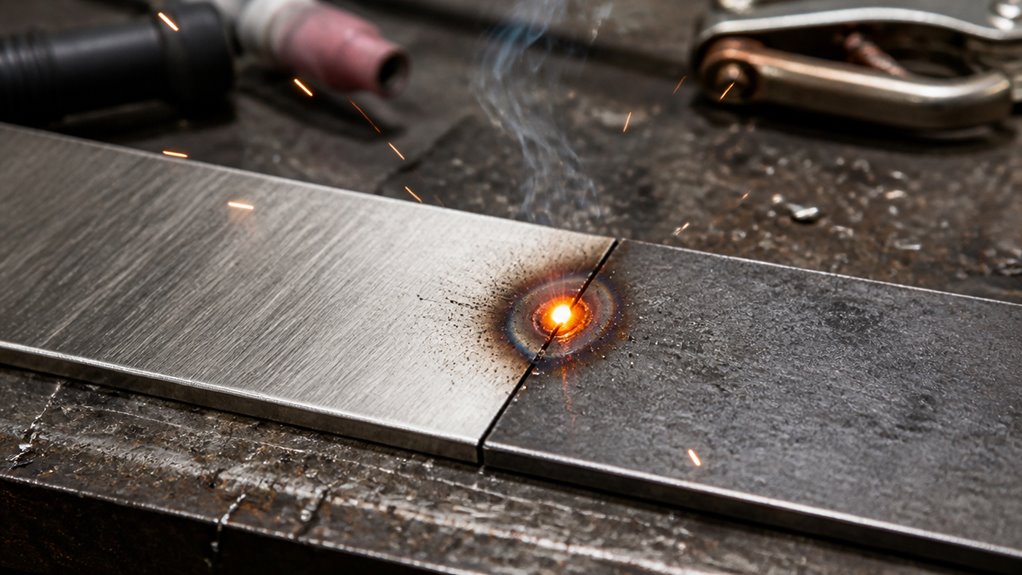
Yes, you can weld stainless steel to mild steel by using compatible filler materials like ER309L, which balance corrosion resistance and strength.
You’ll need to prepare both surfaces carefully and control heat input to minimize dilution and thermal stresses, focusing heat on the mild steel side.
Choosing the right welding method and technique, such as TIG with DCEN polarity, helps guarantee proper fusion without defects.
Understanding these key factors is essential for achieving a durable, high-quality joint.
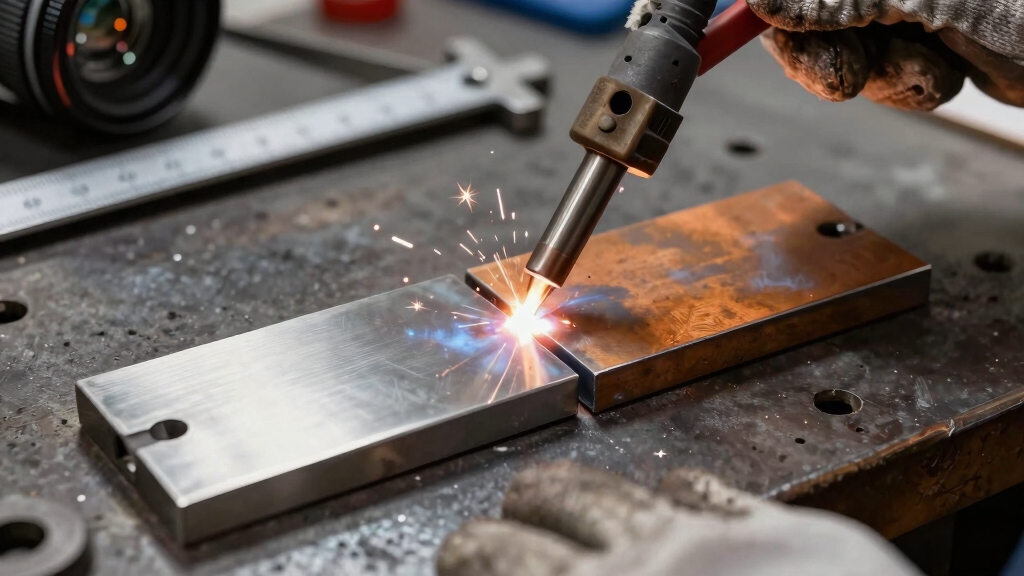
Although welding stainless steel to mild steel presents challenges due to their differing chemical compositions and thermal properties, you can successfully join them using compatible filler materials and proper techniques.
Welding stainless steel to mild steel requires compatible fillers and techniques to overcome their chemical and thermal differences.
The key lies in selecting a filler metal like 309L stainless steel, which balances corrosion resistance and mechanical strength.
You’ll want to control heat input carefully to minimize dilution and thermal stress, focusing more heat on mild steel to guarantee penetration without compromising stainless steel integrity.
Welding methods such as TIG and MIG offer precise control and adaptability to various thicknesses.
Stick welding demands higher skill to avoid defects.
Proper surface preparation and post-weld cleaning are essential to prevent corrosion and ensure joint durability.
Making sure thorough surface preparation is critical when welding stainless steel to mild steel because contaminants like oxides, oils, and rust can compromise weld integrity.
Begin by mechanically cleaning both metals using a wire brush or grinder to remove rust, paint, and any surface debris.
For mild steel, eliminate galvanized coatings at least 2 inches from the weld area to prevent contamination and defects.
Focus on achieving smooth, bright metal surfaces free from oils and oxidation; this reduces the risk of porosity and weak bonding.
Avoid chemical residues by wiping the surfaces with a solvent if necessary.
Proper preparation makes certain consistent fusion and prevents weld discontinuities, laying the foundation for a durable, high-quality joint between these dissimilar metals.
Using the correct filler wire is essential to match the composition and tensile properties of both metals for optimal weld strength.
With clean, well-prepared surfaces, selecting the correct filler material becomes the next critical step in achieving a strong, corrosion-resistant weld between stainless steel and mild steel.
Proper surface preparation and correct filler selection are essential for strong, corrosion-resistant stainless to mild steel welds.
You should use ER309L filler wire, as it balances corrosion resistance from stainless steel with the strength of mild steel.
Avoid regular mild steel filler wires, since they compromise corrosion resistance and weld integrity.
Typically, choose filler diameters of 1/8 inch or 3/32 inch for optimal control and penetration.
Always verify compatibility by consulting filler metal specifications or experts to ensure you meet the application’s mechanical and chemical demands.
Using the right filler minimizes dilution issues and prevents weld defects, ultimately producing a durable, high-quality joint between these dissimilar metals.
Careful control of heat input is essential to prevent brittleness and maintain joint integrity when welding dissimilar metals.
When it comes to welding stainless steel to mild steel, two methods really stand out: TIG and MIG. Both of these approaches work well, especially when you use the ER309L filler. This filler material is great because it helps balance corrosion resistance with strength, which is super important for a solid joint.
Now, one thing to keep in mind is heat control. You definitely want to manage the heat input carefully. If you don’t, you risk excessive dilution and thermal stress. A good tip is to focus the heat on the mild steel side. This will really help in achieving a strong, clean weld.
Using DCEN polarity during TIG welding can further enhance heat concentration on the workpiece and reduce electrode wear for improved weld quality.
In the end, paying attention to your technique and choosing the right filler will ensure you get clean, durable joints. This way, you’ll meet both structural and corrosion requirements without any headaches!
Choosing the right welding technique is essential when joining stainless steel to mild steel. Each method affects the weld quality and structural integrity differently.
TIG (GTAW) welding stands out for its precise heat control. It allows you to produce clean, high-quality welds with minimal distortion.
MIG (GMAW) welding suits thicker sections and offers faster speeds. However, it demands careful parameter adjustments to avoid excessive dilution.
Stick welding (SMAW) can be used but requires advanced skill to prevent defects and guarantee fusion.
Whichever method you choose, maintain tight control over heat input. Focus heat primarily on mild steel and use a short arc length to minimize thermal stress.
This approach optimizes weld penetration and bead symmetry, which are pivotal for durable, defect-free stainless-to-mild steel joints.
Additionally, ensuring proper surface cleaning and tight joint fit-up before welding helps prevent common defects and promotes strong metallurgical bonding.
Filler material selection critically influences the integrity and corrosion resistance of stainless-to-mild steel welds. Use ER309L filler wire or rods, as they balance stainless steel’s corrosion resistance with mild steel’s strength.
Avoid regular mild steel filler materials since they reduce corrosion resistance notably. The filler diameter typically ranges between 3/32 inch and 1/8 inch for ideal weld quality. Your welding method also affects filler choice; TIG provides precision, MIG speeds up thicker welds, and Stick demands skill to prevent defects.
Selecting the proper shielding gas mixture is essential to retain corrosion resistance and prevent oxidation during welding.
| Welding Method | Recommended Filler | Key Advantage |
|---|---|---|
| TIG (GTAW) | ER309L Rod | Precise heat control |
| MIG (GMAW) | ER309L Wire | Fast, suitable for thick |
| Stick (SMAW) | 309L Electrodes | Versatile but skill-dependent |
Selecting the appropriate welding method directly influences how you control heat input when joining stainless steel to mild steel.
TIG welding offers superior precision, allowing you to concentrate heat on the mild steel while maintaining a short arc length to minimize thermal distortion of stainless steel.
MIG welding suits thicker sections, balancing speed with adequate heat control. It requires careful wire positioning toward stainless steel to guarantee symmetrical bead formation.
Stick welding demands skilled technique to avoid overheating and defects.
Across methods, controlling heat input prevents excessive dilution and thermal stress, which can compromise joint integrity.
You should adjust machine settings to the lowest current compatible with material thickness.
Maintain a slightly slower travel speed and employ preheating or interpass temperature management on thick sections to reduce cracking risk and distortion during the weld process.
Using DCEN polarity can help concentrate heat on the workpiece, providing deeper penetration while reducing electrode heating to better control heat input.
When you’re welding dissimilar metals, like stainless steel to mild steel, it’s really important to keep an eye on your heat input. You don’t want to end up with excessive dilution or thermal stress, right? One good tip is to focus the heat mainly on the mild steel side. This way, you can help protect the stainless steel from overheating.
Also, make sure to keep your arc length short. This little adjustment can do wonders in preventing any unwanted heat from reaching the stainless steel. And don’t forget about your travel speed and electrode angle! Tweaking these factors will help you achieve proper penetration and create a nice, balanced weld bead without defects.
Controlling heat input by matching amperage and travel speed to the material thickness is essential to minimize distortion and preserve corrosion resistance, especially on the stainless steel side with Type 304 stainless.
Controlling heat input is essential when welding stainless steel to mild steel to prevent excessive dilution and thermal stress.
You need to focus heat primarily on the mild steel side to guarantee adequate penetration without burning through.
Keep your arc length short; this minimizes unnecessary heat transfer into the stainless steel, preserving its corrosion resistance and mechanical properties.
Adjust your travel speed slightly slower than when welding similar metals to allow proper fusion and bead formation.
Direct the filler wire more toward the stainless steel to achieve a balanced, symmetrical bead, reducing stress concentrations at the interface.
Maintaining consistent, controlled heat input avoids distortion, cracking, and weakening of the weld zone, guaranteeing a strong, durable joint between these dissimilar metals.
Employing precise welding parameters ensures minimized defects and optimal joint integrity when joining dissimilar metals.
Mastering the welding technique when joining stainless steel to mild steel demands precise heat management and deliberate wire positioning.
You need to focus heat primarily on the mild steel to guarantee sufficient penetration without burning through.
Minimize heat input to the stainless steel to prevent distortion and sensitization.
Maintain a short arc length and a slightly slower travel speed than usual to control dilution.
Point the filler wire more toward the stainless steel to achieve a symmetrical bead and balanced fusion.
Adjust welding current to the lowest effective level, especially on thin sections.
Consistent technique reduces thermal stresses and avoids common defects like cracking or incomplete fusion.
Additionally, maintaining the proper torch angle between 15–20° ensures consistent gas coverage and deeper penetration when welding dissimilar metals.
Although the welding process completes the fusion of stainless steel to mild steel, ensuring joint durability requires careful post-weld processing and thorough inspection.
Welding fuses stainless steel to mild steel, but durability depends on meticulous post-weld care and inspection.
You should allow the joint to cool naturally, avoiding quenching or water cooling to prevent thermal shock and cracking.
Next, use angle grinders to remove excess weld material and smooth uneven surfaces, preparing for corrosion resistance restoration.
Applying a passivation treatment reinstates the chromium oxide layer, critical for stainless steel’s corrosion protection.
Inspect the weld visually and employ dye penetration tests to detect cracks or imperfections that could compromise integrity.
Additionally, control cooling rates with heat-resistant blankets if necessary, minimizing residual stresses and distortion.
These steps collectively enhance joint longevity and performance in service conditions.
When you weld stainless steel to mild steel, the magnetic properties change locally. Mild steel is ferromagnetic, while most stainless steels are either non-magnetic or weakly magnetic.
The weld zone and heat-affected areas can become partially magnetic due to phase transformations and mixing of metals. You’ll notice some magnetic attraction near the joint, but it’s less uniform than in pure mild steel.
This variation affects applications where precise magnetic behavior matters.
Oh, sure, you can just slap paint or coating on a stainless-to-mild steel weld and call it a day if you enjoy corrosion problems.
You need to prepare the surface meticulously, removing oxides and contaminants first.
Then, apply appropriate primers compatible with both metals. Proper post-weld treatments like passivation guarantee corrosion resistance before painting.
Neglecting these steps compromises durability, so don’t skip them if you want a lasting, protective finish.
You must wear respiratory protection due to chromium and nickel fumes from stainless steel.
Make certain adequate ventilation to disperse toxic gases.
Remove any galvanized coatings on mild steel to avoid zinc oxide exposure.
Use gloves and eye protection rated for UV and infrared radiation, as welding dissimilar metals can cause unpredictable spatter.
Monitor heat input closely to prevent thermal stress, which could cause rapid oxidation and compromise your safety environment.
Weld flexibility in stainless-to-mild steel joints generally decreases compared to homogenous welds.
You’ll notice stainless steel’s higher hardness and lower ductility create a stiffer joint, while mild steel remains more pliable.
The filler metal choice, typically ER309L, balances these traits but can’t fully equalize flexibility.
To optimize performance, control heat input and employ proper post-weld treatments to minimize residual stresses that further reduce joint flexibility.
Think of welding certifications like a passport for your skills, proving you can navigate complex borders in this case, joining stainless to mild steel.
Yes, specific certifications exist, like the AWS D17.1 or ASME Section IX with qualified procedures for dissimilar metals.
You’ll need to demonstrate mastery over filler selection, heat control, and joint prep.
These certifications guarantee you meet stringent standards for strength, corrosion resistance, and durability in mixed-metal welds.
You can weld stainless steel to mild steel, but success hinges on precise surface prep, the right filler, and controlled heat input. Choosing ideal welding methods and post-weld inspection guarantees the joint withstands stress without cracking or corrosion.
By mastering these variables, you’ll create a seamless bond where strength and durability coincide. This transforms dissimilar metals into a reliable, unified structure.