Phone:
(701)814-6992
Physical address:
6296 Donnelly Plaza
Ratkeville, Bahamas.

Phone:
(701)814-6992
Physical address:
6296 Donnelly Plaza
Ratkeville, Bahamas.

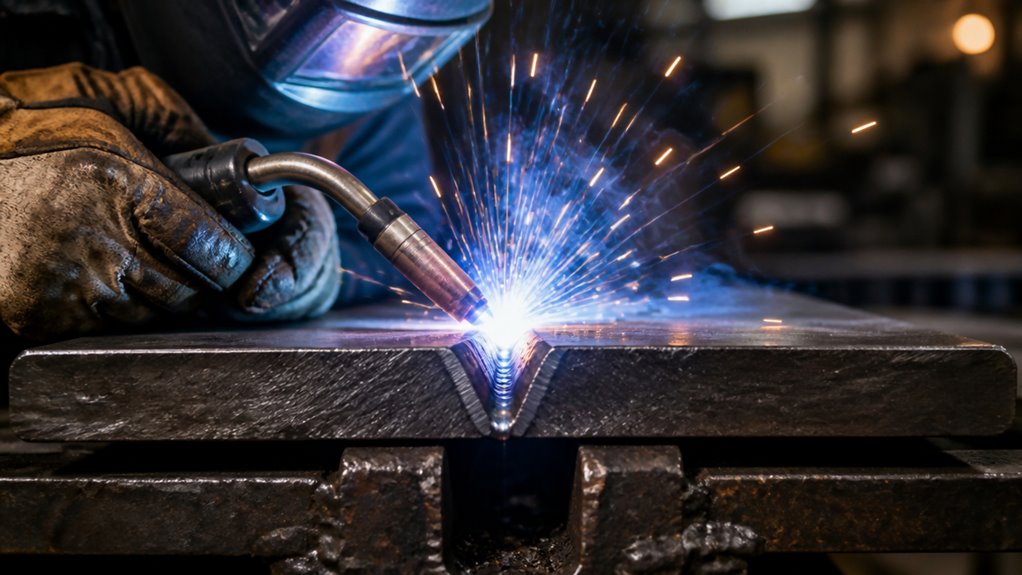
If you want the strongest welds, TIG and Submerged Arc Welding (SAW) are top choices.
TIG gives you precise, high-strength joints ideal for thin metals and critical applications due to controlled heat input and superior ductility.
SAW excels on thick materials with deep penetration and high tensile strength, perfect for large-scale projects.
Your material type, thickness, and application will guide which process fits best. Exploring these factors will clarify the most suitable welding approach for your needs.
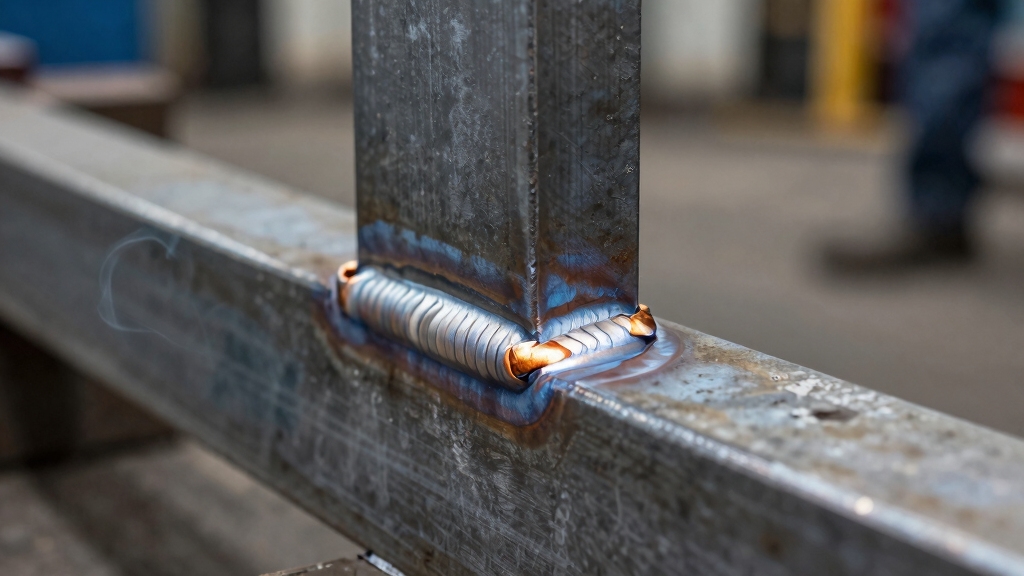
Although weld strength depends on the welding process, you must consider several key factors that directly influence the joint’s performance.
First, the type of metal dictates the maximum achievable strength, as different alloys respond uniquely to heat and fusion.
Material thickness plays a pivotal role; thicker metals generally require more robust welding parameters to maintain structural integrity.
You also need to factor in the anticipated weight stress since the weld must endure operational loads without failure.
Your skill level as a welder markedly impacts quality. Precise heat control and technique reduce defects.
Additionally, filler metal composition, weld length, and size directly contribute to the joint’s tensile and fatigue strength.
Understanding these variables helps you optimize weld performance tailored to specific application demands.
Controlling heat input is essential to balance hardness and ductility, ensuring durability and resistance to cracking.
When it comes to welding methods, TIG welding really shines, especially when you need high-strength and precise joints. It’s perfect for working with thin metals and is often used in critical applications where quality is paramount.
On the flip side, Submerged Arc Welding (SAW) is the go-to choice for large-scale industrial projects. It offers impressive tensile strength on thicker materials and operates with high efficiency, making it ideal for heavy-duty tasks.
However, TIG welding demands a methodical pace and precise control to achieve consistent, defect-free welds, highlighting its reputation as welding’s ultimate challenge.
When you evaluate welding methods by strength and application, TIG welding stands out for its exceptional tensile strength and precision.
You benefit from TIG’s controlled heat input and slow cooling rate, which produce welds with superior ductility and minimal defects.
This makes TIG ideal for thin metals and critical joints requiring high structural integrity.
Consider these strengths when choosing TIG welding:
TIG welding excels where precision and strength must coexist in demanding environments.
Its success is largely due to the use of non-consumable tungsten electrodes, which maintain arc stability and weld quality throughout the process.
While TIG welding offers unmatched precision and strength for thin metals and critical joints, Submerged Arc Welding (SAW) dominates in large-scale industrial fabrication. Here, mass structural strength and efficiency are paramount.
You’ll find SAW excels in joining thick plates, delivering superior ultimate tensile strength (UTS) and yield strength (YS). This is critical for structural applications like shipbuilding and heavy machinery.
Its high deposition rate and deep penetration maximize productivity without compromising weld integrity. However, SAW’s positional limitations mean it’s less versatile than TIG for complex geometries.
When strength in thick sections and volume production matter most, SAW outperforms other methods. To optimize weld quality, you must control parameters like current, voltage, and travel speed precisely.
This ensures consistent, defect-free joints that meet stringent industrial standards. The arc is maintained in a submerged position beneath a flux blanket, which protects the weld and improves overall quality and efficiency.
A TIG weld delivers exceptional precision and strength by applying intense heat with a controlled, slow cooling process that enhances tensile properties.
When you use TIG welding, you benefit from the cleanest, most defect-free joints, ideal for high-performance applications.
You can achieve superior weld ductility and precise control over the weld bead, especially on thin metals.
The strength you gain depends on factors like base metal type and welder skill.
Key aspects to contemplate include:
This method is your top choice when precision and joint strength are critical, especially when using a non-consumable tungsten electrode that creates clean, precise welds.
Harness the power of Submerged Arc Welding (SAW) to achieve exceptional strength in heavy-duty and large-scale industrial fabrication.
SAW excels in joining thick plate materials, delivering superior ultimate tensile strength (UTS) and yield strength (YS) essential for structural applications.
You’ll benefit from its high deposition rates and deep weld penetration, ensuring robust joints with consistent quality over extended weld lengths.
The process’s submerged flux shields the arc and molten metal, minimizing contamination and defects, which directly enhances weld integrity.
While SAW is mostly limited to flat or horizontal positions, its automated nature maximizes efficiency and repeatability, reducing operator variability.
For mass production scenarios demanding structural reliability and strength, SAW stands out as an excellent choice, outperforming many other welding methods in delivering heavy-duty joint strength.
Its high deposition efficiency and continuous wire feed make it particularly suitable for welding very thick plates in heavy low-carbon steel sections.
Several factors, including metal type and joint configuration, critically influence the maximum achievable weld strength. To maximize weld strength, you must carefully select metals and joint types suited to the application and load conditions.
Metal type and joint design are crucial for achieving maximum weld strength in any application.
Consider these key points:
Use high-strength metals like structural steel or aerospace-grade aluminum alloys.
Opt for joint designs that guarantee full penetration, such as single-V or square groove joints.
Favor fillet welds or groove welds depending on stress direction and accessibility.
Match filler metal properties closely with base metals to avoid weak points.
Account for material thickness, as thicker metals provide greater cross-sectional strength.
Proper groove preparation and alignment are essential to ensure full penetration and minimize weld defects.
You can’t just depend on the welding process to ensure strength. Your skill plays a huge role in weld integrity. Think about it: how you handle the technique impacts everything from heat input to filler placement and bead formation. These factors are crucial because they directly affect defect rates and the tensile properties of the weld.
When you master these elements, you’re setting yourself up for success. Consistent, high-quality joints become the norm, which is essential for meeting those strict performance standards in the industry. So, honing your skills isn’t just a nice-to-have; it’s vital for achieving the best results. Achieving this level of proficiency typically requires focused hands-on training which builds the necessary muscle memory and precision.
Mastering welding techniques directly influences the strength and integrity of the final joint. Your skill level affects weld penetration, fusion, and defect avoidance, which are vital for peak performance.
Even the strongest welding method can produce weak joints if improperly executed. Consider these key impacts of welder skill:
Consistent control of heat input prevents brittle or porous welds. Precise manipulation of filler material guarantees uniform bead geometry. Accurate positioning reduces distortion and alignment errors.
Timely adjustments to welding parameters accommodate material variations. Effective inspection and correction of flaws maintain structural reliability.
Your expertise ultimately defines the weld’s mechanical properties and durability. Investing in skill development maximizes the inherent strength potential of any welding process you choose.
Developing fine hand-eye coordination through repetitive practice is essential to achieving consistent, high-quality welds.
Understanding and applying precise welding techniques directly enhances the strength and quality of the final joint. When you control heat input, maintain proper torch angle, and regulate travel speed, you minimize defects such as porosity and incomplete fusion.
For instance, TIG welding demands steady hand movements and consistent arc length to create defect-free, high-tensile welds. Your skill in selecting appropriate filler metals and adjusting parameters to match base materials critically affects weld integrity.
Ignoring these variables risks weakening the heat-affected zone or creating stress concentrators. Additionally, proper joint preparation and cleanliness prevent contamination that compromises weld strength.
Ultimately, your technical proficiency determines whether the weld meets or exceeds performance criteria, especially in critical applications requiring maximum durability and fatigue resistance. Advanced welding methods like pulse MIG offer precise heat input control that can further improve weld quality and reduce defects.
How do you determine the best welding method for your project’s specific demands? You need to analyze material type, thickness, and expected load to select the most suitable process.
TIG welding suits precision and thin metals, offering the strongest, cleanest joints. SAW excels in thick materials and large-scale fabrication, delivering exceptional tensile strength efficiently. Other methods like flux-cored or stick welding may fit particular contexts better.
TIG welding is ideal for precision on thin metals, while SAW handles thick materials with superior strength efficiently.
Consider these factors:
Evaluating these parameters guarantees you choose a method that balances strength, efficiency, and precision for your specific project.
Welding alters the heat-affected zone’s (HAZ) mechanical properties by causing thermal cycles that change microstructure and grain size.
You’ll notice reduced strength and toughness in the HAZ compared to the base metal due to grain coarsening and phase transformations.
This weakening can increase susceptibility to cracking and fatigue.
However, you can mitigate these effects with precise heat control and post-weld treatments, preserving the joint’s overall integrity and performance.
Think of TIG welding as handling a live wire. You need full protection.
Always wear a welding helmet with the correct shade to shield your eyes from UV radiation.
Use flame-resistant gloves and clothing to protect your skin from sparks and heat.
Ensure proper ventilation to avoid inhaling harmful fumes.
Ground your workpiece correctly and keep flammable materials away.
Following these precautions keeps you safe while producing precise, high-quality welds.
Yes, welding techniques directly influence corrosion resistance of joints.
When you control heat input and cooling rates, like in TIG welding, you minimize oxidation and maintain metal integrity.
Proper shielding gas coverage prevents contamination, reducing corrosion risk.
Choosing compatible filler metals and avoiding defects like porosity also help.
In TIG welding, you use thin, precise filler rods tailored to the base metal, allowing controlled deposition and high-quality joints.
TIG fillers often match or closely alloy with the parent metal for peak strength and corrosion resistance.
In contrast, Submerged Arc Welding (SAW) uses thicker, continuously fed wires designed for efficient, high-deposition rates on thick materials.
These fillers prioritize mechanical strength and productivity, suited for large-scale structural applications where speed and penetration matter most.
Picture the steady glow of the TIG torch as you work. To keep that precision, you’ll regularly clean the tungsten electrode, inspect and replace worn gas lenses, and check the torch’s cooling system.
Keep your gas supply dry and leak-free to maintain an uncontaminated shield. Routine calibration of the power supply guarantees stable current flow.
Neglecting these steps risks inconsistent arcs and weak welds, undermining your meticulous TIG process.
Think of welding like building a bridge. Your choice of method is the blueprint, metals are the materials, and skill is the engineer’s precision.
For instance, TIG welding offers the finesse of a surgeon’s scalpel, while submerged arc welding delivers the brute force of a heavyweight champion.
Ultimately, the strongest weld isn’t just about power. It’s about matching technique, materials, and expertise to your project’s demands for peak strength and durability.