Phone:
(701)814-6992
Physical address:
6296 Donnelly Plaza
Ratkeville, Bahamas.

Phone:
(701)814-6992
Physical address:
6296 Donnelly Plaza
Ratkeville, Bahamas.

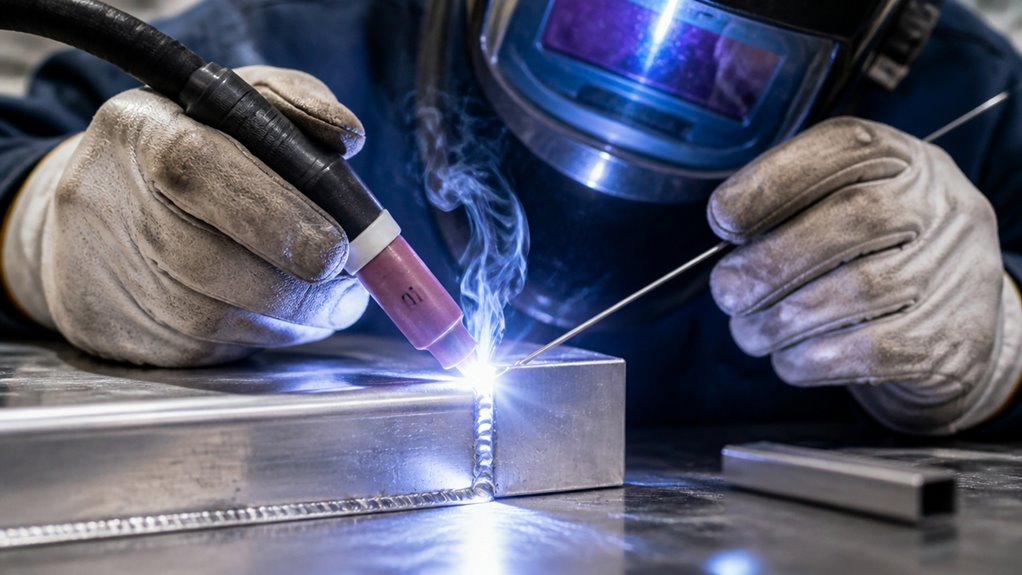
To weld aluminium effectively, start by cleaning with an aluminium-only wire brush and wiping with acetone to remove oxides and contaminants.
Keep filler wire dry and handle it carefully to prevent porosity. Control heat by preheating thick sections and managing travel speed to avoid warping or burn-through.
Use proper torch angles and set MIG equipment with aluminium-specific consumables and pure argon shielding gas.
Match filler metals to your alloy and monitor your weld to prevent defects. Explore these essentials to improve your weld quality.
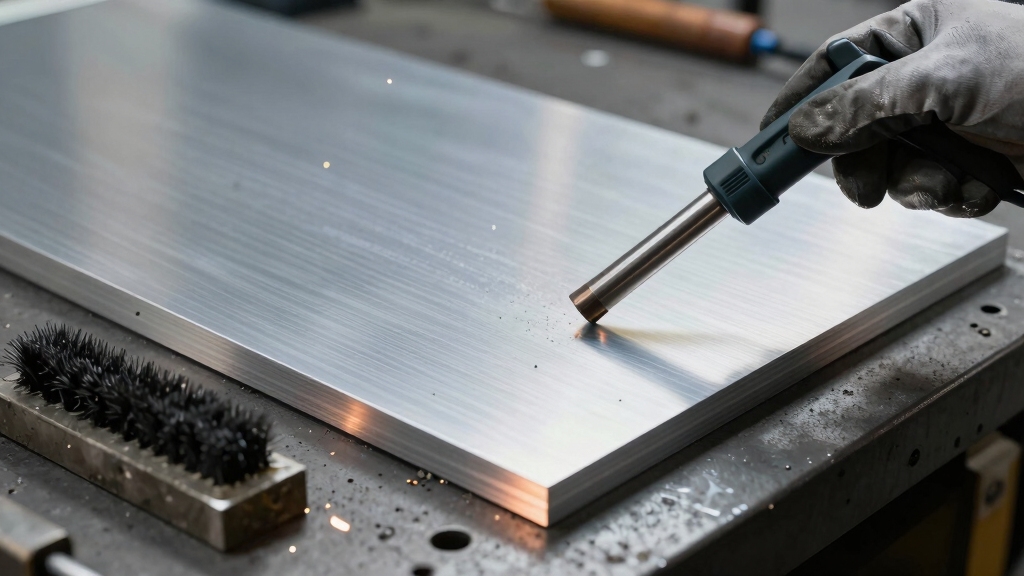
Before you begin welding aluminium, you need to prepare the surface meticulously to guarantee a clean, strong weld.
Start by using a dedicated stainless-steel wire brush reserved exclusively for aluminium to remove surface oxides effectively.
Begin with a stainless-steel wire brush dedicated solely to aluminium for thorough oxide removal.
After brushing, wipe the joint area with acetone or isopropyl alcohol to eliminate residual contaminants.
Make certain the parts remain dry and at room temperature, as welding aluminium stored longer than a few days requires re-cleaning.
Assemble joints flush with minimal gaps, avoiding overlaps or open spaces that complicate welding.
If welding is delayed, cover the prepared joints to prevent dirt and grit contamination.
These steps reduce porosity risk and improve weld integrity by assuring prime surface cleanliness and joint fit-up before you strike your arc.
To maximize weld quality, avoid delays between cleaning and welding since aluminium rapidly forms a new oxide layer that can compromise the joint.
Although aluminium dissipates heat quickly, controlling heat input and applying preheating techniques are essential to achieving strong, distortion-free welds.
You should preheat thicker sections or cold parts to improve weldability and reduce thermal gradients.
Avoid excessive heat by easing off the foot pedal in TIG welding as the workpiece temperature rises, especially near edges where heat builds faster.
Use a heat sink to minimize warping and distortion.
Keep travel speed consistent to prevent burn-through on thin aluminium.
Managing heat input precisely prevents weld defects like porosity and cracking.
By balancing preheat temperature and welding parameters, you maintain joint integrity and reduce residual stresses.
This ensures a sound weld without distortion or damage to the base material.
For optimal results, use foot pedal heat control to dynamically adjust heat input during welding.
Mastering torch angles and travel techniques is essential for producing clean, consistent aluminium welds.
Mastering torch angles and travel methods is key to achieving clean, consistent aluminium welds every time.
When welding aluminium, proper torch positioning and steady travel speed prevent defects and guarantee peak penetration.
Follow these key guidelines:
Additionally, maintaining a steady 3/8 inch tip-to-work distance helps ensure proper shielding gas coverage and prevents feeding issues.
Adhering to these practices will help you achieve strong, defect-free aluminium welds.
Getting your MIG setup dialed in for aluminium welding demands attention to specific equipment and parameters that differ from steel welding.
Use aluminium-specific consumables: Teflon liners, U-groove drive rollers, and aluminium contact tips to reduce wire feeding issues.
Because aluminium wire is softer and prone to birdnesting, employ a spool gun or push-pull feeder for consistent feed rates.
Set polarity to electrode positive and select pure argon shielding gas to maintain arc stability and prevent contamination.
Adjust voltage upward to achieve spray transfer, ensuring a hotter, smoother weld with minimal spatter.
Maintain a slightly longer stickout than with steel and use a consistent push angle to optimize bead formation.
This precise setup reduces feeding problems and produces clean, high-quality aluminium welds.
For best results, keep your shielding gas flow between 20–30 CFH of pure argon to ensure stable arc and proper gas coverage.
When choosing a filler wire, it’s important to find one that matches your parent aluminium alloy. This ensures you get the right strength and weld integrity.
For most applications, UNIMIG actually recommends going with 5356 wire instead of 4043 because it tends to perform better.
And hey, don’t forget to keep that filler wire clean and dry! Handling it carefully is key to avoiding any contamination, which can lead to issues like porosity and defects in your welds.
Additionally, maintaining proper shielding gas coverage during welding is essential to prevent oxidation and ensure a clean, strong weld.
Several factors determine the compatibility of aluminium filler wire with the parent metal. Selecting the correct type is essential for achieving peak weld strength and appearance.
You need to assess the alloy series of the base metal. Filler wires are designed to match or complement these alloys to avoid cracking or weak joints.
Consider the mechanical properties required in the final weld, such as tensile strength and corrosion resistance.
Also, evaluate the service environment, as different fillers react differently to stress and corrosion.
Finally, make certain the wire’s chemical composition aligns with the base metal to maintain weld integrity.
Proper cleaning and oxide removal before welding are crucial to prevent defects and ensure strong fusion when using the correct filler wire for your aluminum project, as emphasized in surface preparation steps.
Many aluminium filler wire types exist, but selecting the correct one hinges on matching the wire to both the parent metal and welding conditions.
For instance, 5356 is preferred for higher strength and marine applications, while 4043 suits castings and reduces cracking. Consider alloy compatibility and mechanical requirements carefully.
| Wire Type | Typical Use Case |
|---|---|
| 5356 | Structural, marine grades |
| 4043 | Castings, general repair |
| 5183 | Marine, high-strength |
You’ll want to avoid mismatches that lead to weak welds or cracking. Always check the base alloy and welding parameters before choosing. Using the right wire guarantees peak weld integrity and appearance under your specific conditions. Additionally, selecting the appropriate shielding gas can significantly influence weld quality and penetration when working with different aluminium thicknesses.
Selecting the appropriate aluminium filler metal is only part of the welding equation. Maintaining cleanliness and proper handling directly impacts weld quality and integrity.
Contaminants like oxides, moisture, and dirt cause porosity and weak joints. To guarantee peak results, follow these steps:
Adhering to these practices guarantees consistent, defect-free aluminium welds with strong mechanical properties. Additionally, using aluminum-specific liners and drive rolls in your welding equipment helps prevent feeding inconsistencies and ensures smooth wire delivery.
To prevent common aluminium welding defects, it’s really important to control contamination. Make sure you clean and prepare the surface thoroughly before you start welding. A clean surface makes a huge difference!
Next up, let’s talk about heat input. You’ll want to manage it carefully to avoid issues like warping, burn-through, and porosity. Adjusting your preheating and travel speed can really help here. Finding the right balance is key!
And don’t forget about crater prevention techniques! Using methods like the back-step technique and run-on plates can help ensure that your bead quality remains consistent and can also reduce the chances of cracking. It all adds up to a better weld!
Using 100% argon as the shielding gas is essential for achieving excellent arc stability and minimizing contamination during aluminium MIG welding.
When welding aluminium, controlling contamination is critical for preventing common defects like porosity, crater cracking, and burn-through.
You need to start with proper surface preparation by using a dedicated stainless-steel wire brush exclusively for aluminium to remove oxides.
Always wipe the joint with acetone or isopropyl alcohol afterward to eliminate residual contaminants.
Keep parts dry and at room temperature. If welding is delayed, clean again before proceeding. Covering prepared joints helps reduce dirt and grit buildup.
Follow these key contamination control steps:
Additionally, selecting the correct tungsten electrode type for aluminium welding is essential to maintain arc stability and minimize contamination.
These methods assure a clean base for defect-free aluminium welds.
In controlling heat during aluminium welding, you must carefully balance input to prevent common defects like burn-through, warping, and crater cracking.
Begin by preheating thicker or cold sections to improve weldability and reduce thermal shock.
Use a heat sink when TIG welding to absorb excess heat and minimize distortion.
Adjust the foot pedal gradually as the workpiece heats to avoid puddle washout, especially near edges where heat concentrates.
Maintain a travel speed fast enough to prevent overheating but slow enough for proper fusion.
For thin aluminium, reduce heat input by controlling amperage and voltage precisely.
Avoid excessive dwell time at starts and stops, which intensifies heat build-up.
Proper heat management guarantees structural integrity and prevents metallurgical issues linked to overheating without sacrificing weld quality.
Watch out for crater cracking and porosity, as these are common defects that can compromise the strength and appearance of your aluminium welds.
To prevent crater formation, pause briefly at the weld end, add extra filler metal before releasing the trigger, and consider run-on/off plates.
Porosity mainly results from contamination and moisture, so maintain clean, dry filler rods and base materials.
Control heat input carefully to avoid burn-through and cracking.
Follow these key steps:
Although aluminium welding presents challenges, you can effectively prevent craters and cracks by carefully controlling the weld termination process.
Controlling weld termination is key to preventing craters and cracks in aluminium welding.
Use the back-step method to avoid stopping the bead directly on the joint edge, reducing stress concentration.
Pause briefly at the weld end, adding extra filler metal before releasing the trigger to fill the crater and stabilize the cooling weld pool.
Employ run-on and run-off plates where possible to maintain consistent heat and prevent abrupt puddle solidification.
Maintain precise heat input as the weld concludes; easing off pedal pressure gradually prevents sudden cooling that leads to cracking.
Finally, inspect the finished weld for any signs of crater cracking or porosity, addressing them immediately with proper rework or additional welding passes to guarantee structural integrity and aesthetic quality.
You should wear a welding helmet with a proper shade lens to protect your eyes from intense light and UV radiation.
Use flame-resistant gloves and a long-sleeve jacket to shield your skin from sparks and heat.
Respiratory protection, like a fume mask or respirator, is essential to avoid inhaling aluminium fumes.
Always wear ear protection in noisy environments.
Make certain your boots are heat-resistant and non-slip for safety and stability during welding.
To store aluminium filler rods properly, keep them dry and free from moisture to prevent porosity and contamination.
Use airtight containers or sealed plastic bags with desiccants to absorb humidity.
Label each container clearly by wire type and diameter to avoid mix-ups.
Store rods at room temperature in a clean, dust-free environment, away from corrosive substances.
Regularly inspect rods for oxidation or dirt before welding to guarantee consistent weld quality.
You can weld aluminium outdoors, but windy conditions complicate shielding gas effectiveness, causing contamination and porosity.
To minimize issues, use windshields or welding tents to protect the arc area. Opt for higher gas flow rates and ensure consistent shielding coverage.
Avoid direct wind exposure on the puddle, as aluminium’s oxide layer is sensitive. If conditions worsen, consider postponing welding to maintain weld quality and reduce defects like porosity and cracking.
You need to regularly clean your aluminium welding machine’s wire feeder, especially the Teflon liner and drive rollers, to prevent wire jams.
Inspect and replace contact tips worn by aluminium wire. Check gas flow and hoses for leaks or blockages, ensuring consistent shielding.
Keep cooling fans and vents free of dust to avoid overheating.
Finally, calibrate voltage and wire feed speed settings periodically for peak weld quality and consistent performance.
Imagine welding a 7000-series aluminium alloy, known for its high strength but poor weldability.
The alloy type affects welding difficulty mainly due to differences in melting points, thermal conductivity, and susceptibility to cracking.
You’ll find 1xxx or 3xxx series easier to weld because they’re more ductile and resist cracking.
Harder alloys, like 7xxx, require precise heat control and preheating to avoid defects and guarantee strong, clean welds.
Mastering aluminium welding demands precision, from surface prep to finishing touches. You can’t rush heat control or skip proper torch angles; each step shapes your weld’s strength and quality.
Think of welding as a carefully choreographed dance. Every movement, from wire feeding to selecting filler metal, must be deliberate and exact.
By preventing defects and refining your technique, you’ll transform challenges into seamless, durable joints that stand the test of time.