Phone:
(701)814-6992
Physical address:
6296 Donnelly Plaza
Ratkeville, Bahamas.

Phone:
(701)814-6992
Physical address:
6296 Donnelly Plaza
Ratkeville, Bahamas.

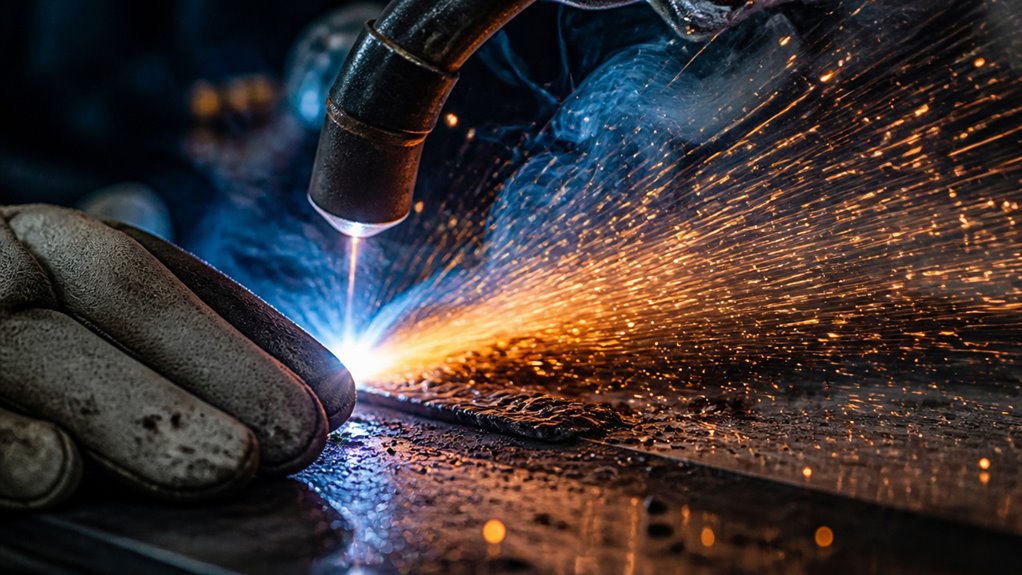
Arc blow disrupts your welding arc by causing unpredictable deflection due to magnetic forces. This is especially true in ferromagnetic steels with residual magnetism.
This instability leads to erratic bead placement, inconsistent penetration, and defects like lack of fusion or porosity.
Controlling bead width and the weld pool becomes harder as arc blow intensifies with DC welding and poor return clamp setup.
Adjusting your joint design, welding parameters, and demagnetizing the base metal can mitigate these effects.
Understanding these details helps you optimize weld quality.
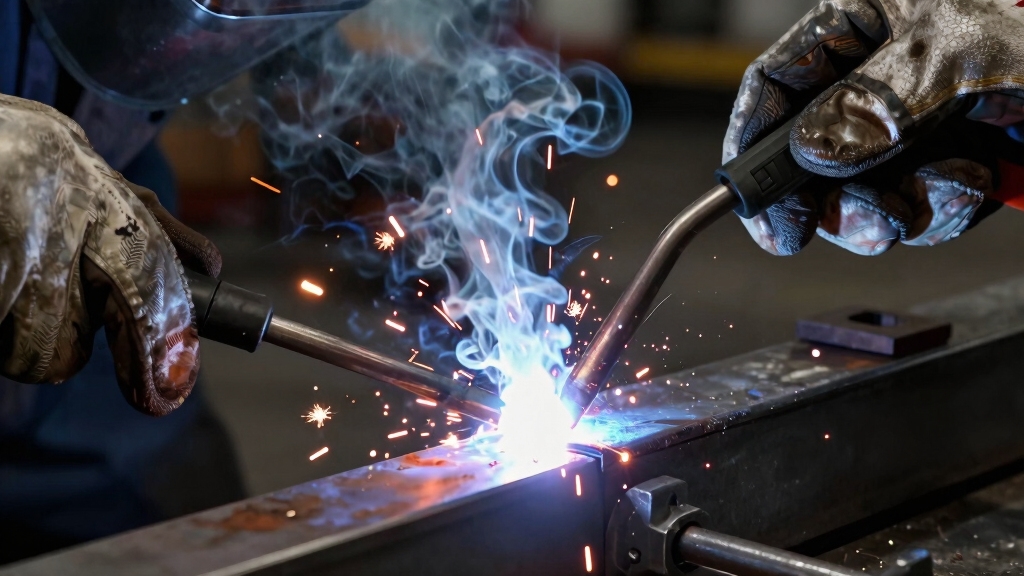
When you weld, arc blow occurs primarily because magnetic forces distort the arc’s path, pushing it off course. This distortion mainly stems from residual magnetism within the ferromagnetic base metal and the magnetic field generated by the welding current.
The position of the current return clamp also influences the magnetic flux distribution, causing the arc to deflect. Arc blow is more prevalent in DC welding due to the unidirectional current creating an asymmetric magnetic field.
Additionally, joint design, poor fit-up, and resistance variations in the base metal contribute to arc instability. External factors like the earth’s magnetic field or nearby magnets can exacerbate the issue.
Thermal arc blow, though less common, arises from localized resistance changes as the weld pool heats and moves, further affecting arc stability.
Adjusting magnetic flux through inductance control can help manage the electromagnetic forces that influence arc behavior and contribute to arc blow.
You know, arc blow can really mess with your weld quality. It leads to issues like lack of fusion and inconsistent penetration by pushing the arc off its intended path. This deflection isn’t just a minor inconvenience; it actually disrupts bead placement.
When the arc isn’t where it’s supposed to be, it becomes a lot trickier to control the weld pool. As a result, you might end up with incomplete fusion and irregular bead geometry. In the end, all these problems can seriously affect the overall quality of your weld. Additionally, unstable arc conditions caused by arc blow increase the risk of unintended arc strikes, which can weaken the base metal and compromise structural integrity.
Arc blow disrupts the stability and direction of the welding arc, directly impacting weld quality and bead placement. When the arc wanders, you risk several critical weld defects that compromise structural integrity and performance.
Here are three primary weld defects caused by arc blow:
Addressing arc blow promptly is essential as it can introduce stress concentrators that serve as initiation points for cracks or corrosion.
Defects like lack of fusion and porosity often signal deeper issues with how the welding arc behaves during the process.
When arc blow occurs, the magnetic forces deflect the arc, causing inconsistent bead placement. You’ll notice the bead wandering from the joint line, making it difficult to maintain a uniform bead profile and width.
This unpredictable arc path compromises your control, leading to overlapping or undercut areas. As a result, the deposited weld metal may not adequately cover the intended area, affecting both aesthetics and structural integrity.
To guarantee precise bead placement, you need to mitigate arc blow by adjusting current return positions or using AC welding when possible.
Controlling arc stability directly improves your ability to place the bead accurately, enhancing overall weld quality.
Additionally, maintaining a steady torch angle between 10° and 15° from vertical can help stabilize the arc and reduce spatter caused by arc instability.
Maintaining proper fusion and penetration hinges on controlling the welding arc’s stability. Magnetic forces can deflect the arc and disrupt its intended path.
When arc blow occurs, you risk incomplete fusion and inconsistent penetration. This compromises weld integrity. The instability causes the arc to wander, leading to uneven heat distribution and insufficient root penetration.
To mitigate these effects, focus on:
Additionally, selecting the appropriate primary power source can enhance arc stability and weld quality by providing controlled current and voltage tailored to welding needs.
Residual magnetism in the workpiece often creates localized magnetic fields that can deflect the arc. This can really throw off your welding process. Plus, the position of the current return is crucial too. It influences the magnetic flux around the weld area, which can lead to some unexpected challenges.
And let’s not forget about joint design flaws and poor fit-up. These issues can make the situation even worse, increasing the chances of arc blow. So, it’s essential to pay attention to these factors to keep your welding on track!
Additionally, improper grounding and damaged cables can exacerbate arc instability and increase the risk of electric shock during welding.
Understanding residual magnetism is essential when addressing arc blow in ferromagnetic steels.
Residual magnetism, leftover magnetic fields trapped in the workpiece, distorts the welding arc’s path by creating uneven magnetic forces. This causes the arc to deflect, reducing weld accuracy and potentially leading to defects like lack of fusion.
When you deal with residual magnetism, consider these key factors:
Proper welding procedure specification adherence also plays a crucial role in minimizing residual magnetism effects and preventing arc instability.
When welding ferromagnetic steels, the position of the current return clamp plays a critical role in arc stability. The return clamp’s location influences the distribution of the magnetic field around the weld zone.
If the return path is too far or incorrectly placed, it can create magnetic flux concentrations that deflect the arc, causing arc blow. You can reduce this effect by positioning the return clamp so the welding direction progresses either toward or away from it, minimizing magnetic interference.
Improper cable routing or a distant return path amplifies magnetic distortion, intensifying arc wander. By carefully managing the current return position, you maintain a more stable arc, improve control, and enhance bead consistency.
This adjustment is a practical, effective countermeasure against magnetic arc blow in ferromagnetic steel welding. Additionally, ensuring the use of properly sized cables with adequate ampacity helps maintain stable current flow, further reducing arc instability caused by voltage drops and resistance.
Although joint design might seem secondary to welding technique, it directly influences magnetic field distribution. It can markedly contribute to arc blow in ferromagnetic steels.
When your joint configuration creates uneven gaps or sharp geometric shifts, magnetic flux concentrates irregularly. This causes arc deflection.
Poor fit-up exacerbates this by introducing inconsistent magnetic paths. To minimize arc blow related to joint design, focus on:
Additionally, improper joint design can lead to increased oxidation and contamination risks during welding, further compromising weld quality.
Because magnetic arc blow stems from distortion of the surrounding magnetic field, it exerts stronger and less predictable forces on the welding arc than thermal arc blow.
You’ll notice magnetic arc blow causes greater arc deflection, making control difficult and increasing weld defects like lack of fusion.
Thermal arc blow, linked to resistance changes in heated metal, typically produces milder, more localized disturbances.
| Aspect | Magnetic Arc Blow |
|---|---|
| Force Intensity | Strong, erratic magnetic forces |
| Effect on Weld | Severe deflection, poor fusion |
| Occurrence | Common in ferromagnetic steels |
Compared to thermal arc blow, magnetic arc blow’s intensity and unpredictability make it a more critical welding challenge. Adjusting the magnetic shunt in the welding transformer can help fine-tune current flow and reduce arc instability caused by magnetic disturbances.
Understanding how your welding setup and technique influence arc blow is essential for mitigating its impact. Your choices affect the magnetic field and arc stability directly.
Here are three critical factors to take into account:
Control of arc blow during welding requires deliberate adjustments to equipment setup and welding technique to minimize magnetic field distortions and stabilize the arc.
First, position the current return clamp strategically so welding proceeds toward or away from it, reducing residual magnetism effects.
When possible, switch from DC to AC welding to exploit AC’s inherent arc stability.
Demagnetize the workpiece before welding if residual magnetism is significant.
Safeguard precise fit-up and thorough surface preparation to limit arc disturbances caused by joint irregularities.
Additionally, optimize cable layout by routing cables close to the workpiece and minimizing loop areas to reduce stray magnetic fields.
Adjust welding parameters and technique to maintain a steady arc path, preventing deflections that compromise weld quality and consistency.
Arc blow rarely occurs in non-ferromagnetic metals because they lack the strong magnetic properties that cause magnetic arc blow.
However, thermal arc blow can still happen due to resistance differences in the base metal during welding.
So, while you won’t typically see magnetic arc deflection in non-ferromagnetic metals, you should remain cautious of thermal arc wander.
This can still affect weld quality and stability in these materials.
Arc blow acts like a mischievous ghost, nudging your automated welding arc off its intended path.
You’ll see inconsistent bead placement and poor fusion, which disrupts your system’s precision and repeatability.
This causes defects and rework, reducing efficiency.
Since automated systems rely on exact control, arc blow forces you to adjust current return paths, use AC power, or demagnetize materials to maintain weld quality and system reliability.
Yes, you’ll find welding machines designed to reduce arc blow, especially those offering AC output or advanced inverter technology.
AC welders help neutralize magnetic fields, minimizing arc deflection.
Inverter machines provide precise control over current and polarity, allowing you to adjust parameters to counteract magnetic disturbances.
Some models also feature adjustable current return paths or built-in demagnetizing functions.
You can leverage these to improve arc stability and weld quality in challenging conditions.
Ambient temperature doesn’t directly influence arc blow severity, but it can affect thermal arc blow indirectly.
When temperatures rise, metal conductivity and resistance change, potentially altering current flow and heat distribution.
This can slightly impact thermal arc blow, though magnetic arc blow remains dominant and unaffected by temperature.
You should focus more on controlling magnetic fields and current paths rather than ambient temperature to manage arc blow effectively.
Yes, arc blow can cause safety hazards for you as a welder. When the arc deflects unpredictably, you risk accidental contact with the workpiece or surroundings, leading to burns or electric shock.
The erratic arc may also cause spatter or molten metal to fly unexpectedly, increasing injury risks. Maintaining stable arc control is critical to prevent these hazards.
You should mitigate arc blow through proper setup and technique adjustments.
Understanding arc blow is vital because it can twist your welds like a river’s current, disrupting bead placement and compromising quality.
By recognizing its magnetic roots, especially in ferromagnetic steels, you can adjust your welding setup and technique to steer the arc steadily.
Armed with practical prevention methods, you’ll not only control arc blow but also guarantee stronger, cleaner welds.
This transforms a potential obstacle into a mastered element of your welding process.