Phone:
(701)814-6992
Physical address:
6296 Donnelly Plaza
Ratkeville, Bahamas.

Phone:
(701)814-6992
Physical address:
6296 Donnelly Plaza
Ratkeville, Bahamas.

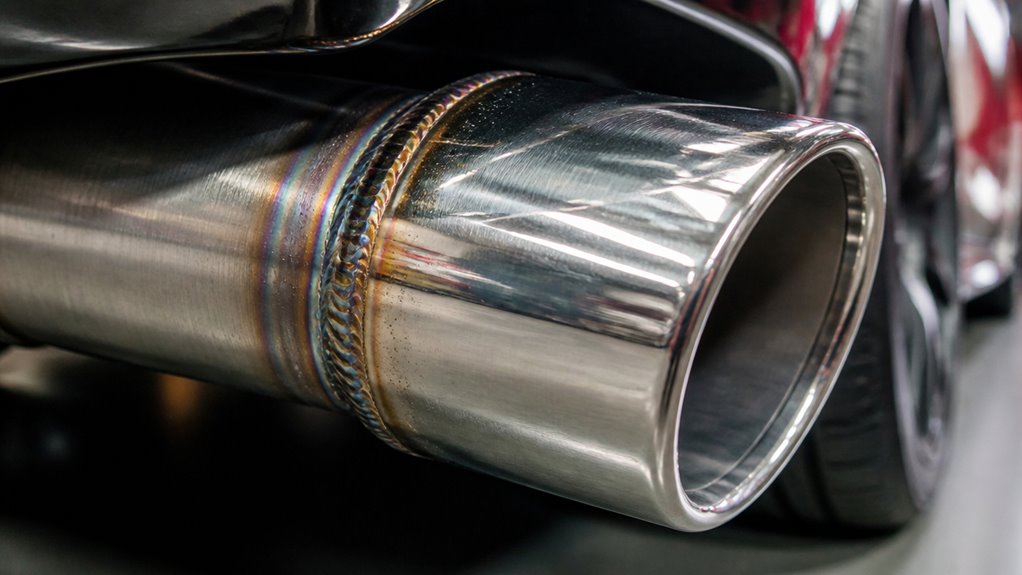
You’ll get a durable, seamless exhaust upgrade with a weld-on exhaust tip, which permanently attaches to your tailpipe via precise TIG welding.
Designed for stainless steel, preferably 304 grade, it guarantees superior corrosion and heat resistance.
Weld-on tips offer a flush fit and enhanced appearance, reducing movement and rattling over time.
Proper fit and clearance are key to a strong, clean weld that lasts.
Explore how material, welding, and installation choices impact your vehicle’s style and performance.
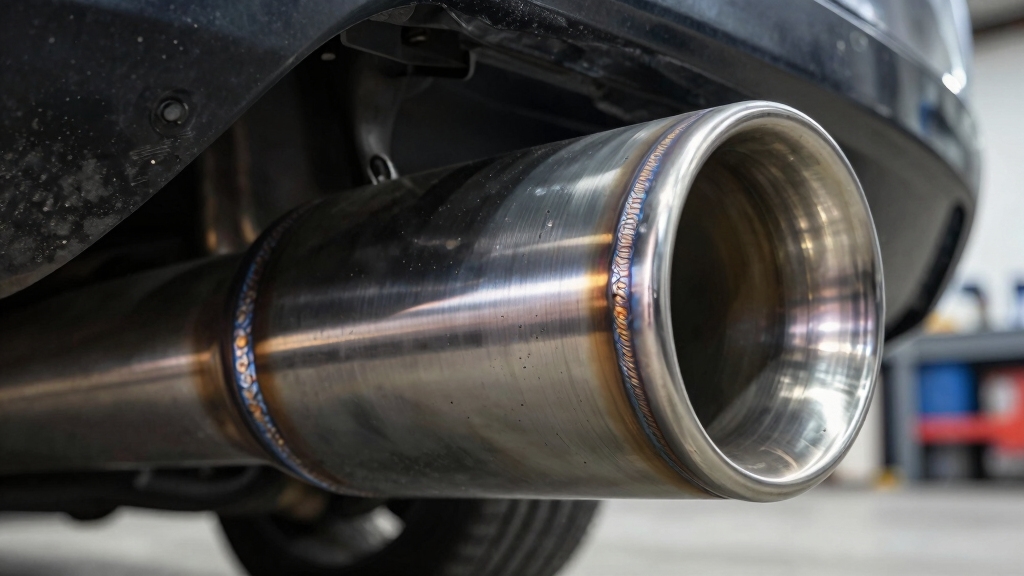
When you weld on an exhaust tip, you’re permanently attaching an accessory designed to enhance your vehicle’s appearance and durability.
Unlike clamp-on tips, weld-on versions fuse directly to the tailpipe, guaranteeing long-term stability and resistance to loosening.
You’ll find weld-on tips available in various sizes, styles, and finishes, often crafted from 304 stainless steel for superior corrosion resistance.
Their design options include single or dual tips with beveled, rolled, or angled cut outlets.
You must guarantee the tip’s inlet diameter matches your tailpipe precisely and confirm clearance around bumpers or trim.
The welding process, typically TIG for stainless steel, requires careful alignment and heat management.
Choosing a weld-on tip means opting for a durable, corrosion-resistant upgrade that offers a cleaner, more integrated look than clamp-on alternatives.
Proper joint preparation and maintaining a consistent root gap are essential for a strong, reliable weld.
Although clamp-on exhaust tips offer easy installation and flexibility, you’ll want to choose weld-on tips when durability and a permanent fit are priorities.
Weld-on tips provide a secure attachment that resists loosening and corrosion better than clamp-on designs. If your vehicle operates in harsh environments or you seek a clean, integrated look, welding guarantees the tip stays aligned and prevents rattling or movement.
Weld-on tips ensure secure, corrosion-resistant attachment, maintaining alignment and preventing rattling in harsh conditions.
Additionally, if your exhaust system requires custom sizing or specific outlet profiles, weld-on tips accommodate tailored fabrication with precise fitment. Conversely, clamp-on tips suit temporary or quick upgrades but can compromise long-term corrosion resistance and stability.
Ultimately, you should select weld-on exhaust tips when you need robust, corrosion-resistant performance and a seamless finish that withstands extended use without adjustment. Proper joint preparation and heat management techniques are essential to ensure a strong, leak-free weld that lasts.
When you’re looking at weld-on versus clamp-on exhaust tips, you’ll definitely notice some key differences in how they attach. Weld-on tips create a permanent bond, which means once they’re on, they’re not going anywhere. On the other hand, clamp-on tips use mechanical fastening, so you can easily take them off or adjust them whenever you want.
Now, let’s talk about durability. Weld-on options usually stand out in this area. They tend to resist corrosion and won’t loosen over time, which is a big plus if you’re looking for something long-lasting.
But, installation is where things really differ. Weld-on tips require a precise fit and some welding skills, so if you’re not comfortable with that, it might be a bit tricky. With clamp-on tips, though, you get the advantage of easy adjustments and removal, making them a more user-friendly option for many.
Stick welding can be a practical choice for exhaust repairs when using the right electrode selection and controlling heat input carefully.
Since weld-on and clamp-on exhaust tips serve similar purposes, understanding their attachment differences is essential for selecting the right option.
Weld-on tips require permanent installation by welding directly to the tailpipe. This ensures a secure, flush fit that alters the pipe’s physical structure. This method demands precise alignment and careful heat management during TIG welding, especially with stainless steel materials.
In contrast, clamp-on tips slide over the tailpipe and secure with mechanical clamps. This allows for easier installation and removal without modifying the pipe.
While clamp-on tips offer flexibility and simpler fitment, they may require periodic retightening.
Your choice depends on whether you prioritize a permanent, seamless attachment (weld-on) or a non-invasive, adjustable solution (clamp-on) suited for temporary or aesthetic needs.
Proper heat control strategy during welding is critical to avoid burn-through and ensure a durable exhaust joint.
Choosing between weld-on and clamp-on exhaust tips impacts not only installation but also the durability and lifespan of the accessory. Weld-on tips create a permanent bond, reducing the risk of loosening or detachment over time.
This is especially important under thermal expansion and vibration. Clamp-on tips rely on mechanical grip, which can weaken with exposure to heat, road debris, and corrosion.
Key durability factors to keep in mind:
Weld-on tips resist shifting and rattling due to a fixed, seamless connection.
Clamp-on tips may corrode or loosen, requiring periodic tightening or replacement.
Stainless steel weld-on tips offer superior corrosion resistance compared to some clamp-on materials.
Welded joints dissipate heat more effectively, reducing stress concentrations that cause premature failure.
Proper surface preparation, including zinc coating removal, is essential to achieve a strong, lasting weld and prevent common issues like porosity and weak joints.
Although both weld-on and clamp-on exhaust tips serve the same basic function, their installation and fitment processes differ markedly.
When you install a weld-on tip, you’ll align it precisely on your tailpipe, ensuring it doesn’t contact plastic or trim. You’ll tack weld first to hold position, then complete the full weld, which offers a permanent, corrosion-resistant bond.
Fitment requires matching tailpipe diameter and checking clearance for bumper cutouts.
In contrast, clamp-on tips simply slip over the tailpipe and tighten with bolts, allowing quicker installation and easier removal but less durability.
Clamp-ons avoid heat-related concerns but can loosen over time.
Weld-on tips demand heat management during welding and careful ground placement. They provide superior long-term stability and a cleaner finish once installed.
Your choice depends on permanence versus convenience. For a secure, non-welded attachment, using clamp sleeve couplers can enhance alignment and joint strength.
When it comes to weld-on exhaust tips, stainless steel is definitely the way to go. Why? Well, it’s all about that amazing corrosion resistance and durability. You really can’t go wrong with it!
Now, when you’re picking a finish, you’ll face a choice between polished and matte. It all boils down to what look you’re after and how much upkeep you’re willing to do. Polished tips can shine bright, but they might require a bit more maintenance to keep them looking fresh.
On the other hand, matte finishes can give a sleek, understated vibe and often hide dirt better. Using inert shielding gases during welding helps maintain the corrosion resistance and quality of stainless steel welds.
Often, weld-on exhaust tips made from 304 stainless steel deliver superior corrosion resistance and durability compared to other materials.
When you choose 304 stainless steel, you get a material that withstands heat cycles and environmental exposure without compromising strength. Its polished finish offers a mirror-like appearance that enhances your vehicle’s look while resisting surface degradation.
You’ll find it easier to weld, especially with TIG processes, ensuring a secure, long-lasting attachment.
Key benefits include:
Selecting 304 stainless steel optimizes both performance and aesthetics for your weld-on exhaust tip installation. Using TIG with DCEN helps achieve precise, clean welds while minimizing heat distortion on stainless steel components.
Since weld-on exhaust tips are exposed to extreme heat, moisture, and road contaminants, corrosion resistance becomes a critical factor in material and finish selection.
Choosing 304 stainless steel is your best bet for long-term protection against rust and oxidation. The finish you pick also affects durability and maintenance.
| Material | Corrosion Resistance | Heat Tolerance |
|---|---|---|
| 304 Stainless | Excellent | Up to 870°C |
| Mild Steel | Poor | Moderate |
| Aluminum | Good | Up to 660°C |
| Chrome-Plated SS | Moderate | Up to 500°C |
| Titanium | Excellent | Up to 1,200°C |
Selecting the right material and finish guarantees your weld-on tip withstands harsh environments without premature failure. Proper shielding gas selection during welding is also essential to maintain corrosion resistance and weld integrity.
Choosing between polished and matte finishes noticeably impacts both the appearance and maintenance of your weld-on exhaust tip.
Polished finishes provide a mirror-like shine that enhances visual appeal but require regular cleaning to prevent oxidation and discoloration.
Matte finishes offer a subdued, modern look and better conceal surface imperfections and dirt, reducing upkeep frequency.
Both finishes typically use 304 stainless steel for corrosion resistance and durability.
When choosing, consider these factors:
Polished finish highlights craftsmanship but demands frequent polishing. Matte finish resists visible scratches and dirt buildup.
Polished surfaces reflect heat more, potentially affecting nearby trim. Matte finishes better tolerate minor weld marks and manufacturing variances.
Select the finish that balances your aesthetic goals with practical maintenance needs for long-term performance.
Proper surface preparation and the use of corrosion-resistant primers can further enhance the durability of the finish on stainless steel exhaust tips.
Measure your tailpipe diameter carefully before selecting a weld-on exhaust tip to guarantee a proper fit. Use calipers for exact measurements, accounting for any irregularities or corrosion.
Accurately measure your tailpipe with calipers, considering corrosion, to ensure a perfect weld-on exhaust tip fit.
Choose a weld-on tip with an inlet diameter matching your tailpipe’s outer diameter, typically ranging from 2 to 3 inches. Make certain the tip’s overall length and outlet diameter suit your vehicle’s design and clearance constraints, especially near bumpers or trim.
Avoid tips that require excessive modification or forceful fitting, as this compromises weld integrity and alignment. Before welding, verify that the tip sits flush and straight on the tailpipe to facilitate a secure, airtight weld.
Proper sizing not only improves aesthetics but also enhances durability and prevents heat damage to surrounding components.
When it comes to choosing between single and dual exhaust tips, you’ll want to think about your vehicle’s exhaust flow and what kind of look you’re going for. It’s not just about performance; aesthetics play a big role, too!
Now, let’s talk about edge profiles. You’ve got options like beveled, rolled, or angled cuts. Each of these can change both how your exhaust looks and how well it performs. So, picking the right combination isn’t just about making it pretty; it’s also key to getting the best performance out of your ride.
While selecting a weld-on exhaust tip, you’ll encounter the choice between single and dual configurations. Each offers distinct visual and performance implications.
Single tips provide a straightforward, clean look and are easier to install. They’re generally suited for standard exhaust systems.
Dual tips create a more aggressive appearance and can enhance exhaust flow when paired with dual pipes. Your choice depends on your vehicle’s exhaust layout and aesthetic goals.
Consider these factors when choosing:
Single tips fit most stock tailpipes and simplify alignment during welding.
Dual tips require precise positioning to ensure even exhaust distribution and symmetry.
Dual tips often increase perceived performance and style but may add weight and complexity.
Material and size compatibility with your existing tailpipe system remains critical for both options.
Weld-on exhaust tips frequently come with various edge profiles that influence both aesthetics and airflow characteristics. You’ll commonly encounter beveled and rolled edges, each offering distinct visual and functional benefits.
Beveled edges provide a sharp, aggressive look and can slightly enhance exhaust gas dispersion. Rolled edges, in contrast, offer a rounded finish that improves durability by reducing sharp edges prone to damage.
Some tips feature angled cuts, adding a dynamic styling element while potentially directing exhaust flow. When choosing between single and dual tips, consider how edge profiles complement the overall design.
Single tips often highlight the edge detail more prominently, while dual tips can balance style with performance. Selecting the right edge profile enhances not only the appearance but also the tip’s integration with your vehicle’s exhaust system.
Choosing TIG welding for stainless steel exhaust tips guarantees precise control over heat input, minimizing warping and preserving material integrity.
This precision is essential when working with thin 304 stainless steel tubes. It ensures a clean, strong weld without compromising corrosion resistance.
TIG welding uses a non-consumable tungsten electrode and an inert gas shield, preventing oxidation during welding.
Its ability to produce narrow, consistent weld beads is ideal for the polished finishes expected in exhaust tips.
Key benefits of TIG welding for stainless steel tips include:
Before you begin installing a weld-on exhaust tip, make certain the tailpipe diameter matches the tip’s inlet.
Verify there’s sufficient clearance from bumpers, plastic trim, and other bodywork.
Position the tip on the tailpipe, ensuring alignment is straight and the outlet clears surrounding components.
Use tack welds to secure initial placement, allowing adjustments before final welding.
Ground your welding equipment properly to maintain a stable electrical circuit.
Proceed with a continuous TIG weld around the joint, minimizing heat input to avoid warping.
After welding, allow the tip to cool gradually; avoid rapid cooling to reduce stress and distortion.
Verify the tip’s clearance again post-weld to confirm no contact with heat-sensitive materials.
This prevents damage or deformation during operation.
What factors should you prioritize when selecting a weld-on exhaust tip to guarantee peak fit and performance? First, make certain the tip matches your vehicle’s tailpipe diameter precisely to avoid installation issues.
Next, consider corrosion resistance. 304 stainless steel offers optimal durability against rust. Also, evaluate clearance around the bumper and trim to prevent contact damage.
Consider corrosion resistance with 304 stainless steel and ensure sufficient clearance to avoid bumper contact damage.
Finally, factor in your aesthetic preference, including outlet shape, edge profile, and finish, to complement your vehicle’s style.
Prioritizing these makes certain a durable, well-fitted, and stylish weld-on exhaust tip.
Once you’ve selected and installed the right weld-on exhaust tip, proper maintenance guarantees it retains its appearance and performance.
Regularly inspect the welds for cracks or corrosion, especially after exposure to road salt or moisture.
Clean the tip using a mild detergent and a soft cloth to remove soot and debris without damaging the polished finish.
Avoid abrasive cleaners that can scratch the stainless steel surface.
Periodically check the fitment and alignment to make certain the tip hasn’t shifted or warped due to heat cycles.
If discoloration occurs, use a stainless steel polish formulated for exhaust components to restore the mirror-like shine.
Finally, make certain surrounding trim and plastic maintain clearance to prevent heat damage, preserving both your tip and vehicle aesthetics.
Yes, weld-on exhaust tips can potentially affect your vehicle’s warranty if the modification causes damage or alters emissions-related components.
Manufacturers may deny warranty claims linked to exhaust system changes, especially if welding affects sensors or the catalytic converter.
To protect your warranty, check your vehicle’s terms and consult the dealer before installation.
Proper installation and using high-quality materials can help minimize risks but won’t guarantee warranty coverage.
Installing a weld-on exhaust tip usually takes about one to two hours. You’ll first align and tack weld the tip to ensure perfect fitment.
Then complete the full weld while managing heat to avoid damage. Precision is key; you’ll need to check clearance and straightness before final welding.
This timeframe includes prep, welding, and cooling, ensuring a durable, precise attachment that lasts.
Yes, weld-on exhaust tips are compatible with aftermarket mufflers as long as you ensure the tip’s inlet diameter matches the muffler’s outlet pipe.
You’ll need to check clearance for surrounding bodywork and bumper cutouts to avoid interference.
Proper alignment before welding is vital for a secure fit.
Since welding alters the pipe permanently, confirm material compatibility and fitment to prevent issues during installation.
When you weld, you suit up like a knight preparing for battle: wear a welding helmet with a proper shade lens to protect your eyes and face from sparks and UV rays.
Use flame-resistant gloves and a long-sleeve jacket to shield your skin.
Don’t forget ear protection and a respirator to guard against fumes.
Proper footwear and a well-ventilated workspace complete your safety gear, keeping hazards at bay throughout the welding process.
You generally can’t remove weld-on exhaust tips without risking damage to the tailpipe since welding fuses the tip permanently.
To detach it, you’d need to grind or cut through the welds, which can harm or deform the tailpipe surface.
If preserving the tailpipe is critical, consider a clamp-on tip instead.
Always use proper tools and care during removal to minimize damage, but expect some level of alteration or repair afterward.
Choosing the right weld-on exhaust tip is like fine-tuning your vehicle’s voice. It shapes performance and style with precision.
By understanding materials, fit, and welding techniques, you’ll secure a durable, sleek finish that withstands heat and time.
Remember, proper installation is your foundation. Neglect it, and your tip’s potential fades like a whisper in the wind.
Stay sharp, follow best practices, and your exhaust tip will roar with lasting confidence.