Phone:
(701)814-6992
Physical address:
6296 Donnelly Plaza
Ratkeville, Bahamas.

Phone:
(701)814-6992
Physical address:
6296 Donnelly Plaza
Ratkeville, Bahamas.

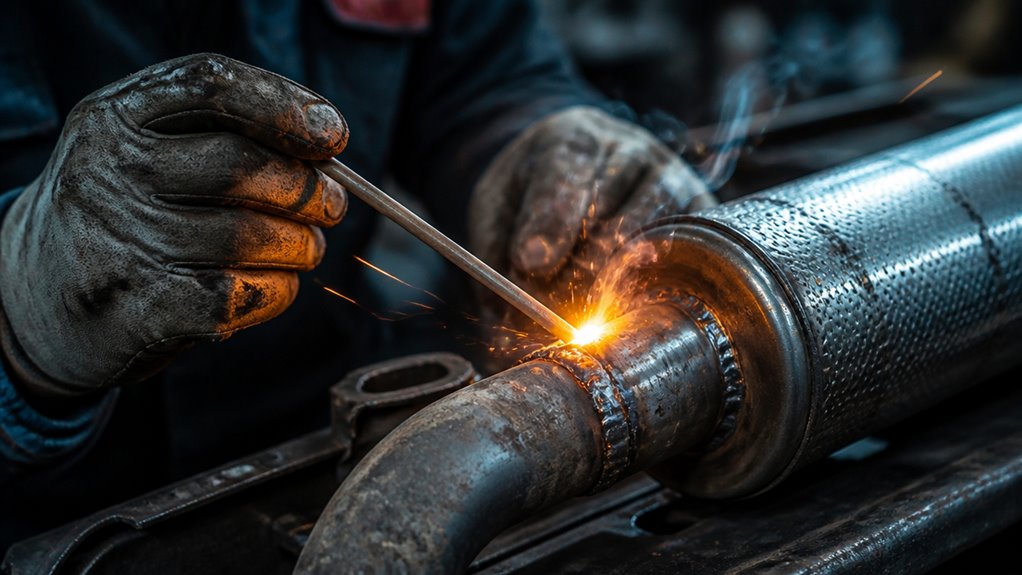
You can stick weld exhaust pipes, especially mild steel and stainless tubing, if you carefully control heat to avoid burn-through.
Use appropriate electrodes: E6013 for mild steel or 308L/316L for stainless.
Prepare joints by removing coatings and ensuring tight fit-up.
Stick welding suits quick repairs and field work but offers rougher welds and higher heat input than MIG or TIG.
To optimize results and decide when replacement is better, understanding electrode choice, settings, and techniques is essential.
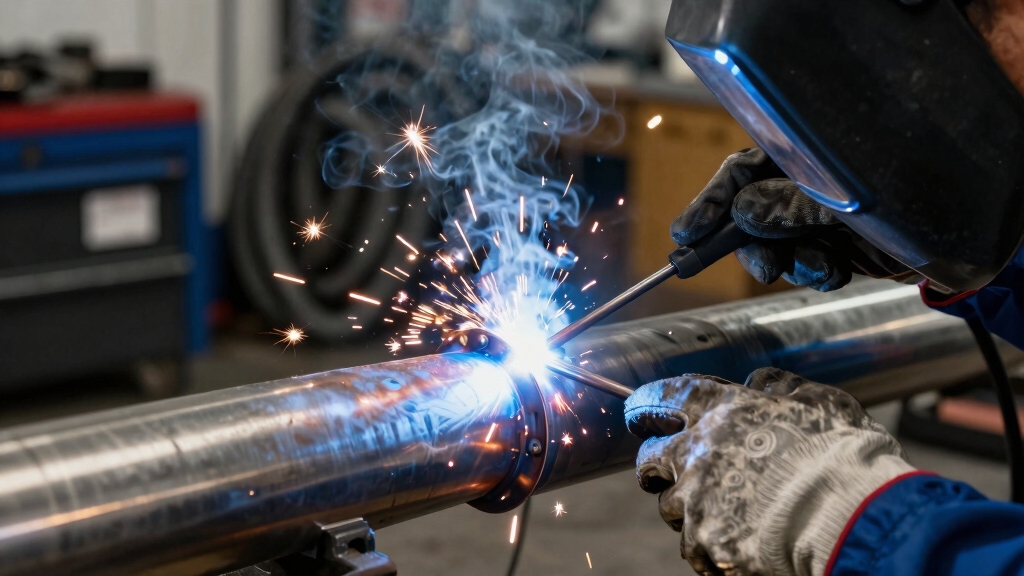
While stick welding isn’t the most common choice for exhaust fabrication, you can use it effectively for exhaust pipe repairs if you handle thin tubing carefully.
Stick welding can be effective for exhaust pipe repairs when thin tubing is handled with care.
Exhaust pipes often have thin walls, so controlling heat input is critical to avoid burn-through. You’ll need to use low amperage settings and short weld segments to maintain material integrity.
Stick welding works best for repair jobs rather than full fabrication because it’s less precise and produces rougher welds compared to MIG or TIG.
Proper joint preparation, with clean and tight fit-up, along with stable arc control, are essential for a successful weld.
Although stick welding can join exhaust tubing, you should weigh its practicality against other methods better suited for cleaner, thinner, and distortion-sensitive exhaust components.
Maintaining a short arc length and controlling travel speed are key techniques to prevent burn-through and ensure proper fusion when stick welding thin exhaust pipes.
You can definitely stick weld common exhaust materials like mild steel, stainless steel, and aluminized steel, as long as you choose the right electrode.
For mild steel, E6013 rods are a great option. They’ve a soft arc, which makes for easier slag removal—pretty handy when you’re working in tight spaces.
Now, when it comes to stainless repairs, you’ll want to use matching stainless electrodes, such as 308L or 316L. These are specifically designed to work with stainless steel, ensuring a strong bond.
And don’t forget, selecting the correct electrode diameter and type is super important. This helps control heat input and prevents burn-through, especially on those thin exhaust pipes. It’s all about getting it just right to make sure your welds are solid!
Always remember to control heat input awareness to prevent burn-through, distortion, and maintain weld integrity on thin metals.
Exhaust pipes commonly consist of mild steel, stainless steel, or aluminized steel, each presenting unique considerations for stick welding.
Mild steel is the easiest to weld, offering good arc control and less risk of cracking.
Stainless steel requires careful heat management to prevent warping and corrosion. Using matching stainless electrodes is essential.
Aluminized steel poses challenges due to its coating, which can burn off and contaminate the weld.
Thorough cleaning before welding is critical.
Because exhaust pipes are thin, you’ll want to use low amperage and short welds to avoid burn-through regardless of material.
Understanding these base metals helps you select appropriate techniques and maintain structural integrity in your stick-welded exhaust repairs.
To ensure a strong weld and reduce harmful fumes, it is important to remove coatings around the weld joint before welding.
Selecting the proper electrode depends heavily on the material of the exhaust pipe you’re working with. For mild steel exhaust pipes, E6013 electrodes are your best bet. They offer a soft arc and easy slag removal, ideal for thin tubing.
When working on stainless steel exhausts, choose stainless-specific electrodes like 308L or 316L to match the base metal. This helps reduce cracking or corrosion. Use smaller diameter rods, like 2.0 to 2.5 mm, to control heat input and minimize burn-through on thin walls.
Aluminized steel can be stick welded with mild steel electrodes but requires extra care due to coatings. Always match your electrode to the base material for durability and weld integrity. Adjust amperage accordingly to avoid warping or holes during welding.
Maintaining precise heat control during welding is essential to prevent burn-through and ensure strong welds on thin exhaust tubing.
Match the electrode to the base metal to guarantee proper fusion and minimize cracking or corrosion. For mild steel exhaust pipes, E6013 electrodes work well due to their soft arc and easy slag removal, especially on thin tubing.
When dealing with stainless steel exhausts, use stainless-specific electrodes like 308L or 316L to maintain corrosion resistance and structural integrity. Choose lower-diameter rods (2.0 to 2.5 mm) to control heat input and reduce burn-through risks on thin walls.
Always confirm electrode polarity recommendations to ensure stable arc starts and peak penetration. Avoid mismatched electrodes, as they can cause weld defects and premature failure.
Additionally, ensure electrodes are clean, dry, and free from moisture to maintain arc stability and prevent weld defects.
Before you strike an arc, make sure the joint surfaces are thoroughly cleaned and properly aligned.
Remove rust, paint, grease, and coatings to guarantee peak arc stability and fusion.
Eliminate rust, paint, grease, and coatings to ensure optimal arc stability and fusion quality.
A tight fit-up minimizes filler use and reduces burn-through risk, especially on thin exhaust tubing.
Use clamps and tack welds to maintain alignment during welding.
Consider beveling edges or creating lap joints if the pipe is damaged.
Focus on these key steps for effective joint preparation:
Proper preparation sets the foundation for a durable, leak-free stick weld on exhaust pipes. Always ensure to inspect welds visually for cracks or gaps before final installation.
Once your exhaust joint is clean and firmly clamped, setting the correct machine parameters becomes essential to preventing burn-through and ensuring a strong weld.
For mild steel exhaust pipes, set your amperage between 60 to 80 amps using a 2.5 mm E6013 electrode, adjusting based on material thickness and fit-up.
Stainless steel requires lower amperage, often around 20 amps with thinner rods, to reduce heat input and avoid warping.
Choose DC polarity according to electrode specs, typically DCEN for softer arcs.
Keep in mind that very low amperage settings may challenge arc stability, so practice and machine quality are vital.
Fine-tuning your settings helps control penetration and slag removal, producing a durable weld while minimizing heat damage on thin exhaust tubing.
Using a flux-coated electrode ensures protective slag coverage that shields the weld from atmospheric contamination during the process.
To prevent burn-through on thin exhaust tubes, it’s really important to keep your amperage low.
You also want to make sure your weld segments are short. This way, you can control the heat input more effectively and avoid overheating, which can lead to holes in the metal.
By using these techniques, you can ensure a solid weld while still preserving the integrity of the thin tubing.
It’s all about finding that balance, right?
Preheating to around 250°F helps slow heat dissipation, improving weld puddle control and reducing the risk of burn-through on thin sections, which is crucial in stick welding aluminum.
Although stick welding exhaust tubing is feasible, managing low amperage settings is critical to ensure burn-through on thin walls.
You need to fine-tune your machine to deliver just enough heat for fusion without damaging the metal.
Follow these practical steps:
Preheating and controlled cooling can also help reduce thermal stresses and cracking risks during welding thin exhaust tubing, especially on cast iron parts, by minimizing thermal shock.
Controlling heat input through low amperage settings is only part of preventing burn-through on thin exhaust tubing. Managing the length of each weld segment plays an equally important role.
You should limit weld beads to short segments, typically no longer than 1 to 2 inches, to avoid excessive heat buildup. After each segment, pause to allow the metal to cool slightly before continuing.
This approach helps maintain the tube’s integrity and reduces distortion. Use a “dab-and-move” technique, applying the electrode briefly then moving forward steadily to prevent lingering heat in one spot.
Overlapping short welds ensures continuous fusion without creating a long, overheated bead. By guaranteeing weld length and timing, you minimize the risk of burn-through while maintaining a solid, reliable joint on thin exhaust tubing.
Additionally, protecting thin metal during welding with low heat input and fast travel speed is critical to avoid warping or burn-through.
Managing heat input is essential when stick welding thin exhaust tubing to prevent burn-through and maintain structural integrity.
You need to control heat precisely to avoid weakening the metal or creating holes.
Here’s how you can do it effectively:
When you compare stick welding to MIG and TIG for exhaust repairs, stick welding offers a straightforward and robust approach, especially for quick fixes and thicker mild steel components.
Stick welding provides a simple, durable solution for quick repairs and thicker mild steel exhaust parts.
It excels in field repairs where portability and simplicity matter, but you must manage heat carefully to avoid burn-through on thin tubing.
MIG welding provides cleaner, faster welds with less slag, making it preferable for thinner and aluminized steel exhaust parts.
TIG welding delivers the highest precision and lowest distortion, ideal for stainless exhaust work demanding superior corrosion resistance and aesthetics.
However, both MIG and TIG require more equipment and skill.
Stick welding’s rougher finish and higher heat input can lead to more warping and porosity, so it’s best for durable, functional repairs rather than cosmetic or high-quality fabrication.
Stick welding can handle many exhaust repairs, but the quality of the weld directly affects the durability and safety of the system.
Common issues include burn-through, incomplete fusion, and slag inclusion. These problems compromise seal integrity and may cause leaks or premature failure.
You should evaluate the damage to decide whether to repair or replace parts. Consider these guidelines:
Prioritize safety and emissions compliance when making your decision.
A stick-welded exhaust repair typically lasts several months to a few years, depending on factors like fit-up quality, heat control, and corrosion exposure.
If you clean surfaces well, control heat to prevent burn-through, and use appropriate electrodes, your repair will hold longer.
However, vibration, heat cycling, and rust can shorten its life. For critical or structural sections, expect shorter durability and consider replacement over repair for safety and compliance.
No, you shouldn’t stick weld exhaust without specialized ventilation.
Welding produces hazardous fumes, especially when working on aluminized or stainless steel exhaust tubing.
Proper ventilation or a fume extraction system is essential to protect your lungs and avoid exposure to toxic gases like metal oxides and welding fumes.
If you can’t guarantee adequate airflow, use a respirator designed for welding fumes.
Work outdoors or in a well-ventilated area to stay safe.
Think of your protective gear as a knight’s armor guarding you in battle.
You’ll want a welding helmet with a proper shade to shield your eyes from sparks and UV light.
Wear flame-resistant gloves and long sleeves to protect your skin from burns.
Respiratory protection, like a mask or respirator, is essential to filter harmful fumes.
Don’t forget ear protection for noise and sturdy boots to guard your feet.
Safety always comes first.
You generally don’t need post-weld heat treatment for typical exhaust pipe repairs, especially on mild steel or aluminized steel.
Exhaust tubing is thin and subjected to cyclic heat, so stress relief isn’t practical or necessary.
However, if you’re working with thicker stainless steel or critical structural components, stress relieving might improve durability.
In most cases, focus on proper welding technique, controlled heat input, and thorough cleaning to guarantee a sound, long-lasting joint.
Weather can be a bit of a dance partner when you’re stick welding exhaust systems.
Cold, damp conditions may cause moisture to cling to your electrodes and metal, leading to unstable arcs and slag issues.
Wind can blow away shielding gases, increasing porosity and weld defects.
To keep your welds strong and clean, work in sheltered areas, store electrodes dry, and adjust your technique to compensate for temperature and humidity variations.
So, yes, you can stick weld your exhaust because who doesn’t love a challenge with sparks flying everywhere? Just remember, it’s not exactly the surgeon’s scalpel of welding methods.
Choose your electrode wisely, prep those joints like a pro, and watch your settings like a hawk to avoid turning thin pipes into Swiss cheese.
If you want perfection, maybe stick welding isn’t your soulmate. But for quick, tough fixes, it’s your reliable sidekick.