Phone:
(701)814-6992
Physical address:
6296 Donnelly Plaza
Ratkeville, Bahamas.

Phone:
(701)814-6992
Physical address:
6296 Donnelly Plaza
Ratkeville, Bahamas.

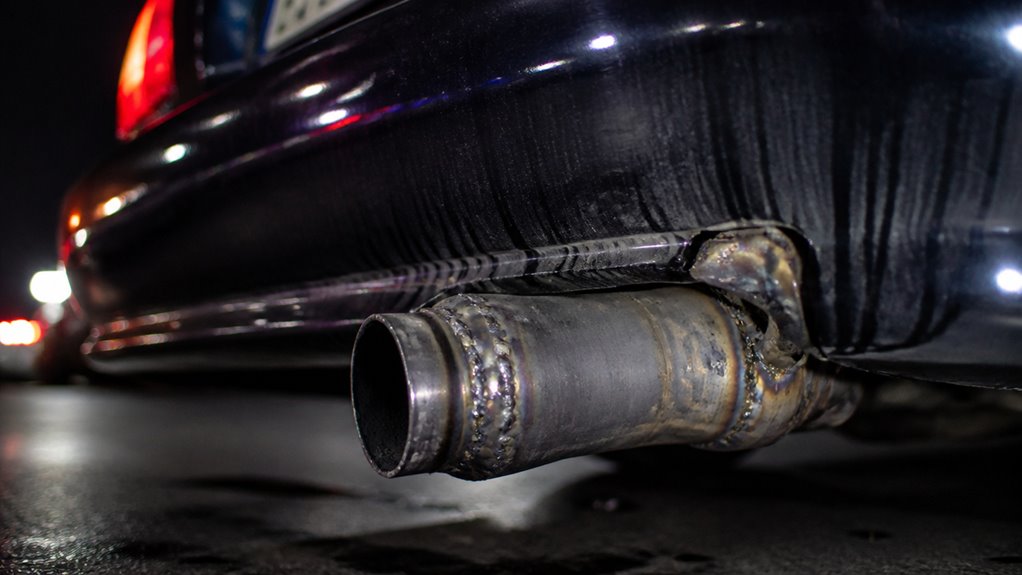
Welded mufflers aren’t inherently illegal, but you risk violating laws if welding alters exhaust flow, increases noise beyond limits, or creates leaks.
Poor welds can amplify sound, cause harmful emissions leaks, and fail inspections. Many states enforce strict noise thresholds and equipment integrity, penalizing both drivers and repair shops.
Welding out sound restrictions or bypassing components often triggers fines and inspection failures. Understanding the nuances of state laws and repair responsibilities will help you stay compliant and avoid penalties.
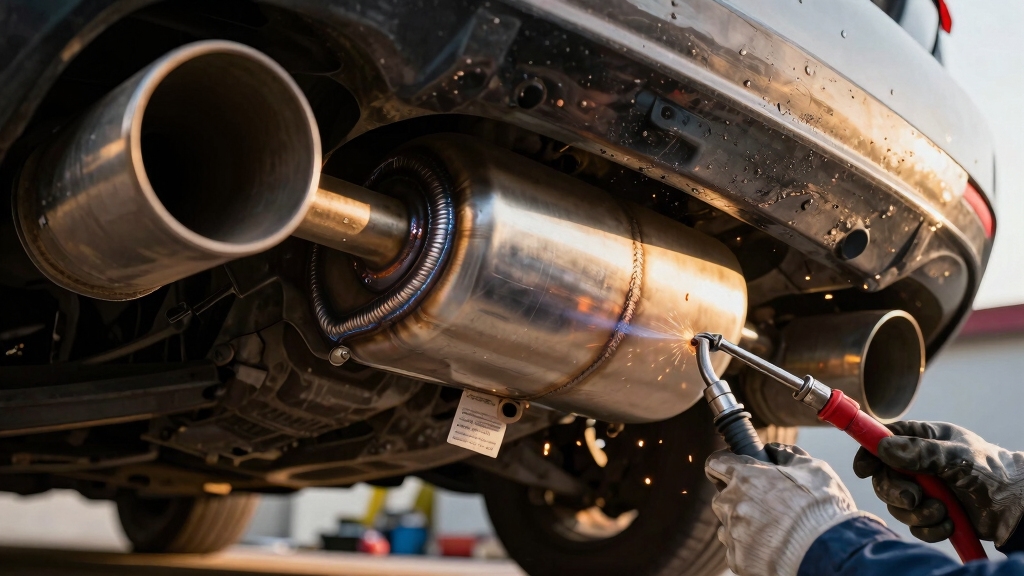
While welding itself isn’t inherently illegal on mufflers, it can affect legality depending on how it alters the exhaust system’s function.
You need to make certain any welded repair maintains the exhaust’s original noise limits and structural integrity.
If welding introduces leaks, bypasses, or cutouts, you risk violating laws targeting equipment modification and noise control.
Enforcement agencies focus on whether the exhaust remains complete, securely fastened, and free from leakage.
Additionally, welding that removes or modifies internal restrictions can increase noise beyond legal thresholds, triggering violations.
Since state regulations vary, you must consider local rules governing noise and equipment conditions.
Ultimately, welding impacts legality by influencing compliance with noise standards, system completeness, and maintenance requirements rather than by its mere presence.
For non-welded repairs, using durable clamping devices can help maintain the exhaust’s structural integrity without risking legal issues.
Welding a muffler can be a tricky business. While it’s often necessary for repairs or modifications, it can also lead to some unintended consequences. For instance, if the welds affect the exhaust flow, you might end up amplifying noise instead of reducing it.
Even small leaks from subpar welding can sneakily raise decibel levels, sometimes pushing them past legal limits. That’s definitely something you want to avoid! So, it’s important to really understand how your welding choices can impact noise output. Keeping this in mind can help you stay compliant with muffler regulations and keep things quiet on the road. Proper heat control strategy during welding is essential to avoid defects that increase noise and reduce muffler effectiveness.
Because welding can alter the internal structure and flow dynamics of a muffler, it often changes the sound profile of your vehicle’s exhaust system.
Welding may remove or bypass key sound-dampening components, causing noise levels to rise above legal limits. You risk creating pressure imbalances and turbulence, which amplify exhaust sound unpredictably.
This noise amplification can trigger enforcement actions if it exceeds regulatory thresholds.
Key noise amplification risks include:
Understanding these risks helps ensure your welded muffler remains compliant and avoids illegal noise amplification.
For a cleaner and legal alternative, consider the clamp-and-hanger method to perform a muffler delete without welding.
In welding a muffler, you risk creating exhaust leaks that markedly alter noise levels. Even minor imperfections in welds can disrupt the system’s integrity, allowing unfiltered exhaust gases to escape prematurely.
These leaks generate abnormal sound profiles, often increasing decibel levels beyond legal thresholds. Unlike intact mufflers designed to attenuate specific frequencies, leaks produce sharp, uneven noises that stand out.
You must understand that such leaks not only amplify noise but may also cause inspection failures if they exceed permissible limits. Additionally, leaks can affect backpressure, potentially altering engine performance and sound output further.
To guarantee compliance, you need precise welding techniques that maintain airtight seals. This preserves the muffler’s original noise reduction characteristics and meets regulatory standards for noise and emissions.
Proper joint preparation and fit-up are essential to prevent leaks and ensure a durable, sealed weld in muffler repairs.
Hey there! Let’s talk about exhaust leaks and how they can really cause some trouble for your muffler.
First off, you should know that exhaust leaks can crank up the noise levels quite a bit. This can push your muffler past those legal limits, and we definitely don’t want that! Many places have rules that classify leaks as equipment failures. This means they can lead to issues with sound or emissions compliance, which can result in failing inspections.
Plus, if you’re not keeping your exhaust system leak-free, you’re opening the door to fines and penalties for noise violations. And trust me, that’s the last thing you want to deal with! So, keeping an eye (or ear) out for exhaust leaks is super important.
Welding creates a permanent attachment that prevents leaks and ensures your exhaust system maintains emissions control integrity.
When exhaust leaks occur in a welded muffler, they often amplify noise levels beyond legal limits, drawing regulatory scrutiny.
You need to understand that even small leaks can substantially increase sound pressure. This causes your vehicle to emit noise noticeably louder than comparable models.
This noise amplification can result from altered exhaust flow dynamics and pressure imbalances caused by imperfect welds or cracks.
Key factors contributing to noise amplification include:
Additionally, repeated heating and cooling cycles can cause thermal fatigue in welds, increasing the risk of leaks that contribute to noise amplification.
Although exhaust leaks may seem minor, legal definitions of such leaks focus sharply on their impact on noise and emissions compliance.
You must understand that any breach in the exhaust system, such as a crack, hole, or poorly welded joint, can cause noise levels to exceed regulated thresholds, leading to violations.
Leaks also risk releasing unfiltered emissions, which contravenes environmental standards.
Legislation typically mandates exhaust systems remain complete, securely fastened, and leak-free to guarantee proper function.
When you weld a muffler, the repair mustn’t create gaps or openings that allow exhaust escape before the muffler’s filtration stage.
Even small leaks can alter sound profiles, making your vehicle noticeably louder and noncompliant.
Consequently, maintaining a sealed, intact exhaust system is essential to avoid legal trouble related to leakage.
Proper welding techniques and surface preparation are critical to prevent porosity and weak joints that can cause leaks and system failure.
Because inspection standards prioritize noise control and system integrity, even minor exhaust leaks from welded mufflers can trigger failure.
When your welded repair compromises the system’s airtightness, it can raise noise levels beyond legal thresholds and allow harmful gases to escape, violating safety regulations.
Inspectors focus on sound output, structural soundness, and leak presence, making any exhaust imperfection critical.
Key inspection failure causes include:
You must ensure welded mufflers maintain noise containment and system integrity to pass inspections and avoid legal repercussions.
Additionally, welding galvanized steel mufflers without proper precautions can release zinc oxide fumes that pose serious respiratory hazards during repairs.
If you remove muffler restrictions by welding out internal components or creating bypasses, you risk violating noise and equipment modification laws in many states. Such alterations often increase exhaust noise beyond regulatory thresholds, triggering legal noncompliance.
Laws focus on preventing excessive or unusual noise, leakage, and incomplete exhaust systems, not welding per se. However, welding that eliminates restrictions frequently results in louder sound profiles, potentially exceeding decibel limits and causing inspection failures.
Additionally, modifications like cutouts or bypasses are explicitly prohibited in some jurisdictions. Enforcement targets whether the exhaust remains properly maintained, securely fastened, and free of leaks.
Consequently, by removing muffler restrictions through welding, you expose yourself to fines, failed inspections, and potential penalties affecting both the vehicle operator and repair facilities. Maintaining compliance demands preserving the original muffler’s noise attenuation and structural integrity.
Non-welded attachment methods with exhaust clamps and sealants can help maintain legal compliance while ensuring a secure and leak-free system.
When you modify your vehicle’s muffler or exhaust system, state laws impose strict limits on noise levels and equipment alterations to prevent excessive or unusual sound emissions. These laws focus on maintaining compliance by regulating noise output, leakage, and equipment integrity.
State laws strictly regulate muffler and exhaust modifications to control noise and ensure system integrity.
Welding repairs become problematic if they alter sound profiles or introduce leaks. You must guarantee your exhaust remains securely fastened, complete, and within noise thresholds to avoid violations.
Key legal points include:
Prohibition of cutouts, bypasses, or devices increasing noise beyond original muffler levels.
Noise limits defined by decibel thresholds or comparative ambient standards.
Requirements for exhaust system completeness and leak prevention.
Enhanced penalties for illegal modifications in some states.
Enforcement through inspections targeting both equipment condition and measured noise output.
Improper welding can also cause UV radiation burns to the skin, highlighting the importance of using proper protective measures even during muffler repairs.
Measuring muffler noise is pretty straightforward. You use standardized sound meters to capture decibel levels while the engine is running under specific conditions.
Then, inspection stations take those readings and compare them to established legal noise thresholds. This helps determine if your vehicle is compliant or not.
If your muffler noise exceeds these limits during official testing, that’s when enforcement actions come into play. So, it’s essential to keep an eye on those noise levels to avoid any trouble!
How do authorities determine whether a muffler’s noise level crosses legal limits? They rely on standardized sound measurement protocols using calibrated decibel meters.
Measurements are taken at specific distances and engine speeds to guarantee uniformity and accuracy.
These objective standards help enforce muffler compliance by quantifying noise output precisely. Key aspects include:
Measuring sound at regulated distances, often 50 cm to 7.5 meters from the exhaust.
Setting maximum allowable decibel thresholds, e.g., 95 dB for certain vehicles.
Conducting tests at standardized engine revolutions per minute (RPM).
Requiring certified equipment and trained inspectors for consistency.
Applying legal limits based on both static and dynamic conditions to capture real-world noise.
This methodical approach guarantees that mufflers meet noise regulations consistently and objectively.
At inspection stations, trained technicians measure muffler noise levels using calibrated decibel meters under standardized conditions to guarantee compliance with state regulations.
They test vehicles at specific engine speeds, typically at idle and at a given RPM, ensuring consistency. The data collected confirms if your muffler noise exceeds legal thresholds or if leaks and modifications impact sound output.
These stations follow strict protocols to prevent errors during measurement.
| Step | Description |
|---|---|
| Calibration | Verify meter accuracy before use |
| Vehicle Setup | Position vehicle under test area |
| Engine Speed | Maintain standardized RPM |
| Noise Measurement | Record decibel levels |
| Compliance Check | Compare readings to legal limits |
You must make certain your exhaust system passes these precise evaluations.
Since muffler noise directly influences legal compliance, authorities enforce strict noise thresholds using standardized measurement protocols.
When your vehicle’s muffler is tested, sound meters gauge decibel levels at specified distances and engine speeds. This ensures consistent, objective results.
These measurements determine if your muffler exceeds legal noise limits, which vary by jurisdiction but often hover around 95 decibels.
Enforcement agencies rely on calibrated equipment and certified inspectors to verify compliance. They focus on whether your muffler remains properly sealed and unmodified beyond factory standards.
If noise thresholds are surpassed, violations trigger fines or penalties.
Though welded mufflers themselves aren’t inherently illegal, you face significant penalties if your repair causes excessive noise or violates equipment standards.
For instance, New York enforces fines up to $1,000 for installing illegal muffler modifications that produce excessive noise.
Initial violations may cost you around $313, escalating to $613 for repeat offenses.
Penalties target both vehicle operators and repair shops, with repair facilities risking loss of their inspection and operating certificates after repeated willful violations.
These penalties reflect the legal emphasis on maintaining exhaust systems that comply with noise thresholds and equipment integrity.
Consequently, when welding alters the exhaust’s sound profile or creates leaks, you risk inspection failure, fines, and potential operational restrictions.
This underscores the need for precise, compliant muffler repairs.
Repair shops shoulder significant responsibility when their muffler repairs lead to violations. If your welded muffler repair results in excessive noise, leaks, or unauthorized modifications, you can face legal consequences alongside the vehicle owner.
Repair shops face legal risks if welded muffler repairs cause noise, leaks, or unauthorized modifications.
Enforcement agencies often hold repair facilities accountable for knowingly installing noncompliant exhaust systems. You must guarantee repairs maintain sound levels within legal thresholds and avoid prohibited alterations such as cutouts or bypasses.
Key points to consider:
Liability extends to shops for willful or negligent installation of illegal mufflers.
Penalties may include fines, loss of inspection certification, or operating licenses.
Shops must verify repairs comply with local noise and equipment standards.
Documentation and inspection protocols help demonstrate compliance.
Repeat violations increase legal and financial risks for your business.
Your diligence directly impacts legal compliance and community safety.
When welding a muffler, you must guarantee the exhaust system remains free of leaks and maintains its original noise level. Avoid prohibited modifications like cutouts or bypasses. To keep your welded muffler legal, ensure all welds are airtight and preserve the muffler’s factory design to prevent noise amplification.
Avoid altering exhaust flow paths or removing sound-dampening components. Regular inspections at certified stations help verify compliance.
| Key Compliance Factors | Recommended Actions |
|---|---|
| Leak Prevention | Use high-quality welds |
| Noise Control | Retain original muffler design |
| Modification Restrictions | Prohibit cutouts/bypasses |
Maintaining these standards protects you from violations and keeps your exhaust system compliant with noise and equipment regulations.
Because muffler welding can affect noise levels and exhaust integrity, states implement distinct laws reflecting their enforcement priorities and thresholds.
You need to understand that legality hinges on whether the welded muffler maintains compliance with noise limits, prevents leaks, and retains original exhaust function.
Some states prioritize noise thresholds; others emphasize equipment condition or inspection protocols.
Here’s how laws differ:
Maine enforces a 95-decibel limit and requires certified inspection stations to verify compliance.
New York sets strict penalties, targeting illegal noise amplification and illegal modifications.
Some states prohibit exhaust cutouts or bypass devices, regardless of welding.
Enforcement may focus on noise measurement or visual inspection of equipment integrity.
Penalties can affect both drivers and repair facilities, emphasizing accountability in muffler modifications.
Knowing your state’s specific standards helps you avoid violations.
Yes, welding a muffler can affect your vehicle’s warranty, especially if it alters the exhaust system’s performance or causes damage.
Manufacturers may void warranty coverage on exhaust-related components if welding leads to leaks, increased noise, or improper function.
To protect your warranty, make certain any welding repairs comply with manufacturer specifications and state regulations.
Always keep documentation proving the work was done professionally and without compromising the exhaust system’s integrity.
You might expect any welding material to work for muffler repairs, but precision matters.
Typically, you need stainless steel or aluminized steel welding rods or wire, matching your muffler’s metal to guarantee durability and corrosion resistance.
Using incompatible materials risks weak joints or accelerated rust, compromising the exhaust’s integrity.
A welded muffler typically lasts less than a new one due to potential weaknesses at weld joints and possible corrosion if not done properly.
While new mufflers use uniform materials and factory-grade seals for durability, welded repairs depend on skill and materials used.
You can expect a welded muffler to last several years if well-executed, but its lifespan often ranges from 1 to 5 years.
This is shorter than a new muffler’s 5 to 10 years.
Can you weld your muffler yourself without breaking laws? Yes, you can, as long as your repair keeps the exhaust system compliant.
This means no leaks, no excessive noise, and no modifications that increase the sound beyond original limits.
You’re responsible for ensuring the weld doesn’t create cutouts or bypasses.
State laws vary, so you should verify local regulations and confirm your welded muffler passes any required inspections to avoid violations.
Welding your muffler typically doesn’t directly affect vehicle emissions or environmental compliance if the repair maintains the exhaust system’s integrity and doesn’t introduce leaks or bypasses.
However, improper welding could alter exhaust flow or cause leaks, potentially impacting emissions control components and triggering compliance issues.
To guarantee environmental standards, you’ll need to confirm that your welded muffler preserves the original emission control functionality and passes state inspection requirements.
Welding your muffler might seem like a quick fix, but it can turn your exhaust system into a legal minefield.
By altering noise levels and causing exhaust leaks, you risk violating state laws designed to keep noise pollution in check.
Think of it as walking a tightrope; one wrong move could lead to hefty fines or repair shop liability.
To stay compliant, always understand your local regulations and opt for professional, approved repairs.