Phone:
(701)814-6992
Physical address:
6296 Donnelly Plaza
Ratkeville, Bahamas.

Phone:
(701)814-6992
Physical address:
6296 Donnelly Plaza
Ratkeville, Bahamas.

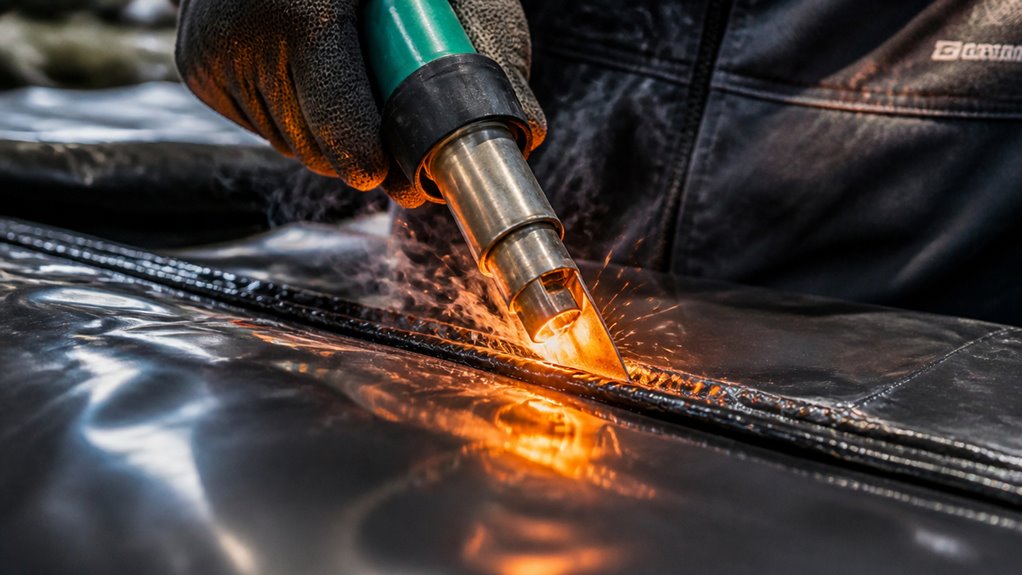
Poly welding fuses thermoplastic pipes by heating their ends to a molten state, then pressing them under controlled pressure to form seamless, molecularly bonded joints without adhesives.
You’ll typically use this on HDPE pipes, aligning and planing ends precisely to ensure strong, leak-proof connections. Methods like butt fusion and electrofusion balance temperature and pressure for peak molecular interlocking.
Proper surface prep and machine calibration are critical to avoid weak spots. Exploring this process reveals essential techniques and quality controls.
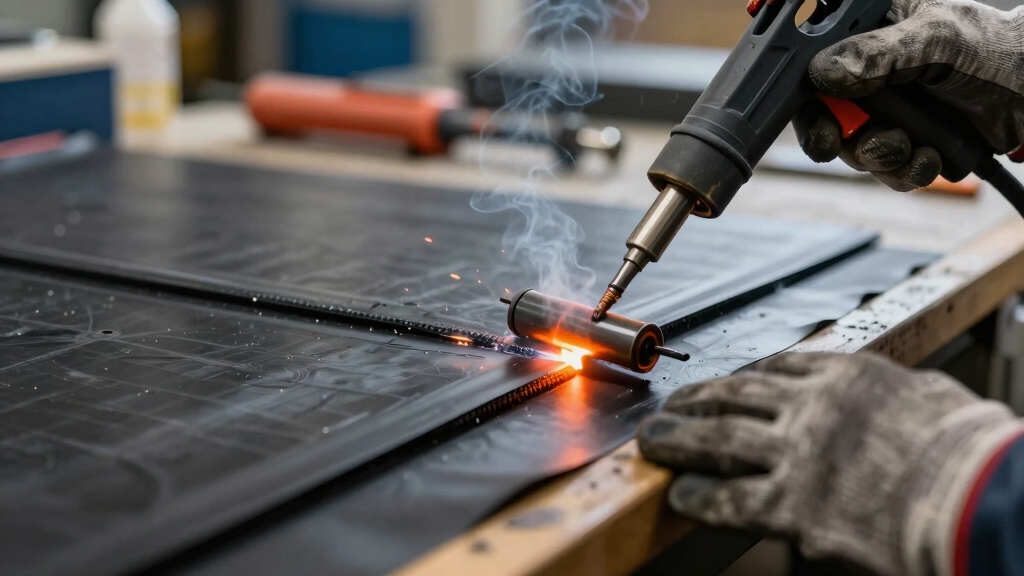
Although poly welding might seem complex at first, it fundamentally involves heating the ends of thermoplastic pipes until they become molten. Then, you press them together under controlled pressure to form a seamless, homogenous joint.
You’ll start by preparing pipe ends through precise planing to guarantee smooth, square surfaces free from contaminants. Depending on the method, typically butt fusion or electrofusion, you’ll heat the pipe ends either directly with a heated plate or via integrated electric coils.
Once molten, you apply regulated hydraulic force to fuse the pipes at a molecular level. This creates a joint as strong as the original material. This process eliminates the need for adhesives or gaskets, relying solely on thermal and mechanical bonding to achieve durable, leak-free connections.
Just as with welding aluminum, selecting the right equipment and technique is critical for ensuring strong, reliable bonds in poly welding.
You know, HDPE and other thermoplastics are really great for welding. It’s all about their molecular structure. These materials have polymer chains that can relax and interlock when you apply heat and pressure. Pretty neat, right?
Another thing to note is their temperature flexibility. They melt around 220°C, which means you can achieve a consistent fusion without worrying about degrading the material’s integrity. That’s essential for getting strong, homogenous joints.
In the end, this precise thermal behavior makes them perfect for durable poly welding applications. So, if you’re considering materials for your project, HDPE and thermoplastics should definitely be on your list!
Additionally, choosing the right welding technique can further enhance joint quality and performance in thermoplastic welding.
Because of their unique molecular structure, HDPE and other thermoplastics excel in welding applications by enabling strong, homogenous joints at the molecular level.
Their long, linear polymer chains align and partially disentangle when heated, allowing chains from opposing pipe ends to interdiffuse and entangle during the molten phase.
This molecular interpenetration creates a weld zone chemically indistinguishable from the base material, ensuring mechanical integrity equivalent to or exceeding the parent pipe.
Additionally, HDPE’s semi-crystalline morphology balances flexibility and crystallinity, promoting molecular mobility without compromising structural strength during fusion.
You benefit from these characteristics by achieving consistent, defect-free welds that resist internal stresses and environmental degradation.
This molecular compatibility and fusion capability make HDPE and thermoplastics ideal for reliable, high-performance poly welding applications across diverse industries.
To maintain weld quality, it is essential to perform proper surface cleaning before welding to prevent contamination that can compromise joint integrity.
When welding HDPE and other thermoplastics, their broad temperature tolerance plays a crucial role in achieving ideal fusion.
These materials soften around 220°C, allowing you to precisely control heat input to reach a molten state without degrading the polymer structure.
This temperature flexibility enables consistent molecular relaxation and interlocking, critical for strong, homogenous joints.
You can apply varying heat levels depending on pipe diameter and wall thickness, ensuring prime weld quality across diverse applications.
Additionally, thermoplastics’ ability to withstand repeated thermal cycles without losing integrity lets you adjust welding parameters dynamically, improving process reliability.
This adaptability minimizes risks of under- or overheating, preserving mechanical properties and enhancing joint durability.
This makes HDPE and similar thermoplastics superior choices for fusion welding applications.
For optimal welding results, maintaining precise control over heat input and shielding gases is essential to prevent defects such as porosity and oxidation.
Although poly welding encompasses various techniques, understanding the primary types is essential for selecting the right method based on pipe size, material, and application requirements.
Butt fusion welding, the most common, uses a heated plate to simultaneously melt pipe ends before pressing them together under hydraulic force. This method suits larger diameters (32mm and above) and thick-walled pipes.
Butt fusion welding melts and joins large-diameter, thick-walled pipes using heat and hydraulic pressure.
Electrofusion welding employs fittings with embedded electric heating coils, ideal for complex joints or repairs. It provides controlled heat localized to the fitting area.
Extrusion welding applies hot air and filler material to join surfaces, typically used for smaller sections or non-standard shapes.
Each technique demands precise control over temperature, pressure, and timing to guarantee molecular interlocking for a homogeneous, leak-proof joint tailored to specific polyethylene grades like PE80 or PE100.
Understanding joint preparation and fit-up is crucial to ensure strong and reliable poly welds.
Before you start welding, it’s really important to plane the ends of the pipes just right. You want to create smooth, square surfaces that will help ensure a strong fusion.
Make sure to clean off any debris or contaminants thoroughly, too. This step is crucial because even tiny bits of dirt can lead to weak joints or even weld failure down the line.
Once everything is cleaned up, go ahead and align the pipes. Don’t forget to clamp them securely! This will help maintain uniform contact and consistent pressure during the welding process, which is key for a solid weld.
Additionally, understanding and controlling the thermal profile during welding helps maintain melt pool stability and weld quality.
Mastering surface planing is essential to guarantee a strong, defect-free weld in poly welding.
You must use specialized rotating planing tools to evenly shave the pipe ends, ensuring surfaces are smooth, flat, and perfectly square.
This precision prevents gaps and uneven contact during fusion, which can cause weak points or leaks.
Adjust the planing tool speed and pressure based on pipe material and diameter to avoid overheating or material deformation.
After planing, inspect the ends for uniform thickness and absence of grooves or ridges, as inconsistencies compromise molecular bonding.
Proper alignment of the planed surfaces is critical; even slight angular deviations reduce fusion quality.
Ensuring secure connections between the welding components during setup also supports overall weld integrity and performance.
Removing all contaminants and debris from pipe ends is essential to guarantee a flawless fusion weld in poly welding.
Before welding, you must thoroughly clean the planed surfaces to eliminate loose shavings, dust, grease, and moisture that could weaken the molecular bond.
Use a clean, lint-free cloth and an approved solvent compatible with polyethylene to wipe the pipe ends.
Avoid abrasive materials that might scratch or deform the surfaces.
Inspect visually to confirm the absence of particles or residues.
Any contamination trapped during fusion can create voids or weak spots, compromising joint integrity.
By meticulously removing debris, you secure consistent heat transfer and uninterrupted molecular interdiffusion during welding.
This produces a homogenous and robust joint that meets stringent quality and safety standards in thermoplastic pipe installations.
Ensuring surface cleanliness before welding is critical to preventing defects and maintaining the strength of the joint.
Although cleaning and planing guarantee pipe ends are ready for fusion, precise alignment and secure clamping are critical to achieving a consistent, high-quality weld.
Misalignment can cause uneven weld beads and weak joints.
Make certain pipes are perfectly butt-ended before heating.
Follow these steps for effective alignment and clamping:
Accurate alignment and clamping prevent weld defects, ensuring molecular fusion produces a reliable, homogenous joint. Controlling heat input and cooling rates is also essential to maintain joint integrity and minimize distortion during welding.
Utilizing poly welding delivers reliable, long-lasting connections essential in various industries where pipe integrity is non-negotiable.
You’ll find poly welding most effective in water distribution networks, where leak prevention and pressure retention are critical.
In gas installations, the method assures safety through fully fused HDPE pipelines resistant to corrosion and stress.
Agricultural irrigation systems benefit from its durable, leak-proof joints that withstand environmental exposure.
Construction projects rely on poly welding for stable infrastructure piping, delivering consistent performance under variable loads.
Industrial settings demand permanent, high-strength bonds for thermoplastic piping handling chemicals or process fluids.
Proper control of welding parameters, including current and pressure, ensures consistent weld quality and durability across applications.
When you compare poly welding to traditional joining methods like adhesives or mechanical fittings, its advantages become clear with respect to strength, durability, and efficiency.
Poly welding creates homogenous joints by fusing molecular chains, ensuring strength equivalent to the pipe itself. You’ll also benefit from reduced installation time since poly welding eliminates curing or setting periods.
Additionally, the process avoids chemical contaminants common in adhesives, enhancing environmental safety.
Key benefits include:
These factors make poly welding the technically efficient choice for demanding piping applications.
Consistently applying rigorous quality control measures is essential to achieving strong, leak-free welds in poly welding.
You must prepare pipe ends by planing to guarantee smooth, square surfaces and remove contaminants that could weaken joints.
Precise machine calibration based on pipe specifications guarantees peak heat and pressure application.
Align clamps accurately to prevent diameter mismatch.
Post-weld, visually inspect joints for uniformity and alignment, confirming molecular bonding integrity.
| Quality Control Aspect | Key Action |
|---|---|
| Pipe End Preparation | Plane and clean surfaces |
| Machine Calibration | Set temperature and pressure |
| Alignment | Guarantee clamps hold pipes square |
| Contaminant Control | Remove shavings and debris |
| Post-Weld Inspection | Check weld uniformity and defects |
Although poly welding offers reliable and robust joints, several common problems can compromise weld quality if not properly addressed. You need to recognize and mitigate these issues to guarantee consistent results.
Ensuring quality in poly welding requires recognizing and addressing common issues for dependable, strong joints.
You can expect a typical poly welding joint to last several decades under normal conditions, often exceeding 50 years.
The molecular fusion creates a homogenous bond as strong as the pipe itself, resisting environmental stress, pressure, and chemical exposure.
Proper surface preparation, correct machine calibration, and adherence to welding parameters guarantee joint longevity.
Failures usually result from poor technique or external damage rather than the weld’s inherent durability.
Think of safety gear as your armor in the heat battlefield.
You should wear heat-resistant gloves to protect your hands from hot surfaces, safety goggles to shield your eyes from sparks and debris, and a long-sleeved flame-retardant jacket to guard your skin.
Use a welding helmet with a proper filter lens for electrofusion.
Make certain to use respiratory protection if ventilation is poor.
Steel-toed boots and hearing protection complete your defense for safe, efficient poly welding.
You can perform poly welding on-site as well as in controlled environments. The process adapts to field conditions, provided you prepare adequately by planning pipe ends, ensuring cleanliness, and calibrating equipment precisely.
On-site welding suits water, gas, and industrial pipeline installations where permanent, leak-proof joints are critical. However, environmental factors like temperature, wind, and dust require careful management to maintain weld quality and safety standards in the field.
You need specialized training and certification to become a poly welding technician. Typically, you’ll complete courses accredited by recognized bodies like the Plastics Pipe Institute or local regulatory agencies.
Training covers equipment operation, welding techniques (e.g., butt fusion, electrofusion), safety protocols, and quality control. Certification requires passing practical and theoretical exams, ensuring you can produce reliable, compliant welds.
Continuous education keeps your skills updated with industry standards and evolving technologies.
Humidity can turn your poly welding job into a nightmare if you’re not careful. Moisture on pipe ends disrupts the molecular fusion, leading to weak, porous joints that might fail under pressure.
You must keep surfaces dry because even slight dampness reduces heat transfer efficiency and weld integrity. Controlling environmental humidity is vital; otherwise, you risk compromised weld strength and increased rework costs, undermining the entire process’s reliability.
Just like a skilled blacksmith forging steel, you’ll find poly welding demands precision and care to achieve strength and durability.
By mastering HDPE and thermoplastic techniques, preparing pipes correctly, and avoiding common pitfalls, you guarantee leak-free, robust joints.
This method, favored in critical applications, outperforms alternatives when done right.
Remember, your welds aren’t just connections; they’re the backbone of a reliable system, built to last under pressure.