Phone:
(701)814-6992
Physical address:
6296 Donnelly Plaza
Ratkeville, Bahamas.

Phone:
(701)814-6992
Physical address:
6296 Donnelly Plaza
Ratkeville, Bahamas.

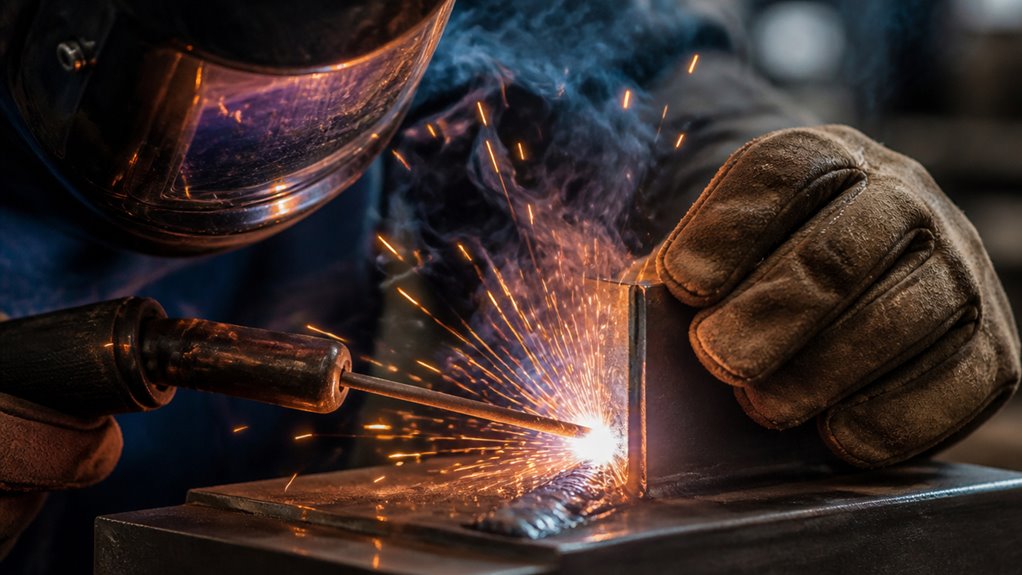
AWS stands for the American Welding Society, a non-profit organization founded in 1919. It sets industry standards and certifications essential for welding professionals like you.
It develops codes, classifications, and training programs to guarantee welding quality, safety, and consistency across sectors such as construction and aerospace.
AWS standards guide material selection, procedure qualification, and certification maintenance. This helps you meet regulatory and performance requirements.
To understand how AWS shapes welding practices and career growth, keep exploring its key roles and benefits.
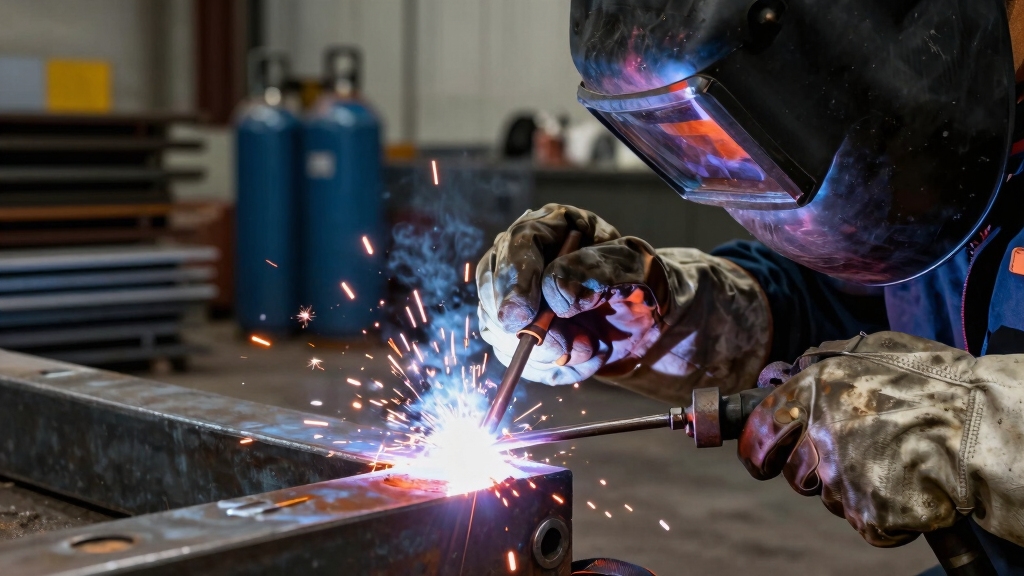
The acronym AWS stands for the American Welding Society, a pivotal organization that shapes welding standards and practices you rely on every day.
Established in 1919 as a non-profit, AWS operates globally from its headquarters in Doral, Florida, serving over 73,000 members through 22 districts and 250 sections.
Founded in 1919, AWS supports a global network of over 73,000 members from its Doral, Florida base.
When you engage with AWS, you gain access to rigorously developed codes, classifications, and certifications essential for quality and safety in welding.
The Society’s structured governance by volunteer officers guarantees standards evolve with industry needs.
Whether you’re selecting filler metals or pursuing certification, AWS’s influence directly impacts your welding performance and compliance.
Recognizing AWS’s role enables you to maintain industry alignment, enhance skill sets, and contribute to uniform welding practices that uphold structural integrity and safety across multiple sectors.
In aerospace welding, certifications like AWS D17.1 ensure welders meet strict quality and regulatory standards essential for safety and performance.
AWS drives innovation and consistency in welding by developing and continuously updating industry standards and technological guidelines. When you rely on AWS, you benefit from precise classifications and rigorous specifications that enhance welding quality and safety.
Here’s how AWS advances welding technology and standards:
Establishes all-encompassing filler metal and electrode classification systems, simplifying material selection.
Develops detailed specifications like A5.18 for solid wires, ensuring repeatable weld performance.
Promotes advanced welding processes across industries such as aerospace and construction.
Provides certification and training programs, equipping you with validated skills and knowledge.
AWS also ensures compliance through WPS and PQR qualification processes that guarantee weld integrity and safety.
You really can’t underestimate the role of AWS in shaping welding codes that ensure safety and consistency across various industries. For instance, take AWS D1.1, which is specifically tailored for steel structures. It lays out clear criteria for welding procedures and materials, making it easier for everyone to follow the same guidelines.
Plus, AWS has a handy classification system for welding wires. This system really simplifies material selection by standardizing designations and specifications. It’s like having a roadmap that helps you choose the right materials without any confusion. Overall, AWS helps welders and industries maintain high standards, which ultimately benefits us all! Additionally, AWS D1.1 specifies requirements for CJP welds to guarantee full joint penetration and structural integrity in critical steel connections.
Although welding practices vary widely across industries, consistent standards are essential for assuring safety, quality, and uniformity. The American Welding Society (AWS) plays a critical role in defining these standards and shaping welding codes that you rely on daily.
When you follow AWS guidelines, you assure structural integrity and compliance with industry norms. Key AWS contributions include:
AWS standards also help guide the proper selection and use of welding processes to ensure optimal weld quality and performance.
Welding wire classification serves as a critical framework for selecting the appropriate filler material in various welding applications.
AWS has developed a systematic code system that clearly identifies welding wires based on their chemical composition, mechanical properties, and usability.
For example, designations like ER70S-3 indicate a solid wire meeting the A5.18 specification, commonly used for mild steel welding.
The “E” denotes electrode, while “R” indicates rod, helping you quickly distinguish between wire types.
This classification guarantees you choose wires that meet strength and performance criteria essential for your project.
By adhering to AWS standards, you maintain weld quality, consistency, and safety, which are vital across industries such as construction, automotive, and aerospace.
Understanding these classifications helps you optimize welding results effectively.
Wire composition directly affects weld quality and mechanical properties, making proper classification essential for optimal performance.
Mastering the essential AWS welding codes is crucial for guaranteeing compliance, safety, and quality in your welding projects.
These codes set the standards you must follow to ensure structural integrity and meet industry requirements.
Focus on these core AWS codes:
Knowing and applying these codes guarantees your welds meet regulatory and safety standards.
This enhances reliability across various industries.
Following the Welding Procedure Specification (WPS) ensures proper adherence to these codes and improves weld quality.
When you’re choosing welding wires, it’s really important to get familiar with AWS classification codes. They play a key role in making sure you’re using the right materials for your projects.
So, AWS has a specific way of designating different types of wires. For instance, they use “E” for electrodes and “R” for rods. This standardization is super helpful because it categorizes wire types based on their composition and performance.
These codes aren’t just for show; they actually provide clear guidance on the properties of the wires. By understanding them, you can achieve consistent weld strength and quality in your work. It’s all about getting the best results!
Additionally, selecting wires with proper chemical composition matching is essential to prevent cracking and ensure weld integrity.
Many welders rely on AWS’s standardized classification system to accurately identify welding wires and electrodes. This system guarantees you can select the correct filler metal for your specific welding application, maintaining quality and consistency.
AWS uses distinct codes to classify wires by composition and mechanical properties, simplifying your decision-making process. Key points to understand about AWS welding wire codes include:
Codes start with “ER” for “Electrode Rod” in solid wires. Numbers following “ER” indicate tensile strength and chemical composition. Additional suffixes specify special characteristics like shielding gas compatibility.
Common examples include ER70S-6, where “70” refers to tensile strength (70 ksi) and “S-6” denotes chemical deoxidizers.
Proper wire selection based on mechanical properties and compatibility with the welding process is essential to achieve strong, defect-free welds.
Understanding AWS electrode and rod designations is essential for selecting the right welding consumables to meet specific project requirements. AWS classifies electrodes and rods using a systematic code beginning with “E” for electrodes and “R” for rods.
These designations specify chemical composition, mechanical properties, and usability. For example, stick electrodes use codes like E7018, where “70” indicates tensile strength (70,000 psi) and “18” refers to coating type and welding characteristics.
Solid wires follow the ER (Electrode Rod) prefix, such as ER70S-6, indicating a solid wire with specific deoxidizers and mechanical properties under specification A5.18. The digits in these codes also inform important aspects such as low-hydrogen flux coating and all-position welding capability, which impact weld quality and handling requirements.
Certification plays an essential role in establishing your credibility and competence as a welder. AWS certification validates your skills against rigorous industry standards, ensuring you meet safety and quality requirements.
It demonstrates your proficiency with welding processes recognized across multiple sectors, including construction and aerospace. Holding AWS certification can differentiate you in a competitive job market by proving your technical expertise.
When you earn AWS certification, you gain:
This certification is essential for maintaining professional integrity and ensuring your work consistently meets established welding standards. Additionally, certifications such as 3G and 4G validate your skills in multiple welding positions, enhancing your adaptability across diverse projects.
AWS empowers welders through thorough training programs and industry-recognized certifications designed to enhance technical skills and advance careers.
AWS provides welders with comprehensive training and certifications to sharpen skills and propel career growth.
You can access AWS SENSE, a comprehensive training system aligned with industry standards. This ensures your foundational knowledge and practical skills meet current welding demands.
AWS Certified Welder programs validate your competence through rigorous testing. This boosts your professional credibility and employability.
AWS also provides continuous education resources, helping you maintain certifications and stay updated on evolving welding technologies and standards.
By engaging with AWS training, you gain structured pathways for skill development. This enables career progression from entry-level to advanced welding roles.
This support system fosters your technical growth, promotes safety adherence, and enhances your marketability within multiple industries relying on precise, standardized welding practices.
When comparing welding standards across North America, you’ll find that the American Welding Society (AWS) and the Canadian Welding Bureau (CWB) serve as the primary authorities, each with distinct requirements and focuses.
AWS standards emphasize uniformity and safety, often targeting structural steel welding with codes like AWS D1.1. In contrast, CWB standards address broader provincial regulations and certification processes within Canada.
Key differences include:
Certification protocols: AWS certifications focus on welder qualification tests. CWB integrates provincial regulatory compliance.
Code application: AWS codes are prevalent in the U.S. CWB codes dominate Canadian industries.
Material specifications: AWS defines filler metal classifications more extensively.
Standard enforcement: CWB enforces certifications through governmental authority. AWS operates as a voluntary standard-setting body.
Understanding these differences helps you navigate welding requirements across borders efficiently.
For welding professionals seeking to advance their skills and career, membership in the American Welding Society offers direct access to cutting-edge industry standards, technical resources, and a global network of experts.
You gain priority access to AWS’s all-inclusive standards like D1.1 Structural Welding Code, essential for maintaining uniformity and safety in your work.
AWS membership also provides exclusive entry to certification programs such as AWS Certified Welder, enhancing your credentials and career mobility.
You’ll benefit from technical publications, webinars, and workshops that keep you up-to-date with evolving welding technologies.
Additionally, the global community of over 73,000 professionals enables valuable networking and knowledge exchange.
AWS supports allied joining processes like brazing and soldering by establishing standards and codes that guarantee quality and safety.
You’ll find AWS provides detailed classifications, specifications, and best practices tailored to these processes.
They also offer training and certification programs to help you master proper techniques and maintain industry compliance.
This all-encompassing support helps you achieve reliable, consistent results in brazing, soldering, and related thermal spraying applications.
You might expect an organization with a global reach to have its headquarters in a major industrial hub, but the American Welding Society (AWS) is actually based in Doral, Florida.
This strategic location supports its leadership in welding science and technology. From here, AWS manages standards, certification programs, and industry advancements.
This ensures you benefit from consistent, high-quality welding practices no matter where you work or what project you tackle.
You’ll find that AWS serves over 73,000 members worldwide. This extensive network includes professionals, educators, and students involved in welding science and technology.
As a member, you gain access to industry standards, certification programs, and technical resources. This enhances your skills and career prospects.
AWS’s global reach guarantees you stay connected with advancements and best practices in welding across diverse industries, from construction to aerospace.
You’ll find the American Welding Society led by a loyal leadership team composed of volunteer officers and directors.
These dedicated decision-makers diligently drive AWS’s direction, ensuring effective execution of its mission.
Their combined commitment cultivates continual advancements in welding science, technology, and standards.
You’ll find AWS promoting welding activities across key industries like construction, automotive, aerospace, and manufacturing.
They drive advancements in welding science and technology tailored to these sectors.
By setting standards and supporting allied processes, AWS guarantees welding quality and safety meet industry demands.
Whether you’re working with structural steel or high-tech aerospace components, AWS’s influence helps maintain consistent, reliable welding practices that boost your project’s integrity and performance.
Now that you know AWS stands for the American Welding Society, you see why it’s crucial for your welding career.
Like a trusty pocket watch guiding a craftsman, AWS sets the gold standard for codes, certifications, and training that keep your skills sharp and industry-relevant.
By aligning with AWS, you guarantee your work meets rigorous quality benchmarks, boosting both safety and professional growth in today’s advanced welding landscape.