Phone:
(701)814-6992
Physical address:
6296 Donnelly Plaza
Ratkeville, Bahamas.

Phone:
(701)814-6992
Physical address:
6296 Donnelly Plaza
Ratkeville, Bahamas.

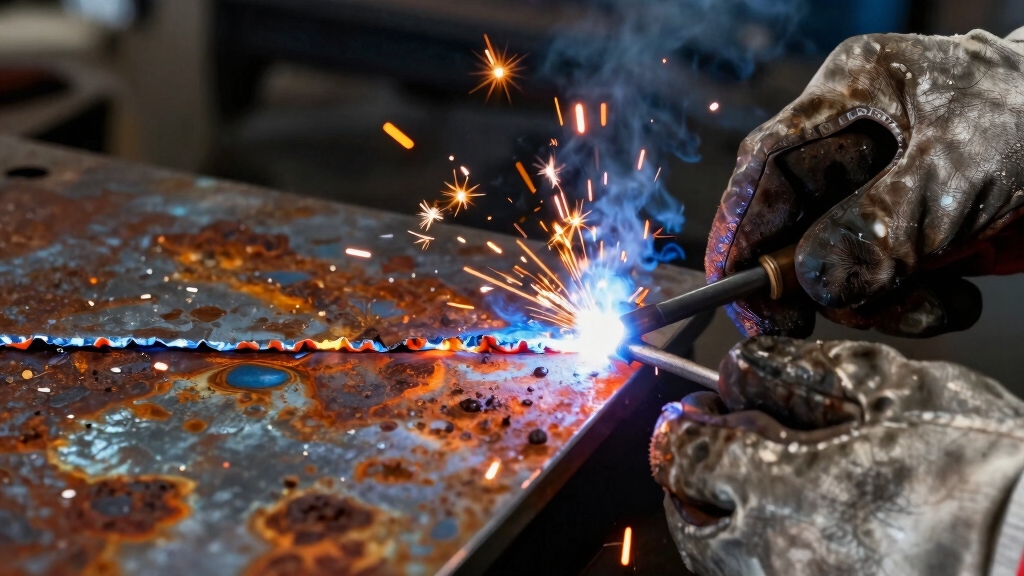
You can weld rusted metal, but only if you properly prepare the surface and confirm the metal’s integrity.
Light rust can be handled with stick or flux-core welding, while severe corrosion, thin, or brittle metal should be replaced for safety.
Rust causes contamination that weakens welds and creates defects, so grinding and cleaning are essential.
Choosing the right welding process and techniques helps prevent porosity and burn-through.
Understanding these factors guarantees strong, reliable joints and safer repairs ahead.
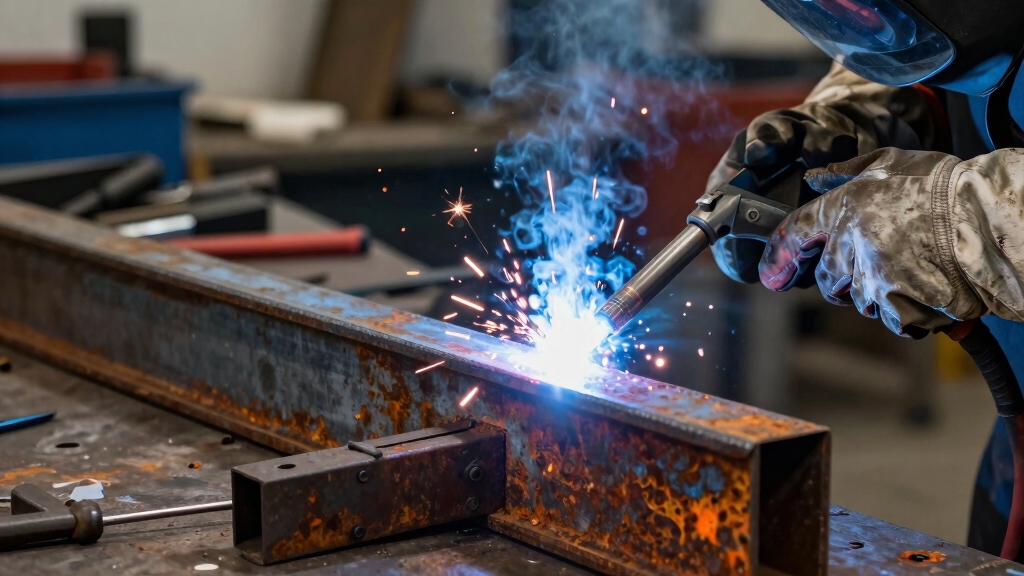
While welding rusty metal is possible with proper techniques, you need to understand the risks and limitations involved.
Light surface rust can be welded using forgiving processes like stick or flux-core welding, which burn through minor oxidation effectively.
However, heavy rust demands thorough preparation, grinding off scale and cleaning the surface to avoid weld defects such as porosity and weak fusion.
You must avoid welding severely corroded or thin, brittle metal, as its structural integrity is compromised.
Additionally, welding rusted metal increases the likelihood of undercuts, unstable arcs, and warpage, especially with MIG or TIG processes.
For safety and durability, replace extensively rusted components rather than weld them.
You should always assess the metal condition carefully before deciding if welding rusted metal is safe and effective for your project.
Porosity caused by contaminants like rust can significantly weaken the weld, making porosity prevention essential in welding rusty metals.
Rust complicates welding by introducing contaminants that weaken the weld’s strength and reduce overall quality.
When you weld rusty metal, oxygen and iron oxides interfere with proper fusion, causing defects that compromise the joint.
Oxygen and iron oxides in rust disrupt fusion, leading to defects that weaken the weld joint.
Here’s why rust makes welding tricky:
To maintain strength and quality, you must prepare the surface thoroughly and adjust your technique to mitigate these effects.
Ignoring rust’s impact leads to unreliable, low-quality welds prone to failure.
Proper surface preparation includes removing rust with tools like a wire brush or fine-grit sandpaper to protect the zinc coating and improve weld quality.
You really want to steer clear of welding rusted metal when its structural integrity is compromised.
Severe corrosion can weaken the base material, which puts your weld at risk of failure.
Plus, if you’re dealing with thin, pitted metal, that’s a whole other ballgame.
It’s especially vulnerable to warping, burn-through, and distortion during the welding process.
In situations like these, it’s often safer and more reliable to just replace the metal instead of trying to make a weld work.
Additionally, improper surface preparation and contamination from rust can lead to porosity and other weld defects that compromise joint strength.
Because welding relies on sound base metal to form strong joints, you should avoid welding rusted metal when corrosion has compromised its structural integrity.
Corroded metal weakens the weld’s foundation, increasing the risk of cracks, porosity, and premature failure.
You need to assess these factors carefully:
If any of these conditions exist, replacing the component often guarantees safety and durability.
Attempting a weld repair on compromised metal is usually not advisable. Proper preheating techniques can sometimes mitigate welding defects but require careful application to be effective.
Handle thin, rusted metal with caution, as its reduced thickness and brittleness can cause warping, burn-through, or weak welds that compromise joint strength.
When metal is thin and heavily rusted, the heat from welding can quickly penetrate, leading to holes or distortion.
Avoid welding if you notice significant pitting or loss of cross-section; these conditions increase the risk of structural failure.
Minimal grinding helps preserve thin metal, but thorough cleaning is essential to reduce porosity and ensure proper fusion.
Processes like TIG require spotless surfaces, while stick welding offers better penetration on light rust.
Ultimately, if the metal is too thin or brittle, replacing the part is safer and more reliable than attempting a weld that may not hold under load or stress.
Using backing bars or heat sinks can help absorb excess heat and stabilize thin rusted metal during welding to reduce burn-through risk.
When corrosion has markedly compromised metal thickness and integrity, welding becomes highly unreliable and unsafe.
You should avoid welding rusted metal when severe corrosion creates risks that outweigh potential benefits.
Consider these key points:
In these cases, preparing and welding rusted metal isn’t practical.
Instead, replacing severely corroded sections prevents weak welds and safety hazards that arise from compromised base metal.
Additionally, welding on compromised metal can increase the risk of porosity and blowholes due to trapped contaminants.
Preparing rusted metal for welding demands thorough cleaning and careful surface assessment to guarantee a strong, reliable joint.
Start by grinding off heavy rust and pitting to expose solid, uncontaminated metal. Use a wire brush or grinder to remove scale and loose rust without excessively thinning the base metal.
Next, clean the surface thoroughly with a solvent to eliminate oils, dirt, and debris, especially if you plan TIG welding, which requires a spotless surface.
Assess the metal’s thickness and integrity. Severely pitted or brittle sections may need replacement instead of welding.
Before welding, burn off any remaining light rust by running a test bead or preheating to minimize porosity and weak welds.
This preparation secures sound fusion and reduces risks like undercut and porosity during welding.
Additionally, employing local exhaust ventilation during welding reduces hazardous fumes and protects welder health.
When you’re dealing with rusted metal, stick welding really shines. It’s great at burning through light rust, which makes it a go-to option in a lot of situations. You don’t have to worry too much about cleaning the surface beforehand, which is a huge plus.
On the other hand, flux-core welding is also a solid choice. It’s forgiving when it comes to surface contaminants, meaning you can skip some of the extensive prep work without compromising the quality of your welds. That’s pretty handy, right?
Now, if you’re thinking about TIG welding, just keep in mind that it demands a spotless surface. So, while it’s super precise, it mightn’t be the best fit for rusty materials. It can be a bit limiting in that regard.
Stick welding’s ability to tolerate dirty, rusty, or painted surfaces while maintaining strong, reliable welds makes it especially useful in fieldwork and outdoor repairs.
Choose stick welding (SMAW) for rusted metal because it effectively burns through light rust and scale, providing strong penetration where other processes may struggle. This makes it ideal for tackling surface contaminants without extensive cleaning.
When you use stick welding, keep these advantages in mind:
To improve results on rusted metal, use cellulose-based flux electrodes like E6010 for their deep penetration and cleaning action in vertical welding positions.
Flux-core welding (FCAW) handles surface contaminants like rust with impressive tolerance. This makes it a reliable choice for metal with moderate corrosion.
You’ll find FCAW’s flux core generates shielding gas and slag that protect the weld pool from oxygen and nitrogen. This reduces porosity caused by rust.
The process allows you to weld without extensive pre-cleaning, saving time on preparation. FCAW’s high deposition rate and deep penetration help you burn through light rust layers while maintaining weld integrity.
It also performs well outdoors or in drafty conditions where MIG struggles. However, heavy corrosion still requires grinding to prevent weak welds.
Use FCAW when you need a robust, efficient solution for moderately rusted metal. Additionally, FCAW’s self-shielding flux core eliminates the need for external gas, making it practical for outdoor or windy environments.
TIG welding demands an impeccably clean surface, making it less forgiving for rusted metal compared to other processes.
If you try TIG on rust, you risk porosity, weak welds, and unstable arcs. Here are key limitations to keep in mind:
Use TIG only when surface conditions are near perfect and precision is critical.
Mastering the technique to burn through rust involves running a hot, digging arc that effectively melts the oxide layer without trapping oxygen.
Use cellulose rods or stick welding to generate enough heat and a digging action to break through rust and scale. Pre-burn the weld area slightly before laying the bead to reduce porosity caused by residual oxides.
Maintain a steady, focused arc to avoid undercut and prevent slag entrapment. After welding, chip off slag to expose the clean weld toe and visually confirm full penetration.
Avoid welding thin, heavily rusted metal without preparation, as trapped gases cause pinholes. Controlling your travel speed and amperage precisely prevents porosity and guarantees a sound weld through rusted surfaces.
After successfully burning through rust and minimizing porosity, focus shifts to protecting thin or pitted metal from distortion and damage during welding.
Thin metal heats quickly, increasing warpage risk and burn-through.
Pitted surfaces weaken structural integrity. To protect the metal, follow these key steps:
These techniques help you maintain metal strength and shape, reducing the chances of weld failure caused by excessive heat or metal thinning during the welding process.
When welding rusted metal, you’ll often encounter issues like porosity, weak welds, and unstable arcs caused by trapped oxygen and contaminants. To fix these, you must prepare properly and control your welding parameters.
For example, grinding off heavy rust, pre-burnishing the area, and using flux-core or cellulose rods can improve weld quality. Watch for undercut and burn-through, especially on thin metal, and adjust amperage accordingly.
| Issue | Cause | Fix |
|---|---|---|
| Porosity | Trapped gases in rust | Pre-burn, grind rust, use digging arc |
| Weak welds | Oxygen contamination | Clean surface, use flux-core rods |
| Unstable arc | Surface contaminants | Thorough cleaning, adjust wire feed |
Addressing these guarantees stronger, more reliable welds on rusted metal.
Although welding rusty metal can sometimes be a viable repair method, you should opt for replacement when corrosion severely compromises the metal’s structural integrity or thickness.
Welding thin, brittle, or heavily pitted metal often leads to weak, unsafe joints prone to failure. Instead, consider replacement in these situations:
Choosing replacement guarantees long-term reliability and avoids hidden weld defects like porosity or undercut.
It also maintains safety standards.
Welding rusted parts is a temporary fix at best when metal degradation crosses these thresholds.
Humidity increases the risk of weld defects when you work on rusted metal.
Moisture promotes hydrogen absorption, leading to porosity and cracking in your welds.
It also worsens surface oxidation, making it harder to achieve a clean weld pool.
To minimize issues, you should preheat the metal, use proper shielding gas, and store materials in dry conditions.
Controlling humidity helps you maintain weld strength and prevents compromised structural integrity.
Welding rusted metal outdoors in rain isn’t advisable.
Imagine trying to write with a soaked pen. Your weld’s quality suffers just as much.
Moisture causes unstable arcs, porosity, and weak bonds, especially on rusted surfaces.
If you must, use a shelter and dry the metal thoroughly before welding.
Otherwise, wait for dry conditions to ensure a strong, reliable weld and avoid safety hazards from unpredictable arc behavior in wet environments.
You should wear a welding helmet with a proper shade to protect your eyes from intense light and flying sparks.
Use flame-resistant gloves and a long-sleeve jacket to guard your skin against burns and UV exposure.
Respiratory protection like a mask or respirator is essential since welding rust releases harmful fumes and particulates.
Don’t forget sturdy boots and ear protection to shield yourself from sparks, noise, and hot metal debris during the process.
Like waiting for toast to cool just right, you should let rusted metal cool for at least 15 to 30 minutes after welding before handling.
This guarantees the metal stabilizes and reduces the risk of burns or warping.
For thicker sections, cooling might take longer.
Always use gloves and check the temperature with a non-contact thermometer to avoid injury and preserve weld integrity during post-weld handling.
Yes, welding rusted metal does emit harmful fumes. The rust (iron oxide) vaporizes during welding, releasing iron oxide fumes that can irritate your respiratory system.
Additionally, contaminants trapped in rust can produce toxic gases. You should always use proper ventilation and wear a respirator rated for welding fumes.
Avoid breathing in the smoke directly, as prolonged exposure increases health risks like metal fume fever and lung irritation.
Welding rusted metal isn’t impossible, but it’s far from straightforward. If you skip proper prep, you risk weak, porous welds that could fail unexpectedly.
You’ll need to remove rust carefully, choose the right process, and protect thin areas to guarantee strength.
Sometimes, no matter how skilled you are, the damage is too severe. Knowing when to weld and when to replace could save you from costly mistakes down the line.