Phone:
(701)814-6992
Physical address:
6296 Donnelly Plaza
Ratkeville, Bahamas.

Phone:
(701)814-6992
Physical address:
6296 Donnelly Plaza
Ratkeville, Bahamas.

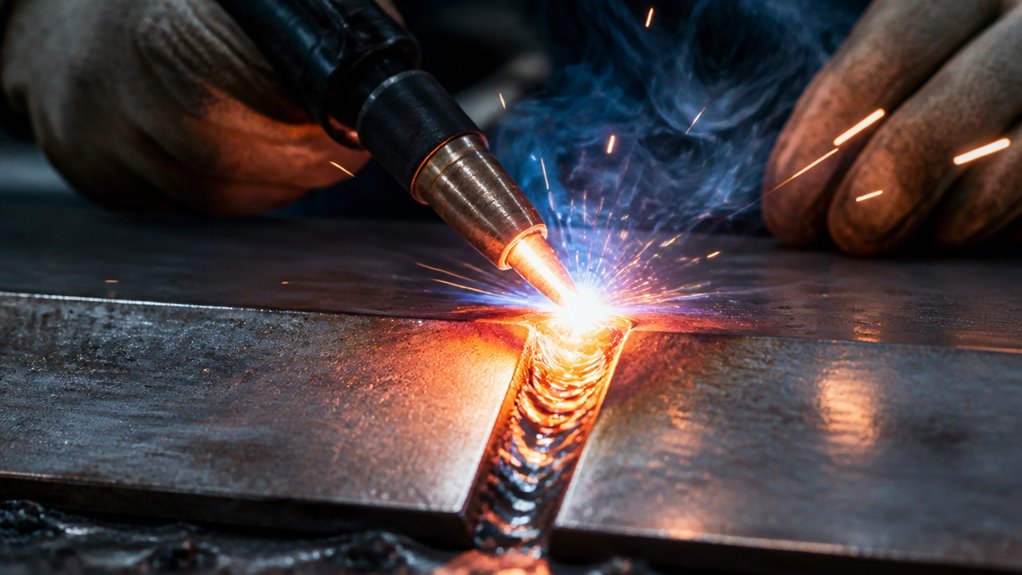
Autogenous welding joins metals by melting only the base materials, without adding filler metal.
You’ll need precise heat control and tight joint fit-up to guarantee proper fusion and avoid defects.
This process produces welds identical in composition to the parent metal, maintaining corrosion resistance and conductivity.
It’s ideal for clean-fusing materials like stainless steel and titanium with controlled geometry.
If you want to understand its benefits, challenges, and best applications, there’s more to explore.
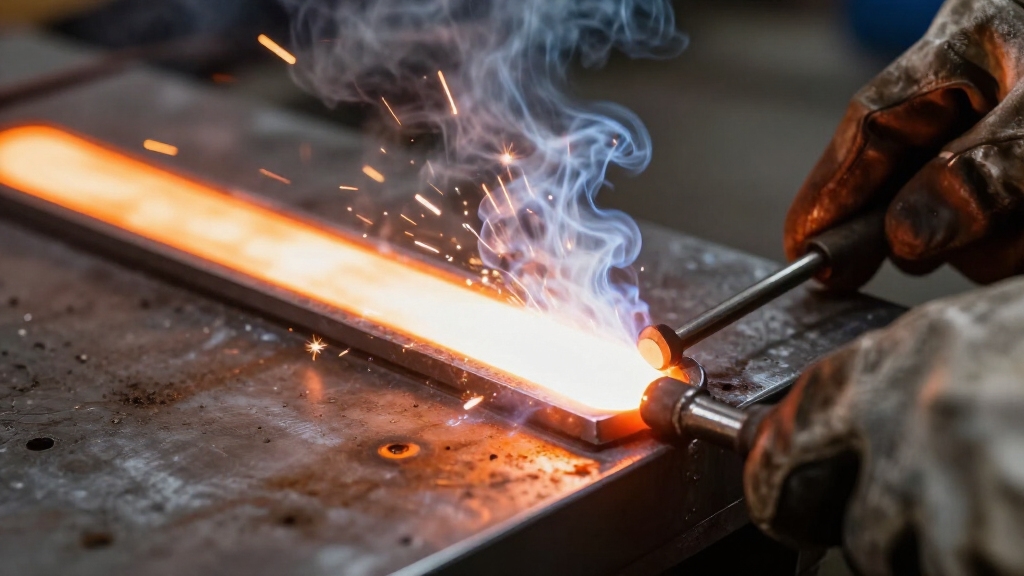
In autogenous welding, you join metals by melting only the base materials without adding any filler metal. You heat the joint edges until they liquefy and fuse, allowing the molten base metals to coalesce and solidify into a seamless bond.
This process demands exact joint fit-up, as gaps beyond tight tolerances can cause defects or incomplete fusion. You must control heat input precisely to guarantee proper melting without excessive distortion.
The absence of filler material simplifies the operation but requires careful preparation of the base metals and joint geometry. Autogenous welding is commonly applied in high-precision contexts like orbital GTAW or laser welding, where the base metal itself provides all weld metal. This guarantees composition consistency and minimizes contamination risk.
Because autogenous welding requires precise control and clean conditions, it shares similarities with TIG welding‘s need for advanced skill and shielding gas to achieve flawless welds.
Mastering autogenous welding means understanding its distinctive characteristics that set it apart from other fusion welding methods.
You rely solely on melting the base metals without adding filler material, which guarantees the weld’s composition matches the parent material exactly.
This demands tight joint fit-up and precise control over heat input, as gaps beyond allowable limits risk weld failure.
The process simplifies operation since you eliminate filler handling, but it requires exact machining accuracy.
Heat input tends to be concentrated, especially in laser autogenous welding, resulting in a narrow heat-affected zone.
Consequently, you achieve strong joints with reduced distortion potential, provided the base metals fuse cleanly.
You must also recognize that this method suits materials and joint designs amenable to direct fusion without reinforcement.
The narrow heat-affected zone minimizes distortion and preserves base material integrity for durable welds.
Though autogenous welding demands tight fit-up and precise heat control, its advantages in precision applications are significant.
Autogenous welding requires exact fit-up and heat control but offers remarkable precision benefits.
You benefit from reduced process complexity since no filler material requires handling, minimizing contamination risk.
The weld composition matches the parent metal exactly, preserving corrosion resistance and electrical conductivity.
In laser-based autogenous welding, you achieve high welding speed and thermal efficiency, while a narrow heat-affected zone limits distortion.
This precision makes it ideal for thin-section and high-purity assemblies.
Additionally, the absence of filler metal simplifies quality control and enhances repeatability, especially in automated setups.
The narrow heat-affected zone characteristic of laser welding also helps preserve base metal mechanical properties, enhancing weld durability.
Because autogenous welding relies solely on the base metal, you must maintain extremely tight joint alignment and machining accuracy to avoid weld failure.
The process is highly sensitive to gaps or misalignment, limiting its use to joints with precise fit-up.
You’ll also find that controlling heat input is critical; too much or too little can compromise weld quality.
Thickness range restrictions and the inability to add reinforcement restrict the method’s applicability.
Additionally, surface preparation must be meticulous to prevent defects.
Key challenges include:
Understanding these limitations helps you decide when autogenous welding is appropriate. Preheating and controlled cooling are often necessary to manage thermal stresses and prevent cracking in sensitive base metals during autogenous welding, especially in cast iron and steel joints, due to their thermal expansion differences.
When selecting materials and joint types for autogenous welding, you need to prioritize those that fuse cleanly without requiring additional filler metal.
Materials with consistent chemical composition and good weldability, such as stainless steel, titanium, and certain aluminum alloys, work best.
These metals allow you to achieve homogenous fusion and minimize defects.
For joint types, butt and lap joints with tight fit-up are ideal because the process demands minimal gaps to guarantee full penetration and fusion.
You should avoid joints with uneven surfaces or excessive gaps, as the absence of filler metal limits your ability to bridge imperfections.
Precision-machined edges and controlled joint geometry are critical to prevent weld discontinuities.
To summarize, autogenous welding excels when applied to well-prepared, gap-minimized joints in weldable, uniform metals.
Maintaining exceptional shielding during the process is essential to prevent contamination and preserve weld integrity.
Many industries rely on autogenous welding for applications requiring high precision and material integrity. This process is indispensable when you need joints free from filler contamination and minimal thermal distortion.
Its precision makes it ideal for tightly controlled environments where joint fit-up is critical.
The precision of autogenous welding is perfect for environments demanding exact joint alignment and fit-up.
When you apply autogenous welding, consider these industries and applications:
The ability to achieve minimal heat-affected zones in autogenous welding helps preserve the base material properties critical for these demanding applications.
Autogenous welding often reduces costs since you don’t need to buy filler materials. You also save on handling and feeding equipment, simplifying the process.
However, you might face higher expenses in ensuring precise joint fit-up and machining, which are critical here. If you require tight tolerances or specialized equipment like lasers, initial investments rise.
You’ll need to focus on precise joint fit-up and control heat input carefully to avoid defects unique to autogenous welding.
Since no filler metal is used, contamination risks shift primarily to base material cleanliness.
Guarantee excellent ventilation because concentrated heat sources like lasers produce intense UV radiation and fumes.
Also, tightly control alignment to prevent gap-related failures.
Protective gear must shield you from high-intensity arcs and laser exposure specific to this process.
You can automate autogenous welding for large-scale production by integrating precise joint fit-up, consistent heat control, and robotic handling.
You must make certain tight tolerance in part alignment, maintain stable welding parameters, and monitor the process continuously.
Automation excels in orbital GTAW and laser welding setups, delivering repeatability, speed, and minimal contamination.
However, you’ll need advanced sensors and feedback systems to manage gap sensitivity and maintain quality across high-volume runs.
You’ll find nondestructive testing methods like ultrasonic testing (UT) and radiographic testing (RT) most effective for inspecting autogenous welds. These detect internal flaws without damaging the weld.
Visual inspection guarantees surface integrity, while dye penetrant testing highlights surface cracks.
Because autogenous welds require tight fit-up and precise fusion, you’ll want to combine these methods to thoroughly assess weld quality.
This ensures the absence of porosity, cracks, or incomplete fusion.
You should know that ambient humidity above 60% can increase weld porosity by up to 25% in autogenous welding.
Moisture and contaminants in the environment affect the molten pool’s stability, causing defects.
Wind can cool the weld too quickly, leading to cracking.
Temperature fluctuations also impact heat input control, critical for precise fusion.
Think of autogenous welding like a sculptor shaping molten metal with precision. No filler, just pure fusion. You rely solely on the base materials, demanding exact control and skill.
While it offers unmatched accuracy and cleaner joints, you must navigate its limitations carefully. In industries where precision is non-negotiable, this method proves invaluable.
It highlights how mastery over subtle heat control can transform raw metal into flawless connections.