Phone:
(701)814-6992
Physical address:
6296 Donnelly Plaza
Ratkeville, Bahamas.

Phone:
(701)814-6992
Physical address:
6296 Donnelly Plaza
Ratkeville, Bahamas.

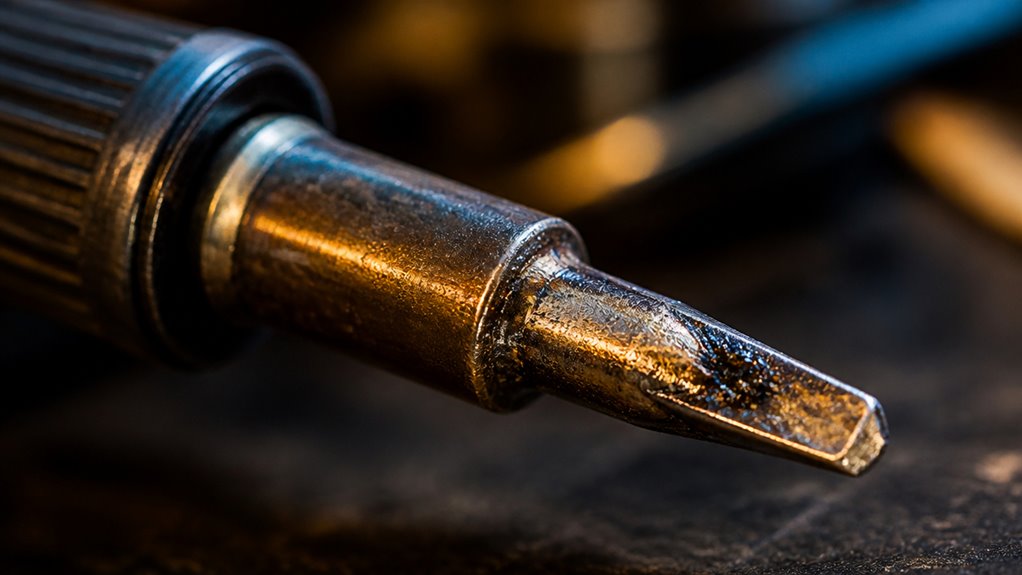
You’ll want a specialized plastic welding tip with a copper or aluminum core for rapid, even heat transfer.
Choose wide chisel or flat tips to press molten plastic evenly into seams. PTFE coatings help prevent plastic buildup and contamination.
Set your soldering iron near the plastic’s melting point, around 220–300°C depending on the tip and plastic type, to avoid warping.
Proper technique and tip maintenance guarantee durable repairs. Explore tip shapes, materials, and welding methods to optimize your results.
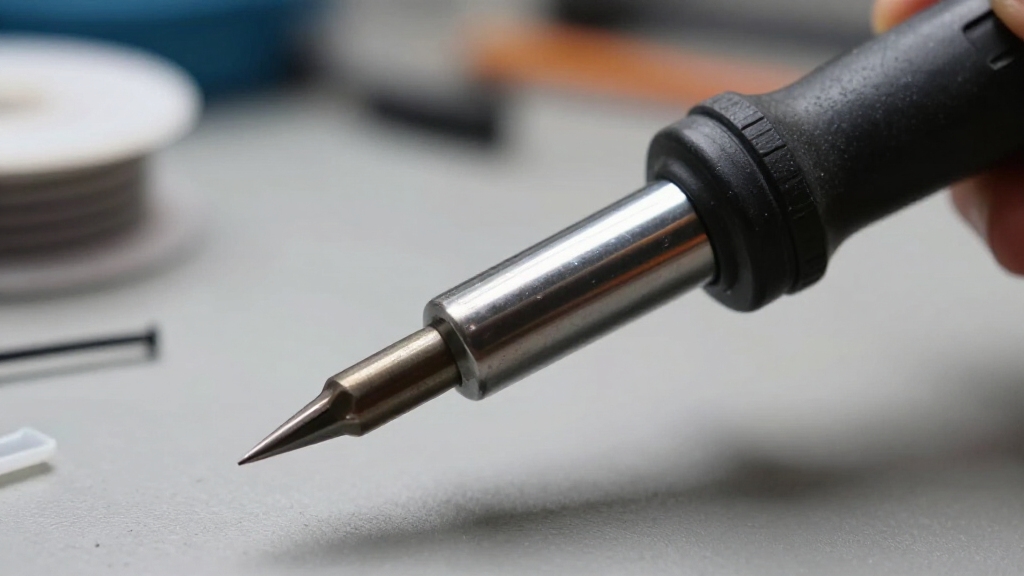
Although plastic welding with a soldering iron may seem straightforward, selecting the right tip is critical for achieving strong, clean repairs.
Choosing the correct soldering iron tip is essential for durable, precise plastic welding repairs.
You should focus on tip geometry because it directly affects heat transfer and weld quality.
Wide chisel or flat-blade tips distribute heat evenly and press molten plastic smoothly into seams or V-grooves, ensuring consistent fills.
Knife-shaped tips excel for trimming and working broader edges, while pointed tips suit tight corners or crack initiation but don’t deliver smooth welds.
Specialized plastic-welding tips combine heating and smoothing functions to streamline your workflow.
Prioritize tip shape according to the repair task, as this influences both thermal efficiency and mechanical strength.
Using the appropriate geometry minimizes warping and promotes uniform plastic flow, resulting in durable, professional-grade repairs.
For best results, always allow the welded joint to cool undisturbed under pressure to solidify and ensure durable, homogeneous connections.
Selecting the right tip geometry lays the foundation. Understanding tip materials and coatings directly impacts heat transfer efficiency and contamination control during plastic welding.
You’ll want a copper or aluminum alloy core for rapid thermal conduction. This ensures consistent heat delivery to the weld seam.
Additionally, PTFE-coated or PTFE-sleeved tips minimize plastic adhesion and residue buildup. This is thanks to PTFE’s low friction and surface energy.
Keep in mind coatings are thin, typically 0.5–1.0 mm, so handle tips carefully to preserve them. Using coated tips helps maintain a clean weld area over multiple repairs.
This reduces contamination and improves weld quality. When selecting your tip, prioritize materials and coatings that balance thermal performance with resistance to plastic buildup for reliable, repeatable plastic welding results.
Just as assembling a TIG torch requires precise fitting of components like the ceramic cup to ensure effective shielding and protection, choosing the right tip coating similarly enhances welding performance and durability.
Control the temperature carefully to achieve strong, clean plastic welds without damaging the material. Proper thermal management prevents warping, burning, or incomplete fusion.
Careful temperature control ensures strong, clean plastic welds and prevents warping, burning, or incomplete fusion.
To set the best temperature for plastic welding repairs:
Always monitor melting to ensure the plastic softens smoothly without smoking or burning to avoid thermal distortion.
Master proper plastic welding techniques to ensure strong, clean repairs with a soldering iron. Begin by cleaning and sanding the repair area to guarantee good adhesion.
Use a chisel or flat tip to evenly heat and press the molten plastic into seams. Apply tack welds to hold parts securely before filling gaps with matching filler rods. Maintain smooth, consistent strokes to distribute material evenly.
| Step | Tool/Tip Type | Purpose |
|---|---|---|
| Surface Prep | Sandpaper, Degreaser | Clean and smooth edges |
| Tack Welding | Fine or Pointed Tip | Align parts with small welds |
| Seam Filling | Wide Chisel Tip | Press and fill joint |
| Finishing | Spade Tip | Smooth and shape weld bead |
Follow these steps methodically for durable, precise welds. Ensure you set the soldering iron to the correct temperature based on the plastic type to avoid weakening the joint.
Because plastic welding tips are exposed to molten material and high heat, regular maintenance is essential to preserve their performance and extend their lifespan.
Regular maintenance is crucial to keep plastic welding tips performing well and lasting longer.
You need to clean off residue and prevent coating damage to maintain efficient heat transfer. Follow these steps:
Consistent cleaning and inspection help maintain proper heat transfer, ensuring optimal welding results and tip longevity.
You shouldn’t use plastic welding tips on metals or other materials because they’re designed for precise heat transfer at lower temperatures suitable for plastics.
Metals require higher heat and different tip geometries for effective welding or soldering.
Using plastic welding tips on metals risks insufficient heat, tip damage, or contamination.
Always match tip type and temperature to the material to guarantee peak performance and avoid tool degradation or poor weld quality.
You can expect a typical plastic welding tip to last several months with regular use, depending on temperature control and maintenance.
Operating near recommended temperatures, usually below 300°C for PTFE-coated tips, extends tip life.
Frequent cleaning with a brass sponge prevents residue buildup, preserving heat transfer.
Avoid overheating to prevent coating degradation.
Proper technique and matching tip geometry to tasks also reduce wear, ensuring consistent performance over time.
You’ll want to take extra care when plastic welding because some fumes can be less than fresh.
Keep your workspace well-ventilated to avoid inhaling potentially harmful gases, especially from plastics like ABS or when coatings degrade above 350°C.
Always control your soldering iron’s temperature precisely, ideally below 300°C for PTFE-coated tips.
Wear heat-resistant gloves and eye protection to prevent burns and splashes during the process.
Yes, you can customize plastic welding tips to suit unique repair needs. By selecting different tip geometries like wide chisel, knife-shaped, or pointed, you tailor heat transfer and plastic flow.
You can also modify tip width, material, and coatings such as PTFE to optimize performance and reduce sticking. Adjusting these parameters precisely helps you match the tip to specific plastics, repair types, and welding techniques for improved seam quality and efficiency.
You might think plastic welding fumes could blanket the planet in toxic clouds, but the reality is more nuanced.
These fumes contain potentially harmful compounds, especially if temperatures exceed safe limits, releasing fluorocarbon gases from degraded coatings.
Proper ventilation and temperature control, keeping below 300°C, minimize environmental and health risks.
Mastering plastic welding with the right soldering iron tip is like wielding a finely tuned instrument. Each material and temperature setting strikes a perfect chord.
By choosing durable coatings and maintaining your tips meticulously, you guarantee every repair flows smoothly and lasts longer.
Approach each weld with precision and care, and you’ll transform cracked plastics into seamless, robust surfaces.
Your skill, paired with the right tip, becomes the steady hand guiding flawless repairs every time.