Phone:
(701)814-6992
Physical address:
6296 Donnelly Plaza
Ratkeville, Bahamas.

Phone:
(701)814-6992
Physical address:
6296 Donnelly Plaza
Ratkeville, Bahamas.

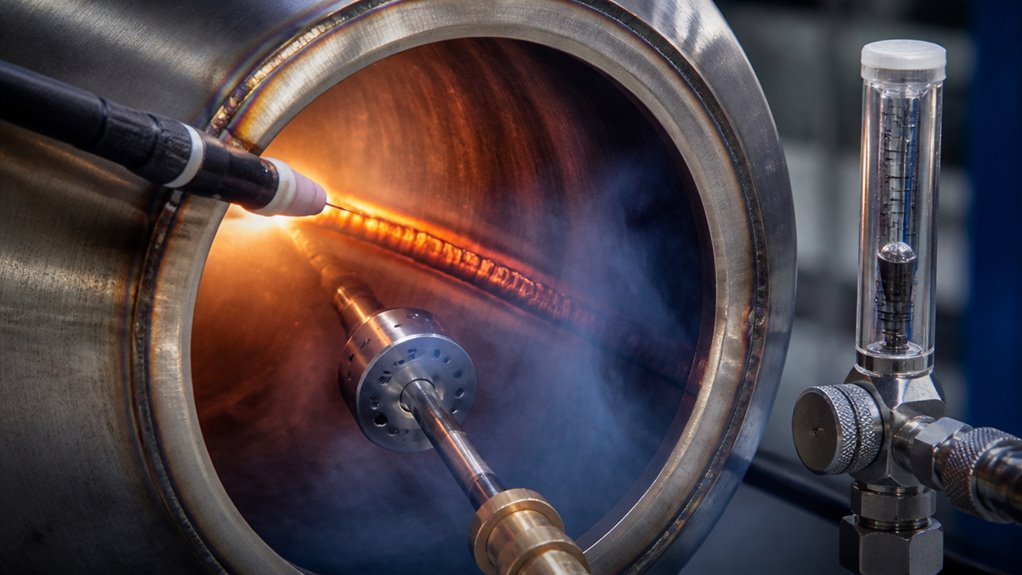
When you back purge, you flush the weld root with inert gas to eliminate oxygen, preventing oxidation and heavy oxide buildup.
This protects the corrosion-resistant properties of metals like stainless steel and titanium.
You also stabilize the molten weld pool, improving weld quality and reducing defects such as porosity.
Finally, back purging enhances leak resistance by ensuring a smooth, oxide-free root that boosts joint durability and sealing integrity.
Explore how each of these functions contributes to superior weld performance.
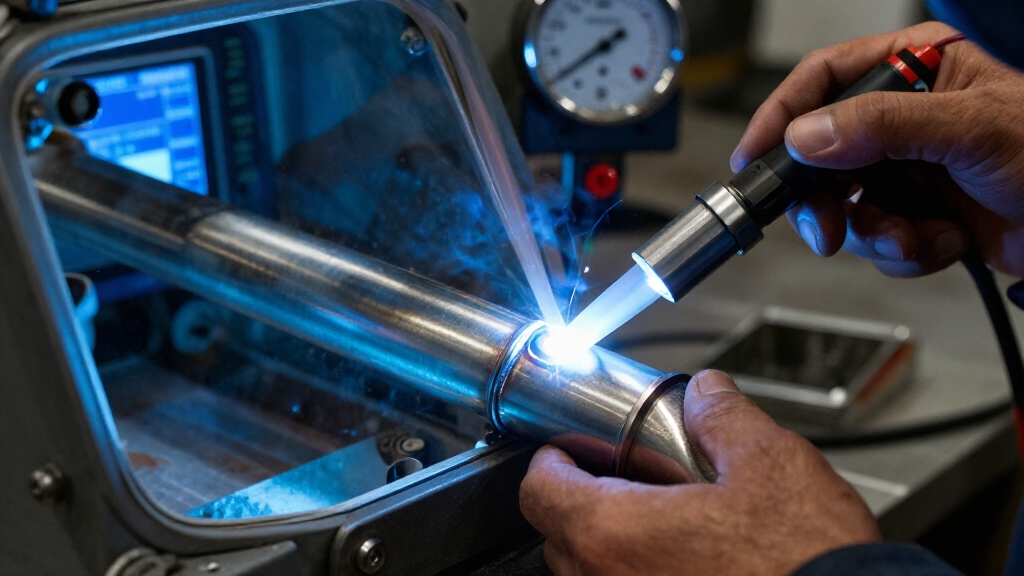
Back purging involves flushing the root side of a weld joint with an inert gas, typically argon, to displace oxygen and other reactive gases.
By removing oxygen from the root area, you prevent the formation of heavy oxides that cause rough, dark deposits known as “sugaring.”
This oxidation control is critical when working with stainless steel, titanium, and nickel alloys, where surface cleanliness directly affects weld quality.
When you maintain an oxygen-free environment, the weld root remains clean and smooth, minimizing contamination and defects.
This process is especially important in applications like pipe, tube, and sanitary welding, where the root’s condition influences overall joint integrity.
Typically, you should purge pipe interior with pure argon at about 25 cfh to ensure effective oxidation prevention throughout the root pass.
Maintaining an oxygen-free environment at the weld root not only improves surface quality but also plays an indispensable role in preserving corrosion resistance.
By using back purging with inert gas like argon, you displace oxygen from the root side. This prevents oxide formation that compromises the protective chromium oxide layer in stainless steel and similar alloys.
This control of oxidation at the weld root is essential because any oxide buildup weakens corrosion resistance. It increases susceptibility to premature failure.
When you back purge properly, you maintain a clean, uncontaminated root surface. This ensures the weld retains its inherent corrosion-resistant properties.
This is especially critical in applications demanding high purity and durability, such as pharmaceutical piping and food-grade systems. Corrosion could undermine safety and performance over time.
Proper sealing of pipe ends with suitable end caps or plugs and monitoring oxygen levels below 50 ppm during purging is crucial to achieve effective oxygen displacement.
When you remove oxygen from the weld root environment, you create ideal conditions for molten metal stability and fusion.
Back purging establishes an inert atmosphere, preventing oxidation that leads to root contamination and defects.
This process directly enhances weld quality by:
Proper sealing of every opening during back purging is essential to maintain an oxygen-free atmosphere and prevent weld defects.
Although leak resistance depends on multiple factors, ensuring a clean and well-protected weld root markedly reduces internal defects that could cause leaks over time.
Back purging displaces oxygen with inert gas, preventing oxidation and minimizing rough root buildup that compromises sealing. This cleaner internal surface reduces porosity and micro-cracks, which are common leak initiation points.
By maintaining a smooth, oxide-free root profile, you improve flow characteristics and sealing integrity in pipe and tube systems.
Over extended service, these factors enhance joint durability, reducing the likelihood of premature failure.
Particularly in high-purity or enclosed systems, back purging supports consistent weld quality, directly contributing to long-term reliability and leak resistance essential for pressure-retaining and critical applications.
Proper tap selection during welding also optimizes arc characteristics and weld penetration, further improving joint quality and leak resistance.
Besides argon, you can use nitrogen for back purging depending on the alloy and application.
Nitrogen is suitable for some stainless steel grades where it doesn’t adversely affect weld properties.
You’ll need to carefully select the gas based on material compatibility and the required inert atmosphere.
Using the right purge gas guarantees you maintain weld integrity, prevent oxidation, and meet specific quality standards in your piping or tubing welds.
Imagine welding a 12-inch stainless steel pipe; you’d select a back purge chamber sized to fit snugly inside, sealing it with inflatable bladders to prevent gas leaks.
For smaller pipes, you might use purge dams or inflatable plugs that create isolated zones.
You’ll connect inert gas lines fitting each setup, ensuring consistent flow and monitoring oxygen levels with a sensor.
Adjust equipment based on pipe diameter to maintain an effective inert atmosphere during welding.
Yes, you can use back purging for materials beyond stainless steel. It’s essential for titanium, nickel alloys, and other metals sensitive to oxidation during welding.
By displacing oxygen with inert gases like argon, you protect the weld root, preserve corrosion resistance, and maintain mechanical properties.
Back purging guarantees high-quality, defect-free welds in various alloys, especially where corrosion resistance and structural integrity are critical in demanding applications.
Think of back purging like controlling the air in a sealed chamber. You’ve got to monitor gas flow carefully to avoid leaks or oxygen intrusion.
You must wear proper PPE, make certain inert gas cylinders are secured and leak-free, and maintain correct flow rates to prevent pressure buildup.
Always verify gas purity, use appropriate ventilation to avoid asphyxiation risks, and follow established welding safety protocols to protect yourself and guarantee process integrity.
Back purging slightly increases welding time because you need to set up and maintain inert gas flow before and during welding.
This added step can extend preparation and welding duration.
However, it reduces rework costs by preventing oxidation-related defects, improving weld quality and integrity.
You might overlook back purging, yet it’s essential for preventing oxidation and preserving corrosion resistance.
It doesn’t just protect; it enhances weld quality, reducing defects that compromise strength.
At the same time, it guarantees leak resistance, boosting long-term reliability.
By balancing protection with performance, back purging transforms ordinary welds into engineered solutions you can trust—precise, durable, and built to last under demanding conditions.