Phone:
(701)814-6992
Physical address:
6296 Donnelly Plaza
Ratkeville, Bahamas.

Phone:
(701)814-6992
Physical address:
6296 Donnelly Plaza
Ratkeville, Bahamas.

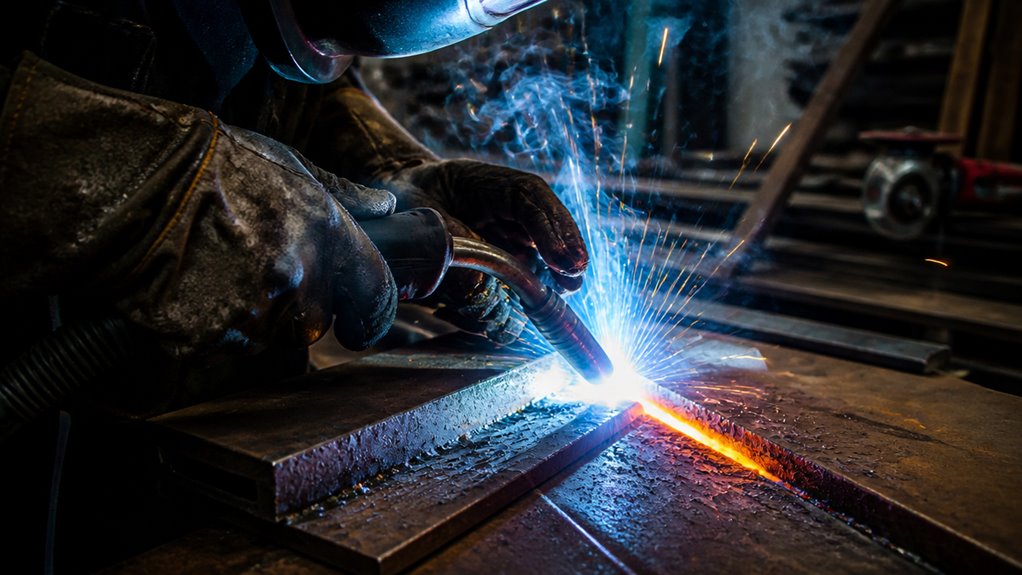
Yes, you can weld steel effectively by choosing low-carbon or low-alloy grades for easier weldability and minimal cracking risk.
Control carbon content under 0.30% to reduce preheat needs. Use suitable processes like MIG, TIG, or SMAW depending on thickness and environment.
Preheat and cooling control become critical as carbon rises to prevent hydrogen-induced cracking. Adjust techniques for outdoor challenges, stainless, or high-strength steels to maintain integrity.
Further insights reveal how to optimize welding parameters and avoid defects.
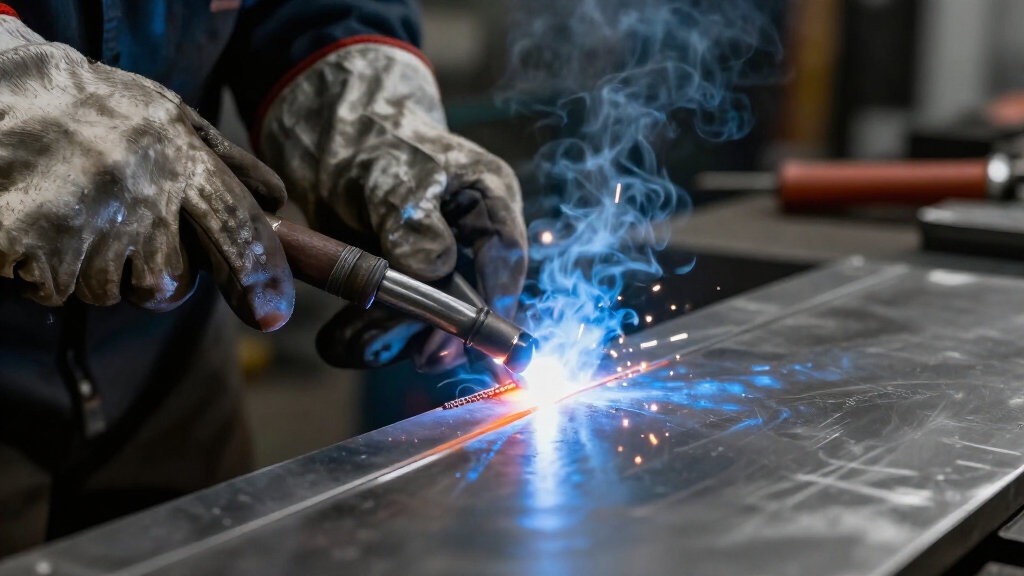
You’ll often find that carbon steels with low carbon content are the easiest to weld. Specifically, carbon steels containing less than about 0.20% carbon offer excellent weldability due to their minimal hardenability and reduced cracking risk.
Carbon steels with under 0.20% carbon provide superior weldability and lower risk of cracking.
Plain carbon steels below 0.30% carbon and 0.05% sulfur can be welded effectively using most standard methods with little special preparation. Low-alloy steels with controlled impurities also fall into this high weldability category.
Medium-carbon steels, ranging from 0.30% to 0.60% carbon, require more careful control but remain weldable. When selecting steel for welding projects, prioritize grades with low carbon and sulfur content to ensure consistent weld quality and reduce pre- and post-weld treatments.
This approach simplifies process choice and improves joint integrity in typical fabrication and repair tasks. Ensuring proper machine settings based on material thickness and type is essential to achieve optimal weld quality and penetration.
As carbon content increases in steel, it can actually make welding a bit trickier. You see, higher carbon levels tend to make the material more prone to cracking. So, it’s important to be aware of this when you’re getting ready to weld.
To manage those risks, you might want to tweak your welding preparation. For instance, preheating the steel and keeping a close eye on cooling rates can really help.
Preheating between 300°F and 500°F is often recommended to reduce the risk of hydrogen-induced cracking in high-carbon steels.
Although steel is generally weldable, its carbon content plays a pivotal role in determining how easily and reliably you can weld it.
Low-carbon steels, typically below 0.20% carbon, offer excellent weldability with minimal pre- or post-weld treatment.
When carbon content rises into the 0.30% to 0.60% range, weldability decreases, requiring careful control of heat input and interpass temperatures to avoid hardness and brittleness in the heat-affected zone.
You’ll find that steels above 0.30% carbon often demand preheating and slower cooling to maintain weld integrity.
When selecting steel for welding, consider carbon levels carefully, as higher carbon content complicates the welding process and limits your choice of electrodes and techniques, directly impacting weld quality and durability.
Proper preheating techniques at 400–600°F are essential to reduce cracking and control thermal stresses during welding of higher carbon steels.
Higher carbon content doesn’t just affect weldability; it directly increases the risk of cracking during and after welding.
When you weld steel with elevated carbon levels, you face higher hardness and brittleness in the heat-affected zone (HAZ). This promotes crack initiation. You must understand how carbon influences microstructure and residual stress to control these risks effectively.
Key effects of carbon on cracking include:
Because AR500 steel has a carbon equivalent of approximately 0.72, it requires preheating and low-hydrogen techniques to mitigate residual stresses and avoid cracking.
Since carbon content markedly affects steel’s weldability and crack susceptibility, proper welding preparation becomes essential to achieve sound joints.
You’ll need to adjust preheat, interpass temperature, and cooling rates depending on carbon levels. Higher carbon steels require more stringent controls to prevent cracking.
Selecting suitable filler materials and welding processes also plays a critical role.
| Carbon Content (%) | Preheat Temperature (°C) | Recommended Welding Process |
|---|---|---|
| <0.20 | None or low (<100) | MIG, TIG, SMAW |
| 0.20 – 0.30 | Moderate (100-200) | SMAW, MIG with controlled heat |
| 0.30 – 0.60 | High (200-300) | SMAW with interpass temperature control |
| >0.60 | Very High (>300) | Specialized processes, post-weld heat treatment |
Proper prep minimizes cracks and guarantees structural integrity. Adjusting welding parameters often involves modifying the output current of the welding transformer to achieve a stable arc suited for the steel’s carbon level.
When you’re picking a welding process for steel, there are a few key factors to consider. First off, think about the material thickness. Thicker sections usually need high-heat methods like Submerged Arc Welding (SAW) or Shielded Metal Arc Welding (SMAW) to ensure proper penetration.
Now, let’s not forget about the environment. If you’re working outdoors or in a windy area, stick welding is often the way to go because it can handle drafts better than some other methods.
Also, managing arc length control and heat input is essential to producing strong, drip-free welds, especially in overhead or vertical positions.
Although steel can be welded using various methods, your choice of welding process must account for the material’s thickness to guarantee strong, defect-free joints.
Thin steel requires precise heat input control to avoid burn-through or warping. Thicker sections demand higher penetration and often multiple passes. Selecting the right technique secures proper fusion and mechanical integrity.
Consider these factors when choosing a welding process based on thickness:
Adjust your method accordingly to optimize weld quality and efficiency. MIG welding is particularly versatile, handling a wide range of thicknesses with adjustable wire feed and current settings for optimal heat input.
Because environmental factors directly impact weld quality, you must carefully select welding processes that accommodate conditions like wind, temperature, and humidity.
For outdoor or drafty environments, stick welding (SMAW) excels due to its flux shielding, which resists wind interference.
Conversely, MIG/MAG and TIG welding require stable, controlled atmospheres to prevent shielding gas disruption and contamination.
Low temperatures can cause rapid cooling and increase cracking risk, so preheating or using processes with slower cooling rates helps maintain weld integrity.
High humidity and moisture increase hydrogen absorption, leading to potential weld defects.
So, drying materials and choosing processes less sensitive to moisture, like stick welding, is advisable.
Additionally, MIG welding uses inert shielding gas to protect the weld pool, which can be easily disrupted by wind, making it less suitable for outdoor conditions.
Mastering steel fabrication means choosing the right welding method to guarantee strong, reliable joints.
You need to understand which process suits your steel type, thickness, and environmental conditions to optimize weld quality and efficiency.
Common welding methods for steel fabrication include:
Shielded Metal Arc Welding (SMAW): Versatile and suitable for outdoor and repair work.
Gas Metal Arc Welding (GMAW/MIG): Efficient for general fabrication, offering high deposition rates.
Tungsten Inert Gas (TIG) Welding: Ideal for precision and thin materials, providing excellent control.
Submerged Arc Welding (SAW): Best for thick materials and high-volume industrial applications.
Selecting the appropriate method reduces defects and ensures structural integrity.
This makes your steel projects both durable and cost-effective.
It is also essential to use proper protective gear to ensure safety during the welding process.
When welding steel, the thickness of the material directly influences your choice of technique and parameters. Thin steel, typically under 3/16 inch, requires precise heat control to prevent warping or burn-through.
TIG welding or controlled MIG settings work best here, allowing you to use lower amperage and finer electrode sizes. For medium thickness, around 3/16 to 3/8 inch, you can employ MIG or stick welding with moderate heat input.
This balance helps achieve appropriate penetration and weld bead size. Thick steel, above 3/8 inch, demands higher amperage, multi-pass welds, and often preheating to reduce cracking risks.
You’ll also need to adjust travel speed and electrode diameter accordingly. Understanding these thickness-dependent variables guarantees strong, defect-free welds suited to your specific application.
For very thick plates, processes like Submerged Arc Welding provide high deposition rates and deep penetration necessary for structural integrity.
Welding steel outdoors introduces unique challenges that require careful consideration to maintain weld quality and consistency.
Welding steel outdoors demands extra care to ensure strong, consistent welds despite challenging conditions.
You’ll face variable weather, wind, and contamination risks that can compromise the weld pool.
To mitigate these, you must adapt your technique and equipment accordingly.
Key challenges and solutions include:
Wind interference: Use stick welding (SMAW) or flux-cored arc welding (FCAW) to protect the arc from drafts.
Moisture control: Keep electrodes and steel dry to prevent hydrogen-induced cracking.
Surface contamination: Thoroughly clean steel to avoid porosity and weak welds.
Temperature fluctuations: Preheat thicker steel to reduce thermal stress and cracking risk.
Outdoor welding techniques and equipment choices set a foundation for handling more demanding materials like stainless and high-strength steels.
When welding stainless steel, you’ll select processes such as TIG or MIG to control heat input and prevent warping or discoloration.
Choose electrodes or filler metals compatible with the stainless grade, whether austenitic, ferritic, or martensitic, to maintain corrosion resistance and mechanical properties.
For high-strength steels, it’s critical to control welding parameters carefully to avoid reducing toughness or strength.
Preheating and post-weld heat treatment may be necessary depending on the steel grade and thickness.
Using proper shielding gases and clean surfaces helps prevent contamination.
Although steel is generally weldable, preventing weld defects and cracks requires careful control of welding parameters and preparation. You need to ensure proper joint fit-up, clean the surfaces thoroughly, and select suitable welding parameters aligned with the steel grade and thickness.
Controlling heat input is crucial to avoid excessive residual stresses and distortion, which often cause cracking.
To prevent defects and cracks, focus on these key practices:
Preheat and post-weld heat treatment to reduce thermal gradients and hydrogen-induced cracking.
Use correct filler material compatible with the base steel to maintain weld integrity.
Maintain appropriate welding speed and technique to minimize porosity and incomplete fusion.
Verify shielding gas coverage or flux consistency to prevent contamination and slag inclusion.
You need essential safety gear when welding steel to protect yourself from sparks, UV radiation, and fumes.
Wear a welding helmet with a proper shade lens to shield your eyes and face.
Use flame-resistant gloves and a long-sleeve welding jacket to protect your skin.
Respiratory protection is vital if ventilation is poor.
Always wear safety boots and ear protection to guard against hot metal and noise.
Proper gear keeps you safe and efficient.
Welding steel is like opening a gateway where corrosion can sneak in if you’re not careful.
You’ll find that the heat from welding alters the steel’s microstructure, often reducing corrosion resistance around the weld zone.
To combat this, you should use proper welding techniques, select compatible filler materials, and apply post-weld treatments like passivation or coatings.
These steps help restore protection and keep your steel durable against rust and environmental damage.
Yes, you can weld steel underwater and in extreme environments, but it requires specialized techniques like underwater arc welding or hyperbaric welding.
These methods use waterproof electrodes and controlled atmospheres to maintain weld quality while preventing contamination.
You’ll need skilled operators and strict safety measures to handle pressure, temperature, and visibility challenges.
Proper preparation and equipment selection are critical to achieve strong, defect-free welds under such harsh conditions.
Oh sure, just leave your welds as-is and watch them last forever, said no expert ever.
To improve steel weld durability, you’ll want to apply post-weld heat treatment (PWHT) like stress relieving or normalizing to reduce residual stresses and refine microstructure.
You can also use techniques like peening to prevent cracking and proper cleaning to remove slag and contaminants.
These steps make certain your welds hold strong under stress and resist fatigue.
Welding costs vary mainly due to steel grade complexity and required precautions.
You’ll pay less with low-carbon steels since they weld easily and need minimal prep.
Higher carbon or alloyed steels increase costs because you must control heat input and use specialized electrodes to prevent cracking.
Stainless and high-strength steels demand tighter process control and often more expensive consumables.
Also, thicker or impurity-laden steels raise labor and equipment expenses, influencing overall welding costs.
When welding steel, you hold the key to joining strength and precision. By understanding steel types, carbon content, and thickness, you tailor your approach like a master craftsman shaping molten metal.
Choosing the right welding process and managing environmental challenges guarantees clean, defect-free joints. Remember, welding steel is both science and art; each bead you lay is a thread weaving durability into your work’s fabric.
Master these essentials, and your welds will stand the test of time.