Phone:
(701)814-6992
Physical address:
6296 Donnelly Plaza
Ratkeville, Bahamas.

Phone:
(701)814-6992
Physical address:
6296 Donnelly Plaza
Ratkeville, Bahamas.

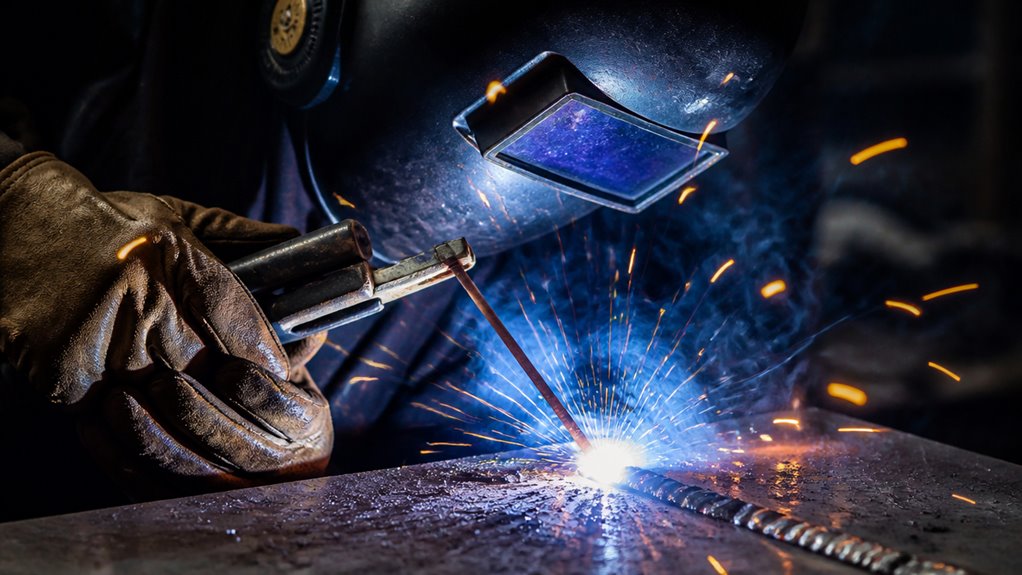
SMAW stands for Shielded Metal Arc Welding, a manual process where you use a flux-coated consumable electrode to create an arc that melts both the electrode and base metal. This forms a strong weld.
The flux coating generates shielding gas and slag, protecting the weld without needing external gas. This makes SMAW highly portable and ideal for outdoor or remote work.
If you want to understand the equipment, materials, and technique details, you can explore further.
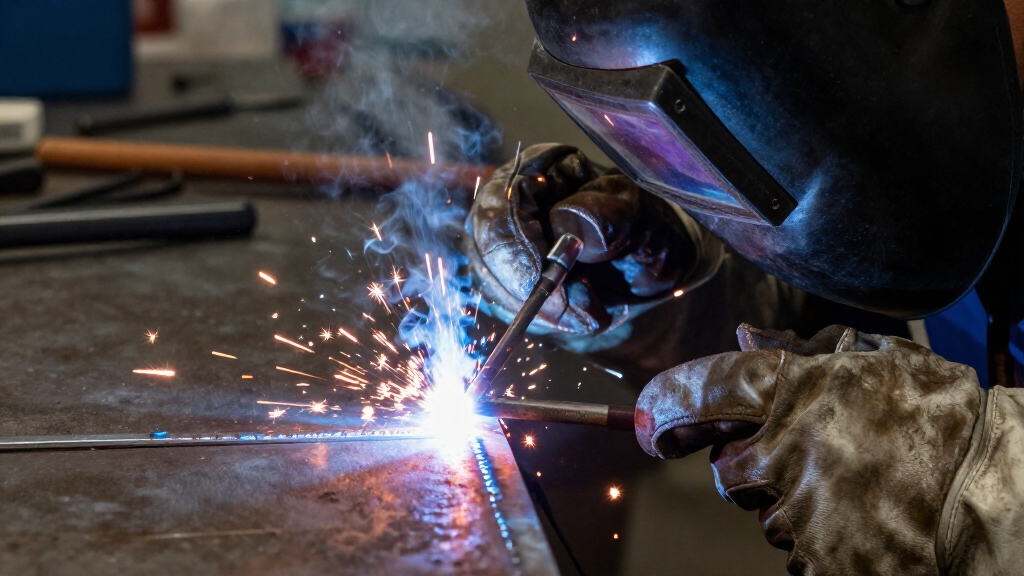
SMAW stands for Shielded Metal Arc Welding, a manual arc welding process that uses a consumable electrode coated with flux to create a weld.
When you operate SMAW, an electric current generates an arc between the electrode and the workpiece, melting both the electrode tip and base metal.
The flux coating decomposes under heat, forming shielding gas and slag that protect the molten weld pool from atmospheric contamination.
This shielding is essential to prevent oxidation and other defects.
You control the weld manually, guiding the electrode to deposit filler metal precisely where needed.
The process relies on a power source supplying either AC or DC current, ensuring consistent arc stability.
SMAW’s straightforward setup and flux shielding make it efficient for various metal joining applications.
Its flux-coated consumable electrode eliminates the need for external shielding gas, making SMAW highly portable and suitable for outdoor use.
SMAW is often called stick welding because it uses a flux-coated electrode that resembles a stick. You actually hold and guide this electrode by hand, which helps create the arc and weld joint.
This hands-on technique really sets SMAW apart from other arc welding processes. It’s all about that personal touch! Shielding gases like carbon dioxide and oxygen mixtures can influence arc characteristics and weld quality, which is important to understand when comparing SMAW to other welding methods using shielding gases.
The electrode used in this welding process resembles a slender rod or stick, which is why many refer to it as stick welding.
This consumable electrode consists of a metal core wire coated with a flux material that stabilizes the arc and shields the molten weld pool.
When you strike the arc, the electrode melts, depositing filler metal into the joint while the flux coating decomposes, producing a protective gas shield and slag.
The rod’s uniform diameter and flux coating are critical for consistent arc stability and weld quality.
You’ll notice that the electrode’s stick-like form contrasts with wire-fed electrodes used in other processes, reinforcing the “stick” terminology.
This distinct appearance directly influences the process’s name and reflects the essential role the electrode plays in SMAW.
Proper electrode selection based on welding position and material thickness is essential for achieving optimal weld results.
Gripping the electrode firmly and striking it against the workpiece initiates the arc that defines this welding method. This manual welding technique, known as stick welding, uses a consumable electrode coated with flux.
You control the electrode by hand, guiding it to maintain a stable arc that melts both the base metal and the electrode tip. The flux coating decomposes, generating shielding gas and slag that protect the molten weld pool from atmospheric contamination.
Because you manually manipulate the electrode stick, the process is straightforward yet requires steady hand control and constant adjustment of arc length. This hands-on approach is why SMAW earns the nickname stick welding, emphasizing the direct, tactile interaction between the operator and the welding arc.
Initiate the welding process by striking an electric arc between the flux-coated electrode and the workpiece. This arc generates intense heat, melting both the electrode tip and the base metal to form a molten weld pool.
As the flux coating decomposes, it releases shielding gas that protects the molten metal from atmospheric contamination such as oxygen and nitrogen. Simultaneously, the flux produces slag, which floats on the weld pool’s surface, preventing oxidation during cooling.
You then manipulate the electrode to maintain a stable arc length, ensuring consistent heat input and penetration. Once the arc is extinguished, the weld pool solidifies into a strong joint, with the slag forming a protective layer that you remove after cooling to reveal the finished weld. The flux coating also helps stabilize the arc and improve weld quality throughout the process.
To get started with SMAW, the first thing you’ll need is a reliable power source—either AC or DC. This power is crucial for generating the arc that melts the metals.
Next up, you have the electrode. It’s coated with flux, which not only supplies the filler material but also decomposes to create shielding gas and slag.
Understanding these core components is key. It really helps you maintain effective control over the quality and consistency of your welds. So, getting a handle on this is essential for successful welding!
Proper equipment selection also sets the stage for smooth and efficient welding.
Several types of power sources can supply the electrical energy required for SMAW. Each affects welding performance in specific ways. You’ll encounter different power sources that influence arc stability, penetration, and ease of use. Understanding these options helps you select the best setup for your welding task.
Transformer-based power sources deliver AC with simple, robust construction. They’re ideal for basic welding needs but offer less control over arc characteristics.
Generator power sources provide portability and flexibility. They’re often used in fieldwork without external power.
Inverter power sources offer compact size and lightweight design. They provide precise current control with both AC and DC outputs.
Rectifier power sources convert AC to DC, allowing steady current output. This results in improved arc stability for consistent weld quality.
Welding transformers specifically use magnetic shunts and taps to finely adjust current output for optimal arc stability.
Choosing the right power source optimizes your SMAW process efficiency and results.
Frequently, the electrode and its flux coating serve as the heart of the SMAW process, directly influencing weld quality and performance.
The electrode acts as a consumable filler metal, melting under the electric arc to join base metals. Its flux coating decomposes under heat, generating shielding gas that protects the molten weld pool from atmospheric contamination.
This flux also forms slag, a solid layer that covers the cooling weld, preventing oxidation and impurities.
You must select the electrode type and flux composition based on the metal being welded and the desired mechanical properties.
Proper electrode handling and storage are vital to prevent moisture absorption, which can cause weld defects like porosity and cracking.
Understanding these components guarantees strong, defect-free welds in various applications.
Additionally, selecting electrodes according to their core metal composition ensures metallurgical compatibility and optimal weld strength.
Many welders choose SMAW welding for its remarkable adaptability and straightforward setup. You can rely on SMAW in diverse environments because it requires minimal equipment and is highly portable.
Its flux-coated electrode eliminates the need for external shielding gas, making it ideal for outdoor and windy conditions. Additionally, SMAW offers excellent penetration and strong weld quality on various metals.
You’ll appreciate these advantages of SMAW welding:
This combination of benefits guarantees SMAW remains a preferred welding process for many professionals. Its tolerance for rusty and dirty surfaces makes it especially valuable for fieldwork and outdoor repairs.
The versatility of SMAW welding extends to the broad range of materials it can effectively join.
When you use SMAW, you can weld various ferrous and some non-ferrous metals, thanks to its adaptable electrode coatings and arc stability.
This process excels in welding carbon steel, stainless steel, cast iron, and even some aluminum alloys, providing strong, durable joints.
Understanding the base material’s composition helps you select the proper electrode for optimal penetration and fusion.
Its ability to perform well on rusty or dirty metals makes it especially useful for field repairs in challenging environments.
| Material | Typical Use Case |
|---|---|
| Carbon Steel | Structural fabrication |
| Stainless Steel | Corrosion-resistant joints |
| Cast Iron | Repair and maintenance |
| Aluminum Alloys | Lightweight assemblies |
Welding professionals rely on SMAW for a variety of demanding applications due to its adaptability and reliability.
You’ll find SMAW indispensable when working in environments where portability and simplicity matter most, especially outdoors or in maintenance scenarios.
This process excels in joining ferrous metals and stainless steel, providing durable and structurally sound welds under challenging conditions.
When you apply SMAW, expect consistent performance without the need for external shielding gas, making it ideal for fieldwork.
Common SMAW applications include:
SMAW’s flexibility enables you to tackle diverse welding challenges efficiently. Proper certification in SMAW ensures welders meet industry safety and quality standards for structural applications.
Compare SMAW to other welding methods by examining its unique advantages and limitations with respect to equipment complexity, portability, shielding requirements, and material compatibility.
SMAW equipment is relatively simple and highly portable, requiring only a power source and consumable electrodes.
This differs from MIG or TIG welding, which need external shielding gas cylinders.
This makes SMAW ideal for outdoor or field work where wind can disperse shielding gases.
However, SMAW produces slag that must be chipped away, adding post-weld cleanup time.
Its flux coating provides effective shielding but limits its use to certain materials, mainly ferrous metals, including steels and stainless steel.
In contrast, TIG excels with thin metals and non-ferrous alloys, while MIG offers faster deposition rates for production.
Mastering SMAW welding starts with understanding your equipment and materials thoroughly.
Success in SMAW welding begins with a deep knowledge of your tools and materials.
You’ll need to select the correct power source, AC or DC, and match it to the electrode type and thickness of your base metal.
Preparing the workpiece by cleaning off rust, paint, and contaminants is vital for a quality weld.
Proper electrode handling and maintaining the correct arc length guarantee consistent penetration and bead shape.
Focus on these essentials when getting started:
Choose the appropriate flux-coated electrode for your application.
Set the welding current based on electrode diameter and metal thickness.
Maintain a steady hand to control arc length and travel speed.
Make certain proper safety gear, including a welding helmet and gloves, is worn at all times.
These steps lay the foundation for reliable and professional SMAW welds.
You need to wear a welding helmet with the proper shade to protect your eyes from intense UV and infrared rays.
Use flame-resistant gloves and clothing to shield against sparks and molten metal.
Ensure good ventilation to avoid inhaling harmful fumes.
Keep a fire extinguisher nearby and clear the workspace of flammable materials.
Always inspect your equipment before use and never weld in damp or wet conditions to prevent electric shock.
Choosing the right electrode for SMAW is like selecting the perfect key to fit a complex lock. You need precision.
First, consider the base metal type and thickness.
Next, match the electrode’s tensile strength and coating to your welding position and desired weld properties.
Check the electrode’s classification, ensuring compatibility with your power source (AC or DC).
Finally, factor in the environment, as some electrodes perform better outdoors or in windy conditions.
You’ll commonly encounter defects like porosity, caused by trapped gas bubbles from improper shielding or moisture in the electrode.
Cracks can form due to excessive stress or rapid cooling.
Incomplete fusion happens when the weld metal doesn’t properly bond with the base metal or previous weld passes.
Slag inclusion, where flux residue gets trapped inside the weld, is another frequent issue.
Controlling technique, electrode condition, and parameters helps prevent these defects.
Imagine welding as a delicate dance with heat. If the temperature’s too low, you’ll face poor fusion and slag inclusions.
Too high, and you risk excessive spatter and burn-through. You must control preheat and interpass temperatures carefully to avoid cracking and distortion.
Consistent heat guarantees proper melting of the electrode and base metal, forming strong, defect-free joints. Temperature directly influences weld strength, penetration, and overall SMAW quality, demanding your precise attention.
You can’t fully automate SMAW because it’s inherently a manual welding process requiring electrode manipulation and constant attention.
However, some mechanized or semi-automatic systems exist that assist with positioning or electrode feeding, but they don’t replace the skilled operator’s role.
The flux-coated electrode and slag formation demand manual control to guarantee weld quality.
Now that you know what SMAW stands for and how it works, you might wonder if it’s the right welding method for you.
With its simplicity, versatility, and strong welds on various materials, SMAW remains a top choice.
Yet it’s not without limits. Before you jump in, consider how it stacks up against other methods and whether its advantages fit your specific projects.
The next step? Hands-on practice to truly master this essential welding technique.