Phone:
(701)814-6992
Physical address:
6296 Donnelly Plaza
Ratkeville, Bahamas.

Phone:
(701)814-6992
Physical address:
6296 Donnelly Plaza
Ratkeville, Bahamas.

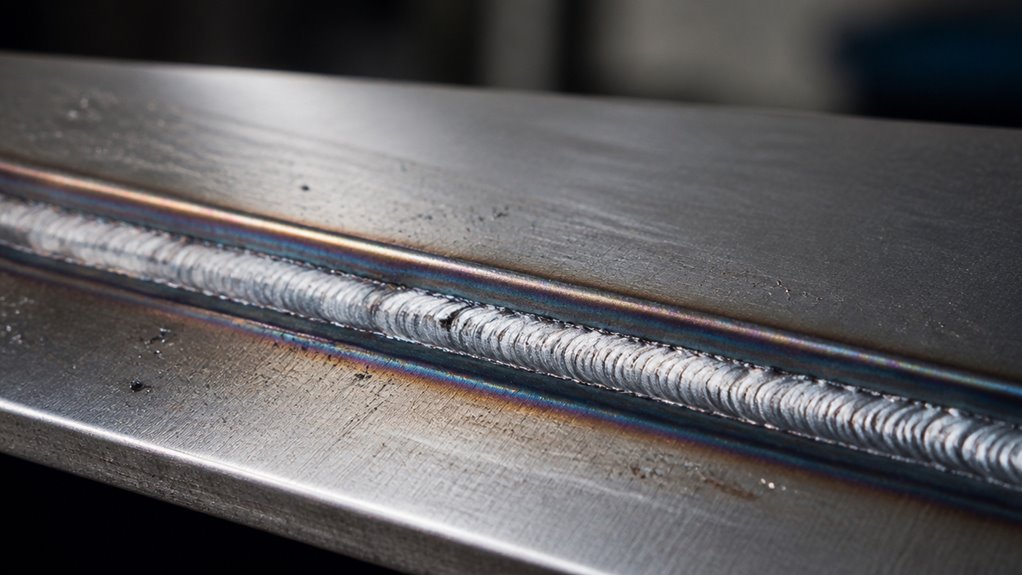
A lap weld joins two overlapping metal pieces by fusing them along the shared area, with one piece placed atop the other.
You’ll often use fillet welds along edges to create a strong, load-bearing joint without complex edge prep.
This joint offers good alignment and reduces blow-through risk but may trap moisture, requiring corrosion protection.
Lap welds balance strength and weight through careful overlap and weld placement.
Exploring its design and application nuances reveals key fabrication insights.
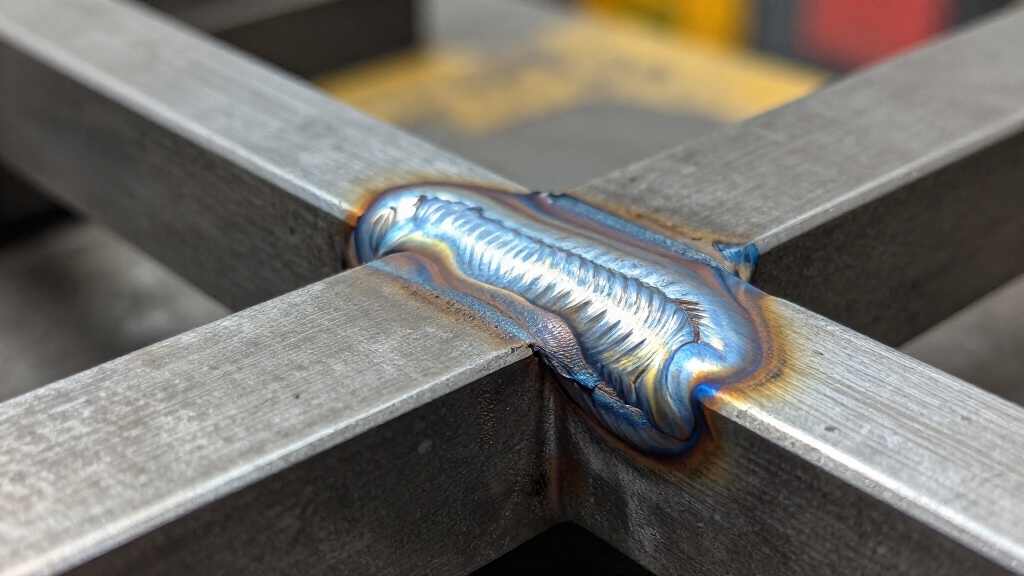
Understanding a lap weld begins with recognizing it as a joint formed by overlapping two material pieces and fusing them along the shared area.
You position one workpiece atop another, creating an overlap where welding occurs, typically along the edges.
This overlap defines the joint rather than the welding method itself.
You can apply weld beads on one or both sides, forming a shared load path through the overlap.
The amount of overlap depends on material thickness and application requirements.
During welding, one piece’s edge fuses to the other’s surface, often with fillet welds.
This joint accommodates differing thicknesses and offers simplified alignment.
Fillet welds in lap joints require proper leg length measurement to ensure adequate weld strength and structural integrity.
Lap welds find extensive application across various industries due to their adaptability and straightforward fabrication. You’ll often see them in automotive bodywork, industrial manufacturing, and sheet metal assembly, where joining dissimilar thicknesses is common. They’re essential when you need reliable overlap joints with efficient load transfer.
Here’s a quick overview of typical lap weld uses:
| Industry | Application | Benefit |
|---|---|---|
| Automotive | Body panels, repairs | Easy alignment, cost-effective |
| Manufacturing | Equipment frames, enclosures | Handles varying thicknesses |
| Construction | Metal cladding, roofing | Structural support |
| Pipe & Tube Fabrication | Overlap joints in piping | Reduces blow-through risk |
Lap welds provide a strong and permanent bond by fusing the overlapping metals, making them a critical part of welding processes in fabrication projects.
Achieving strong lap weld joints requires careful control of overlap dimensions, weld bead placement, and heat input to guarantee peak fusion without compromising the base materials.
You must select an appropriate overlap length based on material thickness and load requirements to optimize joint strength.
Position weld beads precisely along the edges of the overlap, ensuring consistent size and penetration to avoid weak points or undercuts.
Control heat input meticulously to prevent distortion and maintain metallurgical integrity; excessive heat can cause warping or reduce weld toughness.
If welding both sides, balance bead sequence to minimize residual stress.
Finally, inspect welds thoroughly for defects such as incomplete fusion or porosity, as these compromise joint reliability.
Consistent penetration and fusion reduce internal defects and improve load-bearing capacity.
Lap welds come with some great advantages! For starters, they really simplify the joint preparation process. This means less setup time and fewer complexities to deal with. Who doesn’t love that?
Another perk? Their overlapping design helps with alignment accuracy during fabrication. This ensures that your weld placement is consistent every time, which is super important in achieving quality results.
And here’s a bonus: the configuration lowers the risk of blow-through. By using one piece as backing material, you not only enhance the weld quality but also make the whole process smoother. Overall, lap welds are a solid choice! Additionally, when access is limited, techniques like plug welding can be employed to achieve a strong mechanical bond through pre-drilled holes.
Simplifying joint preparation can markedly reduce fabrication time and costs, especially when working with overlapping materials.
When you work with lap welds, the overlapping geometry eliminates complex edge machining or beveling. This allows you to position parts quickly and weld without extensive fit-up.
This straightforward setup also minimizes tooling requirements and reduces material waste.
As a result, you can focus on achieving consistent weld quality with less effort.
Experience faster turnaround times without compromising structural integrity.
Save on labor and machining expenses by avoiding intricate joint configurations.
Reduce the stress and frustration often linked to precise edge preparation.
Additionally, lap joints commonly use fillet welds on both sides to distribute stress effectively across the overlap area.
The inherent overlapping design of lap welds naturally guides the alignment of components during assembly.
When you position one piece over another, the overlap restricts lateral movement, assuring precise fit-up before welding. This geometric constraint minimizes misalignment risks, improving overall joint integrity.
You’ll find that lap joints accommodate slight variations in part dimensions without compromising positioning accuracy. Additionally, the overlap creates a stable interface, allowing you to maintain consistent contact and reduce gaps that could weaken the weld.
This controlled alignment simplifies clamping and fixturing during fabrication, saving time and effort. By relying on the overlap’s self-centering effect, you assure repeatable, accurate assembly, which is critical in high-volume production or when working with thin materials prone to warping.
Moreover, precise positioning is essential in pipe welding to form strong seams that withstand pressure and time.
Confidence in weld integrity often hinges on controlling material penetration. Lap welds excel in this area by inherently reducing the risk of blow-through.
When you overlap one piece of metal on another, the bottom layer acts as a natural backing plate. This prevents molten metal from burning through. This control is critical when working with thin materials or dissimilar thicknesses where blow-through risks increase.
You gain a more reliable joint without excessive weld bead manipulation or complex fixturing.
With lap welds, you can:
This reduction in blow-through risk makes lap welds a dependable choice for precision and durability in your fabrication processes. Proper measurement of the fillet weld size is essential to ensure the joint meets strength and code requirements.
Although lap welds offer practical advantages, they come with notable limitations that can affect structural performance and inspection processes.
You should be aware that lap welds generally exhibit lower tensile strength compared to butt welds, potentially compromising load-bearing capacity in critical applications.
The overlapping geometry can cause uneven heating and cooling, leading to distortion or residual stresses that might affect dimensional accuracy.
Inspection poses challenges since the overlap conceals portions of the weld, making visual and non-destructive testing more complex.
Additionally, the crevices formed by the overlap can trap moisture or contaminants, increasing corrosion risk.
If the overlap is excessive or the weld bead placement is suboptimal, you risk adding unnecessary weight and reducing joint efficiency, which can be detrimental in weight-sensitive designs.
Proper control of heat input and cooling rates is essential to minimize distortion and maintain weld integrity in lap joints.
Understanding the limitations of lap welds helps you make informed choices during the design phase to optimize joint performance.
You should carefully control the overlap length to balance strength and weight, avoiding excessive material that adds unnecessary mass.
Pay close attention to weld placement; consistent fillet welds along one or both edges improve load distribution and reduce stress concentrations.
Also, consider corrosion protection strategies since crevices in lap joints can trap moisture, leading to premature failure.
Feel confident in achieving a durable, efficient joint by mastering overlap parameters.
Avoid costly rework by anticipating distortion and stress during design.
Safeguard your assembly’s longevity by prioritizing corrosion resistance early on.
These tips guarantee your lap weld design maximizes reliability and efficiency within its structural constraints.
Using a weld-through primer can enhance corrosion resistance in lap welds by protecting inner edges and sealing joints against moisture.
For lap welds, you’ll find MIG (GMAW) and TIG (GTAW) welding techniques best suited due to their control and precision.
MIG welding offers speed and ease for thicker metals, while TIG excels with thinner materials and requires skilled operation.
Stick welding (SMAW) can also work but is less common.
You should focus on fillet welds along the overlap edges, ensuring proper heat input to avoid distortion and maintain joint integrity.
You should know lap welds can have up to 30% more corrosion risk than butt welds due to crevices formed in the overlap.
These crevices trap moisture and contaminants, accelerating corrosion.
To improve resistance, you’ll need proper weld bead placement and post-weld treatments like cleaning or coating.
You can use lap welds on some non-metal materials, but it depends on the material type and welding method.
For thermoplastics, techniques like ultrasonic or hot plate welding create lap joints effectively.
However, lap welding non-metals requires controlling heat carefully to prevent damage and ensure robust bonding.
Unlike metals, non-metal lap welds rely more on melting or fusing polymers rather than melting filler material, so process parameters must be precisely managed.
You’ll commonly encounter defects like incomplete fusion, porosity, and slag inclusion in lap welds.
Misalignment may cause uneven overlap, leading to weak joints.
Excessive heat can induce distortion or warping, while insufficient penetration reduces strength.
Crevices formed by overlap might trap moisture, causing corrosion.
You should watch for cracks due to residual stress and avoid excessive weld bead size, which adds unwanted weight and reduces efficiency.
You’ll find lap weld inspection tougher than most because the overlapping layers act like secret vaults, hiding defects beneath.
Unlike butt joints, you can’t just glance at the weld edge. You must probe deeper with ultrasonic or radiographic methods to detect internal flaws.
Visual inspection alone won’t cut it, as crevices and trapped contaminants complicate evaluation.
You’ll need precise, multi-angle analysis to guarantee weld integrity without missing hidden imperfections.
When you choose lap welds, you’re opting for a dependable bridge between materials, offering solid overlap without unnecessary complexity.
While they don’t paint the perfect picture for every scenario, their straightforward strength and ease of creation make them a valuable tool in your welding arsenal.
Keep their limitations in view, but with careful design, lap welds can quietly carry the load.
This ensures your projects hold together with precision and reliability.