Phone:
(701)814-6992
Physical address:
6296 Donnelly Plaza
Ratkeville, Bahamas.

Phone:
(701)814-6992
Physical address:
6296 Donnelly Plaza
Ratkeville, Bahamas.

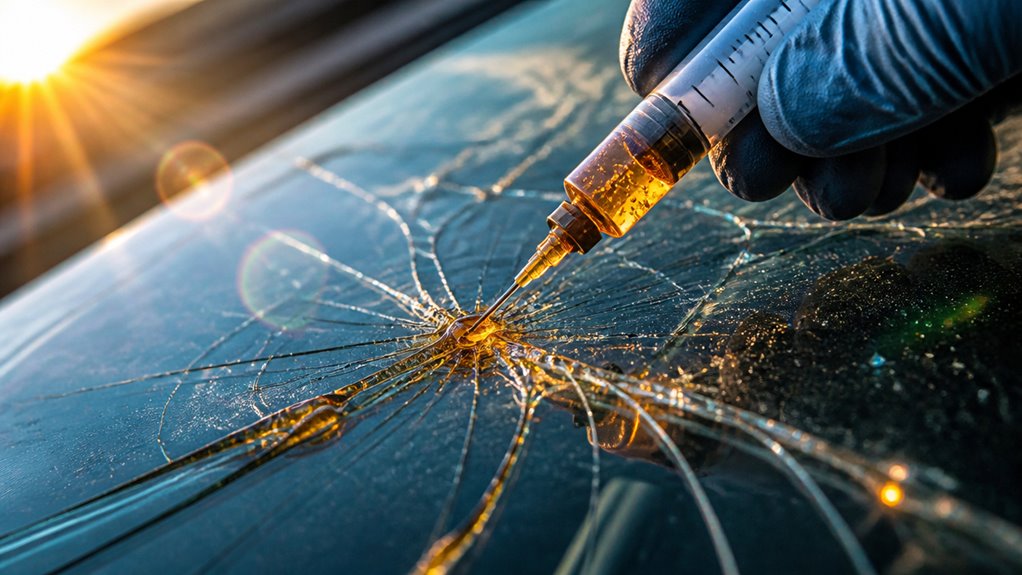
You can use J-B Weld to bond glass, but the strength depends on your product choice and how well you prep the surface. Glass’s smooth, non-porous nature limits adhesion, so thorough cleaning and light abrasion help.
Expect full curing in 15–24 hours and avoid stressing the joint during cure. Keep in mind, J-B Weld isn’t suited for structural or load-bearing glass repairs.
If you want optimized performance and clarity, understanding product selection and preparation nuances is essential.
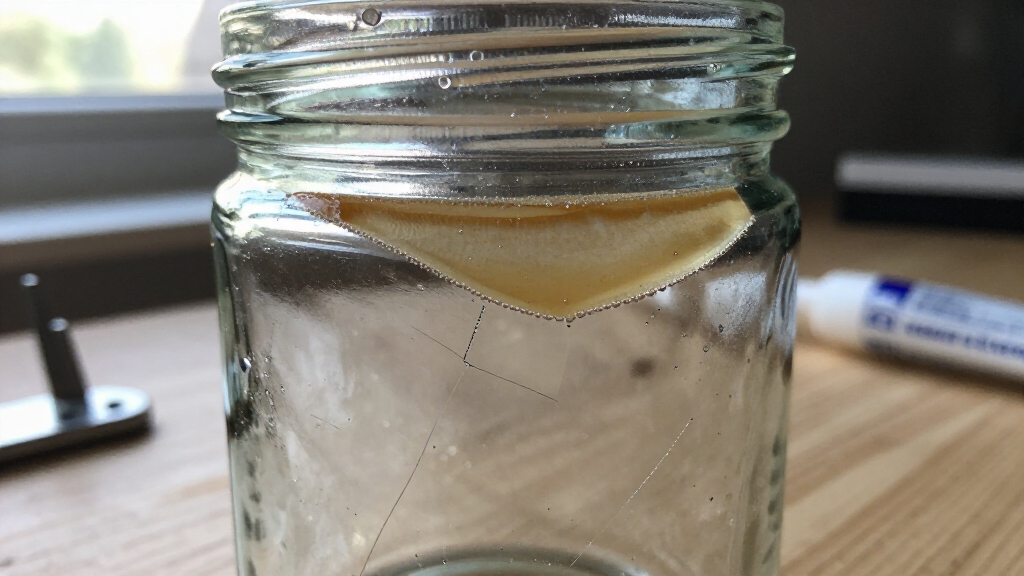
While J-B Weld can form a bond on glass, its strength and durability depend heavily on the specific product used and the conditions of the repair.
J-B Weld bonds glass, but strength varies with product choice and repair conditions.
Glass’s smooth, non-porous surface challenges adhesion, so thorough cleaning and drying are critical before application. Light abrasion may increase mechanical grip but compromises optical clarity.
Cure time varies by product, typically requiring 15–24 hours for full strength. Even fully cured bonds often remain weaker than those on porous materials due to limited surface texture for epoxy to latch onto.
Stress, flexing, or impact further reduce bond longevity, especially in glass-to-glass joints. Thus, you should expect J-B Weld to perform best on small, stable repairs where surface prep and environmental conditions are carefully controlled.
It is less suitable for structural or load-bearing glass applications.
To maximize adhesion, it is essential to clean and roughen surface thoroughly before applying J-B Weld.
When it comes to repairing glass, picking the right J-B Weld product is key. For general bonding, ClearWeld is a solid choice.
If you’re dealing with a chip in your windshield, then Windshield Saver is the way to go. There are also specialized options like MirrorWeld that tackle specific glass challenges. It’s all about choosing the right tool for the job!
But don’t forget—prepping the surface is just as important as the product you choose. Make sure to clean and dry the area thoroughly, and sometimes a little light abrasion can help, too.
Proper preparation really boosts the bond strength and durability of your repair. The Windshield Saver kit specifically targets chips up to 1.25 inches in diameter, making it ideal for moderate-sized windshield damage.
Explore J-B Weld’s specialized epoxy options designed for glass repair to identify the best fit for your project. Selecting the right product depends on the glass type, repair size, and required bond strength. Here are three top choices:
Each product demands meticulous surface preparation. This includes cleaning, drying, and sometimes light abrasion to maximize bond integrity on smooth, non-porous glass.
Proper surface preparation and curing time are critical for achieving maximum bond strength and long-lasting repairs.
Because glass presents unique bonding challenges, J-B Weld offers specialized products designed to address specific repair needs with optimized formulations.
ClearWeld provides a quick-setting, transparent bond suitable for small cosmetic glass repairs.
InstantWeld delivers rapid adhesion for minor fixes.
For windshield chip repairs, Windshield Saver targets bullseye and star cracks up to 1 1/4 inches, ensuring a durable, clear patch.
MirrorWeld specializes in attaching rear-view mirrors to windshield glass, engineered for high adhesion under temperature fluctuations.
Additionally, SuperWeld, recommended in UK guidance, offers a robust epoxy suitable for glass repairs requiring greater strength.
Each product balances cure time, bond strength, and clarity, but your choice should align with the repair type and load demands to optimize performance and longevity.
For best results, always mix resin and hardener in an exact 1:1 ratio to ensure proper curing and maximum bond strength.
Ensuring a thoroughly clean and properly prepared glass surface markedly enhances the adhesion strength of J-B Weld products. Since glass is smooth and non-porous, contaminants like oils and dust appreciably reduce bond effectiveness.
You’ll want to follow these steps for best results:
Using mechanical abrasion after cleaning can further enhance adhesion by providing better surface texture for the epoxy to bond to.
When bonding glass with J-B Weld, preparing the surface is critical to achieving a strong, durable adhesion. Glass’s smooth, non-porous nature limits mechanical grip, so any contamination like oils, dust, or moisture can drastically weaken the bond.
You need a clean, dry surface to maximize epoxy contact and chemical interaction. Additionally, lightly roughening the surface can improve adhesion by increasing surface area, but it may affect clarity and visual quality.
Because J-B Weld epoxy relies on contact and curing within microscopic surface irregularities, neglecting preparation leads to incomplete bonding and reduced strength. Proper prep is more essential on glass than on porous or textured materials, where the adhesive has more natural anchoring points.
Without meticulous prep, even the best J-B Weld formulations won’t achieve peak performance on glass. Thorough cleaning and drying to remove oils, dirt, and oxidation is critical for adhesion.
To get started, you’ll want to clean the glass really well. It’s essential to remove any oils, dust, or other contaminants since these can really weaken the bond. Just imagine trying to stick two pieces of tape together with crumbs in between—it’s not going to hold!
Once you’ve cleaned the surface, make sure the glass is completely dry. Any moisture left behind could mess with the adhesion, and we definitely don’t want that. Think of it like making sure your hands are dry before applying a bandage; it just works better that way.
If you’re feeling adventurous, you might consider lightly abrading the surface. This can help create a bit of texture, which can improve how well the epoxy grips. Just keep in mind that this might affect the clarity of the glass, so weigh your options carefully!
For optimal results, ensure the epoxy has fully cured before attempting any sanding or finishing to maintain its bond strength.
Properly cleaning and preparing the glass surface markedly impacts the strength and durability of a J-B Weld bond. Since glass is non-porous and smooth, contaminants like oils, dust, or residues can severely weaken adhesion.
You must make certain the surface is chemically and physically clean to maximize epoxy effectiveness.
Follow these key cleaning steps:
This precise cleaning routine optimizes the surface for bonding. It allows the epoxy to form a more reliable and long-lasting joint on glass. Additionally, ensuring surface cleanliness prevents weak spots that could compromise the bond strength.
Making sure glass is completely dry before applying J-B Weld markedly enhances adhesive performance. Moisture presence on glass creates a barrier that inhibits epoxy molecular bonding, reducing bond strength considerably.
After cleaning, use a lint-free cloth or compressed air to remove residual water droplets. Avoid touching the surface afterward, as oils from your skin can re-contaminate it.
Ambient conditions affect drying time. Make sure the glass is exposed to warm, dry air to expedite evaporation. Residual humidity trapped in microscopic surface pores can weaken adhesion. Allow ample time for drying—typically 15 to 30 minutes depending on conditions.
Skipping this step risks incomplete curing and bond failure, especially with non-porous materials like glass. Epoxy relies solely on surface contact rather than absorption for adhesion.
For optimal bonding, ensure the surface is free from contaminants like grease or oils by using a suitable degreasing procedure before drying.
Frequently, light surface abrasion markedly enhances epoxy adhesion on glass by creating microscopic texture that improves mechanical grip.
To prepare the glass for bonding with J-B Weld, you need to remove surface contaminants and introduce slight roughness without compromising clarity excessively.
Here’s how to proceed:
This precise surface preparation is essential, especially since glass is smooth and non-porous, limiting epoxy’s mechanical interlock. Note that J-B Weld cures to a steel-like hardness, which may affect bonding strength on non-metal surfaces like glass.
Typically, J-B Weld epoxy products require about 15 to 24 hours to fully cure on glass, depending on the specific formula and environmental factors.
For example, ClearWeld and SuperWeld fall within this cure window, balancing workable open time with adequate strength development.
You should ensure clean, dry surfaces and stable ambient temperatures around 70°F (21°C) to optimize curing.
Humidity and temperature deviations can extend cure time or weaken the bond.
During curing, the epoxy undergoes a chemical cross-linking process that solidifies adhesion to non-porous glass.
Although a tack-free set may occur in an hour or less, you should avoid stressing the joint until full cure to achieve maximum bond strength.
Precise mixing and application thickness also influence cure duration and final performance.
You’ll find that J-B Weld works wonders on small chips and cracks, especially when you can control the surface prep precisely. It’s really about making sure everything is clean and ready to go!
Now, if you’re looking to attach mirrors, there are specific J-B Weld products that are perfect for that. They provide strong adhesion to glass surfaces, which is super important for keeping everything secure.
And let’s not forget about cosmetic surface repairs! These are great for situations where you don’t need load-bearing strength. J-B Weld’s epoxy formulas can really help with those kinds of fixes, giving you a neat finish without the extra pressure.
Addressing small chips and cracks in glass requires selecting the right J-B Weld product for prime adhesion and durability. You’ll want to use ClearWeld or Windshield Saver, both designed to bond glass effectively under controlled conditions.
Proper surface preparation is critical: clean thoroughly, dry completely, and lightly abrade if clarity isn’t a priority.
Here’s how to approach repairs:
Using J-B Weld on small glass imperfections works best when you match product choice and prep rigor to the repair’s scale and transparency needs.
When bonding mirrors to glass surfaces, selecting the appropriate J-B Weld product is essential for achieving a reliable, durable attachment. MirrorWeld, specifically formulated for rear-view mirror bonding, offers superior adhesion compared to general-purpose epoxies.
Proper surface preparation, including cleaning and light abrasion, ensures peak bonding strength, as glass’s smooth texture challenges adhesion.
| J-B Weld Product | Best Use Case |
|---|---|
| MirrorWeld | Rear-view mirror attachment |
| ClearWeld | Small general glass repairs |
| SuperWeld | Structural glass bonding |
Avoid using general-purpose epoxies for mirror attachment; they lack the chemical formulation for strong, lasting bonds on glass. For effective mirror bonding, use MirrorWeld, prepare surfaces meticulously, and allow adequate curing time to maximize bond durability.
Consider J-B Weld products primarily for minor cosmetic surface repairs on glass, such as small chips, scratches, or non-structural cracks. These repairs don’t demand structural integrity but benefit from the epoxy’s bonding capabilities when surfaces are properly prepped.
To maximize results, focus on these glass repair types:
You’ll need to guarantee the glass is impeccably clean and dry, and lightly abraded if necessary, to improve bonding. J-B Weld works best on these limited cosmetic cases rather than on load-bearing or high-stress glass repairs.
Although repairing windshield chips and cracks can be challenging due to glass’s smooth, non-porous surface, J-B Weld offers specialized products designed for these specific issues.
Repairing windshield chips is challenging, but J-B Weld provides specialized solutions for effective glass repairs.
For instance, Windshield Saver targets small bullseye, star, and stone chip damage up to 1¼ inches. It provides a quick-setting, clear epoxy that penetrates and bonds effectively.
You must thoroughly clean and dry the damaged area before application to maximize adhesion. Proper mixing and stable curing conditions are essential for achieving optimal bond strength.
While J-B Weld’s ClearWeld also supports glass repairs, Windshield Saver’s formulation better suits windshield damage. It balances clarity and durability.
Since glass surfaces are smooth and non-porous, J-B Weld adhesives often struggle to form bonds that withstand flexing, impact, or repeated stress. You should consider these limitations when opting for J-B Weld on glass:
1. Bond Strength Variability
The adhesive’s grip weakens if the glass isn’t perfectly clean or if the surface remains glossy. This reduces long-term durability.
2. Surface Preparation Trade-offs
Light abrasion can improve adhesion but compromises optical clarity and aesthetics. This may be unacceptable in visible repairs.
3. Stress Resistance
J-B Weld bonds may fail under mechanical stress or vibration. This makes them unsuitable for structural or load-bearing glass repairs.
Understanding these constraints helps you decide whether J-B Weld meets your glass repair needs or if an alternative adhesive is necessary.
When your repair demands maximum clarity, durability, or load-bearing strength, specialized glass adhesives outperform J-B Weld products.
You should opt for these adhesives when working on precision optical glass, structural joints, or high-stress areas prone to flexing or impact.
Unlike J-B Weld’s general epoxies, specialized glass adhesives chemically bond to glass at a molecular level. This ensures superior adhesion without compromising transparency or surface integrity.
They also cure with minimal shrinkage and resist environmental factors such as moisture and temperature fluctuations better than typical two-part epoxies.
If your repair involves large chips, load-bearing attachments, or requires optical clarity, relying on specialized adhesives designed explicitly for glass guarantees a stronger, longer-lasting bond.
This reduces the risk of failure and maintains the glass’s functional and aesthetic properties.
To achieve the strongest, clearest bond with J-B Weld on glass, you must start with meticulous surface preparation. Glass’s smoothness demands that you eliminate contaminants and optimize surface texture to maximize adhesion.
Following these steps enhances both bond strength and optical clarity. This is vital for effective, durable glass repairs with J-B Weld epoxy.
You can use certain J-B Weld products on tempered or laminated glass, but success depends on the specific product and repair type.
Because tempered glass is stress-treated and laminated glass involves layers, bonding can be challenging.
ClearWeld or SuperWeld may work for minor surface repairs if you prepare the glass meticulously.
However, for structural or load-bearing fixes, J-B Weld isn’t ideal.
Specialized adhesives designed for tempered or laminated glass deliver more reliable, durable bonds.
You’ll find J-B Weld waterproof once fully cured on glass, but water resistance varies by product and preparation.
ClearWeld and similar formulas create a strong, sealed surface that withstands moisture if you’ve cleaned and dried the glass thoroughly.
However, water infiltration might weaken bonds if surfaces aren’t pristine or if the epoxy isn’t mixed or cured correctly.
You’ll find that some J-B Weld products, especially ClearWeld, resist yellowing better than others when cured on glass.
However, prolonged UV exposure and aging can cause slight discoloration or yellow tint over time.
To minimize this, use formulations designed for clarity and UV resistance, like ClearWeld or Windshield Saver.
Keep in mind, environmental factors and curing conditions markedly influence long-term color stability on glass surfaces.
You can use J-B Weld to fill small gaps or cracks in glass, but its effectiveness depends on the product and surface prep.
ClearWeld or SuperWeld offer better gap-filling properties for minor repairs, provided you clean and dry the area thoroughly.
However, J-B Weld isn’t ideal for large or load-bearing cracks, as the bond may weaken under stress.
For precise, durable glass repairs, specialized glass adhesives are generally a superior choice.
You shouldn’t use J-B Weld on glass items that contact food or drink.
Most J-B Weld products aren’t certified food-safe and can leach chemicals into consumables, especially under heat or moisture exposure.
Even cured epoxy may pose contamination risks.
For repairs on food-contact glassware, you need adhesives explicitly labeled as FDA-approved or food-safe.
Prioritize safety by choosing specialized, non-toxic bonding agents designed for direct food or beverage contact.
You might think J-B Weld isn’t the best for glass, yet its surprising strength and durability often coincide with proper prep and curing.
While it’s not perfect for every crack or chip, you can achieve a clear, robust bond if you follow the right steps.
Just remember, when precision and clarity matter most, specialized glass adhesives may be the smarter choice.
Sometimes, coincidence favors those who choose tools designed specifically for the job.