Phone:
(701)814-6992
Physical address:
6296 Donnelly Plaza
Ratkeville, Bahamas.

Phone:
(701)814-6992
Physical address:
6296 Donnelly Plaza
Ratkeville, Bahamas.

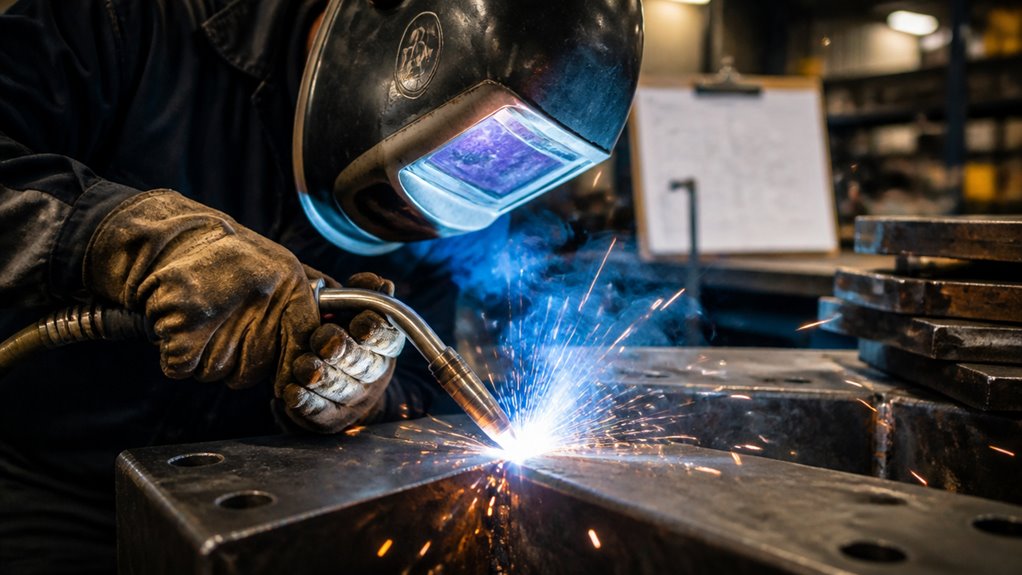
To make money as a welder, focus on gaining essential certifications like AWS, ASME Section IX, and API 1104 to qualify for higher-paying, code-compliant projects.
Specialize in high-demand fields such as pipeline, nuclear, or aerospace welding, and master challenging positions like 6G pipe welding.
Take advantage of overtime, shutdown, and emergency shifts, as well as consulting or inspection roles like CWI to boost income.
Developing versatile skills and certifications will open up advanced opportunities and greater earning potential ahead.
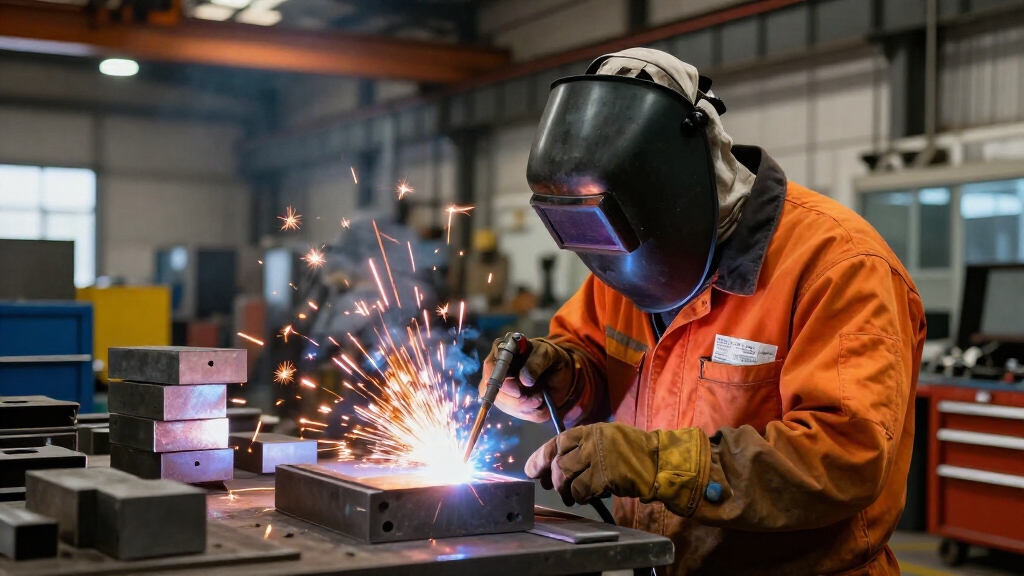
Secure steady income by targeting general welding positions in established shops, where pay typically ranges from $22 to $30 per hour.
These roles provide consistent hours and often involve fabrication, repair, and assembly tasks that build your foundational skills.
To maximize earnings within this range, focus on maintaining high-quality welds and adhering strictly to shop safety and production standards.
While general shop work pays less than some specialties, your reliability and efficiency guarantee a dependable paycheck.
Consider obtaining an AWS Certified Welder credential to access higher hourly rates within shop environments.
You can also enhance your value by cross-training in related processes like cutting and fitting.
Steady shop positions form a baseline income, supporting you as you build expertise or pursue advanced certifications for higher-paying opportunities.
Developing multi-process welding proficiency further increases your versatility and job prospects in diverse welding environments.
If you’re looking to significantly increase your earnings as a welder, consider diving into some high-paying specialties. Think about fields like underwater welding, pipeline welding, or even nuclear welding. These niches can really pay off, with salaries ranging anywhere from $50,000 to a whopping $300,000, depending on your skills and certifications. However, keep in mind that underwater welding careers typically last about 10–15 years due to physical limits and certifications.
High-paying welding niches demand specialized skills and certifications that set you apart from general fabrication work.
To maximize your earnings, focus on underwater welding, pipeline welding, rig welding, nuclear, and aerospace sectors.
Each requires advanced certifications like AWS, ASME Section IX, API 1104, or 6G pipe qualifications.
Mastering difficult positions such as 3G, 4G, and 6G enhances your marketability.
Pipeline and rig welding often yield the highest pay, especially when you operate as an owner-operator.
Nuclear and aerospace welding demand strict quality standards, rewarding precision and code compliance.
Diversifying into inspection roles with CWI credentials can further increase income.
Position yourself in oil, gas, or power generation industries where high-rate pressure-pipe welding and shutdown work offer premium pay.
Your skillset and certifications directly influence access to these lucrative niches.
Utilizing flux-cored arc welding techniques can improve productivity and weld quality in outdoor and challenging environments common in pipeline and rig work.
When comparing salary ranges across specialty welding jobs, you’ll notice significant variation driven by skill level, certifications, and industry demands. Certain niches command premium pay because of technical difficulty, safety standards, or remote work conditions.
To maximize income, focus on these high-paying specialties:
Pursuing certifications such as AWS, ASME, and CWI will further elevate your earning potential in these sectors. Mastery of dry hyperbaric welding techniques can significantly enhance weld quality and job opportunities in underwater welding.
You know, getting certified can really make a difference in your paycheck. By obtaining key certifications like AWS, ASME Section IX, and API 1104, you’re not just checking a box—you’re actually opening doors to higher-paying projects. It’s pretty amazing how these credentials can directly impact your earnings.
These certifications qualify you for specialized, code-compliant work that often comes with premium rates. So, if you’re serious about boosting your income, this is definitely the way to go.
And here’s a little tip: stacking multiple certifications can really enhance your versatility. It positions you for the most profitable welding opportunities out there. It’s like giving yourself an edge in a competitive field!
Pursuing an AWS certification also demonstrates your proficiency with industry-recognized standards, boosting your credibility with employers.
Although welding skills form the foundation of your trade, key certifications markedly elevate your earning potential and job opportunities. Employers prioritize certified welders for their proven ability to meet industry standards and safety codes.
To maximize your market value, focus on these certifications:
Obtaining multiple certifications not only proves your versatility but also positions you for premium contracts requiring strict adherence to welding codes and standards. Additionally, understanding the distinction between licensing and certification ensures compliance with local regulations and enhances your career prospects.
Because certifications directly demonstrate your proficiency and code compliance, they materially influence your earning potential in welding.
Holding an AWS Certified Welder credential, for example, typically positions you in a higher pay bracket, often $30–$40 per hour, compared to uncertified welders.
Specialized certifications like ASME Section IX or API 1104 open access to premium jobs in pressure piping and pipeline sectors, where pay scales rise accordingly.
Mastery of difficult positions such as the 6G pipe weld further elevates your market value.
Additionally, CWI credentials open inspection roles that often pay more than production welding.
Stacking multiple certifications signals versatility and code adherence, making you indispensable for complex, high-stakes projects.
Maintaining certification continuity is especially important in specialized fields to ensure ongoing qualification and maximize career opportunities.
When targeting high welding pay, focusing on specific regions and industries can markedly boost your earnings. Certain geographic areas and sectors demand specialized skills and certifications, leading to premium compensation.
Here are top regions and industries where you can maximize your welding income:
Targeting these areas aligns your skills with high-demand, high-pay opportunities. Understanding the importance of certifications exclusive to welding can further enhance your earning potential in these industries.
Moving from general shop welding into pipe and structural welding opens doors to higher pay and specialized projects that demand advanced skills and certifications.
You’ll need to master welding positions like 3G, 4G, and 6G for pipe work, ensuring weld integrity under code requirements such as ASME Section IX and API 1104.
Structural welding requires proficiency in vertical and overhead positions, often following AWS D1.1 standards.
Expect more fieldwork and variable conditions compared to controlled shop environments.
Precision, repeatability, and adherence to strict inspection protocols become critical.
Shifting means investing time in certification courses and hands-on practice with complex joints.
As you gain experience, you’ll qualify for premium wage bands, often $32 to $42 per hour or more, reflecting the higher risk, responsibility, and technical expertise demanded in pipe and structural welding projects.
Additionally, understanding proper pipe preparation and fit-up techniques is essential to prevent defects and ensure leak-proof welds in critical applications.
Stack multiple welding certifications to gain access to higher-paying contracts and specialized roles. Employers value welders with diverse credentials because you demonstrate versatility, code compliance, and readiness for complex tasks.
Earning multiple welding certifications boosts your versatility and unlocks higher-paying, specialized job opportunities.
Prioritize certifications that expand your marketability and income potential.
Understanding the relationship between WPS and PQR can further enhance your qualifications by ensuring you follow validated welding procedures that meet industry standards.
Seize opportunities to work overtime and participate in shutdown projects to markedly increase your welding income. These assignments often pay premium rates due to urgency, technical demands, and extended hours.
Shutdowns, especially in petrochemical or power plants, require skilled welders with certifications and offer significant hourly boosts. Overtime adds up quickly but demands stamina and adherence to safety protocols.
Preparing physically and mentally guarantees you capitalize on these high-paying shifts without sacrificing quality.
| Work Type | Pay Increase | Typical Hours | Required Skills | Notes |
|---|---|---|---|---|
| Regular Shift | Base Rate | 8 | Basic welding | Steady income |
| Overtime | +25-50% | 10-12+ | Certified welders | Higher pay, longer hours |
| Shutdown Work | +50-100% | Varied | Specialized welding | Short-term, intensive demands |
| Emergency Jobs | +75% | Variable | Versatile skills | Often unexpected, high stress |
| Weekend Shifts | +30-60% | 8-12 | Experienced welders | Supplemental income opportunity |
Although running your own welding business demands more responsibility, it offers greater control over your earnings and work schedule.
Owning a welding business means more responsibility but greater control over your income and schedule.
To build a profitable welding operation, focus on these key areas:
When you add welding inspection and consulting services to your skill set, you open new revenue streams that go beyond traditional welding tasks.
As a Certified Welding Inspector (CWI), you can command higher pay by verifying weld quality, ensuring code compliance, and advising on welding procedures.
Consulting allows you to leverage your expertise to troubleshoot fabrication issues, optimize welding parameters, and support project management.
These roles often pay more than basic production welding and can complement your hands-on work for diversified income.
To succeed, you’ll need a strong grasp of codes like AWS D1.1, ASME Section IX, and API 1104, plus practical experience across multiple welding processes.
You’ll need a reliable MIG or TIG welder, depending on your specialty, plus a quality angle grinder for prep and finishing.
Invest in a durable welding helmet with auto-darkening lenses, heavy-duty gloves, and protective clothing.
A portable workbench and clamping tools improve efficiency on-site.
For self-employment, a multi-process welder adds versatility, while a wire feeder and gas regulator guarantee consistent output.
These tools help you deliver professional, high-quality work confidently.
You mitigate many metalwork mishaps by mastering meticulous measures. You always wear welding helmets with proper filters, flame-resistant gloves, and protective clothing to shield skin from sparks and UV rays.
You guarantee ventilation systems expel fumes and gases, reducing respiratory risks. You follow strict protocols for fire prevention and electrical safety, and you regularly inspect equipment for defects.
Staying vigilant and adhering to OSHA standards safeguards your health and sustains your welding success.
You should build a strong local reputation by delivering consistent, high-quality work and asking satisfied clients for referrals.
Use targeted online ads and maintain a professional website showcasing certifications, past projects, and services.
Network with contractors and industrial clients, attend trade events, and leverage social media to highlight specialized skills.
Offering bundled services like repair, fabrication, and inspection can differentiate you and attract repeat business effectively.
Think of fluctuating demand like a knight managing his armor—stay versatile. You can handle seasonal lulls by stacking certifications (AWS, ASME, API) to access diverse projects.
Embrace outage and shutdown work when it spikes pay. Sharpen skills in fabrication, repair, and inspection.
Building a service business with repeat clients and offering emergency or mobile welding keeps your income steady despite market shifts. Adaptability is your best shield.
You should consider general liability insurance to protect against property damage or bodily injury claims.
Workers’ compensation is essential if you have employees, covering job-related injuries.
Equipment insurance safeguards your costly welding tools from theft or damage.
Commercial auto insurance covers business vehicles.
If you operate as an independent contractor, professional liability insurance can protect against claims of negligence.
Tailor your coverage to your business size, niche, and client contracts for ideal risk management.
If you want to weld your way to financial success, remember this: welding isn’t just a skill; it’s a ladder.
By securing certifications, targeting high-paying specialties, and expanding into inspection or consulting, you’re not just earning; you’re investing in your future.
Don’t settle for steady; aim for growth.
With strategic moves and a commitment to continuous learning, you’ll turn sparks into steady streams of income that power your career forward.