Phone:
(701)814-6992
Physical address:
6296 Donnelly Plaza
Ratkeville, Bahamas.

Phone:
(701)814-6992
Physical address:
6296 Donnelly Plaza
Ratkeville, Bahamas.

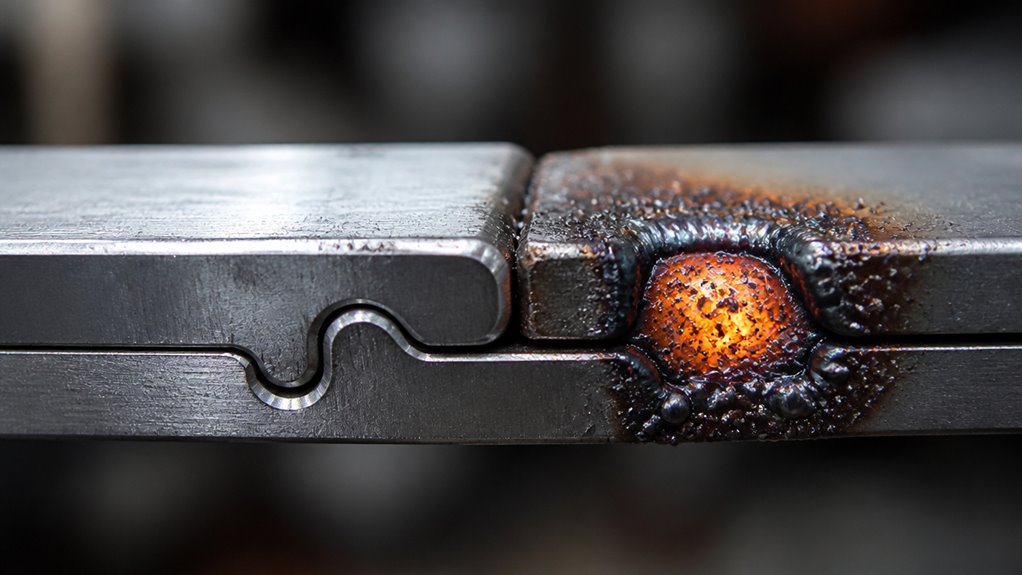
When choosing between clinching and spot welding, consider your materials and access needs.
Clinching mechanically interlocks sheets without heat, excels with dissimilar metals or coated surfaces, and allows single-sided operation.
Spot welding fuses metals using high current, offering stronger static tensile strength but requires matched metallurgy and dual-sided access.
Clinching also reduces energy use and maintenance costs.
Understanding these trade-offs lets you optimize joint performance and production efficiency for your specific application requirements.
| Feature | Clinching | Spot Welding |
|---|---|---|
| Joining Method | Cold mechanical interlock | Electrical fusion using heat |
| Heat Required | None | High electrical current and heat |
| Static Tensile Strength | About 2–8 kN | About 5–15 kN |
| Fatigue Resistance | Excellent | Good |
| Material Compatibility | Excellent for dissimilar materials | Best with compatible metals |
| Coated Surfaces | Preserves coatings | Heat can damage coatings |
| Thickness Ratio | Up to about 3:1 | Generally under 2:1 |
| Access Requirement | Single-sided | Dual-sided |
| Energy Consumption | About 80–90% lower | High |
| Consumables | None | Electrodes and gases |
| Initial Equipment Cost | About €25,000–€40,000 | About €35,000–€80,000 |
| Maintenance | Punch, die, alignment, and force calibration | Electrodes, electrical system, and equipment |
| Heat-Affected Zone | None | Present |
| Production Flexibility | High for varied materials and access conditions | Excellent for compatible sheet-metal production |
| Automation | Well suited to robotic assembly | Well suited to automated production |
| Best Applications | Coated sheets, dissimilar metals, and single-sided assemblies | High-strength sheet-metal joints and high-volume production |
| Main Advantage | Low energy use, material flexibility, and coating preservation | Higher static strength and strong permanent fusion |
| Main Drawback | Requires high mechanical force and rigid tooling | Requires dual-sided access, electricity, and compatible metallurgy |
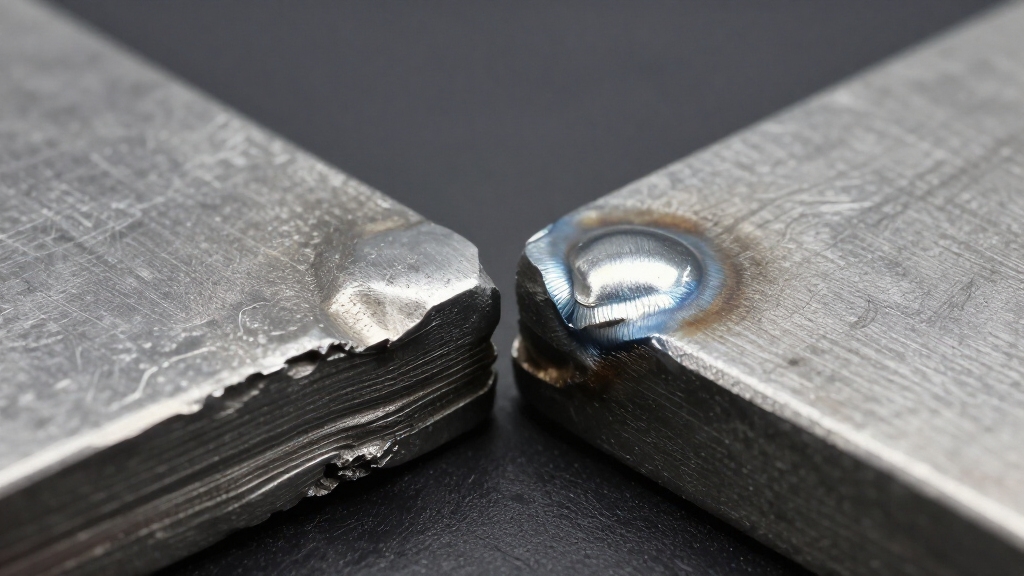
Although both clinching and spot welding join sheet materials, they operate on fundamentally different principles: clinching mechanically forms a cold interlock by deforming the sheets with a punch and die.
Spot welding uses high electrical current to fuse overlapping sheets at localized points.
When you use clinching, you avoid heat and filler materials, creating a button-like interlock through plastic deformation.
This process doesn’t alter the material’s microstructure. Spot welding, in contrast, passes currents typically between 8,000 and 20,000 A, applying electrode pressure for fractions of a second.
This generates a heat-affected zone and metallurgical fusion.
Clinching demands higher mechanical force and rigid tooling, whereas spot welding requires electrical control and dual-sided access.
Understanding these mechanisms helps you select the most suitable joining process based on your application’s mechanical and thermal considerations.
Spot welding typically involves four key steps — squeeze time, weld time, hold time, and off time — to ensure strong, consistent welds.
Material compatibility plays a crucial role when choosing between clinching and spot welding for sheet joining.
Clinching excels with dissimilar materials and can join multiple layers with thickness ratios up to about 3:1.
Spot welding, however, demands compatible metallurgy and performs best with similar metals under roughly 2:1 thickness ratio.
Consider these factors:
Additionally, processes like friction welding offer minimal heat-affected zones and preserve base metal integrity, highlighting the importance of solid-state joining methods in sensitive applications.
When evaluating the strength and durability of clinching versus spot welding, you’ll find that spot welds generally offer higher static tensile strength in comparable sheet-metal applications.
Spot welds can reach tensile strengths of 5–15 kN, whereas clinched joints typically deliver 2–8 kN, roughly 60%–80% of spot weld strength.
However, clinching excels under fatigue or dynamic loading due to its cold-formed interlock, which avoids the heat-affected zone and weld notch effects inherent in spot welding.
This often results in superior cyclic durability and improved fatigue resistance for clinched joints.
You should consider these trade-offs carefully: spot welding provides robust static strength, while clinching offers enhanced performance in applications subject to repeated or fluctuating loads.
For inspecting spot weld quality, using a fillet weld gauge can help ensure weld size and throat thickness meet specified requirements.
Because clinching relies on mechanical deformation, it demands higher force and a more rigid machine and tool design compared to spot welding.
When setting up production, you must consider these key equipment differences:
These differences also affect equipment needs, with spot welding requiring electrodes and electrical power, while clinching relies on robust mechanical components, influencing capital investment and maintenance.
Understanding these distinctions helps you optimize production efficiency and select suitable equipment for your joining application.
In evaluating joining methods, you’ll find clinching offers significant advantages in cost and energy efficiency compared to spot welding.
Clinching eliminates consumables and surface preparation, reducing operating expenses and waste disposal. It consumes 80%–90% less energy, thanks to cold mechanical joining versus high-current fusion.
Although clinching equipment may have a higher upfront cost, its lower maintenance and consumable needs improve long-term economics. Spot welding machines often cost less initially but incur ongoing energy and consumable costs.
GMAW welding, by contrast, provides higher deposition rates and faster welding speeds with minimal post-weld cleanup due to low spatter.
| Factor | Clinching | Spot Welding |
|---|---|---|
| Energy Consumption | 10% of spot welding | High (8,000–20,000 A) |
| Consumables | None | Electrodes, gases |
| Initial Cost | €25,000–€40,000 | €35,000–€80,000 |
You’ll reduce environmental impact by choosing clinching for sustainable manufacturing.
You generally can’t disassemble clinched joints without damaging them because the process creates a permanent mechanical interlock by deforming the materials.
Reworking a clinched joint often means removing the entire joint area and creating a new one, which can be challenging.
However, minor adjustments may be possible with specialized tools, but full reversal isn’t practical.
You should plan carefully before clinching since it’s intended as a permanent joining method.
Imagine handling a high-pressure stapler. Clinching needs you to guard against pinch points and ensure machine rigidity to prevent sudden tool failures.
You’ll wear protective gloves and eye protection, focusing on mechanical hazards rather than heat.
In contrast, spot welding demands strict electrical safety measures, intense eye protection against arcs, and ventilation for fumes.
Both require training, but spot welding’s heat and electrical risks call for more rigorous PPE and workspace controls.
Surface finish critically influences clinching joint quality by affecting material flow during deformation.
If the surface is too rough, it can cause inconsistent interlock formation or tool wear.
Conversely, overly smooth or coated surfaces, like prepainted sheets, preserve finish integrity since clinching doesn’t damage coatings.
You’ll want to make certain the surface is clean and free of contaminants to avoid defects, but don’t worry about removing protective layers.
Clinching preserves surface finish effectively.
Yes, clinching machines demand regular inspection of punches and dies for wear or damage since tooling quality directly impacts joint integrity.
You’ll need to maintain precise alignment and rigidity in the tooling setup to guarantee consistent interlocks.
Lubrication of moving parts is vital to prevent mechanical wear.
Unlike welding, you won’t worry about electrode contamination, but you must monitor force calibration often to avoid under- or over-clinching defects.
Oh sure, you can totally ignore automation if you want slower production.
Clinching fits perfectly into high-speed robotic assembly lines, despite requiring higher forces and rigid tooling.
Modern clinching systems integrate well with robotics, offering single-sided access and quick cycles.
You’ll benefit from precise control, energy savings, and adaptability to dissimilar materials.
Just make sure your robot’s end-effector can handle the necessary force and tooling size for seamless automation.
Choosing between clinching and spot welding is like selecting the right key for a complex lock.
Clinching’s mechanical grip offers versatility across materials, while spot welding’s molten bond guarantees strength and permanence.
You’ll weigh production speed, equipment costs, and environmental impact, with each method revealing different efficiencies.
Ultimately, your decision hinges on aligning material compatibility and durability needs with operational priorities.
This ensures your joint stands firm like a well-forged bridge in demanding conditions.