Phone:
(701)814-6992
Physical address:
6296 Donnelly Plaza
Ratkeville, Bahamas.

Phone:
(701)814-6992
Physical address:
6296 Donnelly Plaza
Ratkeville, Bahamas.

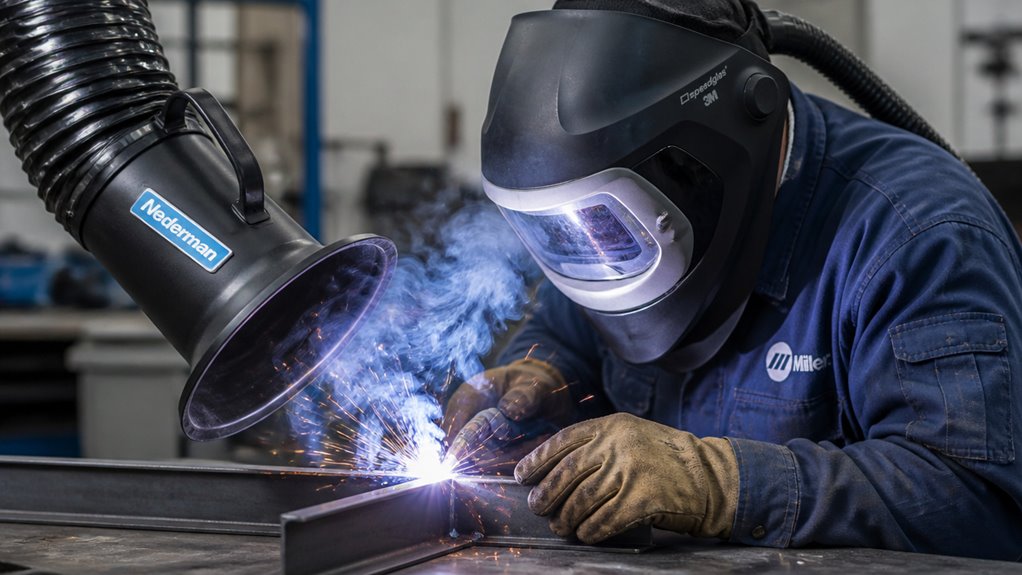
You can prevent inhaling welding fumes by isolating your work area with barriers and positioning yourself upwind or angled away to avoid the plume.
Always remove surface coatings like paint and zinc around the weld to reduce hazardous fumes.
Select low-fume consumables and avoid overwelding to minimize emissions.
Use local exhaust ventilation placed close to the weld and maintain airflow above 100 fpm.
When necessary, wear properly fitted respirators suited to your exposure.
Effective control combines multiple strategies you’ll discover next.
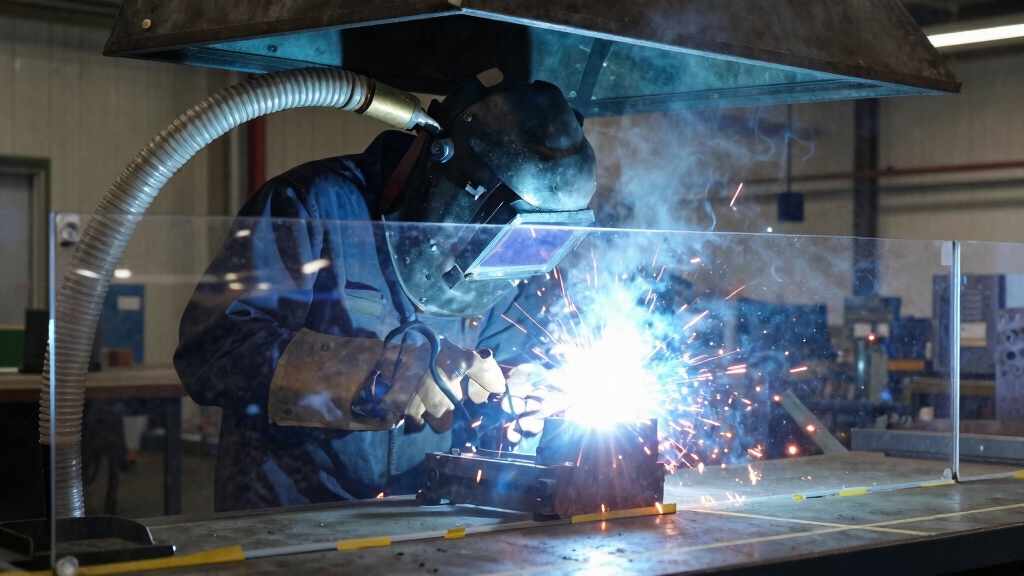
When you isolate welding areas effectively, you markedly reduce the risk of fume exposure to other workers.
Start by restricting access with barriers or protective screens to shield adjacent personnel from airborne contaminants.
Position your exhaust ports strategically, ensuring they don’t pull fumes toward nearby workers.
Arrange the workpiece so welding fumes rise away from breathing zones, minimizing inhalation risk.
Avoid overwelding, as excessive weld material increases fume volume unnecessarily.
By implementing these controls, you limit cross-contamination and maintain a safer environment.
Consistently monitor the welding zone layout to confirm fumes remain contained.
Proper isolation not only protects coworkers but also enhances overall air quality, reducing the potential for occupational respiratory issues linked to welding fume exposure.
Always use local exhaust ventilation near the welding source to effectively capture hazardous fumes before they disperse.
Before you dive into welding, it’s super important to clear off any surface coatings like paint, rust, and plating from the metal. Trust me, this step really helps in preventing toxic fumes.
Make sure you clean the metal thoroughly, and don’t forget to strip away any contaminants at least four inches beyond the weld area. This extra effort goes a long way.
Proper preparation not only reduces fume generation but also seriously boosts your weld quality. So, take your time here; it’s worth it!
Removing zinc from the weld zone is especially crucial because zinc vaporizes at relatively low temperatures and produces harmful zinc oxide fumes during welding.
Removing surface coatings such as paint, rust, or plating from the metal around your weld area markedly reduces the generation of toxic fumes.
These coatings contain elements that vaporize during welding, producing hazardous airborne contaminants. You should strip coatings at least four inches beyond the weld zone to prevent residual fumes.
Employ mechanical methods like wire brushing, grinding, or chemical stripping to guarantee complete removal without damaging the base metal.
Avoid using solvents that leave residues, as these can also contribute to fume generation.
Proper removal of surface coatings minimizes exposure to harmful substances like lead, chromium, and cadmium found in paints and plating.
Ensure the metal surface is thoroughly cleaned and dried before welding to further reduce fume production and improve weld quality.
After stripping away surface coatings, you should clean the metal thoroughly to eliminate oils, grease, dirt, and other contaminants that contribute to fume generation during welding.
Residual contaminants can vaporize under heat, increasing toxic fume output and exposure risk. Proper cleaning minimizes this hazard and improves weld quality.
Use appropriate methods like:
Controlling oxidation and nitriding layers from cutting or surface treatments is essential to maintain joint quality and reduce harmful emissions during welding.
To cut down on toxic fumes during welding, you’ll want to strip paint, rust, and other surface coatings from the metal thoroughly.
Surface contaminants like paint and rust contain hazardous compounds that vaporize under heat, markedly increasing fume toxicity.
Use mechanical methods such as wire brushing, grinding, or chemical strippers to remove coatings at least four inches beyond the weld area.
Make certain metals are clean and dry before starting to minimize fume generation at the source.
Proper surface preparation not only reduces toxic emissions but also improves weld quality and penetration.
Skipping this step can lead to excessive fume exposure and compromised weld integrity.
Always wear appropriate PPE during paint and rust removal to avoid inhaling dust or chemical residues.
Removing coatings at least 25 mm (1 inch) around the weld zone is critical to prevent porosity and reduce zinc fume exposure.
When you’re choosing welding materials, it’s a good idea to go for consumables that produce fewer toxic fumes. This can really help cut down on inhalation risks.
Before you start welding, make sure to prep the metals properly. Give them a good cleaning and remove any surface coatings like paint, rust, or plating—aim for at least four inches around the weld area.
Doing this not only helps reduce harmful fumes but also boosts your overall welding safety. So, a little prep work goes a long way! Additionally, selecting the appropriate transfer mode in MIG welding can significantly reduce fume generation and improve weld quality.
Selecting welding consumables that generate fewer fumes materially reduces your exposure to harmful airborne contaminants. By choosing low-toxicity options, you limit both the volume and toxicity of welding fumes, enhancing safety markedly.
Consider these factors when selecting consumables:
Use electrodes and filler metals designed for reduced fume production, such as low-hydrogen or silicon bronze alloys.
Substitute welding processes that inherently produce fewer fumes, like TIG (Tungsten Inert Gas) welding instead of SMAW (Shielded Metal Arc Welding).
Opt for consumables with minimal flux content or those formulated to reduce hazardous elements like manganese or chromium.
These choices directly impact fume composition and concentration, helping maintain a safer breathing environment during welding operations.
Always verify consumable specifications and compatibility with your welding application for best results.
Additionally, selecting consumables that provide proper shielding effects can improve weld quality while minimizing fume generation.
When preparing metal surfaces for welding, removing coatings like paint, rust, oil, and plating is essential to minimize toxic fume generation. These surface contaminants release hazardous fumes when heated, increasing your exposure risk. Choose base metals and consumables that inherently produce fewer fumes and ensure the weld area is clean for best fume reduction.
| Material Type | Fume Generation Level | Recommended Use |
|---|---|---|
| Clean Steel | Low | General welding |
| Painted Metal | High | Avoid without cleaning |
| Rusted Metal | Moderate | Remove rust before welding |
| Oiled Surfaces | High | Degrease thoroughly |
| Plated Metals | High | Strip plating before weld |
Proper metal preparation directly reduces fume volume and toxicity during welding. Welding rusted metal without proper removal of oxidation can also cause porosity and weak fusion, which compromises weld quality and safety.
Proper removal of surface coatings like paint, rust, oil, and plating markedly reduces the generation of harmful fumes during welding.
You should strip these coatings at least four inches beyond the weld area to minimize toxic emissions. Using effective coating removal techniques helps guarantee cleaner welds and less fume production.
Consider these methods to optimize coating removal:
Mechanical abrasion: Employ grinders or wire brushes to strip coatings efficiently.
Chemical stripping: Use solvent-based or caustic solutions for paint and plating removal, guaranteeing proper ventilation.
Thermal removal: Apply controlled heating to burn off coatings, taking care to avoid excessive fume generation.
Ensuring surface cleaning and roughening before welding not only improves adhesion but also reduces hazardous fume production.
Minimize the amount of welding applied beyond what’s structurally necessary to cut down on fume generation. Overwelding adds excessive metal, increasing the total volume of fumes produced during the process.
You should calculate the precise weld size and length required for structural integrity and avoid exceeding these specifications. Applying more weld metal than needed not only wastes consumables but also elevates fume emissions, raising health risks.
By adhering strictly to design requirements and approved welding procedures, you guarantee unnecessary fume production at the source is limited. This approach reduces airborne contaminants and improves overall air quality in the workspace.
Consistently reviewing weld parameters and inspection standards guarantees you don’t unintentionally overweld, maintaining efficient, safe, and compliant operations.
Additionally, maintaining proper bead geometry helps balance stresses and prevents excessive filler use that can increase fume output.
By carefully positioning your body and head, you can markedly reduce exposure to hazardous welding fumes.
Position yourself to keep fumes away from your breathing zone by angling slightly to the side of the weld and maintaining distance from the plume. In outdoor environments, stay upwind to let the air carry fumes away. Always keep your head as far as possible from the fume source to minimize inhalation risk.
Angle to the side of the weld, keep distance, and stay upwind to minimize fume inhalation risk.
Consider these essential positioning strategies:
Align your body so air flows from behind you toward the welding area, pushing fumes forward.
Avoid standing directly over or downwind of the weld plume.
Adjust the welding workpiece to direct fumes away from your breathing zone.
These measures help reduce fume inhalation effectively without relying on external ventilation controls.
To cut down on your exposure to welding fumes, try positioning yourself upwind.
This way, the airflow will help carry the fumes away from where you’re breathing.
Also, angling your body a bit to the side can be really effective.
It helps redirect those fumes, keeping them from rising straight toward you.
And, of course, always do your best to maintain as much distance as possible from the fume plume.
This little trick goes a long way in minimizing your risk of inhalation.
When working outdoors or in areas with variable airflow, positioning yourself upwind of the welding operation helps keep fumes from drifting into your breathing zone.
By staying upwind, you reduce the risk of inhaling hazardous fumes, improving your safety and comfort on the job.
To optimize your position relative to wind, consider these key points:
Monitor wind direction consistently and adjust your stance accordingly to maintain an upwind position.
Avoid standing downwind or directly in the path of fume plumes, especially when wind speeds fluctuate.
Use natural or artificial windbreaks to control airflow and minimize fume dispersion toward your breathing zone.
Maintaining awareness of wind conditions and positioning yourself strategically forms a fundamental part of controlling your exposure to welding fumes.
Angle your body and welding torch strategically to redirect fumes away from your breathing zone. Position yourself slightly to the side of the weld so fumes drift naturally away, rather than directly toward your face.
Adjust the torch angle to influence the direction of the fume plume, guiding it downwind or laterally to minimize exposure. Maintain consistent control over the torch’s orientation to prevent fumes from rising vertically into your inhalation path.
Use the airflow in your environment to your advantage by aligning yourself so air moves from behind you toward the weld, pushing fumes forward and away. This precise angling reduces the concentration of airborne contaminants you encounter, enhancing respiratory safety without compromising weld quality or accessibility.
Redirecting fumes through careful positioning helps, but maintaining a safe distance from the plume markedly lowers your inhalation risk. You should always position yourself to avoid direct exposure to rising fumes by angling your head and body away.
Staying upwind when welding outdoors guarantees fumes drift away from your breathing zone, reducing inhaled contaminants substantially. Additionally, controlling airflow direction so it moves from behind you forward helps push fumes away.
Key techniques to maintain distance from the plume include:
These measures are essential for minimizing fume inhalation risks effectively.
Capturing welding fumes at their source markedly reduces your exposure to harmful airborne contaminants.
You should position local exhaust ventilation (LEV) devices, such as hoods or extractor guns, as close as possible to the weld to maximize fume capture.
Make certain the airflow velocity is adequate to draw fumes away effectively. Regularly inspect and maintain LEV units, checking fans and filters before each use to maintain performance.
| LEV Component | Recommended Positioning | Key Consideration |
|---|---|---|
| Portable Hood | Within 6 inches of weld | Maximize fume extraction |
| Extractor Gun | Near plume source | Maintain mobility |
| Vacuum Nozzle | Directly above weld | Capture rising fumes |
| Airflow Velocity | ≥ 100 feet per minute (fpm) | Make certain sufficient suction |
| Maintenance | Pre-shift fan and filter check | Prevent system failure |
While local exhaust ventilation targets fumes at their source, you still need general ventilation to dilute and remove residual welding fumes from the work environment.
General ventilation guarantees ambient airflow circulates effectively, reducing fume concentration and maintaining air quality.
To optimize general ventilation, focus on these key factors:
Guarantee a minimum of six air changes per hour in welding areas to maintain sufficient dilution.
Maintain at least 2,000 cubic feet per minute (CFM) of airflow per welder when relying solely on general ventilation.
Avoid welding in confined spaces without a dedicated ventilation system to prevent fume accumulation.
Always prioritize respiratory protective equipment (RPE) when engineering controls and ventilation can’t fully eliminate welding fumes. You must select RPE based on the exposure level and duration.
For short tasks up to one hour, use an FFP3 disposable mask or a half-mask respirator equipped with a P3 filter. For longer welding sessions, battery-powered air-fed respirators with an assigned protection factor (APF) of 20 or more provide superior protection.
Proper fit-testing is essential; an ill-fitting mask compromises your safety by allowing fumes to bypass the filter. Inspect RPE regularly to ensure seals, filters, and straps remain functional.
Replace filters according to manufacturer guidelines and workplace exposure conditions. Always train yourself in correct donning, doffing, and maintenance procedures to maximize RPE effectiveness and minimize fume inhalation risk.
Keep ventilation systems in top condition to guarantee they effectively remove welding fumes at the source.
Regular maintenance ensures that fans, filters, and ducts operate at peak efficiency, preventing fume accumulation and reducing exposure risks.
Neglecting these systems can lead to decreased airflow and ineffective contaminant extraction.
To maintain your ventilation systems effectively, focus on these key actions:
Inspect and clean filters frequently to prevent clogging and maintain airflow.
Verify fan operation and air velocity to guarantee sufficient fume capture.
Check ductwork for leaks or blockages that reduce extraction efficiency.
You face serious health risks from long-term welding fume exposure, including chronic bronchitis, asthma, and reduced lung function.
Prolonged inhalation can lead to metal fume fever, pneumoconiosis, and even lung cancer due to toxic metals like manganese and chromium.
Neurological damage and cardiovascular issues are also concerns.
These risks emphasize the importance of controlling fumes and using protective equipment to safeguard your respiratory health during welding operations.
You shouldn’t wait until symptoms appear. Welders need medical check-ups at least annually to monitor any effects from fume exposure.
If your work involves heavy or prolonged exposure, more frequent evaluations every six months are advisable.
These check-ups focus on respiratory health, lung function, and early detection of occupational diseases. Staying proactive helps catch issues early and guarantees you maintain your health while working safely in hazardous environments.
Yes, welding fumes can affect surrounding equipment and materials by depositing particulate matter. This may cause corrosion or contamination.
You should isolate welding operations and position exhaust ports to prevent fumes from settling on sensitive surfaces. Using local exhaust ventilation helps capture fumes at the source, minimizing their spread.
Additionally, removing coatings from materials before welding reduces toxic residue. This protects both equipment and workpieces from damage caused by fume exposure.
Yes, you’ll find specific training programs focused on safe welding fume practices.
These courses teach proper fume control methods, ventilation techniques, and the correct use of respiratory protective equipment.
They emphasize hazard recognition and compliance with occupational safety standards like OSHA and ACGIH.
You can monitor fume exposure levels effectively by implementing regular air sampling and using real-time fume monitors near welding stations.
Review exposure data against occupational limits daily. Train supervisors to interpret results and adjust controls promptly.
Assure ventilation systems and local exhaust ventilation (LEV) are operating correctly through routine inspections.
Maintain detailed exposure records and conduct periodic health surveillance to identify trends and intervene before exposure exceeds safe thresholds.
To protect yourself from welding fumes, isolate your workspace and prepare metals carefully to minimize fume generation.
Choose low-fume materials and avoid overwelding to reduce exposure. Position yourself upwind and always use local and general ventilation systems, ensuring they’re well-maintained.
Don’t forget your respiratory protective equipment. It’s your last line of defense.
Like a shield in a storm, these precautions guard your lungs, keeping your health intact and your work safe.
[…] local exhaust ventilation with general ventilation to achieve at least six air changes per hour helps ensure sufficient dilution and removal of welding […]