Phone:
(701)814-6992
Physical address:
6296 Donnelly Plaza
Ratkeville, Bahamas.

Phone:
(701)814-6992
Physical address:
6296 Donnelly Plaza
Ratkeville, Bahamas.

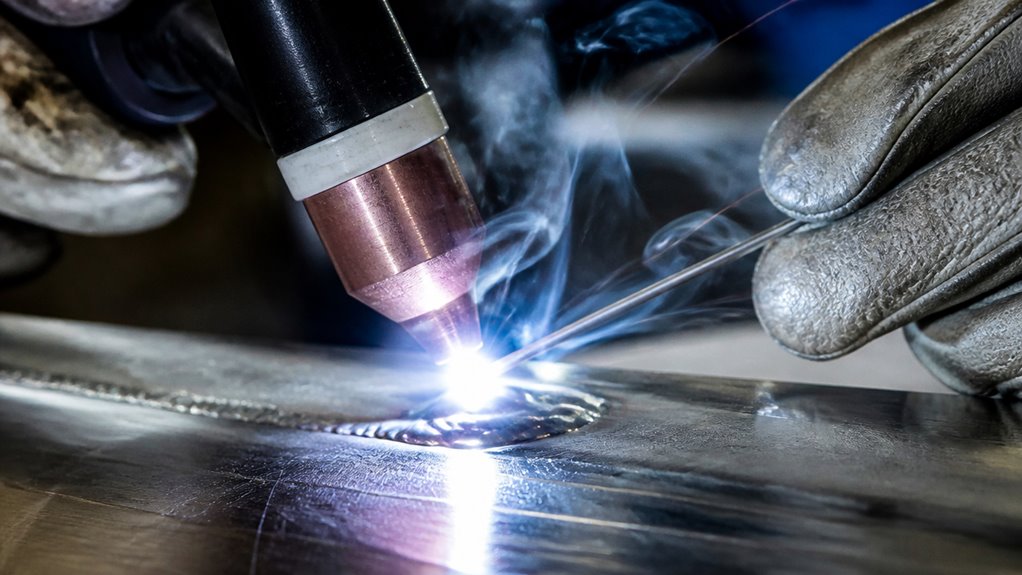
Yes, you can weld aluminum with a TIG welder, provided you use an AC-capable machine for effective oxide cleaning and pure argon shielding gas to protect the weld pool.
Proper surface preparation is critical to avoid contamination and guarantee consistent fusion.
Maintain a short arc length, sharp zirconiated tungsten, and steady filler addition while controlling heat input to prevent distortion.
Managing these factors precisely guarantees strong welds; exploring detailed techniques will improve your results further.
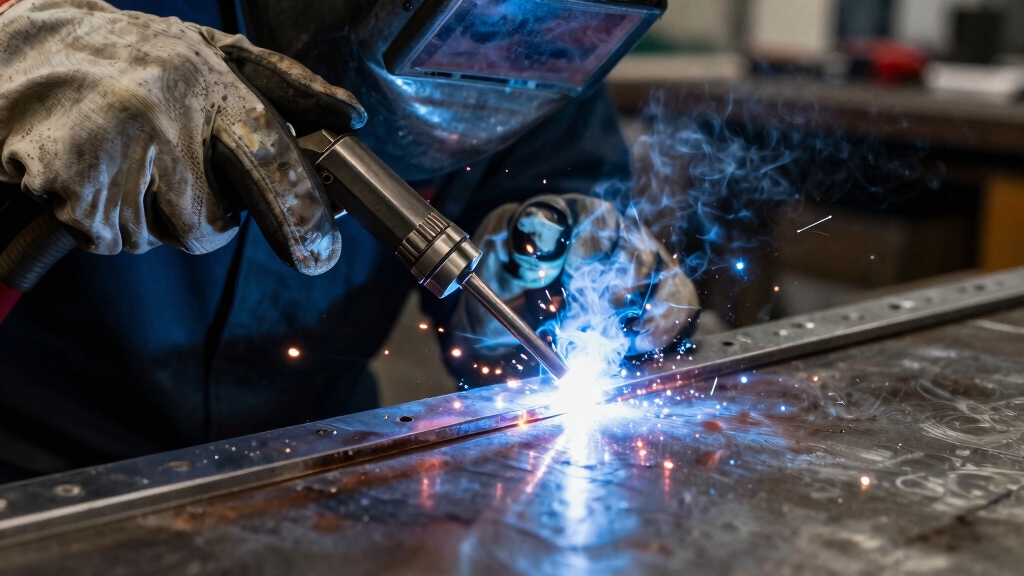
Although TIG welding aluminum presents unique challenges, you can successfully achieve clean, precise welds with the right equipment and technique.
Aluminum’s high thermal conductivity and oxide layer require careful surface preparation and precise arc control. You’ll need an AC-capable TIG welder to provide the alternating current essential for effective oxide cleaning and stable fusion.
Use pure argon shielding gas to protect the weld pool and maintain a sharp tungsten electrode for a stable arc. A push angle with a short arc length, combined with consistent filler addition at the puddle’s leading edge, guarantees proper fusion without contamination.
Managing heat input is critical. Too much causes distortion, while too little results in poor penetration. By balancing these factors, you can produce strong, defect-free aluminum welds consistently.
Proper surface cleaning with a stainless steel wire brush dedicated to aluminum is essential to remove the oxide layer and ensure proper fusion.
If you’re working with aluminum, an AC/DC TIG welder is a must-have. Why? Well, the alternating current does a fantastic job of cleaning off that pesky oxide layer that tends to form on the surface. This cleaning action isn’t just a nice-to-have; it’s essential for making sure you get proper fusion and avoid any contamination in your welds.
Plus, using AC output really helps stabilize the arc. This means you have more precise control over the weld pool, which leads to a more consistent bead quality. So, when you’re tackling aluminum projects, having that AC/DC capability really makes a difference! Inverter technology also plays a key role by offering precise arc control that reduces distortion and boosts welding speed.
Since aluminum forms a tenacious oxide layer that melts at a considerably higher temperature than the base metal, effective cleaning during welding is essential to achieve a strong, defect-free joint.
This oxide impedes proper fusion and can cause porosity or weak welds if not removed. You rely on AC TIG welders because the alternating current provides a cleaning action that breaks down this oxide layer while welding.
To optimize oxide cleaning and weld quality, focus on:
This combination guarantees a clean weld surface and strong joint integrity.
Additionally, avoid delays between cleaning and welding since aluminum rapidly re-oxidizes, requiring immediate welding to maintain weld quality.
Consistently maintaining a stable arc is crucial when TIG welding aluminum. The metal’s high thermal conductivity and oxide layer demand precise control overthe welding current and arc length.
Using an AC/DC TIG welder provides this control by delivering alternating current that balances oxide cleaning with stable arc performance. The AC waveform’s cleaning action removes the refractory aluminum oxide. Its electrode-negative portion guarantees sufficient penetration and heat input.
You’ll find that AC/DC machines offer adjustable frequency and balance controls. These features allow you to fine-tune arc stability and heat distribution. This precision mitigates arc wander and puddle instability common with aluminum.
Without AC capability, a DC-only welder lacks the cleaning function. This results in poor fusion and erratic arc. Therefore, stable arc control via AC/DC TIG welders is indispensable for clean, consistent aluminum welds.
Additionally, maintaining spray transfer mode and direct current electrode positive (DCEP) polarity is essential in MIG welding aluminum to achieve stable arc performance and reliable fusion.
How thick can aluminum be for effective TIG welding? Typically, you can TIG weld aluminum from very thin sheets up to about 1/2 inch thick with the right equipment and technique.
Here’s a breakdown:
Stay within these limits for optimal weld quality and manageable heat input when TIG welding aluminum. For thicker aluminum, consider the preheat and heat control techniques necessary to ensure proper fusion and avoid distortion.
Sure! Here’s a more conversational version of the text:
—
Before you start TIG welding aluminum, it’s really important to clean the surface thoroughly. You’ll want to grab an aluminum-specific degreaser to get rid of any contaminants. Don’t forget to use a dedicated stainless steel wire brush to remove that pesky oxide layer, too.
Now, let’s talk about fit-up and alignment. Getting these right is crucial! If everything fits tight and is aligned properly, you’ll minimize heat input and ensure consistent penetration.
If you skip these steps, you could run into issues like porosity, weak welds, and even arc instability. So, take your time with the prep work—it’s worth it in the end!
Also, using argon shielding gas during welding helps prevent oxidation and ensures a cleaner, stronger weld.
Proper surface cleaning is crucial to achieve high-quality TIG welds on aluminum. Contaminants and oxide layers greatly hinder weld integrity. Before welding, you must remove oils, dirt, and other residues that cause porosity and arc instability.
Use a dedicated aluminum stainless steel wire brush to mechanically clean the surface without embedding foreign particles. Follow these three key steps:
Meticulous cleaning guarantees prime arc stability, reduces defects, and promotes fusion. This sets the foundation for a strong, defect-free weld. It is also important to avoid harsh chemicals or abrasive methods that can damage the protective oxide layer and compromise the weld quality.
Removing the stubborn aluminum oxide layer is essential to guarantee a clean, strong TIG weld. This layer melts at around 2050°C, much higher than aluminum’s 660°C melting point. You must remove it to ensure proper fusion.
You can mechanically remove oxide using a dedicated stainless steel wire brush or chemically with a specialized aluminum degreaser. Always clean the surface right before welding to prevent re-oxidation.
| Method | Key Points |
|---|---|
| Stainless steel wire brush | Use only for aluminum to avoid contamination |
| Chemical degreaser | Removes oils and oxide residues |
| Abrasive pads | Fine grit for gentle oxide removal |
| Grinding | Use cautiously; avoid overheating |
| Timing | Clean immediately before welding |
Proper oxide removal minimizes porosity and arc instability, enabling a stable, clean weld pool. Maintaining precise current control during welding is also critical to overcome the insulating effects of the oxide layer and achieve proper penetration.
Make certain tight fit-up and precise alignment when preparing aluminum for TIG welding, as these factors directly impact weld quality and heat input requirements.
Aluminum’s high thermal conductivity means gaps increase heat input and can cause excessive distortion or weak welds. To optimize fit-up and alignment:
Adhering to these precise preparation steps improves arc stability, minimizes porosity risks, and supports consistent fusion in your aluminum TIG welds. Additionally, selecting the proper ceriated or thoriated tungsten electrodes sized between .020 and 1/16 inch helps maintain precise arc control and reduces heat-affected zones during welding.
When selecting tungsten electrodes and shielding gas for TIG welding aluminum, you need to prioritize arc stability and oxide cleaning efficiency.
Choose pure tungsten or zirconiated tungsten electrodes sharpened to a fine point for AC welding. These provide a stable arc and resist contamination from aluminum oxide.
Pure or zirconiated tungsten electrodes sharpened finely ensure stable arcs and resist aluminum oxide contamination in AC welding.
Avoid thoriated or ceriated tungsten, as they’re better suited for DC applications. For shielding gas, pure argon is standard, offering optimal arc characteristics and preventing oxidation.
If you’re welding thicker aluminum, consider an argon-helium mix. Helium increases heat input and penetration without compromising weld quality.
Balancing tungsten type and gas composition directly influences arc control and weld cleanliness. Selecting them carefully guarantees efficient oxide removal and consistent fusion, critical for defect-free aluminum TIG welds.
For most aluminum TIG work, lanthanated tungsten is recommended as the closest thing to a universal electrode solution.
Consistently applying proper TIG welding techniques is essential for achieving clean, defect-free aluminum welds. You need precise control over the torch angle, arc length, and filler addition to maintain weld integrity and avoid contamination.
Here are three critical techniques to master:
Mastering these techniques enhances weld quality and reduces defects typical in aluminum TIG welding.
Because aluminum dissipates heat rapidly and is prone to distortion, managing heat input during TIG welding is crucial to maintain weld integrity and dimensional accuracy.
You need to control amperage carefully, use pulse TIG if possible, and consider heat sinks or preheating thicker sections to reduce thermal gradients.
Balancing travel speed and arc length also minimizes localized overheating and warping.
| Technique | Purpose |
|---|---|
| Low Amperage | Limits heat input to reduce distortion |
| Pulse TIG | Allows cooling intervals to control temperature |
| Heat Sinks | Absorb excess heat, stabilize weld area |
| Preheating (Thick) | Reduces thermal shock, improves penetration |
Implementing these methods helps you maintain precise weld dimensions and prevent common distortion issues characteristic of aluminum TIG welding.
Although TIG welding aluminum offers clean and precise results, you’ll face specific challenges like contamination, porosity, and unstable arc behavior if preparation and technique aren’t meticulous.
TIG welding aluminum delivers precision but demands careful preparation to overcome common challenges like contamination and porosity.
To avoid these issues, focus on the following:
Addressing these factors systematically enhances weld integrity and minimizes defects inherent to aluminum TIG welding.
You can TIG weld aluminum outdoors, but you’ll face challenges. Wind disrupts your argon shielding gas, causing contamination and poor weld quality.
You’ll need windshields or enclosures to protect the gas flow. Outdoor conditions can also affect heat control and visibility of the weld puddle.
For consistent, clean aluminum TIG welds, a controlled indoor environment is preferable. However, with proper shielding and preparation, outdoor welding is feasible.
You’ll need safety gear tougher than a tank’s armor for TIG welding aluminum.
Always wear a high-quality auto-darkening welding helmet to shield your eyes from intense UV radiation.
Use flame-resistant gloves and long sleeves to protect your skin from burns and sparks.
Respiratory protection is vital; aluminum fumes can be harmful.
Make sure there’s good ventilation or wear a respirator.
Don’t forget hearing protection if you’re in a noisy environment to avoid damage.
You can expect to spend several weeks to months developing proficiency in TIG welding aluminum, depending on your practice frequency and prior welding experience.
Mastery requires consistent focus on surface preparation, arc control, and heat management.
Regularly practicing steady torch movement, filler addition, and maintaining proper settings accelerates skill acquisition.
Using test pieces for feedback helps refine technique, but achieving reliable, clean welds on various aluminum thicknesses typically demands dedicated training and hands-on experience.
Imagine a robotic arm precisely guiding a TIG torch, its arc dancing over aluminum’s shiny surface with unwavering consistency.
Yes, you can automate TIG welding aluminum for industrial production, especially for repetitive, thin to medium thickness parts.
Automation demands tight control over parameters like arc length, heat input, and filler feed to avoid defects.
While complex alloys and intricate joints pose challenges, careful programming and advanced sensors help you achieve consistent, high-quality welds at scale.
You’ll want to match filler metals to aluminum alloys carefully.
For 1xxx and 3xxx series, use 4045 or 3003 fillers for good corrosion resistance.
For 5xxx alloys, 5356 filler is best, offering strength and weldability. For 6xxx series, 4045 or 4047 fillers reduce cracking risks.
Welding aluminum with a TIG welder isn’t just possible; it’s a precise craft you can master.
Think of it like tuning a delicate instrument: controlling heat, choosing the right tungsten and shielding gas, and preparing your material carefully all play essential roles.
By understanding these technical details and avoiding common pitfalls, you’ll achieve clean, strong welds.
With practice and attention, your aluminum TIG welding skills will hit the perfect note every time.
[…] weld integrity and metallurgical properties without compromising quality. For aluminum welding, an AC-capable TIG welder is essential to effectively remove oxide layers and achieve proper […]