Phone:
(701)814-6992
Physical address:
6296 Donnelly Plaza
Ratkeville, Bahamas.

Phone:
(701)814-6992
Physical address:
6296 Donnelly Plaza
Ratkeville, Bahamas.

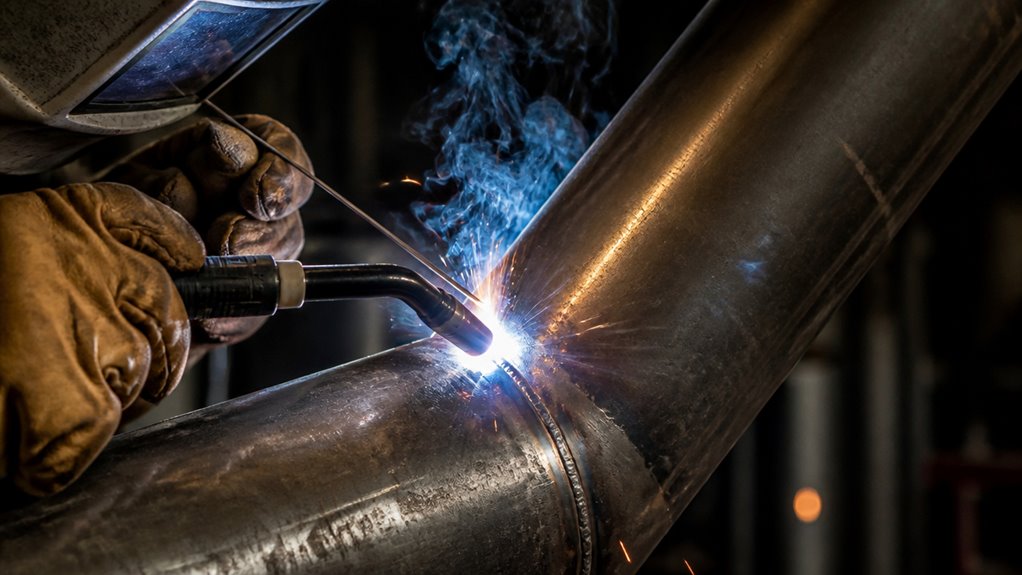
6G in welding means you’re working on a fixed pipe set at a 45-degree angle, requiring you to weld in flat, horizontal, vertical, and overhead positions. This position tests your all-around welding skills and demands precise control of heat, angle, and travel speed to avoid defects from gravity’s pull on the molten metal.
Mastering 6G proves you can handle complex pipe welds in real-world conditions. Exploring its challenges and techniques reveals why it’s so critical.
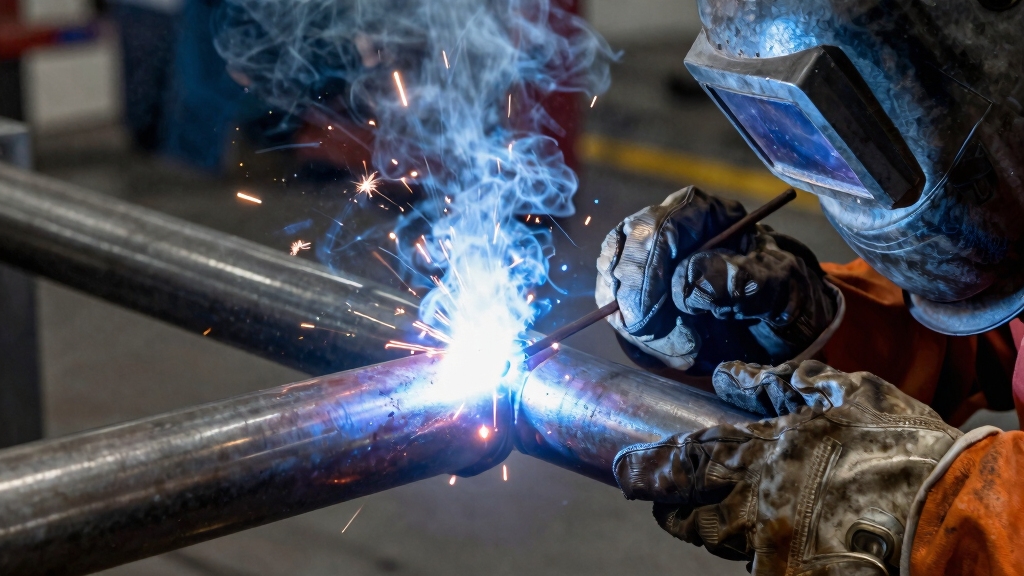
The term “6G” in welding refers to a specific pipe welding position where the pipe is fixed at a 45-degree angle and doesn’t rotate during the welding process.
6G welding involves a stationary pipe set at a 45-degree angle, challenging the welder’s skill and precision.
The “6” designates the position, while “G” indicates a groove weld. In this setup, you weld across multiple orientations—flat, horizontal, vertical, and overhead—within a single joint.
Because the pipe remains stationary, you must manipulate your technique and body position to maintain control of the weld pool against gravity in various directions.
This position is primarily used for pipe and pipeline welding, not general plate work.
Understanding 6G means recognizing its demand for versatility, as you’ll manage different welding angles and positions without adjusting the pipe. This requires precise control and adaptability throughout the process.
Due to the complexity of the 6G position, it often requires advanced out-of-position skill to ensure the weld integrity and quality.
Welding a fixed pipe set at a 45-degree angle can be quite a challenge. Since you can’t rotate the workpiece, you’ll find yourself welding in various orientations. This is where things get tricky!
As you work, gravity starts to pull that molten weld pool in different directions. It’s crucial to have precise control to avoid any defects. You really need to pay attention to how you’re moving.
Throughout the weld, you’ll be adjusting your travel speed, electrode angle, and even your body position. It’s a constant dance to keep everything just right. But with practice, you’ll get the hang of it!
Mastering the 6G position requires proficiency in positional welding techniques to ensure strong, defect-free welds.
Because the pipe remains fixed at a 45-degree angle and can’t be rotated during welding, you must adapt your technique continuously as you move around the joint. This fixed position forces you to weld in multiple orientations: flat, horizontal, vertical, and overhead—without repositioning the pipe. You face unique challenges controlling the weld pool and adjusting parameters dynamically.
Key challenges include:
Mastering these fixed pipe challenges is essential for success in the 6G welding position. It demonstrates thorough all-position welding skill. This position requires precise control of torch angle, arc length, and travel technique to counteract gravity’s influence on the weld pool and avoid common defects like sagging and undercutting, as emphasized in torch and electrode angles.
Adapting your technique to a fixed pipe position means constantly battling gravity’s influence on the weld pool. Since the pipe is set at a 45-degree angle and doesn’t rotate, gravity pulls the molten metal unevenly. This forces you to maintain precise control over the weld pool’s shape and flow.
This effect varies as you move through flat, horizontal, vertical, and overhead sections. Each section demands different counteractions to prevent sagging or dripping. You must stabilize the pool to avoid defects like undercut or excessive reinforcement.
Controlling heat input and travel speed becomes critical, as heat affects fluidity and gravitational flow. This constant adjustment to gravity’s pull is a key reason why 6G demands advanced skill and coordination. It makes this one of the toughest welding positions to master.
Mastery of heat input management is essential in 6G to produce strong welds with adequate fusion while minimizing distortion caused by gravity.
Mastering 6G welding demands frequent adjustments in technique as you progress along the joint. Since the pipe is fixed at a 45-degree angle, you must continuously adapt your approach to accommodate changing welding positions: flat, horizontal, vertical, and overhead within a single weld. This requires precise control over weld pool behavior and heat input.
Key technique variations you’ll need to manage include:
These constant changes make 6G the most demanding position, testing your ability to seamlessly integrate multiple welding disciplines into one continuous, high-quality weld. Selecting the appropriate welding method, such as Flux-Cored Arc Welding for outdoor conditions or Gas Tungsten Arc Welding for precision, is critical to successfully executing this challenging position.
When you weld a pipe fixed at a 45-degree angle, the unique positioning demands precise adjustments in technique to maintain control across multiple orientations.
Because the pipe is stationary, you must adapt your travel speed and electrode angle constantly to counteract gravity’s effect on the weld pool in flat, horizontal, vertical, and overhead segments.
The 45-degree incline forces you to shift body position frequently to access all joint areas effectively.
You’ll need to manage heat input carefully to avoid burn-through or insufficient fusion on the varying slopes.
This angle increases the complexity of maintaining a consistent bead profile and penetration depth.
Mastering these challenges requires deliberate, methodical control to guarantee weld integrity and quality throughout the entire joint without repositioning the pipe.
Controlling heat input and maintaining a steady travel speed are essential to prevent distortion and ensure a strong, defect-free weld.
Although the 6G test involves welding a single joint, it effectively combines multiple core welding positions.
You must execute flat, horizontal, vertical, and overhead welds all within the same pipe setup. This unique setup demands full-position welding skills, as you must adapt your technique continuously.
The welding positions included in the 6G test are:
Mastering these positions within one weld makes the 6G test a thorough assessment of your all-position welding capabilities. Proper electrode angle and motion control are essential to achieve quality welds in all these positions.
When you’re diving into 6G welding, SMAW really shines. It’s super adaptable and reliable, which is a big plus when you’re working in those tricky positions. You’ll appreciate how it handles the challenges thrown your way.
Now, let’s talk about TIG welding. This technique gives you that precise control you often need, especially for critical root passes and when you’re dealing with thinner materials. It’s like having a fine-tuned instrument in your hands.
And then there’s MIG welding. This one stands out for its efficient deposition rates. It helps you keep a consistent weld quality, no matter the angle you’re working at in 6G. So, whether you’re in a tight spot or need to maintain quality, each technique has its strengths that can really make a difference! Additionally, SMAW’s ability to weld on rusty or dirty surfaces makes it especially practical for fieldwork and repair jobs in challenging environments.
Why does SMAW stand out as an effective welding technique for the 6G position?
SMAW’s versatility and portability make it ideal for the fixed 45-degree pipe angle in 6G welding. You’ll find SMAW manageable across all welding orientations required by 6G, offering excellent control over the weld pool.
Its flux-coated electrodes provide slag coverage that stabilizes the weld, essential when welding overhead or vertical.
Key SMAW advantages for 6G include:
Using the appropriate electrode angle of 10–15° uphill helps direct heat effectively into the joint, improving weld quality in vertical and overhead positions.
These factors combine to make SMAW a reliable choice for mastering 6G’s complex welding demands.
Precision defines TIG welding’s advantage in the 6G position, where controlling the weld pool and maintaining consistent heat input are essential.
TIG’s fine control allows you to handle the complex orientations in 6G: flat, horizontal, vertical, and overhead.
This results in minimal spatter and excellent bead quality. You’ll appreciate TIG’s ability to deliver a stable arc and precise filler metal placement, critical for avoiding defects in the restricted groove weld.
Its controllability helps manage heat input carefully, reducing distortion and ensuring proper fusion on the beveled pipe edges.
While TIG requires more skill and slower travel speed, its precision makes it ideal for root passes and thin-walled pipework in 6G.
Proper tungsten electrode preparation is key to maintaining arc stability and weld quality in this position.
While TIG welding offers exceptional control for the 6G position, many professionals turn to MIG welding for its speed and efficiency.
MIG’s continuous wire feed and higher deposition rate let you complete 6G welds faster, which is vital in fieldwork and production.
However, mastering MIG in 6G requires attention to technique due to the position’s complexity.
To optimize MIG efficiency in 6G, focus on these key factors:
Before you begin welding in the 6G position, you must ensure the pipe is thoroughly cleaned and properly beveled to achieve a consistent, defect-free weld.
Remove all contaminants such as oil, rust, and mill scale. Use precise bevel angles, typically 37.5° per side, to guarantee optimal joint fit-up.
Secure the pipe firmly at a 45-degree angle using a stable clamp or fixture to prevent any movement during welding.
Verify alignment and root gap to facilitate proper penetration and fusion.
Select the appropriate welding process, whether SMAW, TIG, or MIG, and prepare your equipment accordingly.
Confirm electrode condition and settings for heat input and travel speed.
Proper setup minimizes defects and is critical for managing the complex positional changes encountered in 6G welding.
To pass the 6G certification, you’ll need to have a solid grip on your welding technique. It’s all about precision when it comes to things like travel speed, electrode angle, and heat input. You really want to get these details right!
Now, let’s talk about body control. This part is super important because the pipe is fixed at a 45-degree angle. That means you’ll be welding in different positions without being able to rotate the workpiece. It can be a bit tricky, but with practice, you can nail it.
Mastering welding techniques for the 6G certification demands precise control over multiple welding variables in a single, fixed pipe position.
You must expertly manage heat input, travel speed, and electrode angle as the weld progresses through flat, horizontal, vertical, and overhead segments. Consistency is key to avoid defects.
Focus on these critical skills:
Achieving precise position and body control is essential when tackling the 6G welding position, where the pipe remains fixed at a 45-degree angle.
This position forces you to weld in multiple orientations without rotating the workpiece. You must maintain a stable stance and adjust your body continuously to access flat, horizontal, vertical, and overhead weld segments seamlessly.
Controlling your posture minimizes fatigue and enables consistent electrode angles and travel speeds. Proper positioning helps you manage gravity’s effects on the weld pool across shifting directions.
You’ll need to shift your shoulders, arms, and wrist ergonomically while keeping your eyes focused on the weld joint. Mastering this dynamic body control enhances bead quality and reduces defects, making it a key skill to pass the rigorous 6G certification test.
Since the 6G position demands welding proficiency across flat, horizontal, vertical, and overhead orientations, passing its qualification test demonstrates your capability to handle virtually all standard welding positions.
This versatility means you’re not limited to pipe welding; you qualify for various welding jobs that require all-position skills.
Employers recognize 6G certification as proof of your ability to control weld pools, adjust angles, and maintain technique under complex conditions.
Here’s why 6G qualification broadens your job opportunities:
Passing 6G greatly enhances your welding credentials.
Although 6G welding is challenging, you’ll find it widely used in industries where pipe integrity and strength are critical.
You’ll encounter 6G welding primarily in oil and gas sectors, where high-pressure pipelines demand precise, defect-free joints.
Industrial plants and chemical processing facilities also rely heavily on 6G welding for their complex piping systems.
When working on field installations or shop fabrication, you’ll use 6G to guarantee structural soundness under varied stress conditions.
The fixed 45-degree pipe position simulates real-world constraints, making it ideal for qualifying welders who must handle multiple welding orientations simultaneously.
Mastering 6G welding prepares you to tackle demanding projects requiring durable, full-penetration groove welds in diverse industrial environments.
When you take on a 6GR weld, you face additional constraints compared to a standard 6G position. The “R” in 6GR stands for “restricted,” meaning access to the joint is limited, increasing complexity and difficulty.
Taking on a 6GR weld means tackling restricted access that adds complexity beyond the standard 6G position.
Unlike 6G, 6GR often involves a backing ring or other obstruction that restricts welding angles and access.
Here’s why 6GR is more challenging:
These factors make 6GR a tougher test of skill and technique than standard 6G welding.
Training for the 6G welding test typically takes between 4 to 8 weeks, depending on your prior experience and the training program’s intensity.
You’ll focus on mastering multiple welding positions, controlling heat and travel speed, and perfecting technique under the fixed 45-degree setup.
Consistent practice and guidance accelerate your progress. If you’re new to pipe welding, expect longer training to build the necessary all-position skills before attempting the test confidently.
Imagine welding in a cramped airplane cockpit. Your movements are limited, and precision is essential.
In 6G welding, you must secure the pipe firmly at 45 degrees and control your body position carefully to avoid awkward angles that risk injury.
Unique safety precautions include ensuring stable pipe securing to prevent shifts, using proper ventilation for overhead welding fumes, and wearing full protective gear to guard against sparks and intense heat in multiple orientations.
Yes, you can perform 6G welding on materials other than steel, such as stainless steel, aluminum, and certain alloys.
However, you must adjust your welding parameters, electrode choice, and technique to suit the material’s thermal conductivity and melting characteristics.
The 6G position remains challenging regardless of material, requiring precise control over heat input and welding angles to avoid defects.
This precision is essential to guarantee strong, reliable welds in critical piping applications.
In 6G welding, you often face defects like porosity, incomplete fusion, and slag inclusion due to complex angles and gravity effects.
Cracking, especially root and hot cracks, can occur from improper heat control. You might also see undercut or overlap from inconsistent electrode angles and travel speed.
Controlling these requires precise technique, consistent heat input, and thorough cleaning before welding to guarantee strong, defect-free welds in this challenging position.
Handling larger pipe diameters in 6G welding is like balancing on a tightrope. Your control must be precise.
Bigger diameters increase the joint’s circumference, demanding longer welds and more consistent heat input to avoid defects.
You’ll need to adjust travel speed and electrode angles carefully, as larger pipes intensify gravity’s effect on the weld pool.
Smaller pipes require tighter manipulation but less heat management, subtly shifting the challenge’s focus.
Mastering the 6G welding position isn’t just about skill; it’s about precision under pressure.
You might’ve heard it’s the toughest test in welding, and that’s true because the 45-degree pipe angle challenges your technique and control.
But here’s the truth: once you conquer 6G, you’re not just certified; you’re qualified for a range of complex welding jobs.
This expertise is what sets top welders apart in critical industries like oil, gas, and construction.