Phone:
(701)814-6992
Physical address:
6296 Donnelly Plaza
Ratkeville, Bahamas.

Phone:
(701)814-6992
Physical address:
6296 Donnelly Plaza
Ratkeville, Bahamas.

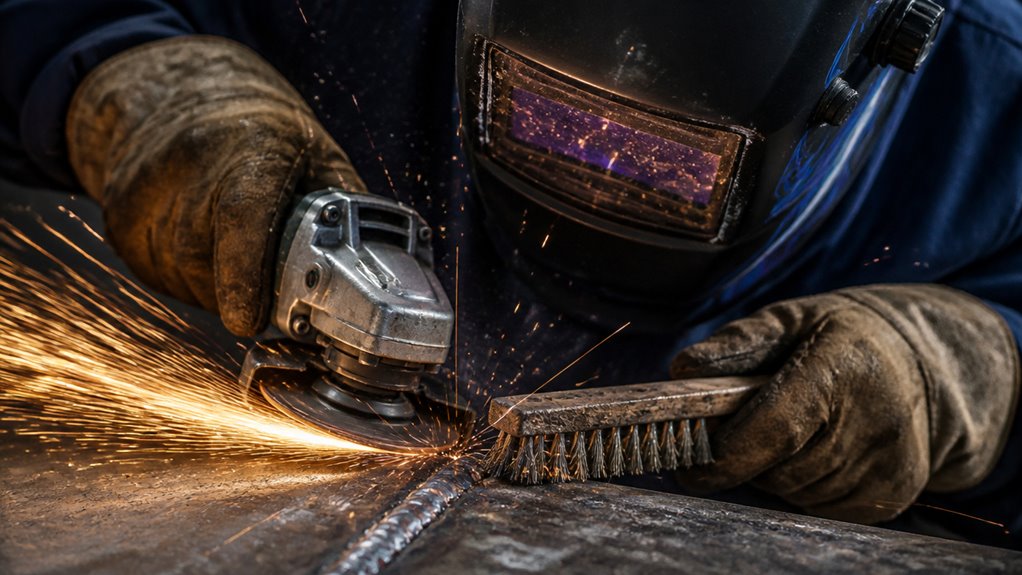
You should clean your welding torch nozzle and tip regularly to prevent spatter buildup that blocks gas flow and reduces weld quality.
Use the correct-sized tip cleaner matched to your wire diameter, and gently remove deposits without forcing or enlarging the orifice.
Scrape stubborn spatter carefully with proper tools and brush copper components gently to avoid damage.
Frequent, light cleaning maintains performance and extends consumable life.
Keep tools organized and inspect parts before each use to guarantee consistent results.
Discover more expert maintenance tips to optimize your welding setup.
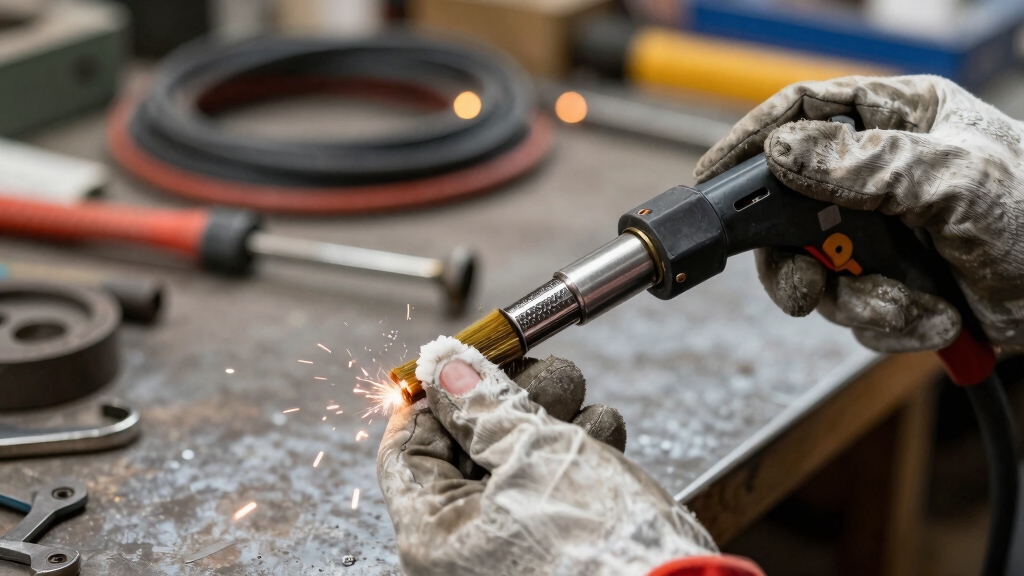
To keep your MIG torch performing at its best, you need to regularly clean the nozzle to prevent spatter buildup that can block shielding gas flow and affect weld quality.
Use a wire brush to remove loose spatter on the nozzle’s exterior and copper parts. For stubborn deposits inside the nozzle, carefully scrape with a dedicated cleaning tool or scraper sized to fit the orifice without enlarging it.
Remove loose spatter with a wire brush; gently scrape stubborn deposits inside without damaging the nozzle’s orifice.
Avoid letting buildup become heavy, as frequent light cleaning preserves the nozzle’s integrity and extends its life. Always handle copper components with care since molten metal adheres strongly to them over time.
Consistent cleaning maintains proper gas flow and consistent welds, preventing costly defects and improving your torch’s reliability on the job. Regular maintenance of consumables like nozzles reduces spatter buildup and supports arc stability for better welding results.
When it comes to cleaning your welding tips, picking the right size cleaner is super important. You want to avoid damaging the orifice, which can affect your weld quality. So, make sure you choose wisely!
As you clean, remember to use gentle, controlled pressure. Focus on both the inside and outside of the tip to really get rid of any buildup. It’s all about being thorough!
Also, don’t forget that regular cleaning and inspection can make a big difference. Keeping an eye on things helps prevent heavy spatter from accumulating and can really extend the life of your welding consumables. Trust me, a little maintenance goes a long way!
Worn or damaged consumables, such as contact tips and nozzles, can destabilize the arc and increase spatter formation, so proper cleaning is essential to maintain stable welding conditions.
When picking a tip cleaner, you’ll want to go with the smallest size that fits the nozzle opening to avoid enlarging it.
Using a cleaner matched to your wire diameter, like .030 or .035, preserves the tip’s original orifice size. This is vital for maintaining consistent wire feed and weld quality.
Don’t force an oversized reamer through the tip; that risks permanently altering the hole’s diameter and reducing shielding gas flow.
Multi-size cleaner kits are practical, offering several reamers for different tip sizes in one compact case.
Choose stainless steel or durable materials to guarantee longevity.
Always use dedicated tip cleaners rather than improvised tools to avoid damaging the nozzle.
Proper selection supports efficient cleaning and extends the life of your welding consumables.
Choosing a cleaner that matches the wire diameter also helps maintain stable wire feed and prevents feeding interruptions.
Start by inserting the correct-sized tip cleaner gently into the nozzle opening. Apply controlled hand pressure to ream only the metal buildup inside. Avoid forcing the tool to prevent enlarging or damaging the orifice.
Focus on cleaning the interior passage first. Then address exterior nozzle edges separately to remove hidden deposits. Use a wire brush or purpose-built cleaner for stuck-on spatter; never use brute force.
Repeat the cleaning process with the appropriate size tool until the passage is free of blockage but not widened beyond specification. Maintain steady, deliberate motions to preserve tip integrity and consistent gas flow.
Regular, careful cleaning extends tip life and guarantees peak weld quality. This is achieved by maintaining proper shielding gas delivery and wire feed characteristics. Always disconnect power before maintenance to avoid electric shock hazards during cleaning.
Regularly maintaining your welding torch prevents heavy spatter buildup, which can impair gas flow and weld quality.
You should inspect and clean the torch nozzle and tip frequently to catch early deposits before they harden.
Using the correct tip size and cleaning tools helps avoid abnormal wear and buildup.
Keep your cleaning tools organized and clean to guarantee effective maintenance sessions.
To prevent spatter buildup effectively:
Following these steps keeps your torch performing at its best and extends the life of consumables. Regular equipment maintenance is essential for consistent wire feeding and stable arc performance, which reduces spatter buildup over time.
Although selecting the right tip cleaner might seem straightforward, choosing one that matches your torch tip size is essential to maintaining weld quality.
Always use the smallest cleaner that fits the tip opening to avoid enlarging or damaging the orifice.
Select a cleaner sized to your wire diameter, such as .030 or .035, ensuring the proper fit for optimal gas flow and consistent welds.
Avoid forcing larger cleaners through the tip, as this can distort the opening and degrade performance.
Multi-size cleaner kits provide versatility for different tip sizes, offering convenience and precision.
When selecting a cleaner, prioritize durability and fit over cost to preserve your torch’s efficiency and extend consumable life.
Proper tip cleaner choice supports consistent wire feed and prevents costly welding defects.
Maintaining the correct shielding gas flow is also critical to prevent oxidation and ensure a stable arc during welding.
Taking care of the copper components in your welding torch is super important!
You’ll want to clean those copper surfaces regularly. This helps prevent any molten metal buildup, which can really mess with gas flow and, ultimately, your weld quality.
When you’re cleaning, just be sure to handle the copper components carefully. You don’t want to accidentally damage them, right?
Proper handling ensures that your torch functions smoothly.
Using the right tools and techniques is key here. It not only keeps those parts in great shape but also extends their lifespan.
Regular maintenance also helps maintain a stable arc and gas flow, which is critical for consistent weld quality.
Focus on cleaning copper components carefully, since molten metal tends to stick and accumulate on these surfaces over time. You want to remove buildup promptly to maintain efficient heat transfer and consistent welding performance.
Avoid abrasive tools that can damage copper’s smooth surface or alter its shape. Instead, use gentle wire brushes or purpose-built scrapers designed for copper parts. Regular inspection and light cleaning prevent heavy deposits that become harder to remove.
Use a soft wire brush to clear spatter without scratching copper surfaces. Apply controlled hand pressure when scraping to avoid deformation. Inspect copper parts frequently for early signs of metal accumulation. Clean copper components separately from other torch parts to guarantee thorough maintenance.
Consistent care extends the life of your copper components and optimizes torch operation. Additionally, maintaining surface cleanliness between welding passes prevents oxidation and ensures optimal weld quality.
When caring for copper components in your welding torch, preventing metal buildup starts with regular inspection and timely cleaning.
Check nozzles and tips frequently to catch early spatter or molten metal deposits before they harden.
Use a wire brush or proper cleaning tools to gently remove surface buildup without damaging copper surfaces.
Avoid heavy buildup by cleaning lightly and often, which extends component life and maintains consistent gas flow.
Match tip cleaners to the correct size to prevent enlarging orifice openings.
Apply controlled pressure when reaming to clear deposits without altering tip dimensions.
Store cleaning tools in a dedicated kit for easy access and consistent maintenance.
This proactive approach reduces downtime, preserves weld quality, and ensures your torch performs reliably throughout its service life.
Using nozzles with smooth, non-porous surfaces also helps minimize slag adherence and reduces cleaning frequency.
Handling copper components in your welding torch requires careful attention to avoid damage and buildup that can impair performance. Copper surfaces attract molten metal spatter, which reduces gas flow and torch efficiency.
Clean these parts regularly using gentle tools to prevent scratching or deformation. Avoid aggressive scraping that can enlarge or damage contact points, causing poor electrical conductivity and inconsistent welds.
To maintain copper components effectively:
Use a soft wire brush or dedicated cleaning tool for spatter removal. Inspect parts frequently to catch early buildup before it hardens. Avoid chemical cleaners that may corrode copper surfaces.
Store cleaned copper parts in a dry, dust-free environment to prevent contamination. Consistent care extends component life and guarantees stable welding performance. Regularly inspect and clean contact tips as part of maintenance and troubleshooting to ensure optimal torch function.
Choose the right tools to efficiently remove welding spatter without damaging your torch components. Use wire brushes for light spatter on nozzles and copper parts. For inside the tip, select the smallest tip cleaner or reamer that fits to avoid enlarging the orifice.
Scrapers help remove stubborn deposits without excessive force. Multi-size cleaner kits provide versatility for different tip diameters, ensuring precise cleaning without damage.
| Tool Type | Purpose | Key Feature |
|---|---|---|
| Wire Brush | Removes light external spatter | Bristles sized for nozzles |
| Tip Cleaner | Clears internal tip buildup | Sized for specific tip diameters |
| Scraper | Removes stubborn deposits | Fits nozzle interior |
| Multi-Size Kit | Covers various tip sizes | Compact, versatile |
| Stainless Steel Reamer | Durable internal cleaning | Resistant to wear |
Regularly maintaining your welding torch greatly reduces spatter buildup and extends the life of your consumables. By inspecting and cleaning the nozzle and tip frequently, you prevent heavy deposits that compromise shielding gas flow and welding quality.
Frequent inspection and cleaning of your welding torch prevent spatter and ensure optimal welding performance.
Use the right-sized tip cleaner gently to avoid enlarging the orifice. Keeping copper components free of molten metal buildup also improves torch performance.
To effectively prevent spatter buildup:
Consistent, precise maintenance keeps your torch working efficiently and reduces downtime caused by spatter-related issues.
Maximize the lifespan of your torch and consumables by keeping all components clean and properly maintained.
Regularly remove spatter from nozzles and copper parts using wire brushes and tip cleaners matched to your tip size.
Avoid forcing oversized cleaners to prevent damage. Inspect frequently to catch buildup early and clean gently to maintain orifice integrity.
Proper cleaning preserves gas flow and weld quality, extending consumable usability.
| Task | Tool/Method | Frequency |
|---|---|---|
| Nozzle spatter clean | Wire brush, scraper | After each use |
| Tip interior clean | Correct size tip cleaner | Weekly or as needed |
| Copper parts cleaning | Soft brush, scraper | Weekly |
| Inspection | Visual check | Before each weld |
Consistent care minimizes downtime and replacement costs.
Selecting the right welding tip cleaner kit guarantees you maintain peak torch performance and weld quality. You want a kit with multiple reamers sized to match your tip diameters precisely. This prevents damage from oversized tools.
Choosing the right tip cleaner kit ensures optimal torch performance and protects your welding tips from damage.
Look for stainless steel or durable materials to assure longevity and consistent cleaning. A compact, organized case helps keep tools accessible and protected. Finally, consider kits that combine tip cleaners with other essential welding accessories for convenience.
Choose cleaners that fit the exact wire or tip size (.030, .035, etc.). Opt for kits with multiple sizes to cover all your torch tips. Prefer durable materials like stainless steel for reamers. Select a kit with a compact case for easy storage and transport.
This approach helps you preserve the orifice size and maintain consistent weld quality.
You shouldn’t use household items to clean welding tips because they may damage the orifice or enlarge the opening, hurting weld quality.
Instead, use specialized tip cleaners or reamers that match your tip size. These tools apply controlled pressure and remove buildup without altering the tip’s dimensions.
Using improper tools risks inconsistent wire feed and poor shielding gas flow, reducing overall weld performance and shortening consumable life.
Stick to dedicated cleaning kits.
You don’t want to wait until your torch consumables look like they’ve been through a war zone!
Replace them as soon as you notice signs like excessive spatter buildup, distorted nozzle shape, or inconsistent wire feed.
Frequent cleaning helps stretch their life, but realistically, expect to swap tips, nozzles, and contact tubes regularly.
This usually happens after several welding sessions or when weld quality drops.
Staying proactive keeps your welds sharp and your torch performing at its best.
You should always wear safety gloves and eye protection to guard against sharp edges and hot metal.
Make sure the welding equipment is powered off and cooled down before cleaning.
Use proper tools like wire brushes or tip cleaners to avoid damage.
Work in a well-ventilated area to avoid inhaling fumes or dust.
Keep your workspace organized to prevent accidents and avoid forcing tools, which could cause injury or equipment damage.
Yes, welding tip cleaning differs between MIG and TIG torches.
MIG tips often require removing spatter buildup using wire brushes and specialized reamers sized to the wire diameter. This prevents gas flow obstruction.
TIG torches need gentler cleaning since the tungsten electrode is more delicate. Avoid abrasive tools and focus on removing oxidation carefully.
You’ll use smaller, precise tip cleaners for TIG, while MIG demands more frequent, robust cleaning due to higher spatter accumulation.
Don’t beat around the bush: improper cleaning can definitely harm your welding machine.
If buildup blocks gas flow or damages the tip or nozzle, your machine will work harder, risking overheating or inconsistent performance.
Using the wrong tools or oversized cleaners can enlarge or damage orifices, leading to poor wire feed and weld quality.
Keeping your torch clean prevents these issues and extends your machine’s life, saving you costly repairs down the line.
Think of your MIG torch as the heart of your welding setup. Clean nozzles keep its pulse steady and strong.
By regularly removing spatter and caring for copper parts, you guarantee smooth, precise arcs every time.
Using the right tip cleaner and tools isn’t just maintenance; it’s investing in longevity and performance.
Keep your torch sharp and ready, and you’ll weld with confidence, knowing your gear works as hard as you do.