Phone:
(701)814-6992
Physical address:
6296 Donnelly Plaza
Ratkeville, Bahamas.

Phone:
(701)814-6992
Physical address:
6296 Donnelly Plaza
Ratkeville, Bahamas.

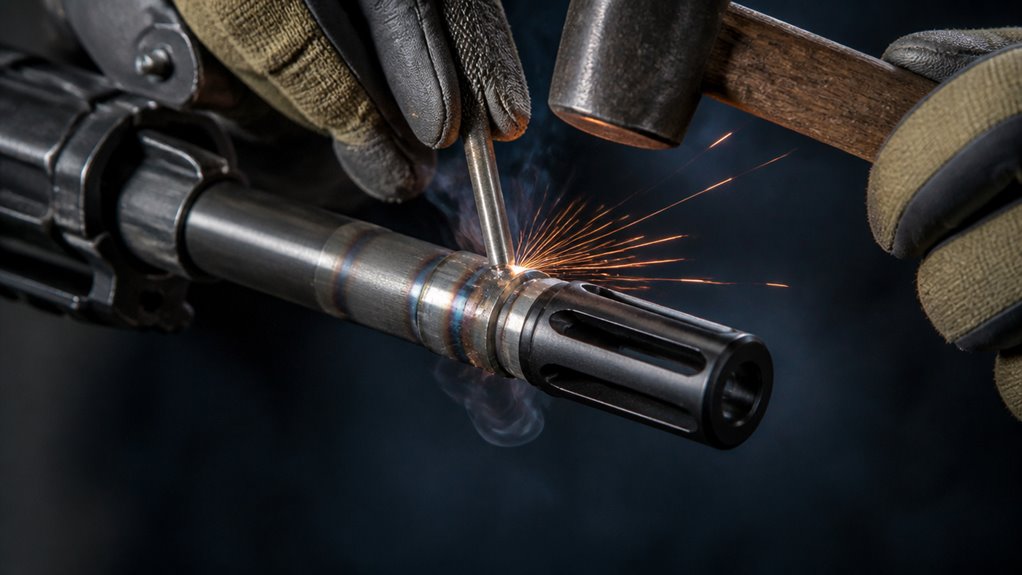
To pin and weld your flash hider correctly, select a hardened steel pin slightly smaller than your drilled, chamfered hole to guarantee a snug fit.
Securely time the muzzle device on the barrel, drill a blind hole with precise depth control, then use TIG welding to apply a clean, permanent weld that penetrates the base metal without warping.
Grind and blend the weld carefully to a smooth finish. Proper technique prevents damage and legal issues. Explore the key steps for flawless installation.
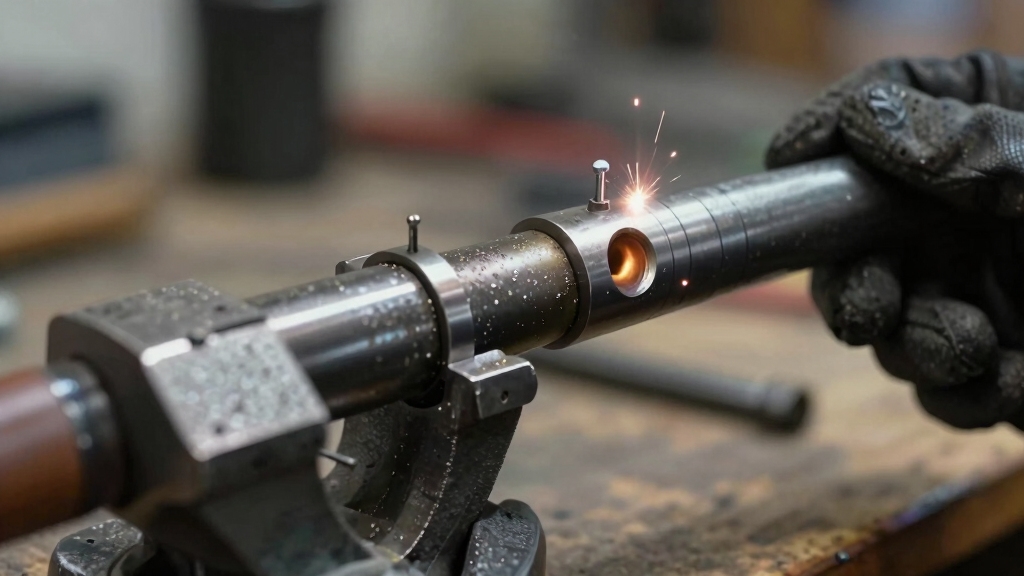
Although attaching a flash hider permanently may seem straightforward, pinning and welding it guarantees your firearm meets legal requirements for barrel length. This is particularly important when aiming to reach the 16-inch minimum overall barrel length mandated by regulations.
Removable muzzle devices don’t satisfy this standard, as they can be detached, reverting the barrel to a shorter, non-compliant length. By drilling a hole through the flash hider and into the barrel, then inserting a steel pin and welding over it, you ensure a permanent, tamper-resistant connection.
This method prevents device removal without damaging the component or barrel threads. You maintain compliance with ATF regulations, avoid legal complications, and preserve the firearm’s structural integrity. This makes the pin-and-weld process essential for short-barreled rifles requiring permanent muzzle devices.
For enhanced durability and to prevent loosening over time, proper joint fit-up, alignment, and uniform clamp torque play a critical role in maintaining long-lasting mechanical seals.
When choosing a pin for your flash hider, it’s really important to go for one made from hardened steel or a similarly tough material. This ensures that it stays secure and durable over time.
Now, let’s talk about the pin’s diameter. You’ll want it to closely match the drilled hole. This helps prevent any unwanted movement and allows for proper welding later on.
Also, don’t overlook the fit of the pin tip. Making sure it aligns well with the hole’s angle can really boost the seating and overall weld integrity. It’s those little details that can make a big difference!
For best results, matching the pin diameter with the recommended drill sizes ensures optimal strength and fit.
Selecting the right pin material is critical to guaranteeing a secure, permanent bond between your flash hider and barrel.
You’ll want to choose a steel pin that matches or exceeds the hardness and strength of the barrel material, typically a medium to high carbon steel or alloy steel.
Avoid softer metals like aluminum or brass, as they won’t withstand welding heat or mechanical stress.
The pin must also exhibit good weldability to guarantee a robust metallurgical bond.
Stainless steel pins are generally less ideal unless they match the barrel’s metallurgy and welding parameters.
Additionally, the pin’s corrosion resistance should align with your operating environment to prevent premature degradation.
Proper heat control during welding is essential to minimize coating damage and reduce the risk of weld defects when joining steel components.
Matching the pin size and fit to your flash hider and barrel threads guarantees a secure, permanent bond that withstands mechanical stress and welding heat.
Select a pin diameter slightly smaller than the drilled hole to allow for welding material around the pin, typically 0.003 to 0.005 inches clearance.
The pin length should extend beyond the hole depth enough to ensure full engagement without bottoming out or leaving gaps.
Chamfer the hole edges and profile the pin tip to match the hole angle, guaranteeing flush seating and peak contact.
Avoid oversizing the pin, which risks splitting the device or barrel, and undersizing, which compromises stability.
Precise measurement with calipers and test fitting before welding ensures consistent alignment, prevents movement, and supports a flawless weld that permanently locks your flash hider in place.
Additionally, controlling amperage during welding is crucial to avoid burn-through or insufficient penetration, especially on thin materials like barrels.
When you’re drilling the pin hole, it’s super important to control the depth carefully. You definitely don’t want to go too deep into the barrel!
A great way to start is by making a clear dimple or starter mark on the flash hider. This little step helps keep the drill bit from wandering off track.
To ensure precision, it’s helpful to use proper welding technique to maintain alignment and avoid defects during the pin installation.
Drill the pin hole with exact control to prevent damage to the barrel and guarantee a secure fit. Use a depth stop or tape on your drill bit to limit penetration slightly past the flash hider’s thickness but never through the barrel.
Measure the combined material thickness carefully before drilling. A blind hole preserves the barrel’s integrity while providing enough depth to seat the pin firmly. Chamfer the hole’s entrance to accommodate weld buildup and improve pin seating.
Maintain a steady feed rate and apply cutting oil to prevent bit binding or overheating. Avoid excessive pressure that might cause bit wandering or uneven depth. Checking depth periodically with a gauge or drill stop reduces risk.
Precision here makes certain the pin won’t loosen and the barrel remains structurally intact. Using heat management techniques during welding helps prevent warping and burn-through, ensuring a reliable joint.
To kick off the pin hole accurately, you’ll want to create a clear and centered starter mark on the muzzle device’s surface. Use a center punch and a small hammer to create a precise dimple that prevents drill bit wandering.
Align the mark along the device’s timing index to guarantee proper pin placement. Before drilling, double-check the muzzle device is firmly secured and timed correctly on the barrel.
Select a drill bit sized for the pin and apply cutting oil to reduce heat and improve control. Start drilling slowly at the starter mark, maintaining perpendicularity to the device’s surface.
This methodical approach minimizes walking and guarantees the hole is drilled safely and accurately, critical for proper pin seating and weld integrity. When welding the pin, consider using the push welding technique to ensure strong gas shielding and a clean weld bead.
Although the pin is already inserted, you must weld it thoroughly to guarantee the flash hider is permanently secured to the barrel. Proper welding makes certain the pin can’t be removed without destruction, meeting legal standards.
Focus on these key welding steps:
Use a TIG welder for precise, controlled heat application.
Apply small weld puddles, fully covering the pin and hole.
Avoid excessive weld buildup to prevent weakening the joint.
Make certain the weld penetrates slightly into the barrel metal for permanence.
Maintain a steady hand to keep the weld spot compact and uniform.
Ensure you maintain proper electrode distance of about 1/16–1/8 inch to avoid contamination and achieve clean welds.
Once the weld has cooled, you’ll begin grinding and blending to achieve a smooth, clean finish that conceals the weld seam without compromising the integrity of the joint.
Use a fine-grit abrasive wheel or a Dremel tool with a grinding bit to carefully remove excess weld material. Maintain a gentle, consistent pressure to avoid overheating or gouging the metal.
Carefully grind excess weld with a fine-grit wheel, applying gentle pressure to protect the metal surface.
Next, blend the weld area into the surrounding surfaces by feathering the edges with a sanding drum or fine abrasive pad. This step guarantees a uniform shift between the weld and base metal.
Finally, clean the area thoroughly to remove any grinding debris or oxidation. A properly finished weld should appear seamless, preserving both the strength and aesthetic of your pinned flash hider.
Using air hammers for weld bead smoothing can further minimize grinding and preserve base metal integrity during finishing.
When performing the pin-and-weld process, you must carefully control drilling depth and weld coverage to guarantee a secure, permanent attachment.
Common mistakes often compromise durability or legality. Avoid:
Additionally, ensure proper weld inspection to identify defects that could weaken the joint and compromise safety.
If you lack specialized tools or experience, entrusting the pin-and-weld process to a professional gunsmith guarantees proper execution and compliance with legal standards.
Gunsmiths possess the precise equipment, such as drill presses, TIG welders, and measurement tools. They’ve the expertise to control drilling depth, achieve correct timing, and apply welds that ensure permanence without damaging the barrel.
Attempting this procedure without adequate skill risks improper pin placement, insufficient weld coverage, or barrel damage. All of these issues compromise both function and legal status.
Furthermore, professionals understand ATF regulations and can verify that your firearm meets all requirements. When precision and legality are paramount, seeking expert assistance minimizes errors and preserves your equipment.
This guarantees the flash hider’s secure and compliant attachment. Don’t hesitate to delegate this critical step to a qualified gunsmith.
You can’t reverse pin-and-weld without damaging the barrel. The pin is welded permanently, so removing it requires cutting or grinding through the weld and pin, often harming the barrel’s threads or surface.
Attempting removal risks structural integrity and could render the barrel unsafe or unusable. If you need to change the muzzle device, consider professional gunsmith services, but be prepared for destructive removal and potential barrel repair or replacement.
Which drill guarantees precision without risking barrel damage? You want a drill press for the most controlled, stable drilling, minimizing walking and angle errors.
Use high-quality, sharp drill bits, preferably titanium-coated or cobalt bits, matched to the steel hardness. A handheld drill can work but demands a steady hand and proper setup.
Always pick a bit that creates a blind hole, preventing through-barrel damage. Use cutting oil to reduce heat and wear during drilling.
The pin-and-weld process typically takes about 1 to 2 hours from start to finish.
You’ll spend 20-30 minutes installing and timing the device, another 15-30 minutes drilling and fitting the pin carefully, and around 30-45 minutes welding and finishing.
Additional time might be needed for grinding and cleanup to guarantee a smooth, permanent attachment.
Precision and patience during each step can prevent damage and guarantee compliance.
Pinning and welding a flash hider is like threading a needle. You must be precise and aware of your surroundings.
It’s not legal in all states, as firearm laws vary widely. You need to check both federal and state regulations before proceeding.
Some states have stricter rules on barrel length and muzzle devices. What’s compliant federally mightn’t be locally.
Always verify legality to avoid serious legal consequences.
Pinning and welding a flash hider generally won’t affect your firearm’s accuracy if done correctly. You must make certain the device is properly timed and securely seated before drilling.
Precise hole depth and clean welding prevent barrel damage or misalignment. Poor execution, like uneven welds or excessive heat, could cause stress or distortion, subtly impacting accuracy.
Using a skilled gunsmith reduces these risks and maintains your firearm’s performance.
Pinning and welding your flash hider guarantees both legal compliance and reliable performance.
But don’t underestimate the precision required. By selecting the right pin, drilling accurately, and welding securely, you lock it down for good—no ifs, ands, or buts.
Remember, shortcuts can lead to costly errors, so take every step methodically. When in doubt, seeking a professional gunsmith’s expertise is your best bet to avoid turning a simple job into a headache.