Phone:
(701)814-6992
Physical address:
6296 Donnelly Plaza
Ratkeville, Bahamas.

Phone:
(701)814-6992
Physical address:
6296 Donnelly Plaza
Ratkeville, Bahamas.

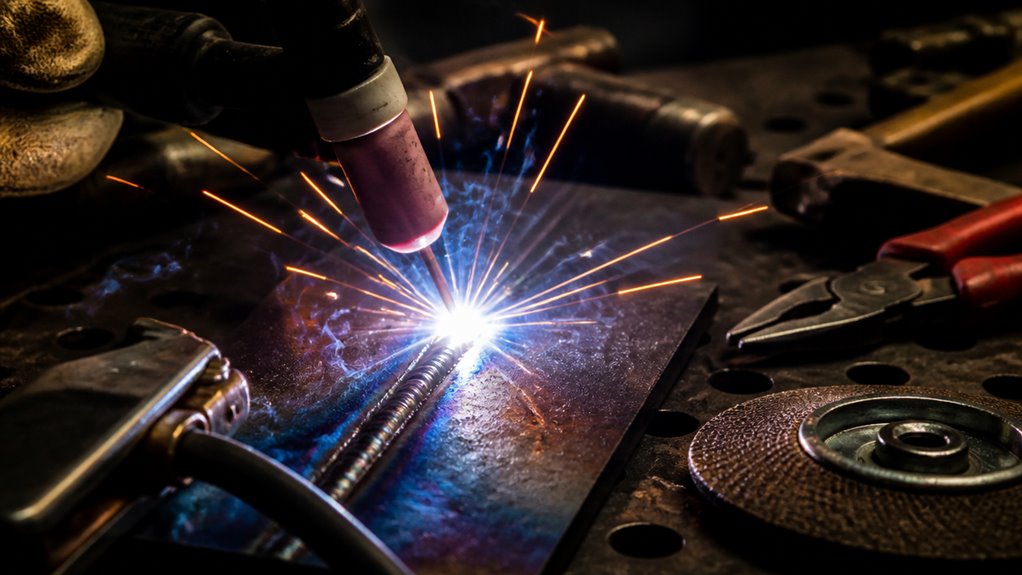
You can weld tungsten, but its extremely high melting point (3422°C) and intrinsic brittleness make direct fusion welding very difficult.
You’ll need specialized TIG equipment, a stable, focused arc, and strict heat control to avoid cracking and contamination.
Preheating and inert gas shielding, like argon or helium, are essential.
Balled tungsten tips and proper electrode preparation also improve performance.
Alternatives like brazing or diffusion bonding often work better for strong, reliable joints.
Explore these factors to understand the best approach for your tungsten application.
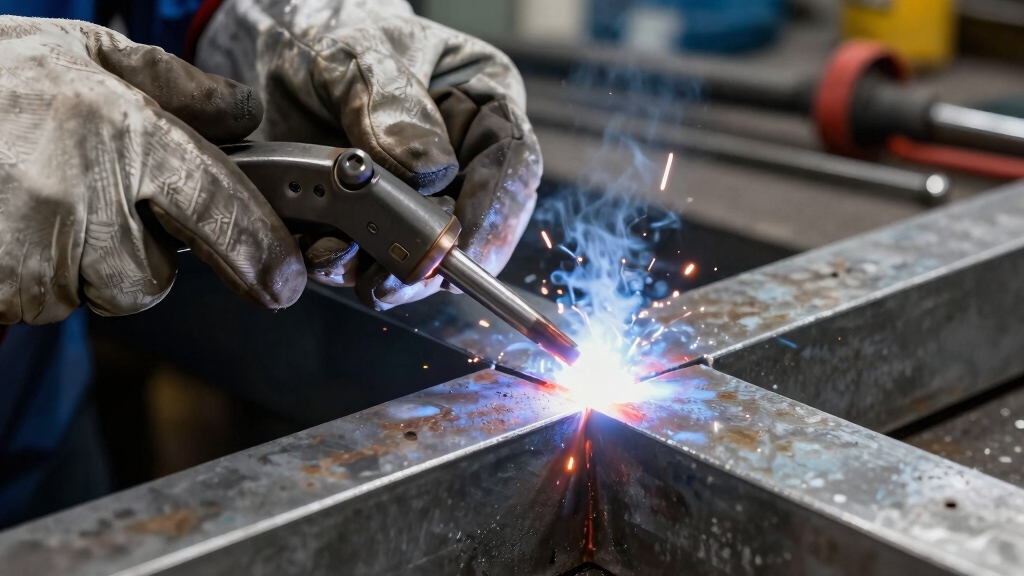
When considering tungsten welding with TIG, you should know it’s technically possible but challenging due to tungsten’s extremely high melting point and inherent brittleness.
TIG welding uses a non-consumable tungsten electrode to create the arc, but welding tungsten as the base metal requires careful heat control and specialized equipment.
You’ll find TIG commonly applied to metals like stainless steel, aluminum, and copper alloys rather than tungsten itself. To achieve any fusion on tungsten, you must prepare joints meticulously and maintain tight thermal management to prevent cracking.
In practice, direct fusion welding of tungsten is rare; alternative joining methods such as brazing, diffusion bonding, or sintering are more reliable.
Consequently, while TIG welding tungsten is feasible, it demands expertise and precision to avoid material degradation. Additionally, maintaining shielding gas purity and preventing contamination are critical to preserving tungsten’s mechanical properties during welding.
Although tungsten is a metal known for its exceptional hardness and high melting point, these very properties make welding it particularly challenging. When you weld tungsten, you face issues that require precise control and specialized techniques to overcome.
Its melting point near 3422°C demands extremely high heat input and stable arc conditions. Tungsten’s brittleness increases the risk of cracking under thermal stress.
Maintaining a clean, uncontaminated surface is critical to prevent weld defects. Controlling heat input precisely is essential to avoid grain growth and embrittlement.
Fusion welding often causes surface damage or fractures, limiting practical applications. Understanding these challenges helps you appreciate why tungsten welding isn’t straightforward and why alternative joining methods often prove more effective.
Additionally, tungsten’s extreme hardness and brittleness, similar to its resistance to cutting and shaping, require expert handling and specialized tools for any modification or repair, as outlined in material properties.
Mastering tungsten welding involves understanding the specific types of tungsten electrodes used in TIG welding. Each variant offers unique properties suited for different applications.
Mastering tungsten welding requires knowing electrode types and their unique applications for optimal results.
You’ll encounter pure tungsten, ideal for AC welding of aluminum and magnesium due to its excellent arc stability.
Zirconiated tungsten, similar to pure tungsten, also suits AC applications with improved longevity.
Thoriated tungsten provides superior arc starting and current-carrying capacity for DC welding but poses health risks from radioactivity.
Lanthanated tungsten, especially 2% lanthanum oxide, excels as an all-purpose electrode for both AC and DC. It offers low erosion and stable arcs.
Selecting the right electrode depends on your metal type, current mode, and desired weld characteristics. Choosing precisely can enhance weld quality and electrode lifespan.
For optimal results, ensure the tungsten electrode is clean and oxidation-free before insertion to maintain a flawless arc.
How do you achieve ideal arc stability and weld quality when TIG welding aluminum with AC current? Using a balled tungsten tip is essential. The ball forms a stable arc root and improves cleaning action during the AC cycle, which is crucial for aluminum oxide removal.
You can create this ball by heating the tungsten at high amperage until it forms a hemisphere about 1 to 1.5 times the electrode diameter.
Keep these points in mind:
Use pure or zirconiated tungsten for controlled balling. Avoid ball sizes larger than 1.5 times electrode diameter to prevent ball detachment. Maintain consistent arc length for stable arc behavior.
Replace the tungsten if the ball becomes irregular or contaminated. Balling improves arc stability and weld bead appearance in AC aluminum TIG welding.
For best results, ensure the tungsten is prepared using precise grinding angles to enhance electrode performance and arc stability.
Properly preparing and grinding tungsten electrodes is critical for achieving stable arcs and consistent weld quality in TIG welding. Start by using a dedicated tungsten grinder to avoid contamination. Grind the electrode longitudinally, not circumferentially, to maintain arc stability and reduce tungsten inclusions.
For most applications, grind to a 15–30° angle for a sharp, truncated tip. Avoid using wire cutters or bending to break electrodes, as this causes micro-cracks and erratic behavior.
| Preparation Step | Purpose |
|---|---|
| Dedicated grinder | Prevents cross-contamination |
| Longitudinal grinding | Maintains arc stability |
| Grind angle 15–30° | Balances penetration and bead width |
Using a longitudinal grinding technique ensures the arc remains stable and minimizes tungsten erosion for better weld quality.
You really need to handle tungsten electrodes with care. If you don’t, you might end up with contamination that can destabilize the arc. So, always remember to grind tungsten using a dedicated wheel. It’s best to keep those marks lengthwise; this way, you can avoid inclusions and minimize arc wander.
Also, try to steer clear of cutting or bending the electrodes with the wrong tools. You see, even the tiniest micro-cracks can lead to erratic arc behavior, which ultimately degrades weld quality. Taking these precautions will help you achieve a more stable and reliable arc! Additionally, using an auto darkening welding helmet ensures your eyes are instantly protected from harmful arc radiation while maintaining clear visibility during these precise tasks.
When working with tungsten electrodes, preventing contamination is essential for maintaining arc stability and consistent weld quality. You must handle electrodes carefully to avoid introducing impurities that cause erratic arcs.
Always store tungsten in clean, dry containers separated from other metals. Avoid cutting or breaking electrodes with pliers, as this can cause micro-cracks and unstable arcs. Use abrasive cutoff wheels or dedicated tungsten grinders to shape electrodes cleanly without contamination.
Replace or re-grind electrodes immediately if you detect contamination or arc wandering.
Proper handling preserves tungsten integrity and weld consistency. Selecting the correct tungsten chemistry and maintaining sharp tip geometry also help ensure stable arcs and optimal electrode life.
Grinding tungsten electrodes with clean, dedicated equipment guarantees stable arcs and consistent weld quality. You must avoid cross-contamination from other metals or abrasives, which causes arc instability and tungsten inclusions.
Use a grinder exclusively for tungsten. Never grind tungsten on a wheel used for steel or aluminum. Always grind lengthwise along the electrode, not circumferentially, to minimize arc wander.
| Practice | Purpose | Impact |
|---|---|---|
| Dedicated tungsten grinder | Prevents contamination | Stable arc |
| Lengthwise grinding | Reduces arc wander | Consistent weld bead |
| Immediate re-grinding | Removes contaminated surface | Maintains arc quality |
Maintaining a sharp tungsten with proper grinding technique is essential for stable arc initiation and preventing contamination during welding.
Although welding tungsten directly presents significant challenges due to its high melting point and brittleness, specialized techniques have been developed to achieve effective joins under controlled conditions.
You’ll need to apply precise control over heat input and joint preparation to avoid cracking or contamination.
Key methods include:
Using DC polarity to concentrate heat and minimize surface damage.
Preheating tungsten components to reduce thermal shock.
Employing a focused, stable arc with a well-shaped tungsten electrode.
Maintaining an inert gas shield (argon or helium) to prevent oxidation.
Controlling cooling rates to prevent brittleness and internal stresses.
These strategies allow you to fuse tungsten parts in specialty fabrication or repair.
Ensuring proper gas flow throughout the welding process is essential to avoid contamination and maintain weld integrity.
In applications where tungsten’s extreme melting point and brittleness complicate fusion welding, brazing or diffusion bonding offers a more practical and reliable joining method.
Brazing joins tungsten to other metals using a filler metal with a melting point below tungsten’s. This minimizes thermal stress and avoids tungsten’s cracking tendency.
You control the joint temperature carefully, often between 800°C and 1200°C, ensuring strong metallurgical bonding without melting the base material.
Diffusion bonding relies on solid-state atomic diffusion under elevated temperature and pressure, typically near 1500°C but below tungsten’s melting point.
This method produces joints with excellent mechanical integrity and minimal distortion.
Both techniques demand precise surface preparation and controlled atmospheres to prevent oxidation and contamination.
This makes them preferable to fusion welding for tungsten in demanding engineering applications.
Additionally, controlling heat input and shielding atmosphere is critical to avoid embrittlement and ensure a strong bond in tungsten joints, similar to challenges faced in dissimilar metal welding.
When it comes to welding tungsten, things can get tricky because of its high melting point and brittleness. That’s where resistance welding comes in handy. It provides controlled heat input and quick cycle times, which really help reduce thermal damage to the material.
You might also want to consider brazing and sintering. These methods are great for creating strong, metallurgically bonded joints without actually melting the base metal. They offer a reliable alternative when traditional welding isn’t feasible.
If you’re looking for something more specialized, diffusion bonding could be the way to go. This method is perfect for applications that need precise, clean interfaces under pressure and higher temperatures. It’s particularly useful for specialty tungsten assemblies, ensuring you get the best results for your project.
Choosing resistance welding for joining tungsten offers several distinct advantages, especially given tungsten’s high melting point and brittleness that challenge traditional fusion welding methods.
Resistance welding allows precise, localized heating without melting the entire workpiece, minimizing thermal distortion and cracking risks. It also supports high production rates with repeatable quality, ideal for tungsten’s demanding applications.
Consider these benefits when deciding on resistance welding:
Controlled heat input reduces grain growth and preserves tungsten’s mechanical properties. Rapid cycle times increase throughput for manufacturing or repair.
It eliminates the need for filler metals, avoiding contamination issues. This process produces uniform, consistent welds in thin or complex geometries.
Additionally, it enables joining dissimilar metals with appropriate parameters, expanding design flexibility.
Use resistance welding when you need durable, high-quality tungsten joints under tight thermal and mechanical constraints.
Mastering brazing and sintering techniques offers effective alternatives for joining tungsten where traditional welding falls short due to the metal’s brittleness and extreme melting point.
Brazing uses a filler metal with a melting point below tungsten’s, avoiding direct fusion and minimizing thermal stress. You’ll achieve strong joints by carefully controlling temperature and atmosphere to prevent oxidation and contamination.
Sintering, often applied to tungsten powder compacts, consolidates particles through heat and pressure without melting. This produces dense, mechanically robust bonds ideal for complex shapes or repairs.
When resistance welding isn’t suitable due to joint geometry or tungsten thickness, brazing and sintering provide reliable solutions. You must guarantee precise temperature control and clean, oxide-free surfaces to optimize joint integrity and avoid embrittlement or cracking during these alternative joining processes.
Although tungsten’s extreme melting point and brittleness limit conventional welding, diffusion bonding offers a controlled solid-state joining method. It can produce high-strength, crack-free joints without melting the base metal.
You use diffusion bonding when precise temperature and pressure control enable atomic diffusion across contact surfaces. This method avoids thermal stresses common in fusion welding. Resistance welding and other methods like brazing serve as alternatives depending on joint design and service conditions.
Consider diffusion bonding when you need to join complex tungsten components with minimal distortion. It achieves metallurgically clean, oxide-free interfaces and preserves fine microstructures without melting.
This technique helps avoid weld-induced brittleness and cracking. It also integrates tungsten with compatible refractory metals under inert atmospheres.
This technique suits aerospace, nuclear, and high-temperature applications demanding superior joint integrity.
You can perform tungsten welding underwater or in vacuum environments, but it demands specialized equipment and strict controls.
Underwater, you’ll need waterproof shielding techniques and precise arc management to prevent contamination and maintain arc stability.
In a vacuum, welding benefits from reduced oxidation but requires carefully controlled heat input to avoid tungsten’s brittleness and cracking.
Both settings challenge tungsten’s high melting point, so you must optimize parameters and prepare joints meticulously for success.
Imagine handling a metal so tough it laughs at heat. That’s tungsten welding. You’ve got to wear a respirator to avoid inhaling toxic fumes, especially from thoriated electrodes.
Always use gloves and eye protection to shield from intense UV radiation and hot sparks. Keep tungsten electrodes clean to prevent contamination.
Never grind them with abrasive wheels used on other metals. These strict precautions keep your welds flawless and your health intact.
When you weld tungsten, expect changes in its electrical conductivity due to heat-induced microstructural alterations.
High temperatures can cause grain growth, recrystallization, and microcracks, reducing conductivity.
Improper welding may introduce contamination or tungsten inclusions, further degrading electrical performance.
To minimize these effects, you’ll need tight heat control, precise joint preparation, and post-weld treatments.
Always verify conductivity after welding since even minor surface damage can impact tungsten’s current-carrying efficiency.
You generally won’t find standard filler materials recommended for tungsten welding because tungsten’s high melting point and brittleness make fusion welding tricky.
Instead, you’ll often rely on specialized fillers like tungsten-rhenium alloys or use brazing materials compatible with tungsten.
These fillers help maintain joint integrity without cracking.
For most practical purposes, you’ll use brazing or diffusion bonding rather than typical fusion welding with conventional filler metals.
Oh sure, just wave a magic wand after welding tungsten, and all its brittleness disappears. If only!
In reality, post-weld heat treatment is essential for you to relieve residual stresses and reduce cracking risks in tungsten welds.
Precise temperature control during annealing helps restore ductility without causing grain growth.
Skipping this step? You’ll likely face a fragile, stressed joint prone to failure under service conditions.
Definitely not what you want.
Welding tungsten isn’t a walk in the park. It demands precision, the right electrode, and meticulous preparation.
You’ll need to master techniques like balled tips for AC aluminum and avoid contamination to keep your arc steady.
Sometimes, the path of least resistance, such as brazing, diffusion bonding, or resistance welding, offers a cleaner, more reliable union.
Remember, welding tungsten is less about brute force and more about coaxing a delicate dance between metals under controlled conditions.