Phone:
(701)814-6992
Physical address:
6296 Donnelly Plaza
Ratkeville, Bahamas.

Phone:
(701)814-6992
Physical address:
6296 Donnelly Plaza
Ratkeville, Bahamas.

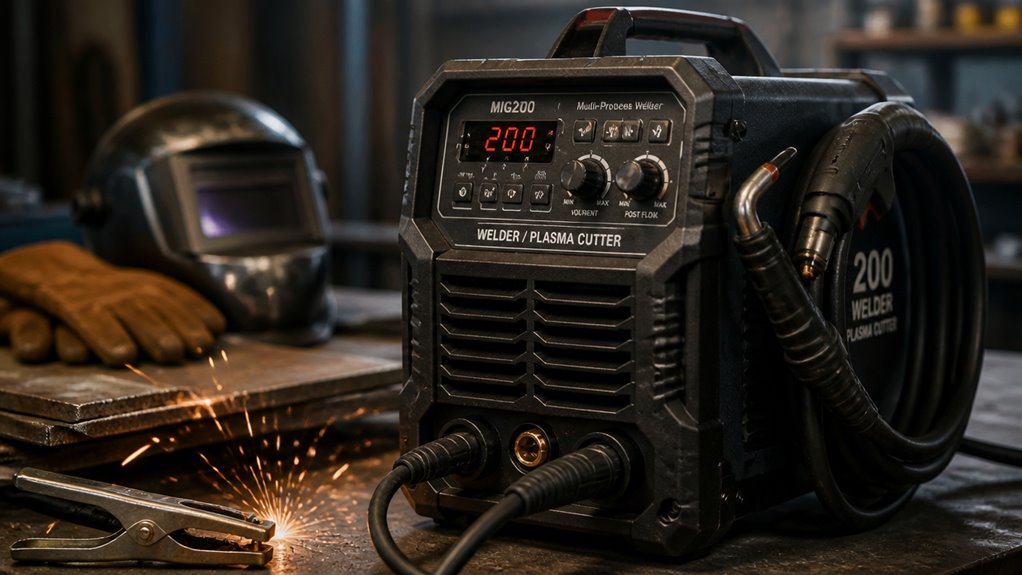
A combination welder is your go-to professional skilled in multiple welding processes like SMAW, GMAW/MIG, GTAW/TIG, and FCAW.
You’ll handle a variety of metals and thicknesses across industries such as construction and aerospace, adapting quickly to different project demands.
Your versatility minimizes downtime by switching processes efficiently, ensuring strong, precise welds.
This expertise boosts your career options with higher wages and advanced roles.
Exploring their key skills and roles reveals how essential they are in modern fabrication.
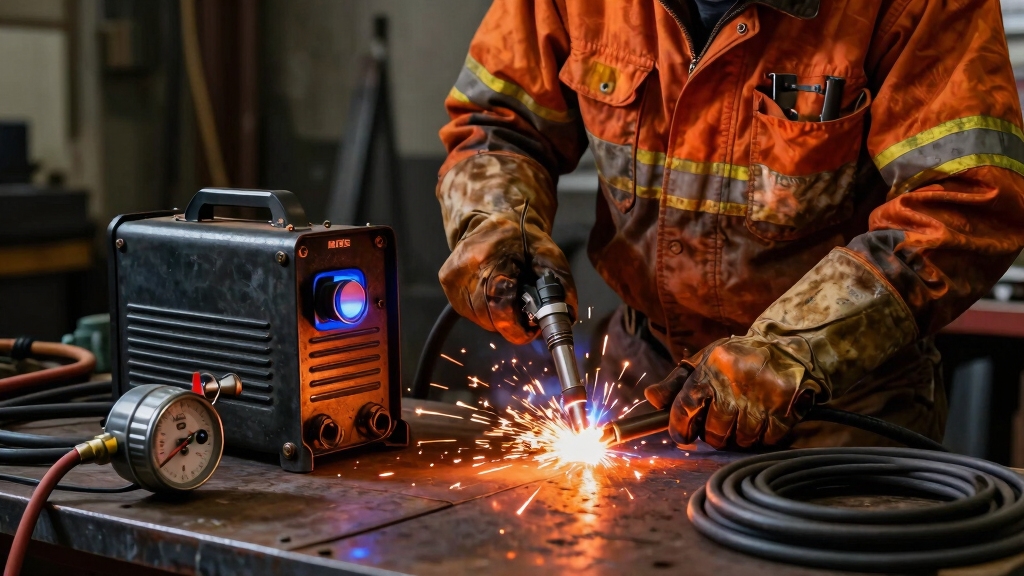
When you look into the role of a combination welder, you’ll find a professional skilled in multiple welding techniques like SMAW, GMAW, GTAW, and FCAW.
You rely on this versatility to handle diverse metal types and thicknesses, ensuring structural integrity across fabrication and repair tasks.
Combination welders specialize in interpreting blueprints, preparing metal components, and executing precise welds on ferrous and non-ferrous materials.
Their expertise reduces the need for multiple specialists, streamlining project workflows and improving quality control.
By mastering various processes, you can adapt welding methods to meet specific material properties and project requirements.
This makes combination welders indispensable in industries where flexibility and precision are essential for maintaining safety and durability in metal structures.
Their ability to switch seamlessly between processes using mode selectors enhances efficiency and minimizes downtime on complex projects.
Combination welders really get around! You’ll find them in all sorts of places—construction sites, fabrication shops, shipyards, and industrial facilities. They often work with structural components like beams and pipes, which keeps things interesting.
Now, the work environments can be pretty diverse. Sometimes they’re outdoors, and other times, they’re in tight, confined spaces. Plus, let’s not forget about those noisy, heat-intensive indoor areas.
Because of this variety, it’s super important for welders to stick to safety protocols.
Protective equipment is a must, and being aware of hazards like fumes and sparks is essential. Keeping safe is key to making sure everything runs smoothly on the job! Proper personal protective equipment and adherence to ventilation standards help minimize exposure to hazardous gases in such environments.
Across various industries, combination welders encounter diverse job sites that demand adaptability and technical skill. You’ll often find yourself working in environments where precision and safety are paramount.
Common job sites include:
Understanding each site’s unique demands guarantees you select appropriate techniques and protective measures. This optimizes weld quality and job efficiency. Adhering to safety protocols is essential across all job environments to prevent accidents and ensure worker well-being.
Combination welders frequently encounter demanding environments that vary widely with respect to space, temperature, and safety hazards.
You’ll often work in construction sites, shipyards, fabrication shops, or industrial plants where conditions range from open outdoor areas to confined indoor spaces.
Expect exposure to high heat from welding arcs, fluctuating temperatures, intense noise levels, and airborne fumes.
Your tasks may require welding structural steel beams, pipes, and rebar, sometimes in awkward or restricted positions.
Because your job involves metal fabrication and repair, you’ll need to adapt quickly to varying workspace constraints and environmental factors.
The ability to operate efficiently under these diverse conditions is essential for maintaining productivity and meeting project specifications in your multi-process welding role.
Using the correct shielding gas and consumables is critical to achieve strong, defect-free welds in such variable environments.
Because welding environments expose you to heat, sparks, fumes, and noise, strict adherence to safety protocols is essential.
Combination welders often work in construction sites, fabrication shops, shipyards, or confined spaces, each with unique hazards.
To maintain safety, you must:
When you master multiple welding processes, you expand your ability to tackle diverse metal fabrication and repair tasks.
Combination welders primarily use Shielded Metal Arc Welding (SMAW), Gas Metal Arc Welding (GMAW or MIG), Gas Tungsten Arc Welding (GTAW or TIG), and Flux-Cored Arc Welding (FCAW).
SMAW excels in outdoor and heavy-structural applications due to its portability and versatility.
GMAW offers high deposition rates and is ideal for thin to medium gauge metals.
GTAW provides precise, high-quality welds on thin materials and non-ferrous metals like aluminum and stainless steel.
FCAW combines flux and wire in a continuous feed, making it efficient for thick materials and outdoor conditions.
Each of these processes has unique environmental impacts that should be considered when selecting the appropriate welding method.
Mastering various welding processes sets the foundation for working confidently with different metals and project types.
You’ll encounter materials like stainless steel, aluminum, and carbon steel, each demanding specific techniques and parameters.
Your versatility lets you adapt welding methods, SMAW, GMAW, GTAW, FCAW, to suit the metal’s thickness and properties precisely.
When tackling projects, focus on:
Understanding the shielding methods used in each process is crucial to ensuring clean, strong welds under varying environmental conditions.
Sure! Here’s a more conversational version of the text:
First off, you’ll want to dive into those blueprints and really get a feel for the welding symbols. This step is all about understanding the different joint types and their specifications. It’s like decoding a secret language, but once you get it, everything else falls into place.
Next up, it’s time to measure and cut the metals. You’ll need to do this carefully to ensure everything matches the design requirements perfectly. It’s kind of like putting together a puzzle—you want each piece to fit just right.
Finally, you’ll align and assemble the parts before the welding starts. This is super important because making sure everything fits well is key to a successful weld. You want to set yourself up for success right from the get-go! Also, make sure to secure the workpiece firmly to prevent any movement during welding.
Although welding involves hands-on skill, accurately interpreting welding symbols on blueprints is essential for a successful weld. These symbols convey critical information about the weld type, size, location, and finish. They guide you to execute the weld precisely. You must master the American Welding Society (AWS) standard symbols to avoid errors.
When interpreting welding symbols, focus on these key aspects:
Mastering these details guarantees your weld meets design specifications and structural integrity. Consistent application of the AWS standard prevents misinterpretation and costly fabrication errors.
Accurately measuring and cutting metals starts with carefully reading blueprints and technical schematics to determine exact dimensions and material specifications.
You’ll use precise measuring tools like calipers, tape measures, and squares to mark metal according to these plans. Selecting the right cutting method, such as saws, shears, or plasma cutters, depends on metal type and thickness.
Accuracy here guarantees proper fit and structural integrity.
| Tool Type | Metal Compatibility | Precision Level |
|---|---|---|
| Tape Measure | All metals | ±1/16 inch |
| Plasma Cutter | Steel, Aluminum | ±1/32 inch |
| Metal Shears | Thin sheets only | ±1/8 inch |
Mastering this step prevents costly errors and sets the stage for successful welding operations. Understanding the gauge-to-thickness relationship is crucial for choosing appropriate cutting and welding techniques.
After measuring and cutting metal parts according to blueprints, the next step involves aligning and assembling these components with exactitude.
You must carefully position parts to assure structural integrity and weld quality. Use fixtures, clamps, and jigs to maintain alignment during assembly.
Precise fit-up minimizes distortion and weld defects. Follow these key steps:
Mastering multiple welding processes is essential for combination welders to meet the diverse demands of their roles. You’ll need proficiency in SMAW, GMAW/MIG, GTAW/TIG, and FCAW, plus a strong grasp of metal types like stainless steel, aluminum, and carbon steel.
Precision, hand-eye coordination, and blueprint reading underpin your success. Formal training or apprenticeship, combined with successful weld tests, validates your skills.
| Skill/Qualification | Description | Importance |
|---|---|---|
| Multi-process Welding | Mastery of several welding types | Enables versatility on projects |
| Metal Knowledge | Understanding material properties | Guides method selection |
| Blueprint Literacy | Reading technical drawings | Ensures accurate fabrication |
You must select appropriate methods by material and thickness. This guarantees structural integrity and quality.
Combination welders play a critical role across several key industries, where their ability to handle multiple welding processes guarantees the structural integrity and longevity of metal components.
You’ll find their expertise invaluable in:
1. Construction
Welding structural steel, rebar, and piping demands versatility in processes like SMAW and FCAW for durability and safety.
2. Manufacturing
Fabrication and repair of machinery require precise application of MIG and TIG welding to accommodate various metals.
3. Aerospace and Aviation
High standards for weld quality and precision call for multi-process skills to maintain lightweight, high-strength components.
The demand for welders skilled in multiple processes grows as industries require greater flexibility and efficiency.
When you master SMAW, GMAW, GTAW, and FCAW, you become indispensable. You can tackle diverse projects involving various metals and structural demands.
Mastering SMAW, GMAW, GTAW, and FCAW makes you essential for diverse metalwork and structural projects.
Your ability to switch welding methods based on material type, thickness, and environment enhances your adaptability and value on the job site.
Employers prioritize combination welders because they reduce downtime and streamline workflows. They also meet stringent quality standards.
This multi-process expertise opens doors to advanced roles in fabrication, maintenance, and specialized pipe welding.
By broadening your skill set, you increase your employability and command higher wages. You also position yourself for career growth in construction, manufacturing, aerospace, and beyond.
Your versatility directly translates into greater professional resilience and opportunity.
You must wear a welding helmet with appropriate filter lenses to protect your eyes from UV and infrared rays.
Flame-resistant gloves and clothing shield your skin from sparks and heat.
Respirators or masks are essential when fumes or gases are present.
Steel-toed boots protect your feet, and ear protection guards against noise hazards.
Always use safety glasses under the helmet and follow site-specific PPE protocols to guarantee full protection on any job site.
It typically takes you 6 months to 2 years to become a certified combination welder, depending on your training path.
Formal welding programs or apprenticeships usually last around a year, combining classroom learning with hands-on practice.
Afterward, you must pass welding performance tests for multiple processes like SMAW, GMAW, and GTAW.
Continuous practice and experience improve your proficiency and certification readiness.
You can expect typical salary ranges for combination welders to vary between $40,000 and $70,000 annually, depending on experience, location, and industry.
Entry-level positions usually start around $40,000. Seasoned welders with multi-process skills and certifications often earn upwards of $60,000 to $70,000.
Specialized roles in aerospace or pipe welding might offer even higher pay, reflecting your advanced technical expertise and versatility.
You can literally weld your way around the globe with combination welder skills. Your expertise in multiple welding processes makes you highly adaptable for international and offshore projects.
Whether it’s shipyards, oil rigs, or remote construction sites, you’ll handle diverse metals and challenging environments confidently.
Your precision and multi-process proficiency guarantee compliance with stringent safety and quality standards worldwide. This greatly expands your career opportunities across various industries and locations.
You can pursue continuing education through advanced welding certifications, such as AWS CWI or specialized pipe welding qualifications.
Enrolling in technical courses on emerging welding technologies, metallurgy, and inspection techniques also sharpens your skills.
Many community colleges and trade schools offer refresher classes and apprenticeships.
Additionally, attending workshops and industry seminars keeps you updated on safety standards and new equipment.
This ensures you maintain versatility and competitiveness in your welding career.
As a combination welder, your ability to master multiple welding processes makes you as versatile as a Swiss Army knife in the metalworking world.
This adaptability not only broadens your job opportunities but also enhances your value across industries.
By honing your technical skills, reading blueprints accurately, and working with diverse metals, you position yourself for a dynamic, in-demand career.
This career keeps you at the forefront of modern fabrication and repair challenges.