Phone:
(701)814-6992
Physical address:
6296 Donnelly Plaza
Ratkeville, Bahamas.

Phone:
(701)814-6992
Physical address:
6296 Donnelly Plaza
Ratkeville, Bahamas.

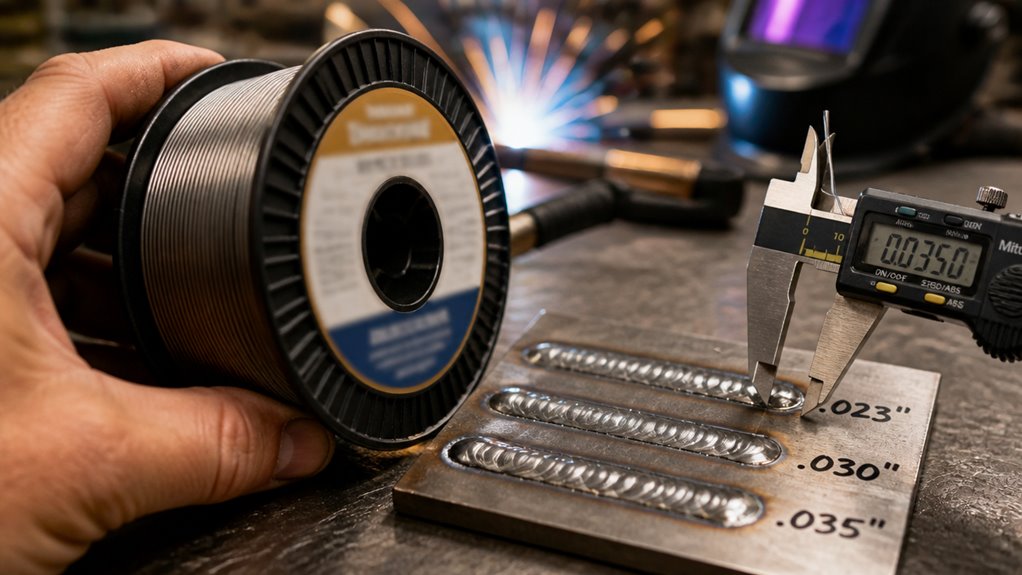
You’ll want to match your MIG wire diameter to your metal thickness for peak performance.
Use 0.023–0.024 inch wire for thin sheet metal and auto body panels to avoid burn-through.
For light fabrication, 0.030 inch wire balances feed speed and penetration.
Structural steel welds suit 0.035 inch wire, while thick plates need 0.045 inch for proper amperage and deposition.
Choosing the right wire guarantees arc stability and weld quality.
Exploring setup and amperage nuances will refine your welding results further.
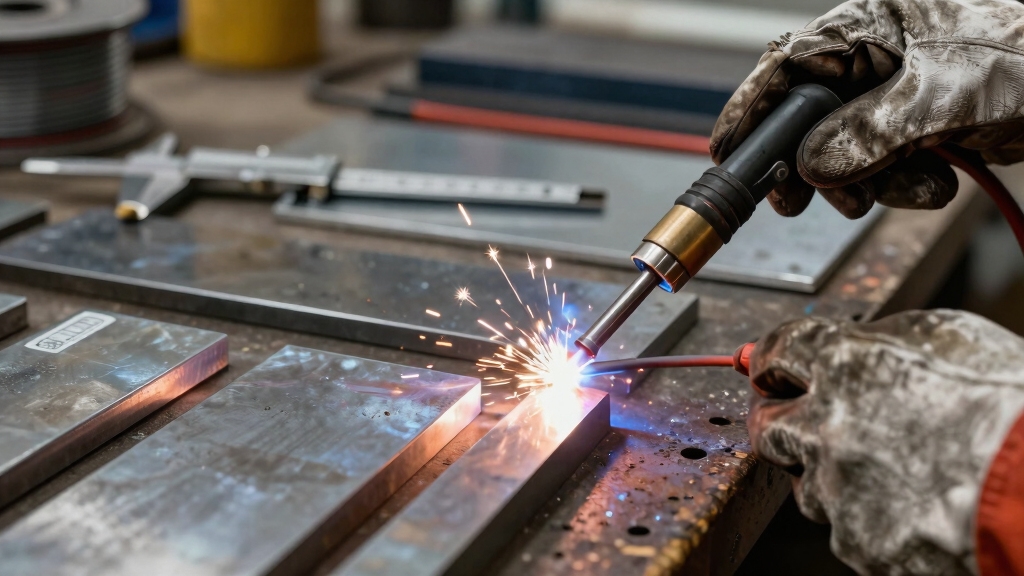
Selecting the correct MIG wire size is essential to guarantee proper weld penetration and strength for the metal thickness you’re working with.
Choosing the right MIG wire size ensures optimal weld penetration and strength for your metal thickness.
For thin materials like 24–18 gauge sheet metal, choose 0.023–0.024 inch wire to prevent burn-through and maintain control.
As thickness increases to 20–16 gauge, you’ll want to switch to 0.024–0.030 inch wire for adequate deposition without sacrificing precision.
When working with 1/8 inch steel, 0.030–0.035 inch wire balances penetration and feed speed effectively.
For 3/16 to 1/4 inch thick metals, 0.035 inch wire is frequently preferred to handle heavier welds.
When you move beyond 1/4 inch, 0.045 inch wire supports the necessary amperage and deposition rates to guarantee weld integrity on thick sections.
Matching wire size precisely avoids defects and optimizes arc stability.
Always ensure proper surface preparation before welding to improve strength and durability.
Choosing the right MIG wire size directly influences weld quality and efficiency across various applications.
For thin sheet metals like auto body panels and exhausts, 0.023–0.024 inch wire provides precise control and minimizes burn-through.
If you’re tackling light fabrication or general repair, 0.030 inch wire balances feed speed and penetration effectively.
For structural steel and medium-thickness materials, 0.035 inch wire is paramount, offering strong deposition rates and adaptability.
When working with thick plates or heavy industrial components, 0.045 inch wire supports higher amperage and faster deposition, vital for productivity.
Selecting these sizes aligns with material thickness and amperage ranges, ensuring consistent weld integrity and operation efficiency.
Using the correct wire diameter also helps optimize feed rates to reduce stoppages and improve arc stability.
When you’re choosing the diameter of MIG wire, one of the first things to think about is the thickness of the material you’re working with. It plays a big role in how deep the weld penetrates and ultimately how strong it is.
Also, don’t forget to match your amperage settings to the wire size. This is crucial because it helps you reach those peak deposition rates while steering clear of any burn-through issues.
Finding the right balance between these factors is key. It can make a real difference in achieving consistent weld quality, no matter what application you’re tackling.
For mild steel, selecting wire diameter according to material thickness—such as 0.023”–0.030” for up to 1/8” thickness—ensures optimal performance and penetration with the correct wire feed speed.
Because metal thickness directly affects weld quality and penetration, you need to match your MIG wire diameter accordingly to achieve peak results.
Thin metals, like 24–18 gauge sheet, require smaller wires such as 0.023–0.024 inches to minimize burn-through and maintain control.
As thickness increases to 1/8 inch, 0.030–0.035 inch wire improves deposition and penetration.
For materials between 3/16 and 1/4 inch, 0.035 inch wire provides adequate weld strength and efficiency.
When welding thicker than 1/4 inch, you should use 0.045 inch wire to guarantee sufficient metal transfer and robust welds.
Selecting wire diameter relative to material thickness optimizes weld integrity and reduces defects. This parameter is critical for your MIG welding setup and performance.
Understanding amperage and deposition rates is crucial for selecting the appropriate MIG wire diameter. Higher amperage supports thicker wire, increasing deposition rates essential for heavy-duty welding.
Conversely, lower amperage suits thinner wire, reducing burn-through risks on thin metal. Matching amperage to wire diameter guarantees peak penetration and weld quality.
| Wire Diameter (in) | Amperage Range (amps) | Typical Applications |
|---|---|---|
| 0.023 | 30–130 | Thin sheet, auto body |
| 0.030 | 40–145 | Light fabrication, general repair |
| 0.035 | 50–180 | Structural steel, piping |
| 0.045 | 75–250 | Thick plate, heavy industrial |
Choose wire diameter based on your machine’s amperage capacity and material thickness for efficient deposition and weld integrity. Additionally, selecting a wire with the proper mechanical properties and alloying elements ensures optimal weld strength and durability.
When it comes to MIG welding, matching your amperage to the right wire diameter is super important for getting the best performance. Each wire size has its sweet spot when it comes to the amp range it works best in.
For instance, if you’re using 0.023-inch wire, it’s perfect for 30 to 130 amps. On the other hand, if you go with 0.045-inch wire, it can handle a broader range of 75 to 250 amps. Choosing the correct wire size prevents burn-through and ensures proper penetration and arc stability during welding.
Match your wire size to the appropriate amperage range to guarantee peak weld quality and machine performance. Each wire diameter corresponds to a specific amp range.
0.023 in wire fits roughly 30–130 amps, while 0.045 in wire suits 75–250 amps. Using wire outside its ideal amperage range risks poor arc stability, weak penetration, or burn-through.
For example, operating a 0.023 in wire at high amps can cause excessive burn-through on thin metal. Low amps with 0.045 in wire lead to poor fusion and wire stubbing.
Choose wire size based on your machine’s amperage output and the material thickness you plan to weld. This ensures consistent feed speed and appropriate heat input.
This alignment optimizes deposition rates and weld integrity across your projects.
Selecting the correct amperage range directly influences your choice of MIG wire size by determining arc stability, penetration depth, and deposition rate. When you match amperage to wire diameter, you guarantee consistent weld quality and avoid defects like burn-through or insufficient fusion.
Consider these key impacts:
Accurately aligning amperage with wire size optimizes performance, weld strength, and material compatibility in MIG welding. Additionally, ensuring the correct polarity settings supports optimal heat distribution and stable arc characteristics when selecting wire and amperage.
Determining when to use thin or thick MIG wire hinges on material thickness and welding application.
You’ll select thin wire (0.023–0.024 in) for sheet metals under 18 gauge, such as auto body panels, where low heat input prevents burn-through.
For medium thickness (1/8 in), 0.030–0.035 in wire balances penetration and deposition.
Thick materials (≥1/4 in) require 0.045 in wire to guarantee adequate weld strength and deposition rate.
Choosing the correct wire diameter also helps maintain arc stability and reduces welding defects.
| Wire Diameter (in) | Material Thickness | Typical Application |
|---|---|---|
| 0.023–0.024 | 24–18 gauge | Thin sheet metal, auto body |
| 0.030 | 20–16 gauge | Light fabrication |
| 0.035 | 3/16–1/4 in | Structural steel |
| 0.045 | ≥1/4 in | Heavy plate, industrial use |
Getting your MIG wire setup right is crucial for consistent feeding and clean welds. Proper tension, liner condition, and drive roll type all influence wire delivery. Incorrect setup may cause bird-nesting or erratic feeding, compromising weld quality.
Focus on:
Optimizing these factors guarantees steady wire flow. This improves bead uniformity and reduces spatter. Using the correct drive rolls is essential to prevent liner distortion and ensure smooth wire feeding.
Yes, you can mix different MIG wire sizes in one project, but you should do so carefully.
Match wire diameter to metal thickness and amperage requirements for each weld section.
Switching wire sizes affects feed speed, penetration, and deposition rate, so adjust machine settings accordingly to maintain weld quality.
Using smaller wire on thin metal reduces burn-through, while larger wire suits thicker sections.
Plan your workflow to accommodate these variations efficiently.
You might think all wire coatings perform the same, but they don’t. The coating type directly impacts arc stability, spatter levels, and weld quality.
For example, flux-cored wires offer better slag coverage and penetration in dirty or rusty metal. Solid wire with gas shielding provides cleaner welds on clean steel.
Choosing the right coating improves weld strength and appearance, reducing defects and post-weld cleanup. So, don’t overlook coating type when selecting wire.
The shelf life of MIG welding wire depends on storage conditions but generally lasts 1 to 2 years if kept dry and sealed.
Moisture causes rust and contamination, degrading weld quality.
You should store wire in a cool, dry place with original packaging or airtight containers.
If you notice rust or corrosion, discard the wire because it can cause porosity and weak welds.
Proper storage extends wire usability considerably.
Just like leaving Excalibur in the mud would dull its edge, storing MIG wire improperly can cause serious safety issues.
Moisture can lead to rust, increasing the risk of weld defects and poor arc stability.
Contaminants may cause spatter or inconsistent feed, potentially leading to equipment jams or even electrical shorts.
Always keep your wire sealed, dry, and clean to maintain performance and prevent hazards during welding.
Environmental conditions markedly impact your MIG wire’s performance. Moisture causes rust and contamination, leading to poor arc stability and weld defects.
Dust and debris on the wire can disrupt feeding and create inconsistent welds. Extreme temperatures affect wire flexibility and feed consistency.
To maintain peak performance, store your wire in a dry, clean, and temperature-controlled environment. Use sealed containers or wire feeders with spools designed to minimize exposure to contaminants.
So, you might think picking a MIG wire size is as simple as grabbing the thinnest spool and calling it a day.
But ironically, choosing the wrong diameter can turn your smooth weld into a tangled mess of spatter and weak joints.
By matching wire size to metal thickness and amperage, you guarantee precision and strength.
Remember, the right wire isn’t just a part—it’s the backbone of a flawless weld.
Don’t let simplicity fool you.