Phone:
(701)814-6992
Physical address:
6296 Donnelly Plaza
Ratkeville, Bahamas.

Phone:
(701)814-6992
Physical address:
6296 Donnelly Plaza
Ratkeville, Bahamas.

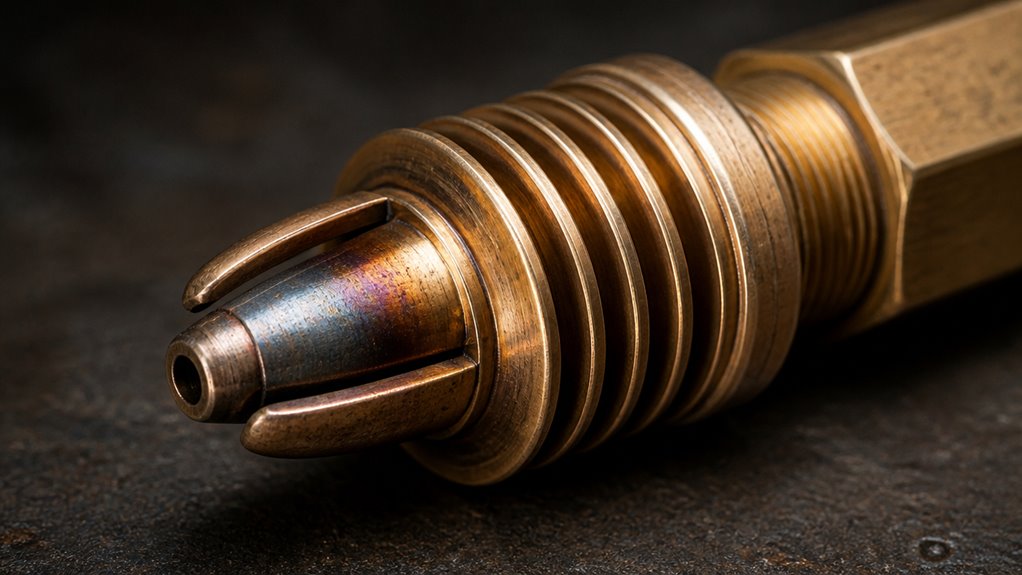
You use a rosebud welding tip to deliver broad, even heat over large metal surfaces via its multi-orifice design. This creates a petal-like flame with peak heat about one inch beyond the inner cone.
It performs best at 12–15 PSI oxygen, run wide open for stable, softer heat ideal for brazing, preheating, or straightening. This is not for precise welding.
Its flame minimizes hotspots and thermal distortion while maximizing BTU output. Exploring its operation and safety will clarify its full potential.
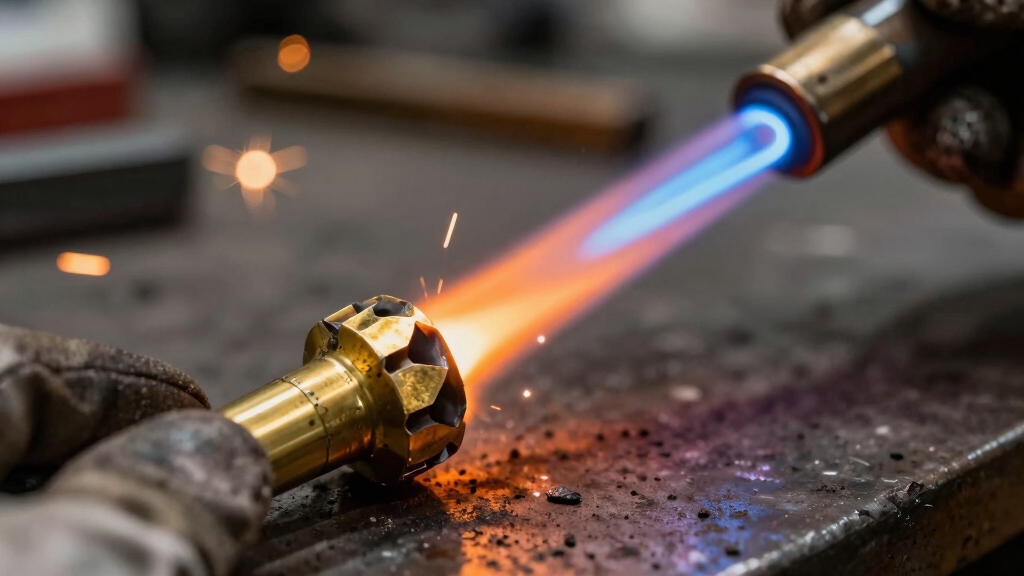
Understanding how a rosebud welding tip functions starts with recognizing its unique multi-orifice design that spreads the flame over a broad area rather than concentrating it into a narrow point.
You’ll see that this design produces a petal-like flame pattern resembling a blooming rose, providing softer, less concentrated heat ideal for applications like brazing and preheating large metal surfaces.
Unlike standard welding or cutting tips, the rosebud tip attaches to compatible torch handles, such as Uniweld Type 17, 28, or 29 models, delivering even heat distribution over wide areas.
By operating at higher oxygen and fuel pressures, you maintain a stable, broad flame that reaches temperatures around 2270°F.
This maximizes BTU output for effective general heating rather than precision welding or cutting tasks.
To achieve optimal performance, it is important to adjust oxygen-to-fuel ratio carefully for a stable flame and efficient combustion.
While standard welding tips focus the flame into a narrow, high-intensity cone for precise cutting or welding, rosebud tips employ a multi-orifice design that disperses the flame across a wider area to produce a softer, less concentrated heat.
This design generates a petal-like flame pattern, resembling a blooming rose, which markedly broadens heat distribution. You’ll notice rosebud flames reach peak temperatures around 2270°F but deliver heat over a larger surface, unlike the pinpoint intensity of standard tips.
The multi-orifice layout minimizes flame concentration, making rosebud tips ideal for heating, brazing, and preheating large metal areas rather than precision work. You can rely on this design to provide even, stable heating, but it sacrifices fine control and intensity, which are characteristic of traditional single-orifice welding tips.
Rosebud tips are often used with oxy-acetylene welding setups due to their ability to provide broad, moderate heat suitable for metal preheating and brazing tasks.
The unique multi-orifice design of rosebud tips demands compatible torch handles that can support their broader flame distribution and higher operating pressures.
You’ll find rosebud tips fit well with Uniweld Type 17 handles such as models 71, WH250, WH350, and WH550, sometimes requiring an F15 adaptor.
They also work with Type 28 handles of similar models, again often needing the adaptor for proper fitment.
For specific heating tasks, Type 29 handles like the WH350 accommodate rosebud tips effectively.
Victor torches, including #10 and #20 tip sizes, are also compatible.
These handles provide the necessary oxygen and fuel pressure stability, typically 12 to 15 PSI, to maintain flame integrity and prevent backfire.
This ensures consistent, broad flame coverage for your heating operations.
Proper gas flow rates, typically between 10 to 35 CFH, are essential to maintain shielding gas protection and optimal flame performance.
Leverage rosebud tips when you need broad, even heat distribution across large metal surfaces rather than pinpoint flame control.
They excel in brazing, soldering, straightening, and preheating sizable metal pieces for welding preparation.
Unlike focused welding tips, rosebuds produce a softer, expansive flame ideal for general heating tasks in automotive fabrication and repair.
You’ll find them especially useful when uniform temperature is critical to avoid warping or cracking.
Their multi-orifice design spreads the flame evenly, allowing you to efficiently raise metal temperature over a wide area.
While not suited for precision welding, rosebud tips optimize heat application for tasks demanding consistent, moderate intensity.
This enhances workflow speed and material integrity in heavy-duty metalworking environments.
Victor’s heating tips, such as the No. 6 rosebud, provide a broader, even flame for effective preheating and heating applications.
When applying heat evenly across large metal surfaces, understanding the temperature and heat distribution of rosebud tips becomes essential. Rosebud tips reach maximum temperatures around 2270°F, focusing peak heat roughly one inch beyond the inner flame cone.
Rosebud tips deliver peak heat near 2270°F, concentrating warmth just beyond the inner flame cone for even metal heating.
This hot zone provides a broad, softer flame ideal for heating rather than cutting. Unlike standard welding tips, rosebuds deliver heat over a wider area, making them effective for preheating or brazing large metal parts.
The flame’s multi-orifice design spreads the thermal energy evenly, minimizing hotspots and thermal distortion. You’ll notice the greatest BTU output occurs just outside the inner flame cone, where combustion stabilizes.
This characteristic defines rosebud performance, enabling you to apply consistent, high-temperature heat efficiently across expansive surfaces. Proper torch tip selection and adjusting flame size are key to optimizing heat distribution with rosebud tips.
Adjusting operating pressures correctly is essential to achieve stable, efficient flame performance with rosebud tips.
You’ll typically set oxygen and acetylene pressures between 12 and 15 PSI to maintain a consistent, broad flame without popping.
Running oxygen too low causes instability, while excessively high fuel pressures increase backfire risk.
For most applications, open the fuel valve fully and regulate oxygen within this range to prevent flame fluctuations.
Always follow the correct shutoff sequence, closing fuel first to avoid backfires.
Remember, unlike precision welding tips, rosebuds demand higher pressures for flame stability, especially on models like Victor #10.
Fine adjustments depend on your specific torch handle and tip size, but maintaining these parameters guarantees optimal heat distribution and prolongs tip life.
When handling oxygen cylinders for your rosebud tips, it is crucial to follow depressurization procedures to ensure safe operation and storage.
Maintaining the correct operating pressures helps reduce many flame stability problems. However, rosebud tips can still experience common issues that affect performance and safety.
You may encounter popping or backfires during shutoff, often caused by insufficient oxygen pressure. Increasing oxygen to 12-15 PSI typically resolves this.
If the tip runs hot between the handle and nozzle, it indicates improper adjustment or gas flow imbalance. Operating the rosebud tip wide open prevents flame instability since it’s not designed for fine control.
Additionally, the flame can reignite with a pop on red-hot workpieces if extinguished, so be cautious during shutdown.
Using a darker shield than green prevents welder’s flash during brazing, addressing visibility and eye safety concerns.
Troubleshooting requires precise adjustment and adherence to recommended pressures for peak rosebud tip performance.
Always wear appropriate Personal Protective Equipment to prevent injury from sparks and heat when using rosebud tips.
Making certain proper safety measures while using rosebud welding tips is crucial due to their high heat output and broad flame coverage. You must always wear a darker protective shield beyond standard green to prevent welder’s flash during brazing.
Maintain oxygen and fuel pressures within recommended ranges (12-15 PSI) to avoid backfire or popping. Assure the shutoff sequence closes fuel first, minimizing flashbacks. Always operate the tip wide open, as low-pressure settings can cause instability.
Position your work area to avoid flammable materials, given the extended flame envelope.
Electrical shocks in welding can occur due to improper grounding or damaged cables, so ensure all equipment is properly insulated and grounded to reduce risk of electric shock.
| Safety Aspect | Recommendation |
|---|---|
| Eye Protection | Use dark protective shields |
| Gas Pressure | Maintain 12-15 PSI |
| Shutoff Sequence | Close fuel before oxygen |
| Operation Mode | Run wide open |
| Work Area | Clear of flammable materials |
Yes, you can use rosebud tips with propane instead of acetylene, but you need to adjust operating pressures carefully.
Propane requires higher oxygen pressures to maintain a stable, broad flame, typically around 12-15 PSI. Expect slightly lower flame temperatures compared to acetylene, which may affect heating efficiency.
Always monitor for popping or backfire and make certain proper shutoff sequence: fuel first. This helps avoid safety hazards and maintain flame stability during operation.
You can expect a rosebud tip to last several months under regular use, depending on maintenance and operating conditions.
Frequent heating cycles at recommended pressures (12-15 PSI) and proper shutoff sequences minimize wear and prevent damage.
Over time, oxidation and tip deformation may reduce efficiency, so inspect for clogging or warping.
Consistent cleaning and avoiding backfire pops will extend the tip’s functional lifespan, ensuring reliable broad-area heating performance.
You might think rosebud tips work only with oxy-fuel systems, but they’re not compatible with non-oxy-fuel heating setups.
Rosebud tips require precise oxygen-fuel gas mixing and specific torch handles, like Uniweld or Victor models, to function safely and efficiently.
Using them with propane-only or other single-fuel systems risks poor flame control, backfires, and damage.
Stick to recommended oxy-fuel torches to guarantee peak heat distribution and tip longevity.
You’ll need to regularly inspect and clean the orifices to prevent clogging from soot or debris, using a soft wire or tip cleaner designed for multi-orifice nozzles.
Always check for cracks or damage to avoid leaks. Confirm proper gas pressure settings to minimize popping and backfire risks.
After use, purge the tip to clear residual gases. Store it in a dry place to prevent corrosion and maintain peak flame performance.
You absolutely can’t think of using rosebud tips indoors without ventilation. It’s like inviting a furnace to roast your lungs.
The combustion produces carbon monoxide and other gases that accumulate dangerously. Always make certain proper exhaust systems or ample airflow to avoid toxic buildup.
Even with moderate flame settings, oxygen depletion and gas hazards persist. Prioritize safety by using dedicated ventilation or working in open or well-ventilated spaces to prevent health risks.
Now that you’ve mastered the ins and outs of rosebud welding tips, you’re ready to turn up the heat with confidence.
These tips deliver broad, intense flames ideal for heavy-duty heating. But remember, the devil’s in the details: proper setup and maintenance are key to peak performance.
Keep your operating pressures dialed in and watch for common issues. With safety front and center, you’ll handle rosebud tips like a pro, never letting the sparks fly out of control.