Phone:
(701)814-6992
Physical address:
6296 Donnelly Plaza
Ratkeville, Bahamas.

Phone:
(701)814-6992
Physical address:
6296 Donnelly Plaza
Ratkeville, Bahamas.

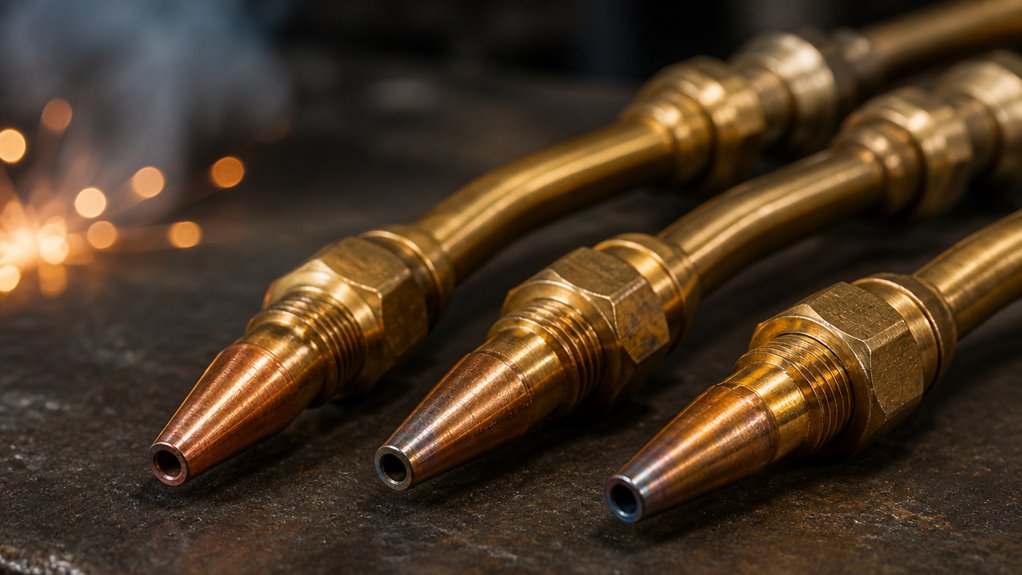
Choose oxy acetylene welding torch tips that match your torch brand and fuel gas to ensure a proper gas-tight seal and flame stability. Use metal-to-metal or soft seats as specified, and select tips designed for acetylene’s high burn speed and pressure limits under 15 PSI.
Pick tip sizes based on metal thickness to control puddle and avoid overheating. Monitor flame type and tip temperature to prevent backfire and tip damage. Understanding flame adjustment and tip care boosts your welding precision and safety.
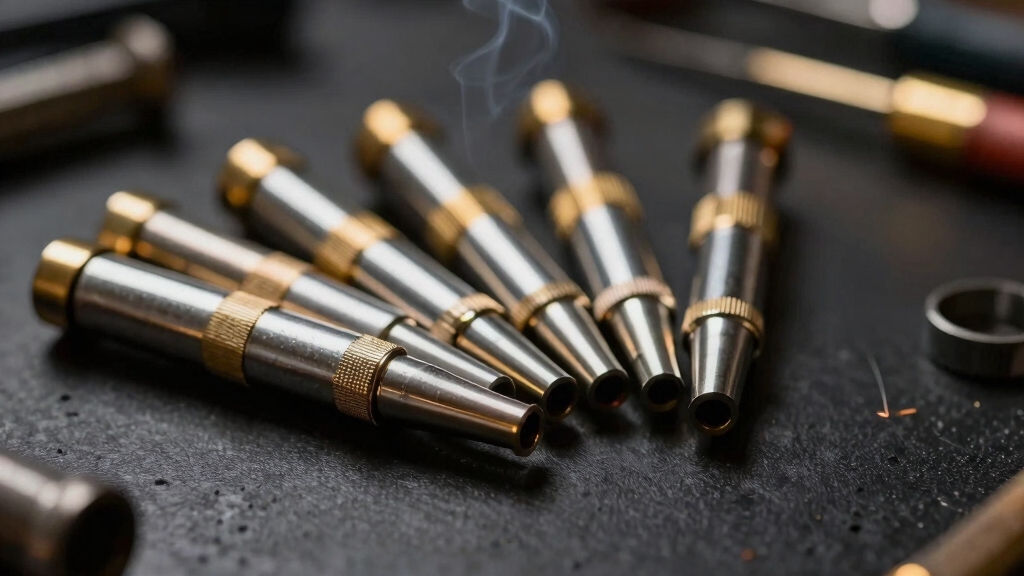
Because torch tip seats are uniquely designed for each brand, you can’t simply swap tips between different manufacturers. Each torch tip features a seat, either metal-to-metal or soft, that guarantees a secure, leak-free fit specific to the torch’s design.
Torch tip seats are brand-specific, ensuring a secure, leak-free fit with either metal-to-metal or soft designs.
Metal-to-metal or hard seats rely on precise torque and machined surfaces for peak sealing. In contrast, soft seats conform to minor imperfections, allowing hand-tightening without tools.
When selecting your tip, prioritize compatibility with your torch’s brand and seat type to maintain safety and performance. Using a mismatched tip risks poor sealing, gas leaks, and inefficient flame control.
Always verify the manufacturer’s specifications to match tip design, seat type, and intended application. This ensures reliable operation and prevents damage or hazards during oxy-acetylene welding tasks.
For optimal safety, ensure your setup includes properly functioning dual check valves to prevent flashbacks and gas reversal.
Matching your torch tip to the correct seat type directly impacts the seal quality and overall safety of your oxy-acetylene setup. The seat type guarantees proper gas sealing and prevents leaks that can cause hazardous backfires or inefficient flames.
You’ll encounter mainly metal-to-metal (hard) seats and soft seats. Hard seats rely on precise machining and torque for a gas-tight seal, demanding proper tool tightening. Soft seats conform to minor surface imperfections, allowing hand-tightening without compromising safety.
Consider these points:
Use the correct seat type specific to your torch brand; seats aren’t interchangeable. Hard seats provide durable, leak-proof connections in high-pressure applications. Soft seats simplify assembly but require careful inspection to avoid wear-related leaks.
Selecting the right seat type is crucial for consistent flame stability and operational safety. Properly tightening connections and verifying they are leak-free helps maintain flame control and prevents dangerous gas leaks.
When it comes to choosing torch tips, it’s really important to pick ones that are specifically designed for your fuel gas. You see, acetylene tips are quite different from those made for propane or natural gas. With acetylene tips, you get that immediate flame stability right at the orifice. On the other hand, propane and natural gas tips need those recessed ports to keep the flame steady.
Now, here’s the thing: if you accidentally use the wrong tip, you could run into some serious problems. We’re talking about overheating, rapid wear, and even dangerous backfires. So, matching the tip design to your fuel gas isn’t just a suggestion—it’s crucial for safe and efficient operation. Trust me, taking that extra step will save you a lot of headaches down the line! Additionally, the torch tip size and nozzle selection play a key role in controlling heat concentration and ensuring optimal flame performance.
Understand that selecting the correct torch tip for your fuel gas is essential to guarantee safe and efficient operation. Acetylene tips differ markedly from propane or natural gas tips due to flame stability and burn rates.
Acetylene burns at approximately 29 feet per second, allowing tips without recesses. In contrast, propane and natural gas burn slower (around 10 feet per second), requiring recessed tips to stabilize the flame and prevent backfire.
Use acetylene-specific tips for immediate flame stability without recess. Choose recessed tips for propane or natural gas to accommodate slower burn rates and assure consistent flame.
Mismatching tips leads to overheating, rapid tip wear, and safety hazards. Always match your torch tip precisely to the fuel gas to maintain operational integrity and safety.
Proper assembly and maintenance of torch components, including the ceramic cup and collet body, are crucial to ensure flame stability and protection during welding.
Because flame stability hinges directly on fuel gas characteristics, selecting the correct torch tip becomes critical for safe and effective operation.
Acetylene’s high burn rate (29 ft/s) allows tips without recesses, providing immediate flame stability at the orifice. In contrast, propane and natural gas burn slower (around 10 ft/s) and require recessed tip designs to stabilize the flame properly.
Using an acetylene tip with propane risks overheating and backfire, while a propane tip on acetylene causes flame instability and rapid tip degradation.
Match tip size to metal thickness and pressure settings: acetylene operates safely under 15 PSI, while propane needs different oxygen-fuel ratios and pressures.
Proper tip selection prevents dross, flame blowback, and guarantees consistent, controlled heat for welding or cutting tasks.
Always ensure the torch tip matches the correct gas mixture and flame type to maintain optimal welding performance and operator safety.
Although both cutting and welding tips attach to oxy-acetylene torches, their designs differ markedly to match their functions.
Welding tips focus on precise flame control, enabling you to form stable puddles and add filler material efficiently. Cutting tips incorporate oxygen ports that deliver a high-pressure oxygen jet to oxidize and blow away molten metal during cutting.
Keep these distinctions in mind:
Welding tips have multiple small orifices to control fuel and oxygen mix for a neutral flame. Cutting tips feature a central oxygen jet surrounded by preheating flame ports.
Using the wrong tip causes inefficient heating, tip damage, and safety hazards.
Understanding these differences guarantees peak performance and safety when working with oxy-acetylene equipment. Proper control of heat input is critical to prevent damage and ensure efficient operation.
Choose your torch tip size carefully to match the metal thickness you’re working on, as this directly impacts heat distribution and weld quality.
Using an undersized tip on thick metal causes excessive heat concentration, leading to sparks and uneven welds. Conversely, an oversized tip wastes gas and creates dross by overheating the workpiece.
Select a tip size designed for your specific torch brand and fuel gas. Acetylene tips differ from propane or natural gas tips in design and flame characteristics.
For metal up to 3/8 inch thick, use smaller welding tips to control puddle size and prevent burn-through. Larger tips suit thicker metals to guarantee adequate heat input.
Proper tip selection optimizes flame stability, minimizes defects, and enhances penetration for clean, strong welds.
Choosing the correct tip size also aligns with controlled heat input principles common in oxyacetylene welding to minimize thermal distortion and improve weld integrity.
When you set acetylene pressure for your oxy-acetylene torch, maintaining a stable flame requires keeping it within a narrow range, typically between 1 and 3 PSI.
Maintaining acetylene pressure between 1 and 3 PSI ensures a stable and safe flame for oxy-acetylene torches.
Pressures above this risk instability and potential explosion hazards.
Proper acetylene pressure guarantees consistent flame characteristics, peak heat output, and safe operation.
Oxygen pressure should complement acetylene, generally around 10 PSI, never exceeding 15 PSI with acetylene.
Key points to maintain stable acetylene pressure:
Always ensure proper handling and depressurization procedures when working with oxygen cylinders to prevent accidents.
Sure! Here’s a more conversational version of your text:
—
Let’s talk about the three main types of flames you’ll encounter: neutral, oxidizing, and carbonizing. Each type is defined by the ratio of oxygen to acetylene. Knowing how to identify them is key!
Now, when you adjust your torch’s oxygen and acetylene pressures, you’re actually controlling those flame characteristics. It’s pretty cool how precise you can be! Getting this right is super important because it helps you achieve the best welding performance.
And here’s the thing: mastering these adjustments can really save you from some common issues. For instance, nobody wants to deal with soot buildup or metal oxidation while welding, right? So, make sure you’re paying attention to those flame types and adjustments!
Using an inert shielding gas like argon in other welding processes can further protect your welds from contamination and improve overall quality.
How do you identify and adjust the three primary oxy-acetylene flame types: neutral, oxidizing, and carbonizing to optimize welding performance?
First, observe the flame’s color and shape. A neutral flame has a clear, well-defined inner cone with balanced oxygen and acetylene. This flame is ideal for most welding tasks.
An oxidizing flame shows a shorter, sharply pointed inner cone with excess oxygen. This produces a hotter but thinner flame.
A carbonizing flame exhibits a longer, feathered inner cone with excess acetylene. This results in soot and carbon deposits.
Use precise gas adjustments to maintain the desired flame type for optimal outcomes. Proper flame control is essential to minimize heat input and reduce issues such as zinc vaporization when welding coated metals.
Mastering flame adjustment means recognizing subtle changes in flame shape and color to maintain ideal welding conditions. You’ll identify a neutral flame by its well-defined inner cone and balanced blue color. This indicates a 1:1 oxygen-acetylene ratio, ideal for most welding.
If the flame’s inner cone shrinks and the tip appears pointed with a light blue hue, you’re dealing with an oxidizing flame caused by excess oxygen. It burns hotter but risks metal oxidation.
Conversely, a carbonizing flame shows a longer, feathered inner cone with yellowish, sooty tips. This signals excess acetylene that can deposit carbon on the weld.
Adjust oxygen and acetylene valves incrementally to shift flame characteristics. Ensure you maintain a stable, clean flame matched to your welding task for peak penetration and minimal contamination.
Since improper tip selection and incorrect gas pressures directly impact torch performance, preventing torch tip overheating and backfire starts with matching the tip to the correct fuel gas and maintaining appropriate pressure settings.
Using an acetylene tip with acetylene gas at 1-3 PSI and oxygen at about 10 PSI guarantees flame stability and prevents overheating. Avoid exceeding recommended pressures, as acetylene above 15 PSI risks explosion and backfire.
Using acetylene at 1-3 PSI with oxygen around 10 PSI ensures stable flames and prevents overheating.
To prevent tip damage and operational hazards:
Always select tips designed for your specific fuel gas and torch brand. Maintain neutral flame characteristics by balancing oxygen and fuel gas ratios precisely.
Monitor tip temperature and shut off gas flow immediately if you detect overheating or irregular flame behavior.
These controls safeguard tip integrity, extend service life, and guarantee consistent welding or cutting performance.
Although oxy acetylene welding offers versatility and precision, you must follow essential safety protocols to prevent accidents and equipment damage. Always use a proper striker to ignite the torch; never use a lighter, which creates dangerous soot buildup.
Confirm oxygen purity is 99.9% to maintain flame quality and avoid contamination. Keep acetylene pressure below 15 PSI to prevent instability and explosion risk. Wear welding goggles to protect your eyes from intense light and sparks.
| Safety Aspect | Best Practice |
|---|---|
| Ignition | Use striker, ignite gas flow only |
| Pressure Limits | Acetylene ≤ 15 PSI, Oxygen ≤ 15 PSI |
| Personal Protection | Wear welding goggles and gloves |
Adhering to these guidelines minimizes hazards and guarantees equipment longevity.
Maintaining proper control over the weld puddle and flame distance directly affects the quality and strength of your welds. You must keep the torch at an ideal distance to regulate heat input, ensuring the puddle forms evenly without overheating or underheating the metal.
Too close, and you risk excessive heat causing burn-through; too far, and the puddle cools prematurely, leading to weak fusion.
Key points to control effectively:
Mastering these controls enhances weld integrity and precision in every project.
You clean and maintain your torch tips by first shutting off gas and letting the tip cool.
Use a tip cleaner or fine wire to clear debris from the orifices without enlarging holes.
Avoid damage by cleaning gently and regularly.
Inspect for wear or damage, replacing tips if necessary.
Store tips in a dry, protected case to prevent corrosion and contamination.
Proper maintenance guarantees stable flames and extends tip life.
You’ll notice worn or damaged torch tips by irregular flame patterns, inconsistent heat, or difficulty maintaining a stable flame.
Look for enlarged or distorted orifices, cracks, or carbon buildup inside the tip. Excessive soot or spitting flames also indicate wear.
If your cuts produce excessive dross or sparks, the tip’s likely compromised. Address these signs promptly to avoid backfires, tip burnout, and poor weld quality.
Picture a torch tip glowing steadily as you weld, then imagine it struggling to spread heat evenly when you switch to heating.
You shouldn’t use the same tip for both tasks.
Welding tips focus flame precisely for joints, while heating tips deliver broader, gentler heat.
Using one tip for both risks poor results and faster wear.
Always match your tip to the specific task to guarantee safety, efficiency, and quality.
Ambient temperature and wind directly impact your torch flame stability.
Cold temperatures can cause gas contraction, reducing flame intensity.
High winds can blow the flame off-course or extinguish it, disrupting combustion.
You’ll need to shield the flame from drafts and adjust gas pressures slightly to maintain a consistent, stable flame.
Always monitor flame behavior closely in variable conditions to prevent backfires or inconsistent heating during your work.
Want to keep your torch tip performing at its best during long sessions? Use tip cleaners to remove soot and debris, ensuring consistent flame quality.
Pair that with heat-resistant gloves to protect yourself and maintain steady control.
A high-quality striker guarantees safe, reliable ignition every time.
Also, consider gas regulators and flashback arrestors to maintain stable pressure and prevent dangerous backfires.
This enhances both performance and safety throughout prolonged use.
You might think picking any oxy acetylene torch tip will get the job done. But precision matters more than you realize.
Using the wrong tip or flame setting isn’t just a minor hiccup; it risks overheating, weak welds, and safety hazards you’d rather avoid.
So, don’t underestimate those small, often overlooked details. They’re exactly what separate a sloppy weld from a professional-grade finish.
Master your tips, or be prepared for sparks flying in all the wrong ways.