Phone:
(701)814-6992
Physical address:
6296 Donnelly Plaza
Ratkeville, Bahamas.

Phone:
(701)814-6992
Physical address:
6296 Donnelly Plaza
Ratkeville, Bahamas.

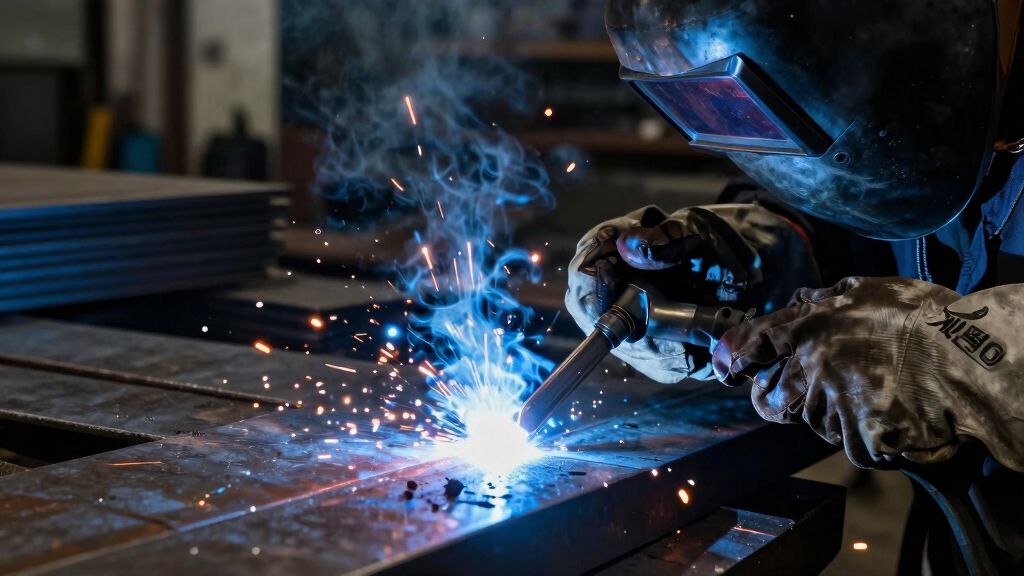
You’ll typically pay between $124 and $489 for welding, with labor making up about 85% of the cost.
Expect hourly rates between $80 and $150 depending on welding type and job complexity. Structural welding runs $80 to $120, while pipe welding is higher.
Materials, consumables, and equipment also add up, especially when working with thicker gauges or specialty metals.
Choosing MIG welding and consolidating joints can cut costs. More details on optimizing expenses follow.
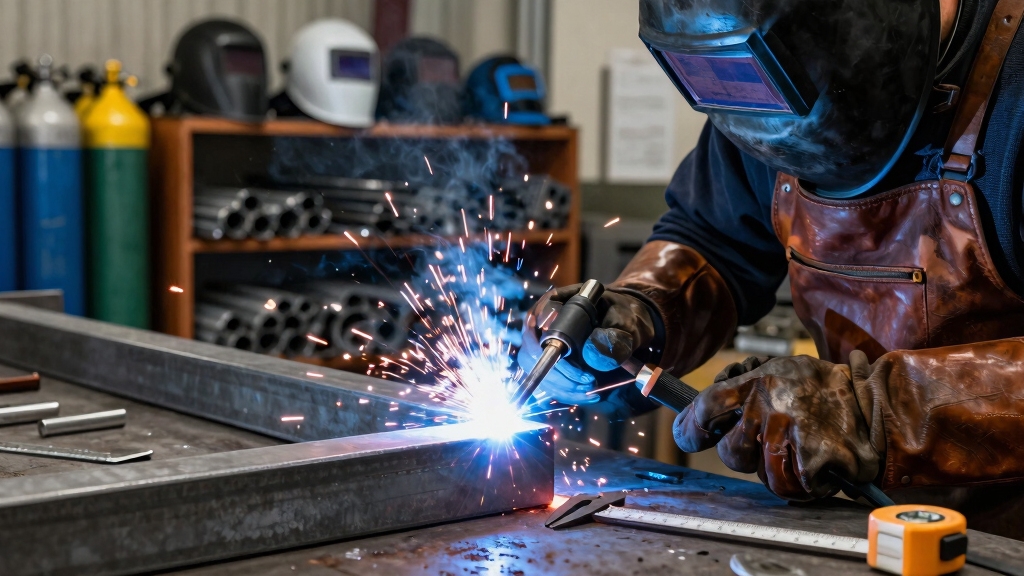
Understanding the key factors driving welding project costs helps you manage your budget effectively. You’ll want to take into account labor rates first, as they often represent up to 85% of total costs.
Labor rates are crucial, often making up to 85% of your welding project expenses.
Structural welding typically runs $80 to $120 per hour, while specialized tasks like pipe welding can be higher. Next, material costs vary depending on steel gauge and consumables.
For example, 14-gauge steel sticks range roughly $44 to $125 per 25 feet, and consumables add $140 to $230.
Equipment expenses also influence your budget. Entry-level welders start around $200, but professional-grade machines can cost up to $12,000.
Finally, project complexity, such as custom fabrication or ornate designs, increases labor time and material usage. This directly affects your overall cost.
Using a multi process welder can reduce equipment expenses and improve efficiency on varied welding projects.
You’ll often find that the average cost of welding projects ranges broadly, typically between $124 and $489, with a national average sitting around $303.
Smaller jobs like metal furniture repair can start as low as $50, while complex projects such as ornate gate fabrication may reach $6,000.
Structural welding typically costs $80 to $120 per hour, contributing markedly to overall expenses.
Materials add to costs; 14-gauge steel ranges from $44 to $125 per 25-foot stick, while consumables like wire and flux add $140 to $230.
Equipment investments vary widely, from entry-level stick welders at $200 to industrial TIG welders exceeding $12,000.
Understanding these averages helps you budget effectively, balancing labor, materials, and equipment to meet your project’s technical demands.
MIG welding is often chosen for its high deposition rates that can reduce labor costs and speed up project completion.
Labor costs make up about 85% of total welding expenses. Knowing how hourly rates vary can help you estimate project prices more accurately.
Welding labor rates typically range from $80 to $150 per hour, depending on the specialization. Structural welding often falls between $80 and $120 hourly, while pipe welding can command $100 to $150.
Custom fabrication varies widely within this same range. The national average welder rate hovers near $100 to $105 per hour, occasionally reaching $120 for complex jobs.
When you plan your project budget, factor in these labor rates carefully. They directly influence total costs. Precision in estimating labor hours and rates can prevent overruns and guarantee your welding project stays financially on track. Understanding and following qualified Welding Procedure Specification (WPS) is essential to ensure cost-effective and compliant welding outcomes.
When you’re budgeting for your welding project, it’s good to know what to expect in terms of material costs. For instance, 14-gauge steel can run you anywhere from $44 to $125 for a 25-foot stick. That’s quite a range, so keep that in mind as you plan.
On top of that, don’t forget about consumables like sandpaper and flux. Those can add another $140 to $230 to your total costs. It might seem like a small detail, but it definitely adds up!
Now, let’s talk about wire. The costs here can vary quite a bit depending on the type you need. For carbon steel MIG wire, you’re looking at prices from $1.50 to $3.50 per pound.
If you’re going with TIG wire, expect to pay between $2.00 and $5.00 per pound.
Choosing the correct welding wire classification helps ensure the best performance and cost efficiency for your project.
Understanding these material expenses upfront will really help you plan your project budget accurately. It’s all about being prepared!
Understanding steel material pricing is essential for accurately estimating welding project costs. Steel prices vary based on gauge, length, and type. For example, 14-gauge steel typically costs between $44 and $125 per 25-foot stick.
These fluctuations affect your budget directly, so sourcing the right grade at a competitive price is key. Here’s a concise breakdown of typical steel material costs you should consider:
| Steel Type | Unit | Price Range |
|---|---|---|
| 14-Gauge Steel | 25-foot stick | $44 – $125 |
| Carbon Steel | Pound (wire) | $1.50 – $5.00 |
| Structural Steel | Per foot | $7.28 – $3.95 |
Keep these figures handy when planning to ensure your material costs align with your overall project estimates. Proper surface preparation is crucial to maximize the longevity and corrosion resistance of welded steel components.
After accounting for steel material costs, you’ll need to factor in consumables, which substantially impact the overall welding budget.
Consumables include essential items that wear out or get consumed during welding, directly influencing project expenses. Knowing their typical cost range helps you plan accurately.
Common consumables and their estimated costs are:
These consumables add between $140 and $230 on average to your project’s material costs. Budget accordingly to avoid surprises. Selecting the appropriate cable gauge for your welding setup ensures consistent arc performance and protects equipment during the project.
Several common wire types drive the material costs for welding projects, each varying by welding process and application.
For MIG welding, carbon steel wire typically costs between $1.50 and $3.50 per pound, offering a cost-effective option for general fabrication.
TIG welding wire runs higher, from $2.00 to $5.00 per pound, reflecting its precision and cleaner welds.
Stick welding wire generally falls between $2.50 and $4.50 per pound, balancing affordability with versatility.
When budgeting, consider that wire type not only influences material cost but also affects weld quality and speed.
Selecting the right wire guarantees efficiency and cost control.
Keep in mind, consumables like flux and shielding gas add extra expenses, so factor those into your total material cost estimates for accurate project planning.
Using the correct wire electrode diameter can also impact welding efficiency and overall project costs.
When it comes to welding equipment, you’ll notice that entry-level stick welders typically fall between $200 and $500. If you’re looking at professional-grade MIG or TIG machines, though, be prepared for a significant investment—those can run anywhere from $10,000 to $12,000.
Now, if you’re trying to decide between MIG and TIG welders, here’s the scoop: MIG units are generally more budget-friendly and easier to use. On the flip side, TIG machines provide exceptional precision, but that precision comes with a heftier price tag. Multi-process machines like the Power MIG 140 MP offer versatility with multi-process capabilities, making them a cost-effective choice for varied welding needs.
Choosing the right entry-level welder is essential for managing equipment costs in welding projects. Your choice directly impacts project efficiency and budget adherence.
Entry-level welders vary by type and price, so consider your specific welding needs carefully. Here’s a quick look at typical price ranges:
Stick welders: $200 to $500
MIG welders (home use): $300 to $800
TIG welders (entry-level): $500 to $1,500
Consumables and accessories add to initial costs
Power requirements and portability affect pricing
Selecting a welder that matches your project scope avoids overspending. Focus on durability and functionality to guarantee long-term value without unnecessary upfront expense. MIG welding is often recommended for beginners due to its continuous wire feed system that simplifies operation and reduces electrode changes.
Investing in professional welding equipment requires careful consideration of both functionality and budget constraints.
You’ll find entry-level stick welders priced between $200 and $500, suitable for basic tasks. For more advanced work, professional MIG welders range from $800 up to $10,000, offering higher power and precision.
TIG welders start around $500 for entry-level models and can exceed $12,000 for industrial-grade machines. When selecting equipment, evaluate duty cycle, amperage range, and compatibility with your project materials.
Keep in mind, higher upfront costs often translate into better durability and efficiency, reducing long-term expenses. Also, factor in consumables and maintenance to avoid hidden costs.
Balancing your immediate needs with potential project complexity ensures you invest wisely in welding equipment that matches your professional demands. Additionally, choosing machines with multi-process functions can enhance versatility and cost-effectiveness across various welding projects.
When comparing MIG and TIG welding equipment costs, it’s important to weigh both the initial investment and the specific project requirements you face. MIG welders tend to be more affordable upfront, making them suitable for general fabrication and thicker materials.
TIG welders, while pricier, excel in precision and thin metal work but require more skill. Consider these key points:
MIG welders range from $300 (entry-level) to $10,000 (professional).
TIG welders start around $500 and can exceed $12,000 for industrial units.
MIG uses cheaper consumables ($1.50 to $3.50 per pound wire) than TIG ($2.00 to $5.00).
TIG welding demands more operator expertise.
MIG is faster, reducing labor costs on larger jobs.
Choose based on your budget, material, and precision needs.
Although both structural and pipe welding demand specialized skills, their hourly rates differ due to the complexity and environment of the work.
Both structural and pipe welding require expertise, but their hourly rates vary with job complexity and work conditions.
Structural welding typically runs between $80 and $120 per hour. It involves joining large steel frameworks in relatively accessible settings, requiring solid technique but less environmental hazard.
Pipe welding commands higher rates, from $100 to $150 per hour, because it often requires working in confined spaces and handling pressurized systems while meeting stricter code requirements.
Pipe welders must master more precise procedures and inspections, raising labor costs.
When budgeting, consider that pipe welding’s increased difficulty and safety standards justify its premium compared to structural welding.
Your choice depends on project scope, environment, and regulatory demands, all impacting hourly labor costs.
Understanding welding costs per foot helps you accurately estimate expenses based on the chosen welding process. Each method varies in material consumption, equipment needs, and speed, directly affecting cost efficiency.
Here’s a quick comparison to guide your budgeting:
Spray transfer welding costs around $4.87 per foot, balancing speed and quality. High wire feed speed processes reduce costs to about $3.95 per foot by increasing deposition rates.
Standard stick welding can reach approximately $7.28 per foot due to slower deposition and higher consumable use. Fillet weld costs include labor, gas, wire, and consumables, essential for precise cost assessment.
MIG welding generally offers a middle ground in cost, equipment investment, and productivity.
Recognize that labor typically accounts for about 85% of your total welding costs. This makes it the most consequential expense in any project.
Welder hourly rates vary by specialization and complexity, which directly impacts your budget. Understanding these labor components helps you estimate costs accurately and manage resources efficiently.
| Welding Type | Hourly Rate (USD) | Labor Cost Share (%) |
|---|---|---|
| Structural Welding | $80 – $120 | 85 |
| Pipe Welding | $100 – $150 | 85 |
| Custom Fabrication | $80 – $150 | 85 |
| National Average | $100 – $105 | 85 |
| Median Welder Pay | $22.60 | 85 |
Focus on labor rates when planning. They dominate expenses, so optimizing labor efficiency reduces overall costs markedly.
You might notice that welding costs really start to climb when you’re dealing with larger projects. It makes sense—more labor hours and a bigger volume of materials can really drive up expenses.
And then there are the complex materials. They often need specialized techniques and specific consumables, which can add to the overall cost. Plus, the added preparation and precision required for these materials can really push expenses higher.
Because the scale and complexity of a welding project directly influence labor hours, material requirements, and equipment usage, the overall cost can vary markedly as project details expand.
When your project grows, expect these factors to impact costs:
Increased labor hours for larger weld lengths or multiple joints.
Greater consumption of consumables like wire and flux.
Extended equipment run-time, raising operational expenses.
More complex handling or setup for bulky or heavy parts.
Additional safety measures for large-scale or structural welds.
For example, a small metal repair might cost $50, while an ornate gate fabrication can reach $6,000.
Since labor constitutes about 85% of costs, scaling up your project size substantially drives price increases.
Planning with these variables helps you budget efficiently.
When welding projects involve more complex materials, costs tend to rise due to the specialized handling, preparation, and consumables required.
You’ll need to account for higher labor rates when welders work with alloys, stainless steel, or thicker gauge metals, as these demand advanced skills and longer setup times.
Consumables like filler wires and fluxes for TIG or MIG welding on complex materials often cost more, ranging from $2.00 to $5.00 per pound.
Additionally, material prep may require grinding, cleaning, or preheating, increasing labor hours.
Complex joints or tight tolerances further elevate costs by slowing progress and requiring precision equipment.
Optimize your welding expenses by carefully selecting materials and labor options that align with your project’s scope and budget. You can markedly reduce costs without compromising quality by adopting strategic measures.
Consider these practical tips:
Choose standard gauge steel over thicker or specialty metals to lower material costs.
Opt for MIG welding when possible, as it generally costs less per foot than TIG or stick welding.
Consolidate weld joints to minimize labor hours and consumable usage.
Rent or buy entry-level equipment for smaller projects instead of investing in high-end welders.
Schedule projects during off-peak labor times to negotiate better hourly rates.
You need essential safety gear like a welding helmet with a proper shade lens to protect your eyes from UV and infrared rays.
Wear flame-resistant gloves and a long-sleeve jacket to shield your skin from sparks and heat.
Use safety glasses underneath for extra eye protection.
Don’t forget ear protection against noise and a respirator if working in poorly ventilated areas.
Proper boots and pants protect your legs and feet from molten metal and burns.
You’ll find that weather directly impacts weld quality and safety.
Humidity and rain increase the risk of weld contamination and defects.
For example, structural welding, which costs $80 to $120 per hour, demands dry conditions to maintain strength and integrity.
Wind can blow shielding gas away, causing porosity.
Extreme cold or heat affects metal expansion and cooling rates.
You’ll need to adjust techniques or schedule work accordingly to guarantee durable, safe welds.
You should make sure a professional welder holds AWS certifications like the Certified Welder (CW) or Certified Welding Inspector (CWI).
Depending on the work, certifications from the American Society of Mechanical Engineers (ASME) or the American Welding Society (AWS) covering specific processes such as MIG, TIG, or structural welding are critical.
These credentials verify their skills and compliance with industry standards, ensuring quality, safety, and code adherence for your project.
A typical welding project usually takes anywhere from a few hours to several days to complete, depending on complexity and size.
Simple repairs or small fabrications might be done within a day, while structural projects or custom fabrications can extend over multiple days.
You’ll want to factor in preparation, welding, cooling, and finishing times.
Efficient scheduling and skilled labor help keep your project on track without unnecessary delays.
Common welding defects include porosity, cracks, undercut, and slag inclusions.
You can avoid porosity by ensuring clean metal surfaces and proper shielding gas coverage.
Prevent cracks by controlling heat input and preheating thick materials.
Avoid undercut by adjusting welding speed and electrode angle.
Remove slag inclusions by cleaning between passes and using the correct welding technique.
Consistently monitoring parameters and maintaining equipment helps you produce strong, defect-free welds.
When you tackle welding costs, think of it like steering through a complex blueprint. Each factor, from labor to materials, shapes the final design.
By understanding these elements and their impact, you can tighten your budget without sacrificing quality. Just as a skilled welder fuses metal with precision, you can fuse knowledge and strategy to keep expenses lean.
This ensures your project stands strong and cost-effective from start to finish.