Phone:
(701)814-6992
Physical address:
6296 Donnelly Plaza
Ratkeville, Bahamas.

Phone:
(701)814-6992
Physical address:
6296 Donnelly Plaza
Ratkeville, Bahamas.

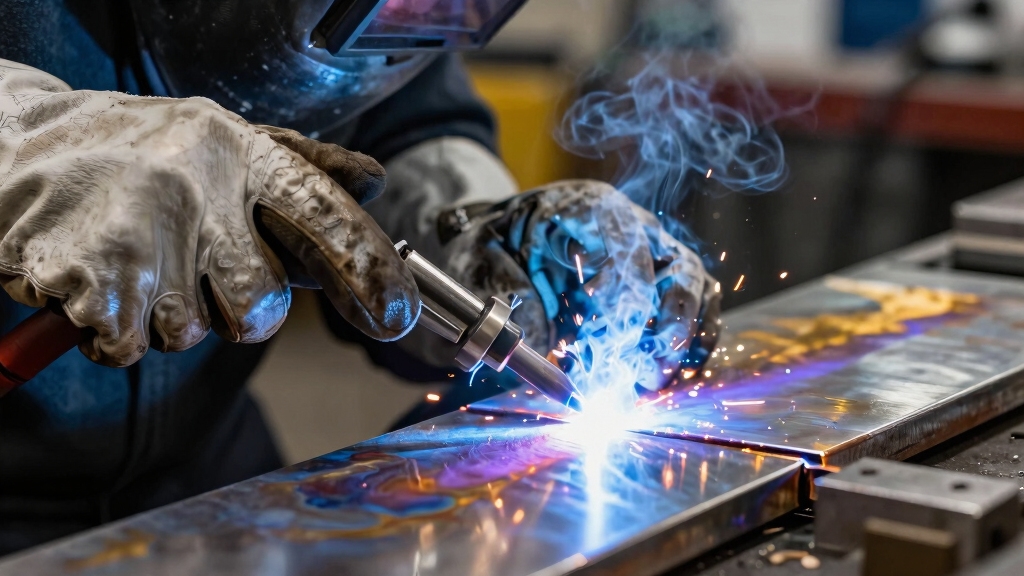
To weld titanium, you must prevent contamination by using dedicated, clean tools and removing surface smears until pure metal shows. Use 100% high-purity argon shielding gas with proper pre-flow and post-flow to isolate the weld.
Design joints with tight fit-up and control heat input using steady welding speed and chill blocks. Start the arc with high-frequency DCEN polarity and feed clean filler carefully. Mastering these steps guarantees strong, defect-free welds.
Further details cover joint design and shielding nuances.
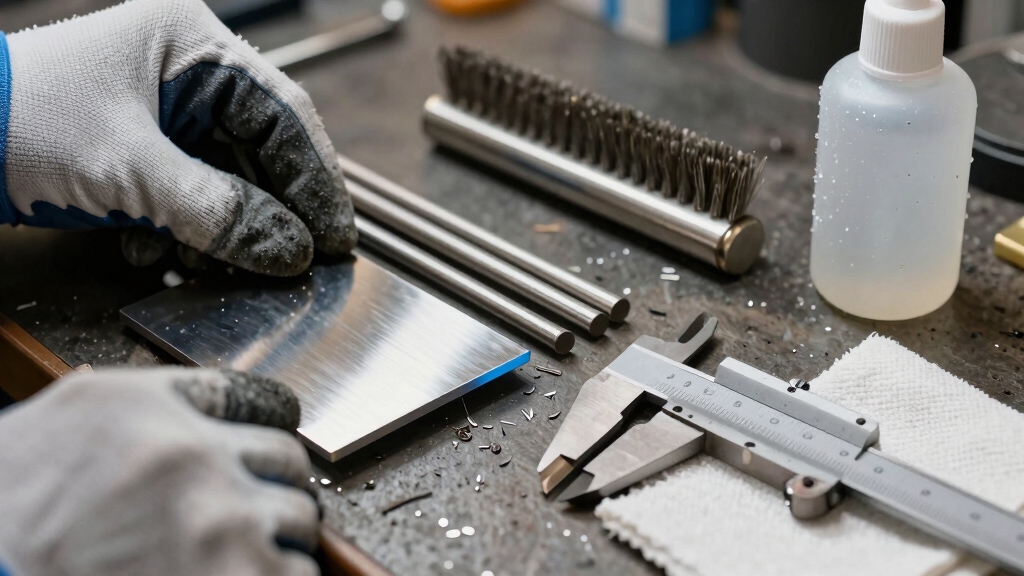
Before you begin welding titanium, you must prepare the material meticulously to prevent contamination and guarantee weld integrity.
Proper preparation is essential to avoid contamination and ensure strong, reliable titanium welds.
Use dedicated tools such as carbide deburring files or titanium-specific stainless steel wire brushes to avoid cross-contamination from other alloys.
Avoid band saws; instead, cut with high-speed circular saws to reduce smearing. If smearing occurs, file until pure metal is exposed.
Clean the surface thoroughly with a scotchbrite pad designed for titanium to remove oxides and debris.
Maintain a tight fit-up, ensuring joint edges align precisely to minimize contamination risk.
Additionally, ensure the use of chemical cleaning and pickling to remove oxide layers and surface oils before welding.
Although titanium offers exceptional strength and corrosion resistance, its high reactivity at elevated temperatures demands strict contamination control during welding.
You must prevent exposure to oxygen, nitrogen, and hydrogen, which cause embrittlement and weld defects.
Use dedicated, clean tools reserved solely for titanium to avoid cross-contamination.
Thoroughly clean the joint area with a titanium-specific stainless steel wire brush or scotchbrite pad before welding.
Maintain tight fit-up to minimize atmospheric exposure in the weld zone.
Avoid fluxes and oxy-fuel processes, as they introduce contaminants.
During welding, keep the weld and filler metal fully enveloped in inert shielding gas.
Any surface smears or impurities must be removed by filing until pure titanium is visible.
Following these steps methodically guarantees weld integrity and prevents alloy degradation caused by contamination.
Selecting the appropriate inert shielding gas is critical to prevent nitrogen absorption and porosity during titanium welding.
When setting up shielding gas for titanium welding, you must ensure a continuous, inert atmosphere to prevent contamination from oxygen and nitrogen.
Use 100% high-purity argon, ensuring no leaks in the gas delivery system.
Begin pre-flow 2 to 5 seconds before striking the arc to purge the weld area.
Maintain steady gas flow throughout welding, adjusting flow rate to avoid turbulence that can draw air into the weld zone.
Employ a wide cup and gas lens to focus the shielding gas precisely over the weld and filler metal.
After welding, continue post-flow for at least 20 to 25 seconds to protect the cooling weld and back face.
Use a trailing shield when temperatures exceed 520°C for additional coverage.
Always purge the joint’s backside efficiently during cooling.
Argon’s inert atmosphere guarantees contamination-free welds by displacing oxygen and nitrogen in the weld zone.
Select the appropriate joint design based on titanium thickness to guarantee peak weld integrity and minimize contamination risks. For thin sections under 5 mm, an autogenous square butt joint works best. V-groove joints suit thicknesses over 2.4 mm per AWS D10.6. For materials thicker than 9.5 mm, opt for a U-groove to guarantee adequate penetration.
Make certain tight fit-up between components to reduce gaps where contamination could occur. Maintain consistent tack welds under the same shielding conditions as the final weld to stabilize alignment without compromising cleanliness.
Key considerations include:
Using argon shielding gas during welding can significantly help minimize contamination and improve weld quality.
To kick things off, you’ll want to start the arc using a high-frequency method. This really helps ensure a stable, contamination-free ignition. Trust me, it makes a difference!
Oh, and don’t forget to clip the filler rod end before you start welding. This little step exposes fresh titanium, which is key to preventing impurities from sneaking in.
And here’s another tip: keep that filler metal within the shielding gas envelope. It’s super important for maintaining the integrity of your weld. You definitely want to get this right!
Also, make sure to use ultra-high-purity argon with minimal oxygen (2–20 ppm) as your shielding gas to prevent contamination and ensure weld integrity when welding titanium.
Kicking off the arc cleanly is essential for achieving precision in titanium welding. A stable, contamination-free arc guarantees consistent heat input and protects the titanium from atmospheric gases.
To start the arc correctly, you’ll want to weigh these key methods:
Use high frequency (HF) arc starting to initiate a smooth, non-contact arc without contaminating the tungsten electrode. Maintain Direct Current Electrode Negative (DCEN) polarity to concentrate heat on the workpiece and guarantee arc stability.
Avoid scratch or touch starting methods, as these can introduce tungsten contamination and compromise weld integrity.
Titanium favors AC for controlled thermal input but relies on DCEN for deep penetration and low spatter.
After establishing a clean, stable arc using high frequency starting with DCEN polarity, focus shifts to managing the filler rod with equal care.
Clip the rod’s end just before welding to expose uncontaminated titanium, preventing oxide inclusion.
Handle filler rods exclusively with clean, dedicated tools to avoid cross-contamination.
Maintain the rod within the argon shielding envelope at all times to prevent atmospheric exposure.
Feed the rod steadily into the leading edge of the weld pool, avoiding rapid dipping that can disturb the arc or introduce impurities.
Use a filler diameter matching the joint thickness for controlled deposition.
Keep your motions smooth and consistent, ensuring the rod melts evenly into the weld pool without oxidizing.
Proper filler rod handling is critical to achieving high-integrity, contamination-free titanium joints.
Maintain a consistent argon shielding flow throughout welding and cooling to prevent oxidation and ensure weld integrity.
Because titanium reacts aggressively with oxygen and nitrogen at elevated temperatures, managing heat input and cooling rates during welding is critical to maintaining weld integrity. You need to control heat to prevent excessive thermal expansion and contamination from atmospheric gases.
Use a steady, moderate welding speed to avoid overheating the weld zone. Employ chill blocks close to the weld area to minimize heat-affected zone size and maintain dimensional stability. Additionally, guarantee extended shielding gas post-flow to protect the cooling weld metal from oxidation.
Key strategies include:
Maintaining consistent, moderate heat input to limit weld distortion.
Using chill blocks or heat sinks to dissipate excess heat rapidly.
Applying post-weld gas shielding for at least 20 seconds to prevent contamination during cooling.
Careful heat and cooling management guarantees robust, contamination-free titanium welds. A controlled heat input is essential to reduce thermal distortion and ensure weld quality throughout the process.
To weld titanium effectively with TIG, you really need to focus on precise arc control. It’s crucial to use Direct Current Electrode Negative (DCEN) polarity for the best results.
Now, let’s talk about shielding gas. Using high-purity argon to envelop the weld zone is essential. This step helps prevent contamination from oxygen and nitrogen, which can compromise your weld.
And don’t forget about the tungsten electrode! Choosing the right one is key. Plus, managing the shielding gas flow before, during, and after welding is vital to ensure you achieve peak weld integrity. It all comes together to create a strong, reliable weld. Maintaining a steady arc length of 1.5 to 3 mm is also important to ensure consistent penetration and avoid tungsten inclusion.
Mastering precise arc control is essential when TIG welding titanium, as it directly affects weld quality and contamination prevention. You need to maintain a stable, focused arc to avoid overheating and uneven fusion. This can lead to contamination by atmospheric gases. Using direct current electrode negative (DCEN) polarity guarantees peak penetration and arc stability.
To achieve precise arc control, focus on:
Consistent arc length: Keep the tungsten electrode close to the workpiece without touching to maintain stable heat input.
Controlled travel speed: Move steadily to avoid excessive heat buildup or insufficient fusion.
High-frequency arc start: Initiate the arc without contaminating the tungsten or weld pool, preserving weld integrity.
These methods help you produce clean, defect-free titanium welds with minimal contamination risk. Additionally, selecting the correct tungsten electrode size based on your amperage ensures optimal arc stability and electrode longevity.
Maintaining a stable arc sets the foundation for protecting titanium welds from contamination. Shielding gas plays a pivotal role in preserving weld purity throughout the process.
You need to use 100% high-purity argon for effective shielding. Begin with a pre-flow of 2 to 5 seconds to purge ambient air and prevent oxidation before arc initiation.
Employ a post-flow of at least 20 to 25 seconds to shield the weld as it cools below titanium’s reactive temperature range. Using a wide gas lens and trailing shield guarantees consistent gas coverage, especially above 520°C, where titanium’s reactivity increases.
Don’t overlook back purging on the weld’s underside to prevent contamination. Proper gas flow rates and coverage are critical to avoid weld discoloration and guarantee ideal mechanical properties.
Choose a non-consumable tungsten electrode for TIG welding titanium, guaranteeing peak arc stability and control. Use a pure tungsten or thoriated tungsten electrode sized appropriately for the weld current to maintain a consistent arc.
Set your welding machine to Direct Current Electrode Negative (DCEN) polarity, which directs heat to the workpiece and minimizes tungsten erosion.
Keep these points in mind:
Select electrode diameter based on material thickness and amperage. Maintain DCEN polarity to optimize heat distribution and weld penetration. Avoid consumable electrodes or AC polarity that increase contamination risk.
Following these guidelines guarantees a stable arc, deep penetration, and clean welds vital for titanium’s reactive nature. Proper electrode choice and polarity support a precise, controlled TIG process, reducing contamination and promoting weld integrity.
Inspecting the weld color is one of the most reliable ways to identify high-quality titanium welds. A silver or light straw coloration indicates proper shielding and minimal contamination, confirming that the inert gas shield was maintained throughout.
Avoid welds showing blue, purple, or gray hues, as these reveal oxygen or nitrogen absorption, which compromises weld integrity. Make sure post-flow shielding lasts at least 20 seconds to cool the weld without exposure.
Check for uniform bead shape and absence of porosity or cracks, signs of consistent heat input and proper technique. Confirm tight joint fit-up and clean surfaces to prevent contamination.
Even when you follow proper procedures, common mistakes can undermine titanium weld quality. Contamination, improper shielding, and poor fit-up are frequent issues that degrade weld integrity. Avoid these pitfalls by focusing on critical controls throughout the process.
Common mistakes like contamination and poor shielding can compromise titanium weld quality despite proper procedures.
Contamination: Use dedicated titanium tools and clean surfaces thoroughly with a scotchbrite or titanium-specific wire brush to prevent alloy contamination.
Shielding Gas Management: Maintain a pre-flow of 2-5 seconds and a post-flow of at least 20 seconds with 100% argon. Employ trailing shields for elevated temperatures above 520°C.
Fit-Up and Joint Preparation: Ensure tight fit-up and proper joint design. Tack welds must be done under identical shielding conditions to final welds to prevent contamination.
You need a welding helmet with a proper shade to protect your eyes from intense UV and IR radiation.
Wear flame-resistant gloves and a long-sleeve jacket to shield your skin from sparks and hot metal.
Use respiratory protection if ventilation is poor, as titanium welding fumes can be hazardous.
Don’t forget ear protection to guard against noise.
Always make certain your PPE fits well and is maintained for effective safety during titanium welding.
You’ll adjust welding parameters for titanium alloys by using DCEN polarity with a non-consumable tungsten electrode.
Maintain a high-purity 100% argon shielding gas with pre- and post-flow times of several seconds to avoid contamination.
Control heat input carefully since titanium reacts above 400°C; use a wide cup and gas lens for gas coverage.
Select joint design based on thickness and use high-frequency arc start to guarantee consistent weld quality.
You can automate titanium welding like clockwork in a large-scale production line, turning sparks into a steady, controlled dance.
Using TIG with precise gas shielding and consistent DCEN polarity, robots maintain a perfect, contamination-free arc.
You’ll need tight fit-up, dedicated tooling, and exact gas flows to protect the weld’s integrity.
Automation boosts efficiency but demands rigorous monitoring of shielding, temperature, and filler placement to avoid costly defects.
You’ll face higher costs with titanium welding due to specialized equipment like TIG machines, high-purity argon gas, and dedicated tools to avoid contamination.
The need for precise joint fit-up and extended shielding gas flow increases gas consumption and labor time.
Additionally, consumables like pure titanium filler rods add expense.
While automation can reduce labor costs, initial capital investment remains significant.
Titanium welding demands stricter contamination control, requires inert gas shielding, and needs precise temperature management.
In contrast, aluminum welding tolerates more flexibility in shielding and heat.
You must prepare titanium with dedicated tools, maintain a tight fit-up, and use DCEN polarity, unlike aluminum’s more forgiving processes.
You’ll find titanium welding harder due to its reactivity above 400°C, necessity for argon shielding, and sensitivity to oxygen and nitrogen absorption compared to aluminum.
Welding titanium demands precision. Contamination can reduce weld strength by up to 50%. You must meticulously prepare materials, control shielding gas, and manage heat to guarantee integrity.
TIG welding, with its precise arc and inert gas protection, is ideal for titanium’s reactive nature. Avoid common mistakes like improper joint fit-up or insufficient shielding.
By following these methodical steps, you’ll achieve strong, clean welds that meet high-quality standards every time.