Phone:
(701)814-6992
Physical address:
6296 Donnelly Plaza
Ratkeville, Bahamas.

Phone:
(701)814-6992
Physical address:
6296 Donnelly Plaza
Ratkeville, Bahamas.

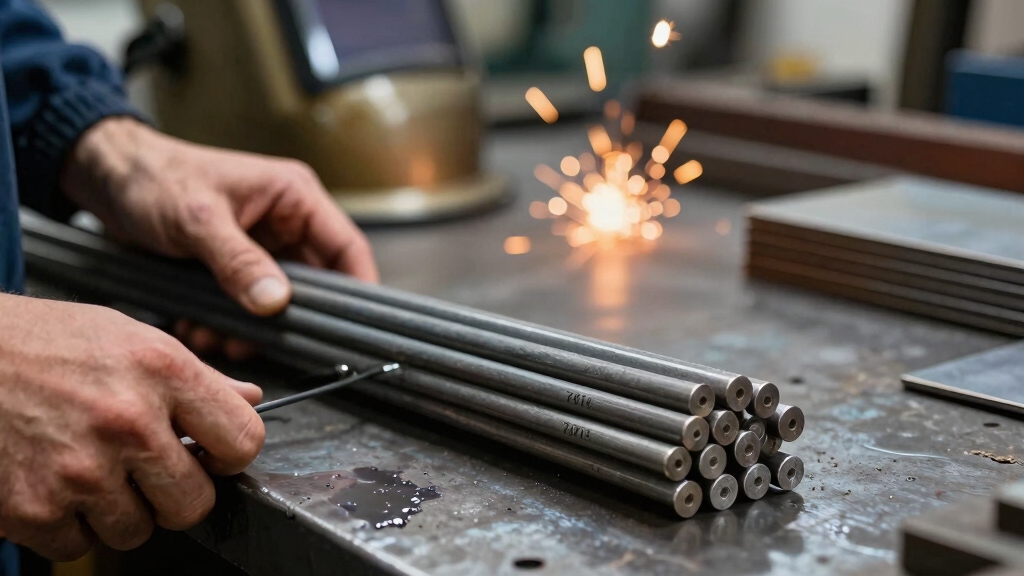
You’ll use 7014 welding rods for versatile, clean welds across structural steel, automotive, marine, and maintenance tasks.
Their smooth, stable arc and low spatter let you work efficiently in all positions.
These rods offer excellent slag removal and medium-to-low penetration, reducing cleanup and distortion risks.
They perform well on varied surfaces, including rusted or coated metals, making them ideal for pipework and pressure vessels.
If you want to optimize productivity and weld quality, exploring their full capabilities is worthwhile.
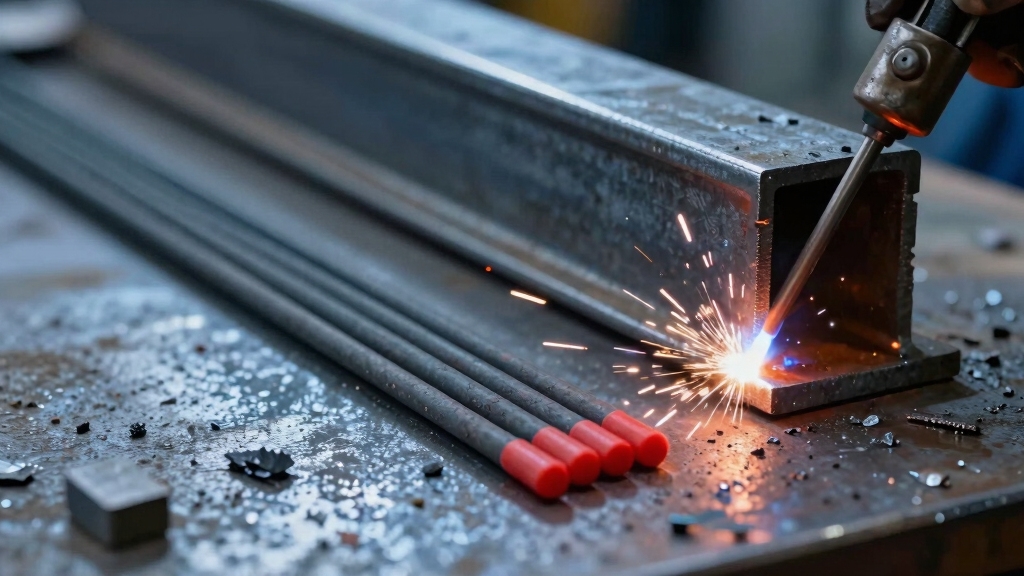
Although 7014 welding rods handle a variety of materials, their key features make them especially suited for structural steel applications. You’ll appreciate the smooth, stable arc that guarantees consistent bead formation, critical for the integrity of thick steel members.
7014 welding rods deliver a smooth, stable arc for consistent beads, ensuring strong, reliable structural steel welds.
The rod’s medium to low penetration provides controlled fusion, minimizing distortion in heavy gauge steel. Its high deposition rate accelerates your welding speed, increasing productivity on large-scale fabrications.
You’ll also benefit from low spatter production, which reduces cleanup time and improves weld appearance. Outstanding slag removal simplifies post-weld processing, enabling faster inspection and subsequent work.
Because they support multiple current types and polarities, you can adapt your setup without compromising weld quality. These characteristics combine to deliver robust, uniform welds essential for structural steel fabrication.
Additionally, the use of alkaline flux in 7014 rods helps minimize hydrogen pickup, enhancing weld integrity and reducing cracking risk.
When you choose 7014 electrodes, you gain the flexibility to weld in multiple positions, including flat, vertical, overhead, and horizontal. This all-position capability stems from the rod’s stable arc and controlled penetration.
These features allow consistent weld quality regardless of orientation. In flat and horizontal positions, you benefit from a high deposition rate and smooth bead appearance. This enhances productivity and finish.
Vertical welding with 7014 rods is manageable due to the electrode’s slag system, which supports slag removal and minimizes weld defects. Overhead welding remains reliable since the rod’s low spatter and slag characteristics reduce weld contamination and improve bead control.
Similar to 6013 rods, 7014 electrodes offer smooth slag removal, which is essential for maintaining weld quality in vertical and overhead positions.
When you use 7014 rods in shipbuilding and marine repairs, you really boost corrosion resistance, which is super important in those harsh saltwater environments. It’s like giving your structures an extra layer of protection!
These electrodes also deliver strong, uniform welds. This means they can hold up well under the dynamic stresses that ships often face.
It’s all about maintaining that structural integrity, right?
Additionally, 7014 rods are preferred in such applications due to their tolerance for rust and ability to produce smooth arcs on less-than-perfect surfaces.
Because marine environments expose structures to constant moisture and salt, 7014 welding rods offer critical corrosion resistance that enhances the durability of shipbuilding and repair projects.
When you use 7014 rods, you benefit from a welding electrode that forms a protective slag layer, minimizing oxidation and preventing corrosive elements from penetrating the weld. This is essential for maintaining the integrity of steel hulls and marine frameworks.
Key corrosion resistance benefits include:
Proper preparation, including removal of oils and coatings from the weld zone, is crucial to reduce defects and ensure the corrosion resistance properties of the weld are maintained through localized grinding.
Although shipbuilding and marine repairs demand exceptional toughness, 7014 welding rods deliver the structural integrity needed to withstand harsh operational stresses.
When you use these rods, you benefit from their medium to low penetration and smooth arc. This guarantees consistent weld quality on thick steel members.
Their high deposition rate allows you to work efficiently on large-scale structures, while excellent slag removal minimizes defects critical in marine environments.
Proper consumable selection ensures weld quality, strength, and durability, which is vital in demanding marine conditions.
| Feature | Benefit |
|---|---|
| Medium to low penetration | Controls heat input, reduces distortion |
| Smooth, stable arc | Guarantees uniform bead appearance |
| High deposition rate | Increases productivity |
| Outstanding slag removal | Enhances weld cleanliness |
When you use 7014 rods for automotive assembly, you’ll really appreciate how smooth the arc is and how little spatter you get. This means your welds on vehicle frames and body panels come out clean and strong. Isn’t that what we’re all aiming for?
These rods are especially great for repair techniques that need a consistent bead appearance and controlled penetration. This not only boosts the structural integrity but also keeps the heat input in check. So, you can make repairs without worrying about warping or damaging the surrounding areas.
Getting familiar with how to use these rods effectively can really help you speed up your welding process. Plus, with less slag to deal with, you’ll find that vehicle repairs become more efficient and durable. It’s a win-win!
To ensure weld quality and safety, it is important to perform non-destructive inspection regularly during and after welding.
In automotive assembly and vehicle repairs, 7014 welding rods deliver smooth, stable arcs that facilitate precise welds on both thick and thin steel components.
You’ll find these rods ideal for joining carbon steel parts with uniform bead appearance and minimal spatter.
Their medium to low penetration suits delicate sheet metal without warping.
When using 7014 rods, you can expect:
These characteristics guarantee you achieve strong, visually consistent welds critical for vehicle structural integrity and longevity during both assembly and repair tasks. Proper adjustment of welding parameters such as arc stability ensures optimal results when working with 7014 rods.
Because 7014 welding rods provide smooth arcs and consistent bead profiles, you can execute precise repair welds on automotive components with minimal distortion.
Their medium to low penetration makes certain you avoid excessive heat input, which reduces warping on thin sheet metal typical in vehicle frames.
You’ll appreciate the rod’s high deposition rate and low spatter, streamlining cleanup and accelerating workflow.
The outstanding slag removal characteristic allows for quick slag removal, enabling faster multi-pass welding when reinforcing structural joints or patching damaged areas.
Using 7014 rods, you maintain uniform bead appearance, which improves joint integrity and fatigue resistance.
Their compatibility with all welding positions means you can address complex automotive repairs, from chassis to body panels, with reliable strength and excellent weld aesthetics.
For optimal results, maintain a short arc length to stabilize heat input and improve puddle control during welding.
Though pipework and pressure vessels demand stringent welding standards, 7014 rods deliver the consistent bead quality and medium penetration required to meet these criteria.
You’ll find these rods excel because they provide a smooth, stable arc and low spatter, which guarantees clean welds essential for pressure integrity. Their medium penetration balances strength without risking burn-through on thinner sections typical in pipework.
Additionally, 7014 rods offer outstanding slag removal, minimizing contamination risks.
Consider these key advantages when using 7014 rods for pipework and pressure vessels:
These factors make 7014 rods ideal for high-reliability pipe and vessel welding. It is also crucial to reference the appropriate Welding Procedure Specification (WPS) to ensure consistent process and compliance.
Building on the consistent bead quality and versatile all-position capability that make 7014 rods ideal for pipework and pressure vessels, these same properties simplify maintenance welding tasks.
You’ll appreciate the smooth, stable arc that allows precise control in confined or awkward areas, common in maintenance work. The medium to low penetration reduces the risk of burn-through on thinner or worn materials, preserving structural integrity.
Plus, the high deposition rate means you can complete repairs faster without sacrificing strength. The outstanding slag removal eases cleanup, letting you maintain a steady workflow.
Whether you’re working overhead, vertically, or horizontally, 7014 rods adapt seamlessly, minimizing downtime. Their compatibility with AC and DC currents further guarantees flexibility across different equipment setups during maintenance operations.
Additionally, the flux coating on 7014 rods generates a protective gas and slag layer, providing atmospheric contamination protection without the need for external shielding gas.
While selecting welding electrodes, you’ll find that 7014 rods offer a unique combination of smooth arc stability and high deposition rates that set them apart from common alternatives like 6010 or 7018.
You’ll appreciate how 7014 rods balance medium penetration with cleaner slag removal, making your welding process more efficient and producing consistent bead profiles.
Consider these benefits of 7014 rods compared to other electrodes:
Using 7014 rods means achieving stronger, cleaner welds with less downtime and enhanced operational flexibility.
You can use 7014 rods with any stick welding machine since they’re compatible with AC, DC electrode positive (DCEP), and DC electrode negative (DCEN) polarities.
Your welder should support amperage up to and beyond 100 amps for 3/32 inch rods to optimize performance.
Just make sure your machine provides stable current control to maintain a smooth arc and consistent bead appearance, which 7014 electrodes require for best results.
You should store 7014 rods in a dry, low-humidity environment to prevent moisture absorption. This can cause weld defects.
Keep them sealed in airtight containers or rod ovens at 250°F to 300°F for extended storage. Avoid temperature fluctuations that promote condensation.
If rods absorb moisture, bake them before use to restore quality. Proper storage guarantees consistent arc stability, smooth slag removal, and peak weld strength during your projects.
Think of 7014 rods like a key designed for carbon steel locks. They don’t fit stainless steel doors.
You shouldn’t use 7014 rods on stainless steel because their flux and alloy composition aren’t compatible. This can risk weld defects and corrosion issues.
For stainless steel, you need rods specifically formulated for its chemistry, like 308 or 316.
Using the right electrode guarantees strong, corrosion-resistant welds that meet technical standards and durability requirements.
You need to wear appropriate personal protective equipment, including a welding helmet with the right shade lens, flame-resistant gloves, and a long-sleeve jacket to prevent burns from sparks and UV radiation.
Make sure adequate ventilation, as fumes from 7014 rods can be hazardous. Avoid inhaling smoke by using exhaust systems or respirators.
Keep your workspace free of flammable materials and always inspect your equipment for damage before starting. Stay alert to electrical hazards.
Imagine welding in a biting wind under a gray sky; 7014 rods handle extreme weather well, maintaining arc stability and smooth bead formation despite cold or moisture.
Their low spatter and consistent slag removal keep weld integrity intact, even in damp conditions.
You’ll notice medium to low penetration suits varying temperatures, preventing cracking.
However, you must control current and polarity precisely to optimize performance, ensuring strong, reliable welds regardless of harsh environments.
When you choose 7014 welding rods, you’re equipping yourself with a versatile tool that handles structural steel, shipbuilding, automotive repairs, and pipework with precision.
Their compatibility with multiple welding positions and ease of maintenance make them a reliable partner in your projects.
Like a Swiss Army knife in your welding kit, 7014 electrodes streamline complex tasks, ensuring strong, clean welds every time. Trust them to elevate your work’s quality and efficiency.