Phone:
(701)814-6992
Physical address:
6296 Donnelly Plaza
Ratkeville, Bahamas.

Phone:
(701)814-6992
Physical address:
6296 Donnelly Plaza
Ratkeville, Bahamas.

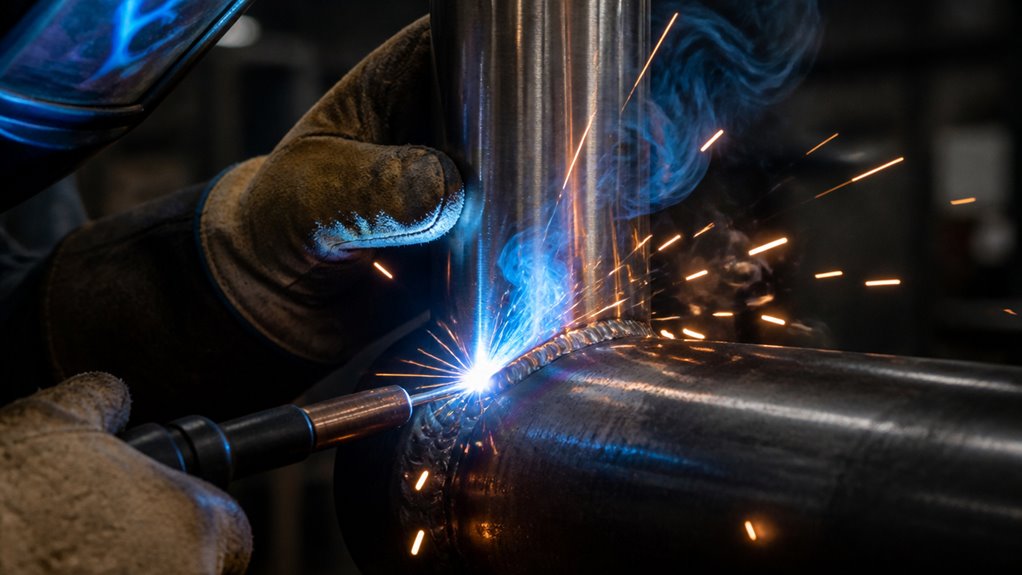
You can weld stainless steel to carbon steel effectively by selecting the right filler metal, like 309L or 309LMo, to balance corrosion resistance and mechanical strength.
Control heat input carefully to minimize distortion and prevent brittle martensitic welds.
Maintain clean, dry joint surfaces and use strategic tacking to reduce residual stresses and hydrogen-induced cracking.
Proper preparation and post-weld corrosion protection are key to durable joints.
Understanding these factors guarantees reliable performance when joining dissimilar metals.
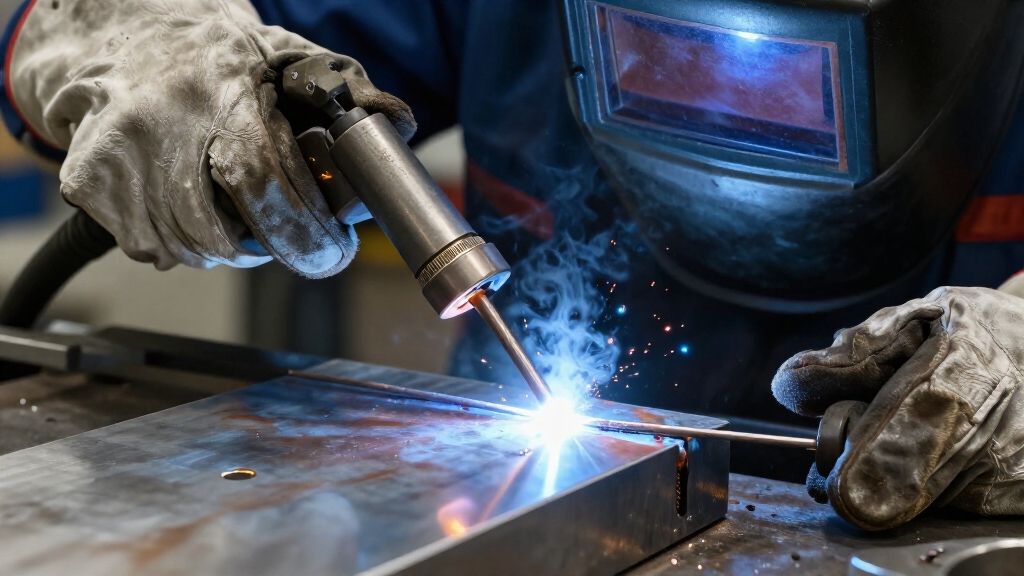
Ensuring safe welding practices when joining stainless steel to carbon steel starts with controlling the risk of cracking and weld failure.
Safe welding of stainless to carbon steel begins with managing cracking and preventing weld failure risks.
You need to avoid direct fusion without proper filler, as this may produce hard, brittle martensitic weld metal prone to cracking.
Maintaining dry consumables and a clean, dry weld area reduces hydrogen-induced cracking risk.
Control heat input carefully to minimize distortion and cooling stresses caused by differing thermal expansion rates.
Use tacking strategically at ends, center, and quarter points to stabilize the joint and reduce restraint.
Preheating carbon steel above 0.2% carbon or thicker than 30 mm to around 150 °C under high restraint can prevent cracking.
Proper joint preparation, including cleaning and possibly buttering carbon steel surfaces with stainless weld metal, enhances weld integrity and reduces stress concentration.
Additionally, selecting the appropriate ER309L filler metal balances corrosion resistance and mechanical properties essential for durable dissimilar metal welds.
After controlling factors like heat input, restraint, and joint preparation, selecting the appropriate filler metal becomes the key to achieving a reliable stainless-to-carbon steel weld.
You should avoid direct fusion without a suitable filler because it risks forming brittle martensite.
Instead, choose a filler with sufficient alloy content to maintain an austenitic structure and reduce cracking.
Common choices are:
Use 309L filler for welding carbon steel to 304(L) stainless steel.
Opt for 309LMo when joining carbon steel to 316(L).
Prefer 309-type fillers over 308L to guarantee higher alloy content and better dilution control.
Employ over-alloyed fillers to preserve weld ductility and reduce hot cracking tendencies.
Selecting the correct filler metal prevents shrinkage cracks and enhances weld integrity under service conditions.
Controlling heat input and preparing the joint meticulously play critical roles in minimizing distortion when welding stainless steel to carbon steel.
Careful heat control and joint preparation are essential to reduce distortion in stainless steel to carbon steel welding.
You should limit heat input to reduce thermal expansion mismatch effects, as stainless steel and carbon steel expand differently.
Employ tacking at strategic points, such as ends, center, and quarters, to stabilize the joint and constrain movement during welding.
Make sure the joint surfaces are clean and dry; moisture can increase hydrogen-induced cracking risks.
For highly restrained joints, avoid excessive clamping to reduce stress concentration.
If carbon steel thickness or carbon content is high, apply preheat around 150 °C to moderate cooling rates and reduce residual stresses.
Proper joint preparation, including possible buttering with 309-type filler on carbon steel, improves weld integrity and mitigates distortion by balancing metallurgical and mechanical factors efficiently.
Maintain a short arc length to minimize unwanted heat transfer into stainless steel and preserve corrosion resistance.
While welding stainless steel to carbon steel, you must carefully manage filler metal selection and process parameters to prevent cracks and brittle welds.
Using a suitable filler like 309L or 309LMo guarantees enough alloy content to maintain an austenitic structure with controlled ferrite. This reduces martensite formation and hot cracking risk.
You should also control heat input and restraint to minimize shrinkage stresses that cause cracks. Hydrogen-induced cracking risk rises if the weld area or consumables aren’t dry.
Key practices include:
Choosing a filler with higher ferrite content like 309 also improves crack resistance in dissimilar-metal welds.
These measures enhance ductility and integrity in your dissimilar metal joints.
Making effective corrosion protection for stainless-to-carbon steel welds requires careful attention to joint treatment and environmental exposure.
You need to focus on post-weld surface protection, as the bimetallic interface can be susceptible to localized corrosion if left untreated.
Applying appropriate coatings or repainting the joint drastically reduces this risk.
Selecting filler metals like 309L or 309LMo guarantees compatibility with service conditions, maintaining corrosion resistance within the weld zone.
Additionally, controlling dilution minimizes carbon migration that could promote galvanic corrosion.
You should also consider environmental factors such as moisture and chemical exposure, which influence corrosion rates.
Proper cleaning before and after welding removes contaminants that could initiate corrosion.
Implementing insulating coatings and corrosion-inhibiting pastes can further prevent galvanic corrosion at the joint interface.
You’ll find stainless-to-carbon steel welding in industries like chemical processing, oil and gas, power generation, and food processing.
These sectors require corrosion resistance combined with strength, so they often join stainless’s durability with carbon steel’s toughness.
You’ll also see it in construction and shipbuilding, where structural integrity and environmental resistance matter.
Understanding your specific application and service conditions helps you select proper procedures and filler metals for reliable, crack-resistant joints.
Welding stainless steel to carbon steel creates a joint with altered electrical conductivity compared to the base metals.
You’ll find the weld zone’s conductivity typically decreases due to the mixed microstructure and alloying elements in the filler metal, such as 309L, which increase resistivity.
This change can impact electrical applications by increasing resistance and potentially causing localized heating.
You should account for these conductivity variations when designing or analyzing welded components in electrical circuits.
Sure, robotic welding can’t exactly “handshake” dissimilar metals by itself, but it handles stainless-to-carbon steel joints remarkably well.
You’ll rely on precise control over heat input, filler selection like 309L or 309LMo, and joint preparation.
Robots maintain consistent speed and arc stability, reducing cracking risks and distortion.
Just make sure your program accounts for alloy differences and uses proper consumables.
Automated accuracy really shines in managing these challenging welds.
You’ll face environmental impacts like emissions from welding fumes containing chromium and nickel particulates. This requires proper ventilation and filtration.
Energy consumption varies by welding method, influencing your carbon footprint.
Waste disposal of slag and spent consumables demands compliance with hazardous material regulations due to potential metal contamination.
Additionally, managing heat input reduces thermal distortion, minimizing material waste.
Taking these factors into account helps you minimize environmental harm during dissimilar metal welding.
Yes, you should use specific inspection methods for stainless-to-carbon steel welds.
Visual inspection checks surface quality and joint fit-up. Non-destructive testing like dye penetrant or magnetic particle testing detects surface cracks.
Ultrasonic and radiographic testing reveal internal defects and fusion quality.
You must also monitor for intermetallic phases or martensitic structures via metallurgical analysis to guarantee weld integrity and avoid brittle failures in dissimilar metal joints.
Welding stainless steel to carbon steel isn’t just a task; it’s a precise dance of metallurgy.
By choosing the right filler metal, preparing joints meticulously, and controlling heat effectively, you’ll prevent cracks and distortion.
Remember, corrosion protection is your final guard against failure.
With careful attention, your welds will stand strong, bridging two metals like a well-forged handshake—reliable, resilient, and built to last under pressure.