Phone:
(701)814-6992
Physical address:
6296 Donnelly Plaza
Ratkeville, Bahamas.

Phone:
(701)814-6992
Physical address:
6296 Donnelly Plaza
Ratkeville, Bahamas.

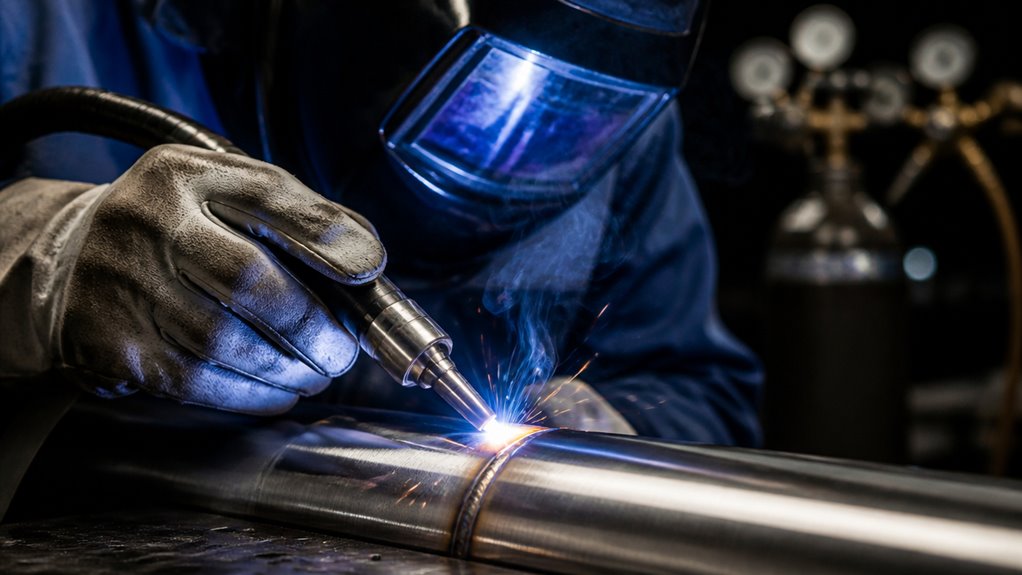
You generally need shielding gas for laser welding to prevent oxidation, porosity, and defects that weaken weld quality.
Shielding gas isolates the molten pool from atmospheric contaminants like oxygen and moisture, ensuring consistent bead formation and corrosion resistance.
Gas choice and flow rates depend on material type and weld parameters.
While some high-speed welds on carbon steel may omit gas, most applications demand it for reliability.
Understanding gas roles, purity, and flow rates can optimize your weld outcomes.
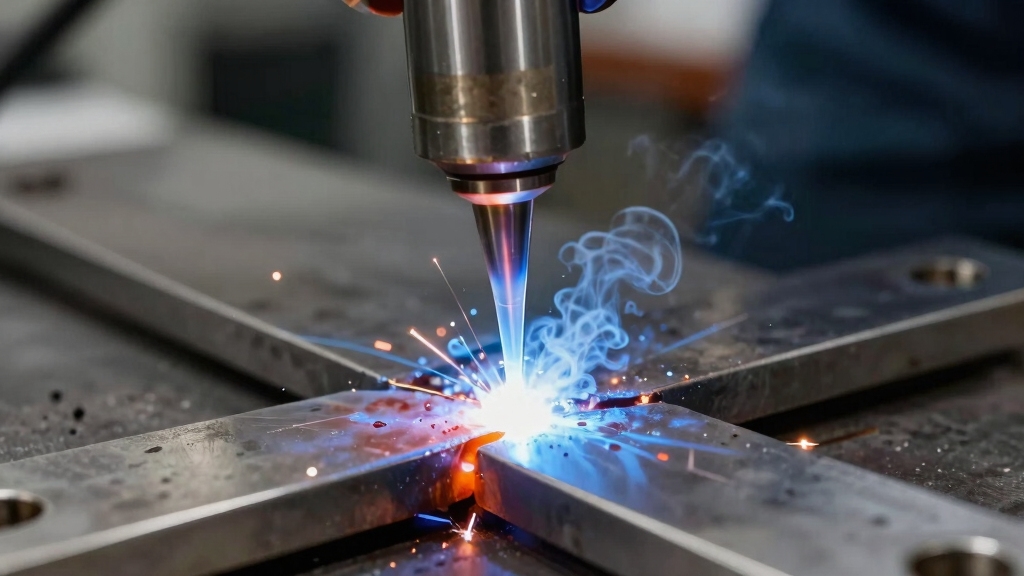
When you explore into laser welding, knowing when to use shielding gas can make all the difference in weld quality.
Shielding gas isn’t always mandatory; high-speed welding often proceeds without it because the brief exposure limits atmospheric reactions.
You can weld specific metals like aluminum and carbon steel in ambient air at high linear speeds, but that’s an exception.
If you’re welding mild or carbon steel where surface finish isn’t critical and downstream processes like grinding or painting follow, you might skip the gas.
However, in most workshop scenarios, shielding gas markedly reduces oxidation, porosity, and inconsistent weld quality.
Consequently, while not universally required, shielding gas remains strongly recommended to ensure consistent, high-quality welds across diverse materials and applications.
Effective plasma suppression with shielding gases also enhances beam efficiency by minimizing energy loss during welding.
Because molten metal is highly reactive to oxygen and other atmospheric gases, shielding gas plays a crucial role in laser welding by isolating the weld pool from ambient air.
Shielding gas is vital in laser welding to protect the molten metal from reactive atmospheric gases.
This isolation prevents oxidation, which can cause weld discoloration, weakening, and compromised corrosion resistance.
Shielding gas also displaces nitrogen and moisture, reducing porosity and inclusions that create structural defects.
By maintaining an inert or controlled atmosphere, the gas stabilizes the molten metal’s surface tension, promoting consistent bead formation and minimizing irregularities such as spatter or nail-head defects.
Additionally, it suppresses the laser-induced plasma plume, enhancing laser energy absorption and weld quality.
Without proper shielding, you risk weld contamination, reduced mechanical properties, and increased post-weld processing.
This makes shielding gas essential for reliable, high-integrity laser welds.
Using an inert shielding gas prevents oxidation and contamination, improving weld quality and durability.
When it comes to laser welding, you’ll often hear about argon, nitrogen, and helium as the go-to shielding gases. Each of these gases has its own unique benefits, and the best choice really depends on what materials you’re working with and the specific requirements of your welding process.
So, why does it matter which gas you pick? Well, factors like the alloy composition, the power of the laser, and the shape of the weld all play a significant role in determining the right gas for your project. By understanding these elements, you can effectively reduce oxidation and ensure that your welds are consistent and free from defects.
In short, choosing the right shielding gas is key to achieving high-quality results in laser welding! Shielding with argon or argon–helium mixtures prevents oxidation and is critical for weld quality due to their ability to provide effective plasma suppression.
Selecting the right shielding gas plays a pivotal role in optimizing laser welding performance and weld quality.
Argon remains the most common choice due to its effective oxidation protection and cost-efficiency.
For stainless steel, you’ll find nitrogen valuable, as it enhances corrosion resistance while maintaining weld integrity.
Helium serves best when deep penetration or high-speed welding is required, especially on reflective metals like aluminum and copper.
Each gas’s physical properties influence plasma plume behavior, weld pool stability, and cooling rates.
You must match gas selection to material type, laser power, and joint geometry to prevent oxidation, porosity, and discoloration.
Maintaining pure gases (≥99.99%) and correct flow rates guarantees consistent shielding, minimizing contamination.
Understanding these common gases allows you to tailor shielding precisely for your laser welding application, optimizing both efficiency and weld quality.
Additionally, proper gas flow rates are critical to avoid turbulence and ensure effective shielding during the welding process.
Achieving peak weld quality hinges on matching the shielding gas to the specific material characteristics, laser parameters, and joint design. You should select argon for general use, especially with easily oxidized metals like stainless steel, due to its effective inert atmosphere.
When cost constraints arise or corrosion resistance is critical, nitrogen serves well, particularly for stainless steel. For deep penetration and reflective metals such as aluminum or copper, helium’s high thermal conductivity and ionization potential make it ideal.
Flow rates and purity matter: maintain ≥15 L/min for argon or nitrogen and 20–40 L/min for helium, with gas purity at least 99.99% to avoid contamination. Always consider joint geometry and laser power to optimize shielding gas choice, ensuring consistent weld integrity and minimal oxidation or porosity.
Additionally, controlling the shielding gas composition is crucial to prevent contamination and ensure optimal arc stability during welding.
To ensure effective shielding during laser welding, it’s important to maintain a minimum gas flow rate of around 15 liters per minute. This helps create a protective atmosphere around the weld.
Now, when it comes to gas pressure, you’ll typically want to keep it in the range of 0.15 to 0.3 MPa. This balance is key, as it optimizes both coverage and gas consumption.
Keep in mind that different gases have their own specific flow rate requirements. For instance, if you’re using helium, you’ll need a higher flow rate—around 20 to 40 liters per minute—to achieve deep penetration in the weld.
On the other hand, if you’re working with nitrogen, a flow rate between 15 and 25 liters per minute is usually sufficient for stainless steel.
Using the correct gas flow rates ensures consistent shielding and prevents contamination-related defects during laser welding.
When managing shielding gas during laser welding, maintaining appropriate flow rates and pressures is critical to guarantee weld quality and consistency.
You should target a minimum flow rate of 15 liters per minute (LPM) for handheld operations to ascertain complete shielding of the weld pool. For helium, which is preferred in deep penetration applications, flow rates between 20 and 40 LPM are advisable.
Nitrogen typically requires 15 to 25 LPM, especially when welding stainless steel. Pressures should remain within 0.15 to 0.3 MPa to maintain stable gas coverage without excessive turbulence.
Insufficient flow risks oxidation and contamination, while excessive flow causes turbulence, introducing ambient air. By carefully calibrating gas flow, you optimize weld integrity, reduce porosity, and prevent discoloration.
This ensures consistent, high-quality results across various materials and joint configurations. Using the correct gas flow rate, similar to recommendations for FCAW which suggest 30–45 CFH for optimal shielding and penetration, can significantly improve weld consistency.
Ideal gas pressure plays a critical role in maintaining stable shielding gas coverage during laser welding. You need to set gas pressure between 0.15 and 0.3 MPa to guarantee a consistent protective atmosphere around the weld pool.
Pressures below this range risk insufficient shielding, allowing oxidation and contamination. Pressures above it may cause turbulence, disrupting the gas shield and introducing air.
Maintaining optimal pressure also controls the displacement of the laser-induced plasma plume. This improves weld quality by reducing soot and preventing weld defects like nail-head formation.
For deep penetration or specific gases like helium, slight adjustments may be necessary. However, staying within the recommended pressure window guarantees peak weld integrity, minimal oxidation, and consistent results across various materials and joint geometries.
Using helium blends can increase heat input and improve weld penetration, especially on thicker sections, but requires careful pressure control to avoid gas wastage.
Maintaining appropriate gas flow rates is crucial for guaranteeing effective shielding during laser welding, directly impacting weld quality and consistency.
You should maintain a minimum flow rate of 15 liters per minute (L/min) or 32 cubic feet per hour (CFH) for handheld operations to fully protect the weld pool.
Argon, the most common shielding gas, typically operates within this range at pressures between 0.15 and 0.3 MPa.
For helium, used in deep penetration welding, flow rates increase to 20–40 L/min to optimize penetration and plume control.
Nitrogen, favored for stainless steel, requires flow rates between 15 and 25 L/min to enhance corrosion resistance and prevent oxidation.
Precise control of flow rates and pressure guarantees stable shielding gas coverage, minimizing contamination and maximizing weld integrity.
Using 100% pure argon as the shielding gas is essential to prevent oxidation and ensure high-quality welds.
Although laser welding can tolerate some impurities, you must use shielding gases with a purity of at least 99.99% to prevent contamination that degrades weld quality.
Lower purity gases introduce moisture, oxygen, and other contaminants that increase oxidation and porosity, weakening the weld structure and causing discoloration.
Impurities also lead to inconsistent melting and solidification, reducing mechanical integrity.
Using high-purity argon or nitrogen guarantees a stable, inert atmosphere around the weld pool, preserving its metallurgical properties.
Furthermore, contaminants can foul the nozzle and optics, leading to maintenance issues and reduced laser efficiency.
Consequently, controlling gas purity directly impacts weld penetration, surface finish, and repeatability.
Always verify your gas supply meets these stringent purity standards to maintain peak laser welding performance and avoid costly rework or component failure.
Oxygen contamination must be avoided because it oxidizes the weld pool, causing porosity and embrittlement that compromise weld strength and quality.
When can you skip shielding gas in laser welding? You can omit shielding gas during high-speed welding where the brief exposure minimizes oxidation risks.
Ambient air welding is feasible for specific metals like carbon steel when using high linear speeds, especially if weld appearance isn’t critical and the part will undergo post-processing such as grinding or painting.
For mild or carbon steel, skipping gas is possible if cosmetic quality is secondary. However, these exceptions apply mainly in controlled conditions with fast weld times or non-critical aesthetics.
Generally, shielding gas is essential to prevent oxidation, porosity, and inconsistent weld quality. Without gas, weld integrity and appearance often degrade, particularly on reactive materials.
Consequently, you should evaluate metal type, welding speed, and final requirements before deciding to weld without shielding gas.
Because aluminum and stainless steel are highly reactive metals, using shielding gas during laser welding is essential to prevent oxidation and discoloration.
Without proper shielding, the molten pool reacts with oxygen and nitrogen in the air, causing porosity, weakened welds, and surface blemishes.
For stainless steel, argon or nitrogen at flow rates above 20 L/min creates an inert atmosphere that preserves corrosion resistance and aesthetic quality.
Aluminum alloys demand helium or argon shielding to control porosity and maintain weld integrity.
The shielding gas also displaces the laser-induced plasma plume, reducing soot formation and stabilizing the weld pool dynamics.
You must match gas type, flow rate, and purity (≥99.99%) to the material and laser parameters to assure consistent, high-quality welds free from contamination and structural defects.
In tube and pipe welding, using back purging is critical to protect the weld’s interior from atmospheric contamination. You’ll create an inert environment inside the tube, preventing oxidation and discoloration on the backside of the weld.
To use back purging effectively, follow these steps:
To use back purging effectively, follow these essential steps for optimal weld protection and quality.
Proper back purging guarantees consistent, clean welds on enclosed geometries, especially stainless steel or aluminum tubes.
You might think outdoor laser welding can skip shielding gas, but that risks oxidation and inconsistent weld quality.
While high-speed welding outdoors can limit exposure to ambient air, most metals still need gas protection to prevent contamination and defects.
Without shielding gas, especially in variable outdoor conditions, you’ll face poor weld integrity and discoloration.
To guarantee reliable, high-quality welds outdoors, maintain proper gas flow and select the right gas for your material and environment.
When handling shielding gases, you must guarantee proper ventilation to avoid asphyxiation risks. These inert gases can displace oxygen.
Always secure gas cylinders upright and use regulators rated for the specific gas. Wear appropriate PPE, including gloves and eye protection, to prevent frostbite from cold gas releases.
Inspect connections for leaks regularly. Store cylinders away from heat sources and combustible materials to maintain safety and prevent accidents.
You might think shielding gas just adds fluff, but it actually boosts your welding speed and efficiency markedly.
By preventing oxidation and plasma plume interference, it lets the laser work cleaner and deeper, reducing defects and rework.
That means you can run higher speeds without sacrificing quality.
Plus, gas stabilizes the weld pool, enabling smoother, continuous seams.
Ultimately, this saves you time and cuts costs while improving the final weld integrity.
Yes, using shielding gases in welding impacts the environment. You’ll release inert gases like argon or nitrogen, which have minimal direct greenhouse effects but require energy-intensive extraction and compression.
Helium, a non-renewable resource, faces scarcity concerns. Additionally, improper gas management causes waste and increases operational costs.
You should optimize flow rates and select gases carefully to reduce consumption. This minimizes your carbon footprint while maintaining weld quality and efficiency.
Wondering how to keep your gas flow steady during laser welding? You’ll need a precise gas flow regulator, a pressure gauge, and a reliable flow meter to control and monitor gas volume and pressure accurately.
Additionally, solenoid valves automate gas supply, while a high-purity gas delivery system guarantees contamination-free flow. Proper equipment maintains peak flow rates (15-40 L/min) and pressures (0.15-0.3 MPa), vital for consistent weld quality and preventing oxidation or porosity.
You might think laser welding always demands shielding gas, but sometimes it doesn’t, especially with certain metals or controlled environments.
Yet, neglecting gas often leads to oxidation and defects, especially with aluminum or stainless steel.
Using the right gas at precise flow rates secures your weld, while back purging ensures quality in pipes.
So, balancing when to use gas versus when to skip it is key to mastering laser welding’s precision and reliability.