Phone:
(701)814-6992
Physical address:
6296 Donnelly Plaza
Ratkeville, Bahamas.

Phone:
(701)814-6992
Physical address:
6296 Donnelly Plaza
Ratkeville, Bahamas.

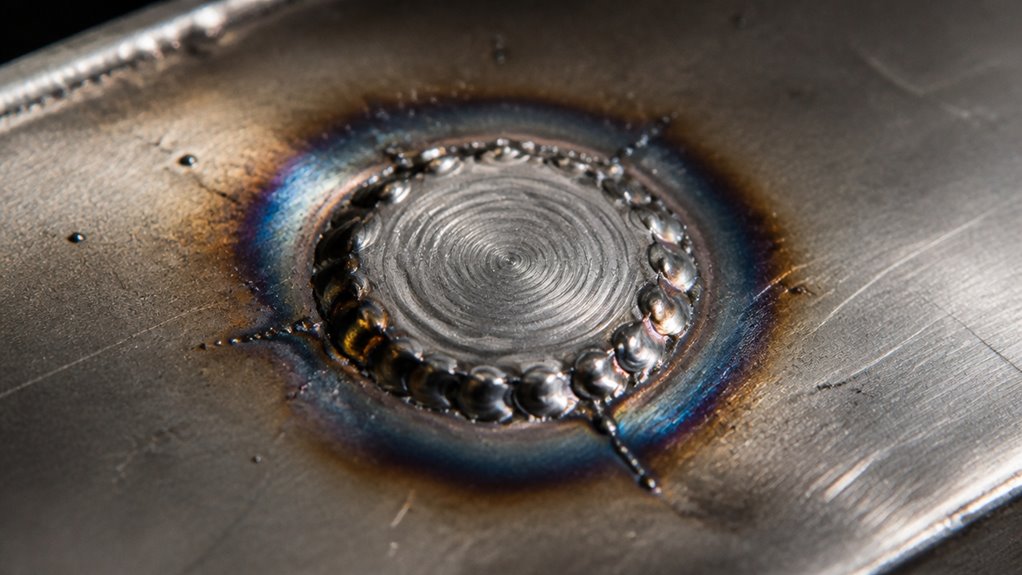
A plug weld joins two metal pieces by filling a drilled hole in the upper part with molten filler metal, creating a strong, concealed bond. You’d use it when spot welding access is limited or a flush surface is needed.
Proper hole sizing relative to material thickness guarantees full fusion and structural integrity. It also controls heat input to minimize distortion. Understanding its applications, techniques, and power settings will equip you for effective plug weld execution.
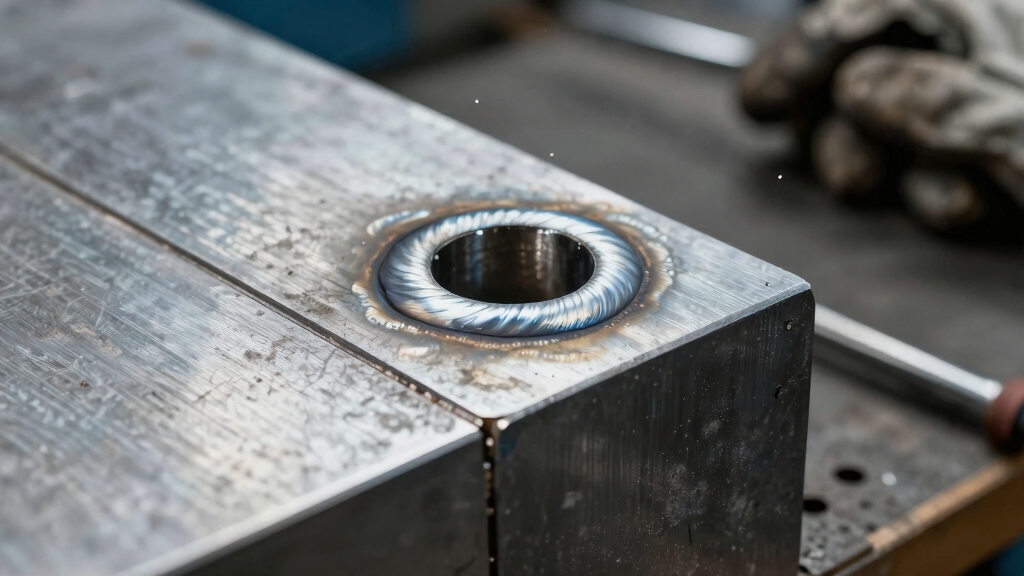
When you look into plug welds, you’ll find they join two metal pieces by filling a pre-drilled circular hole in the upper member with molten filler metal.
This weld fuses the top member directly to the underlying surface beneath the hole, creating a robust mechanical bond.
Known also as a rosette weld, the process fully fills the hole, ensuring solid contact and strength.
You position the weld to replace spot welds where direct access is limited.
The hole diameter is critical, typically sized relative to the thickness of the materials, to maintain structural integrity.
By focusing the weld inside the hole, you avoid weakening edges, ensuring the upper and lower members fuse effectively.
This precise technique lets you achieve a strong, concealed joint in metal fabrication.
Semiautomatic welding processes like GMAW and FCAW are often used to perform plug welds efficiently with consistent wire feed and controlled deposition.
Although spot welding is a common method for joining metal sheets, you’ll opt for plug welding whenever access for a spot welder is restricted or when the joint requires a stronger, more reliable mechanical bond.
Plug welding excels in situations where overlapping members prevent direct electrode contact, enabling weld deposition through pre-drilled holes. This method achieves deeper penetration by fusing the upper piece to the underlying metal directly, resulting in enhanced shear strength.
When structural integrity is critical or surface finish demands a flush weld without visible marks, plug welding outperforms spot welding.
Additionally, plug welds accommodate varying material thicknesses more effectively since hole dimensions can be tailored. You should choose plug welding whenever joint configuration, load requirements, or accessibility limit spot welding’s applicability and compromise weld quality.
Plug welds offer improved resistance to cyclic loading compared to spot welds, which is essential in applications demanding fatigue performance.
Plug welds are super common in automotive panel joining, especially when access is a bit tricky for spot welding. It’s a handy solution that really gets the job done.
They also shine in structural metal assemblies. Here, they help secure overlapping components, creating strong and reliable connections that you can trust.
And let’s not forget about their role in mechanical frameworks. Plug welds are quite effective when it comes to attaching tubing and pipes to flat metal surfaces. Overall, they’re a versatile choice in metal fabrication!
Their strength and durability are achieved through precise welding parameters such as current, pressure, and weld time, ensuring consistent and defect-free joints.
Automotive manufacturers rely on plug welds to securely join panel flanges where traditional spot welders can’t reach due to space constraints. You’ll find plug welds extensively used to fasten overlapping sheet metal panels in vehicle bodies, particularly in tight corners or complex geometries.
This method guarantees a strong metallurgical bond by filling pre-drilled holes that penetrate the top panel, directly fusing it to the underlying flange. When you weld these panels, you achieve consistent penetration and structural integrity without distorting thin sheet metals.
Additionally, plug welds allow for easier finishing since they can be ground flush, maintaining smooth exterior surfaces essential for aerodynamics and aesthetics. Using plug welds also reduces the need for specialized spot welding equipment, optimizing production efficiency in confined assembly areas.
Plug welding is a key welding technique that provides permanent, load-bearing joints critical to the overall fabrication workflow.
Beyond vehicle panel assembly, plug welds play a significant role in structural metal fabrication. Reliable joints are critical for load-bearing applications.
You use plug welds to join overlapping metal plates, ensuring strong, localized fusion without compromising the integrity of the surrounding material.
This method excels when welding thick or multi-layered assemblies where conventional welding access is limited.
By drilling precise holes and filling them with molten metal, you create joints that withstand shear and tensile stresses effectively.
Additionally, plug welds allow for flush surfaces, which is essential in structural elements requiring smooth finishes or subsequent machining.
Their application spans from framing components to equipment housings, making them indispensable when mechanical strength and joint durability are priorities in metal fabrication.
Ensuring full fusion and penetration within the plug welds is essential to maintain joint strength and prevent weak points that could lead to failure.
When attaching tubing or pipes to flat metal surfaces, plug welds provide a secure and efficient joining method.
You drill precise holes in the flat surface, aligning with the tubing or pipe’s contact area. Then you deposit molten metal through these holes to fuse both components.
This approach guarantees consistent penetration and mechanical strength by bonding the pipe directly to the base metal beneath the hole.
You’ll appreciate that plug welds distribute stress uniformly around the joint, minimizing distortion and enhancing load-bearing capacity.
Compared to other welding techniques, plug welds offer easier access to confined spaces where pipe flanges meet flat panels.
This method also allows you to maintain smooth, flush surfaces, which is vital for applications requiring aerodynamic or aesthetic considerations, such as automotive or structural piping assemblies.
To ensure the quality of welds like these, it’s important to measure weld size accurately using a fillet weld gauge to confirm compliance with specifications.
When it comes to choosing the right hole size for a plug weld, it’s essential to ensure that you maintain structural integrity while considering the thickness of your materials. So, what does that mean in practical terms? Well, you generally want your hole diameter to be at least twice the thickness of the top workpiece.
Now, if you really want to optimize for peak weld strength, aiming for 2.25 times the thickness is often a better choice. This extra bit can make a significant difference in the reliability of your weld. It is also important to ensure that the weld size meets minimum leg length requirements as specified by applicable codes like AWS D1.1.
Although selecting the correct hole diameter might seem straightforward, it critically affects the strength and quality of your plug weld. The hole size dictates penetration depth, weld fusion, and load distribution.
To choose the ideal diameter, consider these guidelines:
Adhering to these standards guarantees consistent weld quality and reliable joint performance without compromising the base metals. Proper control of heat input and weld pattern is essential to minimize heat-affected zones and distortion during welding.
Selecting the proper hole diameter naturally leads to evaluating the thickness of the materials involved, as it directly influences weld strength and penetration.
You should size the hole at least twice the thickness of the top sheet to guarantee sufficient filler metal deposition and fusion with the underlying material.
For enhanced structural integrity, a factor of 2.25 times the sheet thickness is preferred, balancing weld volume and heat input.
If the hole is too small, you risk inadequate penetration and weak bonding; too large, and you may introduce excessive heat distortion or burn-through.
For thin sheets, such as 0.8 to 1.0 mm, a hole around 7.5 mm offers ideal results.
Accurately matching hole size to material thickness is critical to achieving a consistent, high-quality plug weld.
Maintaining proper hole size helps control the weld pool size, which directly affects bead height, width, and profile.
When preparing to create a plug weld, it’s vital to start by drilling a properly sized hole in the upper workpiece, typically with a diameter 2 to 2.25 times the thickness of the material.
Next, position the workpieces so the hole aligns directly over the base metal.
Then, set up your welding equipment, guaranteeing the torch points straight into the hole to maximize penetration.
Begin welding by filling the hole fully, creating a molten metal pool that bonds both layers securely.
Follow these steps:
This method guarantees a strong, reliable plug weld. Using the correct welding rod selection ensures proper metal fusion and structural integrity in the weld.
After ensuring the hole is properly filled and the torch is positioned correctly, focus on setting the appropriate power levels and selecting the welding technique that will optimize penetration and weld quality.
Match power settings to weld 1.5 times the thickness of one sheet, guaranteeing sufficient heat to fuse the back sheet without melting hole edges.
MIG welding is typically preferred for plug welds due to its controllability and steady metal deposition. TIG welding suits applications demanding superior weld cleanliness and precision.
Adjust voltage and wire feed speed carefully to maintain a stable arc and avoid burn-through.
Proper technique involves directing the torch straight into the hole center, preventing arc wandering.
Controlling heat input and welding speed systematically guarantees consistent fusion and structural integrity in the plug weld.
Although plug welds are often hidden beneath surfaces, you’ll rely on standardized symbols in fabrication drawings to identify their specifications accurately. These symbols convey essential details that guide your welding process and ensure structural integrity.
When reading plug weld symbols, focus on these key elements:
Understanding these symbols allows you to interpret fabrication drawings precisely. This ensures the plug welds meet design standards and perform reliably under load.
You’ll find that a plug weld typically takes between 30 seconds to a few minutes to cool, depending on factors like material thickness, ambient temperature, and welding parameters.
Thicker metals and higher heat inputs prolong cooling time, while thinner sheets cool faster.
Since plug welds fuse through a hole, localized heat concentration affects cooling rates.
Monitoring cooling guarantees structural integrity and prevents distortion or cracking in your welded joint.
Yes, you can inspect plug welds non-destructively using methods like ultrasonic testing, radiography, and magnetic particle inspection.
These techniques help you detect internal flaws such as porosity or incomplete fusion without damaging the weld.
Visual inspection also plays a role to check surface quality.
Right off the bat, you can’t cut corners on safety during plug welding.
Always wear proper PPE: welding helmet, gloves, and flame-resistant clothing to shield yourself from sparks and UV radiation.
Make certain adequate ventilation to avoid toxic fumes.
Keep your workspace clean to prevent fire hazards, and double-check grounding to avoid electric shocks.
Following these steps keeps you out of hot water and guarantees a safe, effective welding process.
Yes, plug welds are suitable for aluminum materials, but you need to adjust parameters carefully.
Aluminum’s high thermal conductivity requires you to increase heat input slightly to guarantee proper fusion without burn-through.
Use TIG or MIG welding with proper shielding gas to prevent oxidation.
Also, select hole size based on aluminum’s thickness, typically 2 to 2.25 times thickness.
Position the torch precisely to achieve strong, defect-free welds.
You might think corrosion won’t impact plug welds much, but it actually reduces their durability markedly.
When moisture or contaminants infiltrate the weld or surrounding metal, corrosion weakens the bond and promotes cracking or separation over time.
To maintain strength, you’ve got to use corrosion-resistant materials or coatings and ensure proper sealing.
Otherwise, corrosion can compromise the joint’s mechanical integrity and shorten the weld’s service life in harsh environments.
Now that you understand plug welds, consider this: studies show plug welding can increase joint strength by up to 30% compared to spot welding in certain applications.
By choosing the right hole size and technique, you guarantee peak metal fusion and durability.
Mastering plug welds not only improves fabrication quality but also enhances structural integrity. Keep applying these precise methods to achieve reliable, high-performance welds every time.