Phone:
(701)814-6992
Physical address:
6296 Donnelly Plaza
Ratkeville, Bahamas.

Phone:
(701)814-6992
Physical address:
6296 Donnelly Plaza
Ratkeville, Bahamas.

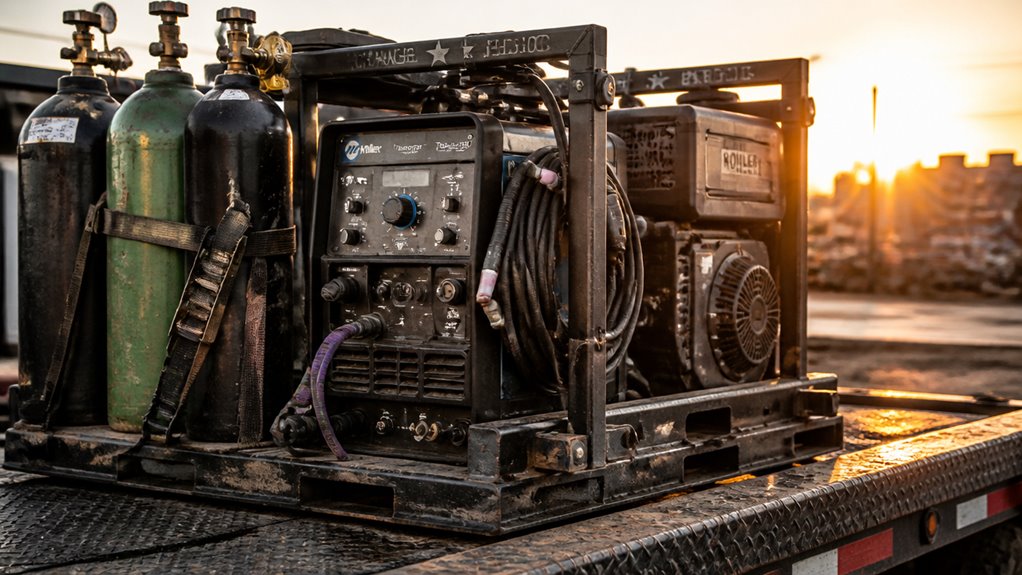
You’ll want to mount your welder at its center of gravity to guarantee balance and minimize axle loading during transport.
Design your skid to fit your truck bed precisely, leaving room for bottle racks and hose reels with clear valve access.
Use rectangular steel tubing for a rigid frame, securing components with weld tabs and plate-and-bolt systems to prevent shifting.
Organize hoses with leads and clamps to avoid tangles and ease setup.
Explore modular designs for smoother maintenance and quick deployment.
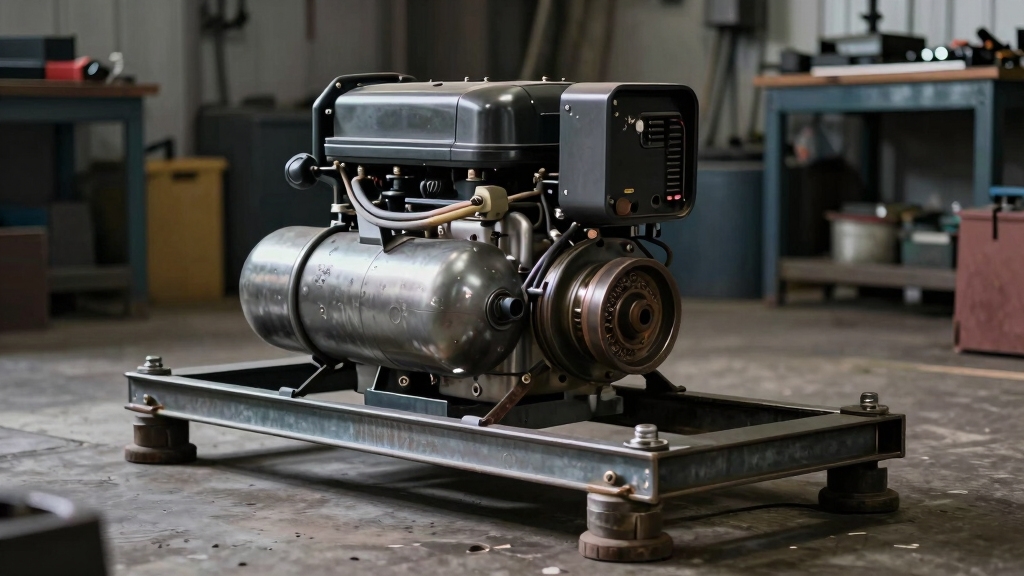
When positioning your welder on the skid, place it at the center of gravity to enhance balance and minimize uneven loading on the truck bed axles.
Secure the machine rigidly using factory mounting holes or welded tabs to prevent movement during transit.
Firmly anchor the welder using factory holes or tabs to ensure it stays secure during transport.
Construct the skid frame from rectangular or square tubing for strength and rigidity.
Use spacers or standoffs beneath the welder to level it on uneven surfaces, guaranteeing stable contact.
Incorporate a plate-and-bolt retention system so tightening pulls the welder firmly into position, avoiding shifts caused by vibration.
Properly positioned and secured, your welder won’t cause axle-side loading or instability, improving safety and equipment longevity.
This precise approach guarantees balanced weight distribution and reliable operation on the road.
Consider the duty cycle and amperage output of your welder when planning the skid to ensure optimal performance and machine longevity during extended use.
Fitting a welding skid into your truck bed or utility vehicle starts with accurately measuring bed width, length, and sidewall clearance to guarantee a precise match.
You’ll want to design the skid footprint to avoid interference with bed rails, tie-down points, and access panels. For short or utility beds, reduce the overall footprint and employ compact, modular components to maximize usable space.
Leave adequate room for a job box if you need separate storage for tools and consumables. Position oxygen and acetylene cylinders with accessible valves, ensuring they don’t encroach on welder controls or hose routing.
Plan reel and hose mounts near skid edges for efficient deployment. Confirm the skid profile clears any bed caps or enclosures to maintain full utility vehicle compatibility.
Consider incorporating integrated storage solutions to keep welding leads, torches, and hand tools accessible and secure during transport and operation.
When it comes to selecting frame materials, think about using rectangular or square tubing. These options provide a solid, rigid base that can easily handle the weight of the equipment and any vibrations that come with it.
Now, let’s talk about securing the welder. It’s crucial to use the factory mounting holes or welded tabs. This ensures that the unit stays firmly in place, especially during transit.
Also, consider incorporating plate-and-bolt retention methods along with spacers if necessary. This will help maintain alignment and prevent any unwanted movement. It’s all about keeping everything secure and steady!
Additionally, choosing a frame design that accommodates quick mode switching can enhance operational efficiency when using multi-process welders.
Although selecting the right frame material for your welder skid may seem straightforward, choosing rectangular or square tubing provides a strong and simple foundation that resists twisting and flexing under load.
These shapes offer predictable strength-to-weight ratios and ease of welding, letting you create a rigid base that supports the welder’s weight and vibration.
Steel tubing is typically preferred for its durability and cost-effectiveness, but aluminum can be considered when weight reduction is critical.
Make sure tubing dimensions match the expected loads and skid footprint.
Incorporate welded mounting tabs or factory holes for secure attachment points.
Spacers or standoffs help level the machine and compensate for uneven surfaces, maintaining balance.
Selecting materials that accommodate multi-process functionality can increase the skid’s versatility for different welding applications.
Make certain your welder skid remains stable and secure by carefully selecting frame materials and employing robust mounting methods. Use rectangular or square tubing for a rigid base, ensuring the frame resists flex and vibration.
Position the welder at the skid’s center of gravity to maintain balance during transport. Secure the machine using factory mounting holes or welded tabs, combined with plate-and-bolt retention to pull the unit firmly into place and prevent movement.
Add spacers or standoffs as needed to level the welder on uneven surfaces. Clamp components tightly before welding, using stitch welds to minimize distortion while maintaining strength.
Finally, include dedicated tie-down points on the skid frame to anchor the entire assembly within the truck bed, ensuring safety and reliability on the move.
For enhanced protection and stable operation, consider the benefits of using an inverter welding machine known for its compact, lightweight design and precise arc control.
Optimize your skid design by incorporating dedicated storage solutions for oxygen and acetylene bottles that guarantee safety, accessibility, and efficient space use.
Position bottles separately from the welder to reduce congestion and ensure valves and regulators remain reachable for inspection and adjustment.
Use horizontal layouts when height clearance is limited, and consider a profile compatible with bed covers or enclosures.
Secure bottles with robust mounting brackets that prevent movement during transport.
Always ensure oxygen cylinders are fully depressurized in a well-ventilated area before storage or transport to prevent safety hazards.
| Feature | Recommendation |
|---|---|
| Bottle Orientation | Horizontal for low clearance spaces |
| Accessibility | Valves and regulators easily reached |
| Mounting | Separate racks with welded tabs |
When setting up your equipment, it’s a good idea to place the cord and hose reels close to the edges of the skid. This way, you can deploy and retract them quickly without getting in the way of any controls or valves. It makes a big difference when you’re in a hurry!
Also, be mindful of how you route the hoses. Try to avoid crossing over any critical components. It can save you a lot of headaches later on. Using guides or lead rails can really help keep everything organized and tangle-free.
And don’t forget about the reel mounts! Designing them for easy removal and maintenance is key. You want to be able to access everything without having to dismantle the entire skid. Trust me, it’ll make your life much easier!
Always inspect cables and hoses for damage before use to ensure electrical safety and prevent accidents.
When positioning reels for welding skids, placing them near the skid edge allows faster deployment and retrieval of hoses and cords. This minimizes setup and cleanup time.
You should mount reels using dedicated points integrated into the skid frame to guarantee secure attachment and easy access. Avoid crossing hoses over controls or bottle valves to prevent interference and maintain safety.
Leave enough clearance around reels for smooth operation and quick removal without dismantling the skid. Consider spacing reels to prevent hose entanglement and provide room for cable guides or lead rails to keep lines organized.
Ensure proper gas hose connections and check for leaks regularly to maintain safe and efficient welding operations, following gas hose maintenance guidelines.
For faster setup and cleanup, route hoses to minimize crossing over controls and bottle valves while maintaining clear, unobstructed paths.
Position hoses along the skid edges or designated lead rails to prevent tangling and interference with operator access.
Secure hoses using clamps or cable guides to keep them organized and reduce wear from abrasion or kinking.
Avoid sharp bends that can restrict gas flow or cause hose damage over time.
Make certain hose lengths are optimized—long enough for reach but short enough to reduce excess slack.
Plan hose routing in coordination with reel placement, so deployment and retrieval are seamless and quick.
Using high-quality clamps with load capacity over 90 psi ensures secure hose management and prevents slippage during operation.
Effective hose routing sets the stage for maintenance-friendly access by ensuring reels and hoses remain organized and reachable without dismantling the entire skid.
You should plan dedicated mounting points near the skid edges to speed up lead deployment and retrieval. Avoid routing hoses across welder controls or bottle valves to prevent interference during setup or service.
Incorporate removable reels with quick-release fasteners, so you can repair or replace them without taking the whole skid apart. Utilize lead rails or cable guides to keep hoses aligned and reduce wear from abrasion or kinking.
This approach minimizes downtime during routine maintenance and cleanup, letting you focus on welding tasks. Prioritize clear access paths to reels and hose connections, ensuring you can perform inspections and adjustments efficiently on-site.
Regular cleaning and inspection of hoses and reels are essential to prevent contaminant buildup that can compromise weld quality and safety.
Control heat input carefully during welding to minimize distortion and maintain frame integrity.
Use a stitch-weld layout on long plates, starting with end stitches before filling intermediate sections evenly.
Clamp or press parts firmly when surfaces are uneven to guarantee tight contact and reduce gaps.
Choose rectangular or square tubing for a rigid frame base that resists warping.
Weld mounting plates and tabs securely to handle equipment weight and vibration during transport.
Avoid over-grinding load-bearing welds; dress joints only where necessary to maintain strength.
Incorporate spacers or standoffs for leveling and clearance, ensuring the frame remains square throughout assembly.
When designing a welder skid, incorporating modular construction allows you to easily remove or reconfigure components for maintenance and transport. This approach simplifies repairs, reduces downtime, and enhances versatility across different job sites or truck beds.
Focus on rigid module interfaces with quick-release fasteners to speed up disassembly. Make certain each module, such as the welder cradle, bottle rack, and hose reels, can be serviced independently without disturbing others.
Consider these key points:
This method streamlines upkeep and adapts well to varying transport requirements.
You protect electrical components from weather by enclosing them in sealed, weatherproof housings rated for outdoor use, like NEMA 4 or IP65.
Use gaskets and silicone sealants on all openings to prevent moisture ingress. Position components away from direct water spray and make sure cable entry points have proper strain relief and sealing.
Additionally, integrate drainage holes or vents with covers to avoid condensation buildup. This maintains reliable operation in harsh environments.
You should include dedicated tie-down points to secure equipment during transport, preventing movement and accidents.
Add covers or enclosures to shield electrical components from weather and debris.
Incorporate accessible bottle storage with valve protection to avoid damage.
Make sure hose and cord reels are mounted for safe deployment without crossing controls.
Use rigid mounting with plate-and-bolt retention to keep everything stable.
Finally, design for quick removal to facilitate maintenance and emergency access.
You can minimize noise and vibration during transport by securely welding mounting plates and tabs, ensuring the welder is rigidly fixed to the skid frame.
Use spacers or standoffs to level the machine and create clearance for uneven surfaces. Incorporate plate-and-bolt retention so tightening hardware pulls the machine firmly into position, preventing movement.
Additionally, choose a frame built from rectangular or square tubing for rigidity, reducing vibration transmission.
Imagine your skid frame gleaming under harsh weather without a hint of rust.
You should use powder coating or epoxy primers for durable rust prevention.
These coatings form a tough, protective shell that resists chipping and corrosion during transport.
For added defense, apply a rust-inhibiting metal primer before painting.
This layered approach keeps the frame sturdy and reliable, saving you time and money on maintenance while ensuring long-term performance.
The best way to label and organize consumables on your skid is by using durable, weather-resistant labels clearly marking each item.
Combine this with designated compartments or modular storage bins to separate consumables by type and size.
Use color-coding for quick identification and make sure labels face outward for easy reading.
Secure bins to prevent shifting during transport.
Keep frequently used items accessible near the work area to streamline your workflow.
By positioning your welder for balance and stability, selecting sturdy frame materials, and organizing bottles and hoses efficiently, you’ll build a skid that stands firm like a well-rooted tree.
Tailor the design to fit your vehicle. Use modular components for easy maintenance, and apply precise welding techniques to prevent distortion.
These practical steps guarantee your welding skid isn’t just a tool, but a reliable partner in every job, ready to roll and perform with ease.