Phone:
(701)814-6992
Physical address:
6296 Donnelly Plaza
Ratkeville, Bahamas.

Phone:
(701)814-6992
Physical address:
6296 Donnelly Plaza
Ratkeville, Bahamas.

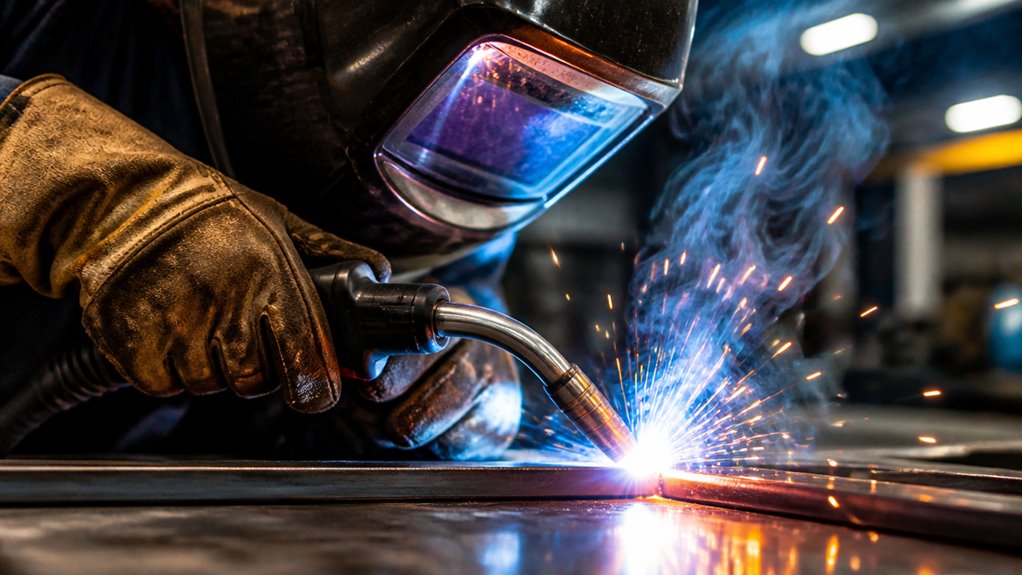
MIG in welding stands for Metal Inert Gas, a process where you use an electric arc between a continuously fed wire electrode and your workpiece.
You protect the weld zone with inert gases like argon or helium to prevent contamination.
This method is excellent for joining metals such as aluminum and copper quickly and cleanly.
Understanding how it differs from similar techniques and the materials suited for MIG can help you apply it effectively in various projects.
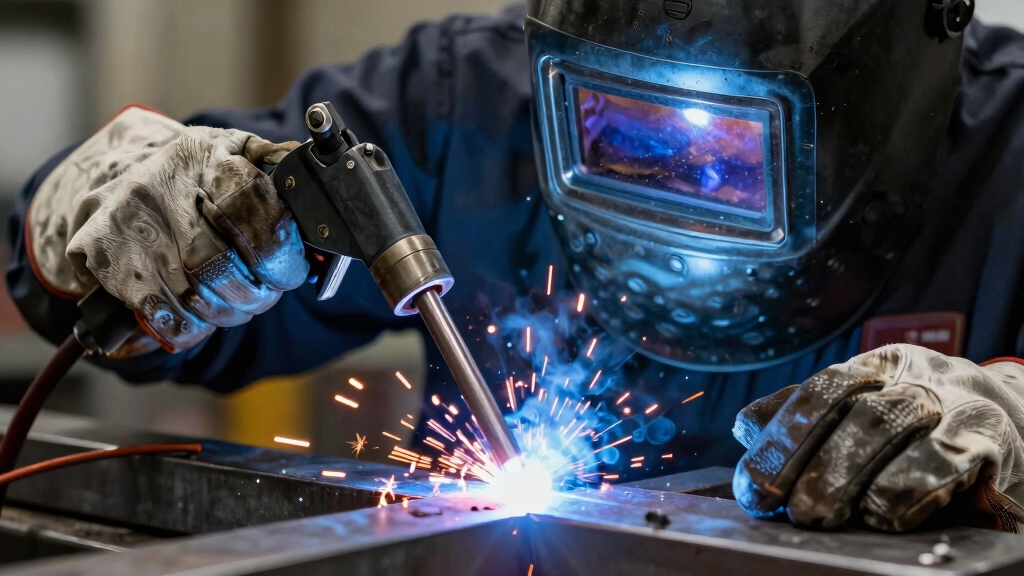
Understanding MIG welding starts with knowing that MIG stands for Metal Inert Gas. This welding process, also called Gas Metal Arc Welding (GMAW), uses an inert shielding gas like argon or helium to protect the molten weld pool from contamination.
In MIG welding, an electric arc forms between a continuously fed consumable wire electrode and the workpiece. The wire melts, supplying filler metal that joins the base materials. The inert gas flows through the welding torch, shielding the weld area and ensuring clean, strong bonds.
You’ll often hear MIG welding referred to simply as wire welding because of the continuous wire feed. This process is particularly effective for non-ferrous metals such as aluminum and copper, providing efficient, high-quality welds in various industrial applications. It also features semi-automatic operation, where manual travel speed pairs with automated wire feed and arc control for improved consistency.
While MIG welding focuses on using inert gases like argon or helium to shield the weld pool, MAG welding employs active gases such as carbon dioxide or gas mixtures containing reactive components.
This fundamental difference influences their applications and weld characteristics.
MIG welding suits non-ferrous metals like aluminum and copper due to inert gas protection that prevents oxidation.
In contrast, MAG welding targets ferrous metals such as steel, where active gases aid in stabilizing the arc and improving penetration.
Both fall under Gas Metal Arc Welding (GMAW), but their gas types define process behavior.
When you choose between MIG and MAG, consider the base metal and desired weld properties.
Shielding gas chemistry directly affects arc stability, weld quality, and spatter levels.
Understanding these distinctions helps optimize your welding process for specific materials.
Selecting the appropriate transfer mode based on material thickness and welding position is essential for achieving optimal results.
MIG welding creates a strong bond by establishing an electric arc between a continuously fed consumable wire electrode and the workpiece.
You feed the wire through a welding gun, which also directs an inert shielding gas around the weld zone. This gas protects the molten metal from atmospheric contamination.
The electric arc generates intense heat, melting both the wire electrode and the base metal, allowing them to fuse together.
As the wire melts, it acts as filler metal, filling the joint gap. You control the wire feed speed and voltage to maintain a stable arc and consistent weld pool.
Once the arc moves on, the molten pool solidifies, forming a strong, clean weld. This precise interplay of wire, arc, and shielding gas defines MIG welding’s effectiveness.
Proper surface preparation, including removing oxidation and contaminants, is essential to improve weld strength and durability.
Welding professionals often choose this process for its ability to join a variety of metals with strong, reliable bonds.
You’ll find MIG welding extensively applied to aluminum, copper, magnesium, and titanium due to its precise control over heat input and clean welds. This process also excels in automotive repair and fabrication, where rapid, consistent welds are essential.
In construction, MIG welding provides robust structural joints that meet demanding safety standards. Its adaptability supports both manual and mechanized operations, including robotic welding systems.
Because the continuous wire feed and shielding gas protect the weld pool effectively, you can achieve high-quality results on both thin and thick materials. The semi-automatic operation of MIG welding enables consistent welds with minimal spatter, reducing cleanup time and improving efficiency.
You’ll often find this process favored for its high welding speed, which boosts productivity without compromising quality.
MIG welding’s continuous wire feed minimizes downtime, allowing you to maintain a steady arc and consistent weld bead.
This not only enhances efficiency but also improves weld uniformity. The process is straightforward to learn, making it accessible if you’re new to welding or need to train operators quickly.
Additionally, MIG welds typically require minimal post-weld cleanup, saving you time and effort. Its versatility lets you work effectively on various metals, from aluminum to steel, across industries like automotive and construction.
You need to wear proper PPE like a welding helmet with a correct shade, flame-resistant gloves, and protective clothing to shield from sparks and UV radiation.
Make certain good ventilation to avoid inhaling fumes. Keep your work area free of flammable materials.
Use safety glasses under your helmet and maintain equipment properly. Always follow manufacturer guidelines for gas handling and electrical safety to prevent burns, electric shock, and fire hazards during MIG welding.
Picture yourself like a blacksmith tending his forge: to maintain and clean your MIG welding equipment, regularly inspect and replace the contact tip and nozzle to avoid spatter buildup.
Clean the wire feeder drive rolls and check for wire jams. Wipe down the torch and make certain the gas nozzle is free of debris.
Periodically check gas flow and hoses for leaks. This upkeep guarantees consistent arc stability and prolongs equipment life.
When troubleshooting MIG welding, check for proper wire feed speed and tension to avoid bird-nesting.
Make certain the contact tip and nozzle are clean to maintain arc stability.
Verify shielding gas flow rate and cylinder pressure to prevent contamination.
Inspect cables and connections for damage or loose fittings.
Adjust voltage and wire feed settings to suit the material thickness.
Regularly clean the drive rolls and replace worn parts to maintain consistent weld quality.
You can perform MIG welding outdoors, but windy conditions pose challenges. The shielding gas used in MIG welding is susceptible to being blown away, causing weld contamination and poor quality.
To minimize issues, use windshields or work in sheltered areas. Alternatively, consider flux-cored arc welding, which offers better wind resistance.
Always monitor gas flow and adjust settings to maintain a stable arc and protect the weld pool effectively.
You’ll find MIG welding equipment generally costs less upfront compared to TIG but more than stick welding gear.
MIG’s continuous wire feed and shielding gas add to operational expenses, making it pricier than stick welding in consumables.
However, compared to TIG, MIG offers faster deposition rates and easier handling, which can reduce labor costs.
Now that you know MIG stands for Metal Inert Gas welding, you can see why it’s favored for its speed and clean welds.
Imagine you’re fabricating a steel bike frame: MIG welding lets you join parts quickly with minimal cleanup, using an inert gas to protect the weld pool.
This precision and efficiency make it ideal for both hobbyists and professionals handling various metals with consistent, high-quality results.