Phone:
(701)814-6992
Physical address:
6296 Donnelly Plaza
Ratkeville, Bahamas.

Phone:
(701)814-6992
Physical address:
6296 Donnelly Plaza
Ratkeville, Bahamas.

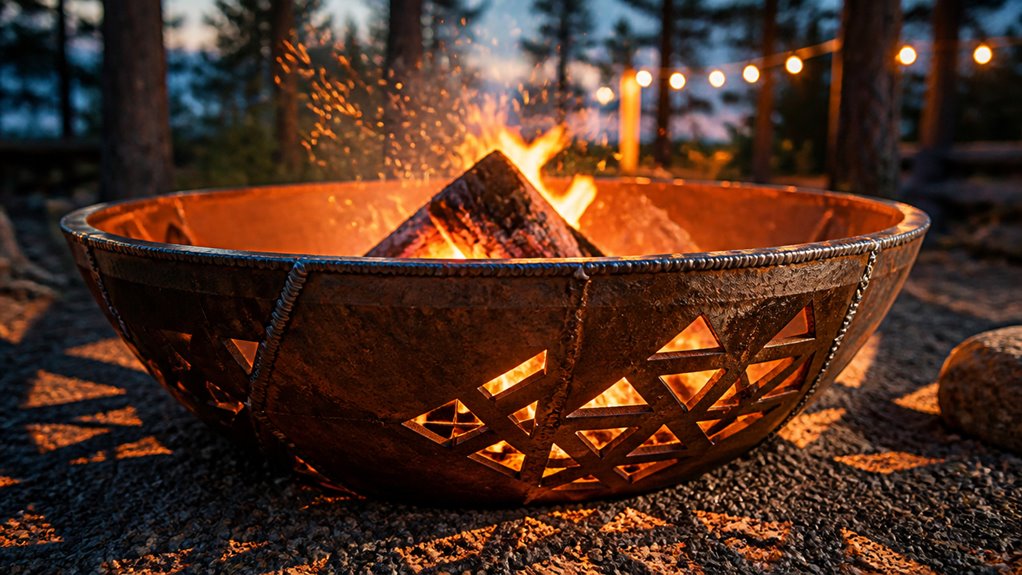
You can create a durable fire pit by welding 1/8″–1/4″ mild steel sheets onto a 1/2″ square tubing frame for stability.
Choose hexagon or square shapes, reinforced with 12″ triangular gussets and welded leg assemblies to keep joints strong and corners true.
Use clean MIG welds with a 75% Argon/25% CO2 mix for smooth, lasting seams.
Add removable grill inserts and drainage for easy cleaning.
Keep your setup tight and polished to guarantee lasting performance, perfect for your next project.
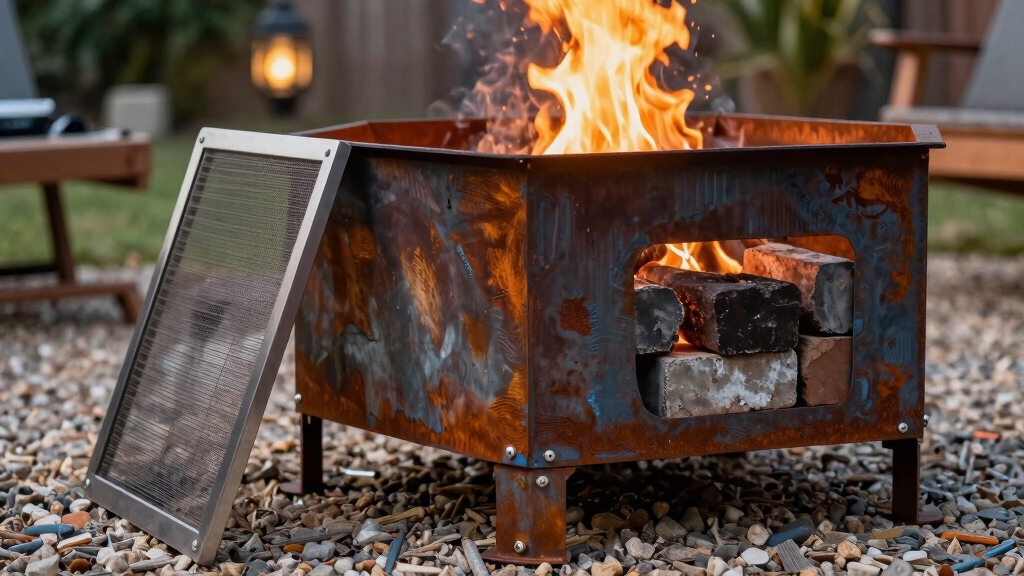
When selecting materials for your fire pit, prioritize steel that balances durability with ease of fabrication.
Mild steel sheets, typically 1/8″ to 1/4″ thick, offer strong resistance to heat and corrosion while remaining workable.
Mild steel sheets, ranging from 1/8″ to 1/4″, combine heat resistance with easy fabrication.
A 4′ x 8′ sheet provides ample material for most designs, allowing you to cut precise shapes with a plasma cutter.
Incorporate 1/2″ square tubing as a structural base for stability without adding excessive weight.
To reinforce joints, use 12″ triangular gussets, which enhance structural integrity and prevent warping.
For welding, opt for MIG wire (.025″ to .030″) paired with a 75% Argon/25% CO2 gas mix to ensure clean, strong welds.
These materials together create a fire pit that’s both robust and visually appealing.
Always ensure proper grounding and use of personal protective equipment during welding to minimize electric shock risks.
Crafting hexagon and square fire pits requires precise alignment and sturdy supports to maintain shape integrity. You’ll use square tubing as the structural base, ensuring each corner is reinforced with gussets for durability.
A 90-degree vice or speed square keeps edges true while you tack weld. Hexagons demand careful angle measurement (120°), while squares rely on exact 90° corners. Supports not only stabilize but distribute heat stress evenly.
| Shape | Support Type | Key Measurement |
|---|---|---|
| Hexagon | Triangular gussets | 120° internal angles |
| Square | Square tubing base | 90° corners, 24″ sides |
| Both | Welded leg assemblies | Full seam welds for strength |
Following this approach enhances both aesthetic appeal and structural reliability. When welding these supports, it is essential to wear flame-resistant protective gear to shield yourself from sparks and heat.
Ensuring your fire pit’s frame holds its shape is just the start. The strength and cleanliness of your welds define its durability and appearance.
Start by thoroughly cleaning and prepping all steel surfaces to remove rust and oxidation. Use tack welds at each joint to maintain precise alignment before completing full seams.
Employ a Miller Multimatic 220 with MIG wire and a 75% Argon/25% CO2 mix for peak penetration and minimal spatter. Grind weld beads smooth with flap wheels for a clean finish that enhances both strength and aesthetics.
For optimal results, carefully adjust voltage and wire feed to achieve a steady arc and clean bead profile.
Although a sturdy fire pit frame forms the foundation, incorporating removable grills and effective drainage markedly simplifies upkeep and prolongs its lifespan.
You’ll want to weld a grill insert with 3-inch spacing using 1/8″ to 1/4″ steel plate, enabling easy ash removal and airflow.
Design the grill to rest securely on ledges within the basin, allowing quick removal without tools.
For drainage, integrate small holes or slots near the basin’s base, ensuring water escapes and prevents rust buildup.
Position these alongside the removable grill to maintain accessibility.
Finish all welds inside the basin to seal gaps where debris might collect.
This approach enhances both function and aesthetics, letting you maintain your fire pit effortlessly while preserving structural integrity over time.
Be sure to clean and prepare all metal surfaces thoroughly before welding to ensure strong and durable joints.
When assembling your fire pit, start by tack welding each joint to secure proper alignment before completing full seams. This prevents distortion and guarantees structural accuracy.
Use 90-degree vices or speed squares to hold pieces steady during welding. After full welds, grind seams smooth for a refined look and improved longevity.
For maintenance, clean ash regularly and inspect welds for cracks or corrosion. Keep the basin sealed to avoid debris buildup that can weaken the structure.
Always wear appropriate personal protective equipment to ensure safety during welding.
This approach makes certain your fire pit remains both functional and visually striking over time.
Yes, you can customize your fire pit colors using heat-resistant paint specifically designed for high temperatures.
Choose paints rated for at least 1200°F to guarantee durability and prevent peeling or discoloration.
Before painting, prepare the steel surface by removing rust and oxidation with surface conditioning tools.
Apply thin, even coats and allow proper drying between layers.
This enhances both the aesthetic appeal and longevity of your fire pit while withstanding intense heat.
You need a welding helmet with a proper shade, gloves that resist heat and sparks, and a flame-resistant jacket to protect your skin.
Wear safety glasses under the helmet, sturdy boots to shield your feet, and ear protection to guard against noise.
Use respiratory protection if ventilation is poor.
These essentials create a barrier from sparks, UV radiation, and fumes, ensuring your safety while you craft with precision and confidence.
You’ll find that weather conditions markedly impact your fire pit’s longevity. Moisture accelerates rust, so sealing welds and using rust-resistant coatings are essential.
Extreme temperature changes can cause metal expansion and contraction, potentially leading to cracks or warping. Choose thicker steel and allow for expansion in your design.
Wind can spread embers, so a sturdy, well-anchored build improves safety. Regular maintenance, like cleaning and touch-up painting, keeps your fire pit looking great and performing well over time.
Just like Da Vinci sought harmony between art and science, you can choose eco-friendly alternatives to mild steel for your fire pit.
Consider recycled steel or corten steel, which ages beautifully and resists rust naturally, reducing maintenance.
Aluminum alloys offer lightweight durability with less environmental impact.
Even cast iron, when sourced sustainably, provides longevity.
These materials combine practicality, aesthetic appeal, and a greener footprint for your fire pit project.
You can definitely incorporate seating or tables into your fire pit design by welding steel frames with attached benches or side tables.
Use square tubing for sturdy support and steel plates for tabletops or seat surfaces.
Make sure you tack weld joints first for alignment, then finish seams for durability.
Adding gussets increases strength at connections.
This approach not only enhances functionality but also creates a cohesive, sleek aesthetic that’s both practical and visually appealing.
By choosing the right steel and mastering clean welds, you not only build a durable fire pit but also craft a centerpiece that’s both functional and artful.
When your hexagon or square design fits perfectly with removable grills and drainage, maintenance becomes effortless, coinciding practicality with elegance.
As you assemble and care for your fire pit, you’ll realize that strong joints and thoughtful design aren’t just technical steps. They’re the foundation of lasting warmth and style.