Phone:
(701)814-6992
Physical address:
6296 Donnelly Plaza
Ratkeville, Bahamas.

Phone:
(701)814-6992
Physical address:
6296 Donnelly Plaza
Ratkeville, Bahamas.

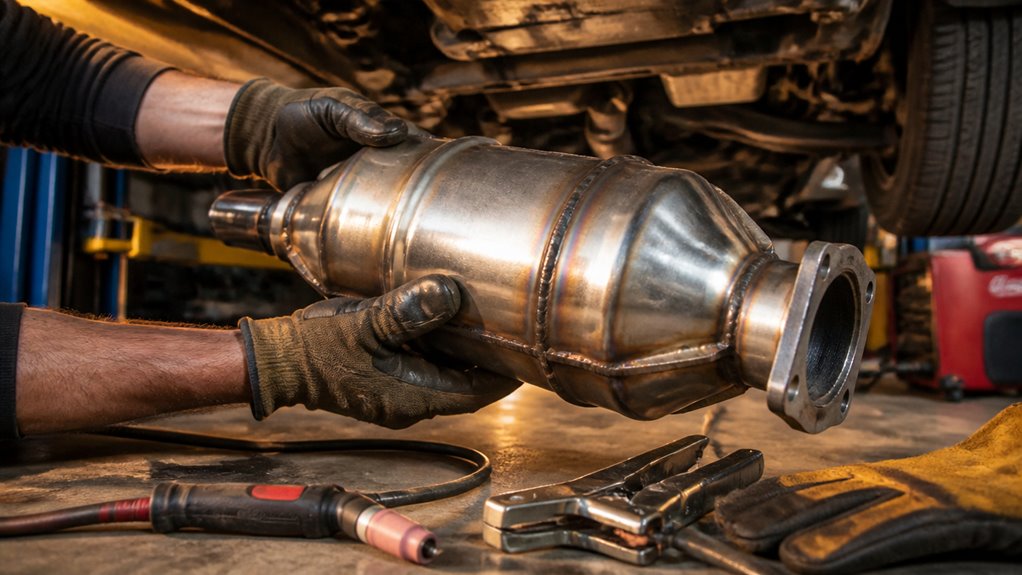
You have to weld a catalytic converter on at least one end to meet federal EPA regulations and ensure it’s tamper-proof and leak-free.
While modern bolt-on converters often include flanges for tool installation, universal aftermarket parts typically require welding for a secure, permanent fit.
Proper welding also protects against vibration and thermal expansion, supporting legal compliance.
However, state laws may allow exceptions or alternatives.
Discover how these rules and installation techniques affect your converter choice.
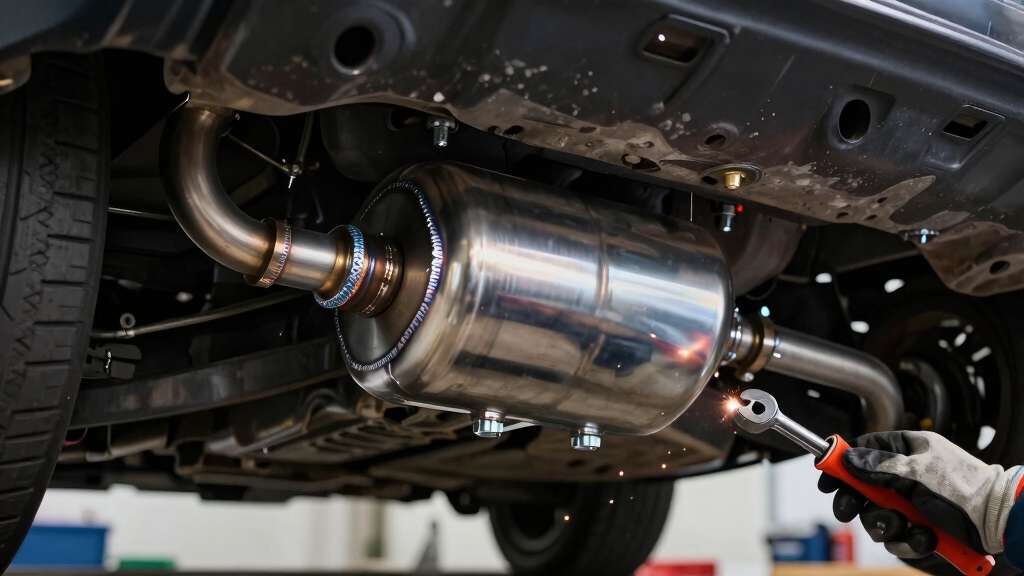
When deciding between welding and bolt-on catalytic converters, you’ll need to take into account your vehicle’s make, model, and local regulations.
Selecting weld or bolt-on catalytic converters depends on your vehicle type and local legal requirements.
Modern vehicles often come with bolt-on catalytic converters equipped with flanges. This allows you to install or remove them using basic hand tools and penetrating oil.
These bolt-on options simplify alignment and prevent leaks when you tighten bolts to specifications. However, universal catalytic converters usually require welding due to their custom fit and lack of pre-existing flanges.
Welding guarantees a tamper-proof, leak-free seal but demands precise cutting, fitting, and protective handling near oxygen sensors.
You’ll also want to verify local laws since some states mandate welded installations while others accept bolt-on or clamped systems.
Choose the method that aligns with your vehicle’s design and complies with applicable regulations for peak performance and legality.
For non-welded installations, using clamp sleeve couplers and exhaust clamps can provide secure, leak-resistant joints without the need for welding.
Sure! Here’s a modified version of your text with a more conversational tone:
—
So, did you know that federal law actually requires catalytic converters to be welded on at least one end? This is to ensure they’re securely installed and tamper-proof, all while staying compliant with EPA standards. Pretty interesting, right?
And here’s something important: removing or bypassing that converter? Totally illegal. It doesn’t even matter if your vehicle isn’t subject to smog testing. It’s crucial to understand these regulations before you start thinking about welding or replacing anything.
Clamp-based replacement kits offer a weld-free alternative that can comply with legal and emissions standards when properly installed.
Just a heads-up—it’s always good to be informed before making any decisions!
—
Although some catalytic converters can be installed with bolts, you’ll need to weld at least one end to comply with federal law. The Environmental Protection Agency (EPA) mandates welding to guarantee the converter is tamper-proof and properly sealed, especially for universal converters requiring custom flanges.
This welding prevents leaks and unauthorized removal, maintaining emissions control integrity. While original equipment manufacturer (OEM) converters often use bolt-on designs, universal aftermarket parts usually demand welding for legal installation.
Welding also secures the converter against vibration and thermal expansion. When you weld, guarantee proper alignment and avoid damage to oxygen sensors. This method meets federal requirements and safeguards your vehicle’s emission system, keeping you compliant with EPA standards and avoiding potential penalties from improper installation. To ensure a strong, safe weld, it’s important to control heat and avoid exceeding temperatures that could cause hazardous fumes or damage to the metal.
Because the Environmental Protection Agency (EPA) enforces strict regulations, removing a catalytic converter is illegal regardless of whether your vehicle undergoes smog testing.
Federal law mandates that catalytic converters remain installed and tamper-proof, typically requiring welding on one end for compliance. Here’s what you need to know about legality:
You can’t legally remove or bypass catalytic converters even if your state doesn’t require smog checks.
Welding guarantees the converter’s secure, tamper-resistant installation, aligning with EPA’s emission control mandates. Proper welding process selection and technique are essential to ensure a safe and effective weld without compromising the converter or surrounding components.
State laws really do differ when it comes to installing catalytic converters, especially regarding whether you should weld them or can just use clamps.
For example, in California, they’ve some pretty strict rules. They require CARB-compliant parts and often insist on welding to meet those tough emission standards.
On the flip side, other states are a bit more lenient. They allow clamps for installation, which makes maintenance a lot easier.
It’s also important to consider the magnet test to ensure the steel substrate of the converter’s metal parts, which can affect welding compatibility.
When dealing with catalytic converter installation, state laws can materially influence whether welding or bolt-on methods are required or permitted. You must understand these regulations to guarantee compliance and avoid penalties. Here’s a quick guide:
Check your state’s specific rules before installation to choose the correct method and maintain legal operation of your vehicle’s emissions system. Proper welding often involves using weld-through primers to ensure corrosion resistance and joint durability during installation.
Although federal regulations set baseline requirements for catalytic converter installation, state laws materially impact whether you can use clamps or must weld the parts.
For example, Pennsylvania permits exhaust clamps legally or via common shop practices, allowing you to avoid welding if you use proper clamps.
Conversely, California enforces stricter rules, mandating CARB-compliant catalytic converters installed with welds to guarantee tamper-proof sealing.
North Carolina exempts pre-emission vehicles, giving you more flexibility with clamp installations on older models.
Clamps, while cheaper and easier to install with hand tools, generally don’t deliver as secure a seal as welds, increasing the risk of leaks.
Before deciding, you should review your state’s specific legislation, as local laws ultimately dictate whether welding or bolt-on clamp methods meet legal and environmental standards.
Non-welded repairs using band clamps and sleeves can provide durable, leak-proof seals when properly installed, but their suitability depends on local regulations.
State laws play a defining role in how you guarantee your catalytic converter meets emission standards through welding or bolt-on installations.
Depending on your state, you must follow specific regulations to ensure compliance and avoid penalties. Here’s what you need to know:
Understanding these variations helps you select the correct installation method while meeting emission standards and preventing legal issues.
Always verify local laws before proceeding. Additionally, proper welding techniques and ventilation are crucial to control hazardous fumes during installation.
Before replacing a catalytic converter, you should thoroughly inspect key components to guarantee proper fitment and function.
Check weld integrity, O2 sensor ports, pipe alignment, and gasket conditions to avoid leaks or misfits.
Verify the cooling system’s leak-down for at least 15 minutes and assess fuel additives, oil consumption, and engine compression.
Also, make certain the EGR valve operates cleanly to prevent contamination of the new converter.
| Inspection Item | What to Check | Reason |
|---|---|---|
| Welds & Joints | Cracks, corrosion | Prevent exhaust leaks |
| O2 Sensor Ports | Thread integrity | Accurate sensor readings |
| Pipe Alignment | Proper fit, no stress | Avoid premature failure |
| Gaskets & Clamps | Condition and tightness | Make certain airtight seal |
Additionally, ensure that any exhaust welds are free from cracks or gaps by performing a thorough joint inspection to maintain a leak-free system.
After confirming the condition of welds, O2 sensor ports, and pipe alignment, you’ll need specific tools and techniques to properly install a universal catalytic converter.
Welding guarantees a secure, tamper-proof fit that complies with federal standards. To get it right, gather these essentials:
Use tack welds first to maintain alignment.
Then complete the weld with continuous beads, avoiding excessive heat near O2 sensor ports.
Proper technique prevents leaks and guarantees durability under thermal cycling and vibration.
Choosing a welder with precise wire feed control helps achieve clean, consistent welds essential for catalytic converter installation.
When working with bolt-on catalytic converters, you’ll need basic hand tools and penetrating oil to loosen rusted bolts and clamps.
Start by spraying bolts twice, then carefully remove them to avoid damaging flanges or sensors. Keep track of bolt orientation and gasket condition.
Installation is the reverse: align flanges precisely, hand-start bolts to prevent crossthreading, then torque to manufacturer specs for a proper seal.
Avoid overtightening to prevent flange damage.
| Step | Key Point |
|---|---|
| Preparation | Penetrating oil on rusted bolts |
| Removal | Remove bolts carefully, note orientation |
| Inspection | Check gaskets, flanges, sensors |
| Installation | Align flanges, hand-start bolts |
| Finalization | Torque bolts to spec, check seal |
Although bolt-on catalytic converters offer ease of installation, welding creates a permanent, tamper-proof seal that meets federal legal standards.
When you weld a catalytic converter, you guarantee:
1. Permanent attachment
Welding fuses the converter to the exhaust, preventing removal without cutting tools.
2. Compliance with EPA regulations
Federal law mandates welded connections on at least one end for legality.
3. Reduced tampering risk
Welded joints are difficult to dismantle, deterring theft or illegal removal.
4. Leak-free exhaust path
Proper welding eliminates gaps or leaks that clamps or bolts might allow.
Welding a catalytic converter guarantees a secure, tamper-proof fit. However, improper installation can still cause issues like leaks, misalignment, or sensor damage.
Welding a catalytic converter ensures a secure fit, but improper installation risks leaks, misalignment, or sensor damage.
To avoid common mistakes, first inspect your pipes and gaskets for corrosion or damage before welding. Ensure perfect alignment to prevent exhaust leaks and stress on welds.
When working near O2 sensors, protect them from heat using shields or remove them temporarily. Use penetrating oil on bolts twice if you opt for bolt-on converters to ease removal and avoid stripping threads.
Photograph the original orientation before removal to ensure correct reinstallation. Tighten bolts to the specified torque to prevent leaks or cross-threading.
Finally, verify that your replacement part matches your vehicle’s year, make, and state emission requirements to avoid legal issues.
Yes, welding can damage oxygen sensors if you’re not careful. The intense heat from welding near O2 sensors can cause sensor failure or inaccurate readings.
To prevent this, you should remove the sensors before welding or use heat shields and cooling techniques during installation. Proper positioning and timing are vital to protect the sensors and maintain accurate emission control system performance.
Always follow manufacturer guidelines to avoid costly sensor damage.
Exhaust clamps can serve as a convenient compromise, but they don’t always provide the steadfast bond welding offers, especially for universal cats.
While clamps simplify installation and allow easier removal, they mightn’t seal perfectly, risking leaks or loosening over time.
Welding guarantees a tamper-proof, durable fit required by federal standards. If you prioritize reliability and compliance, welding remains the gold standard.
Though clamps can work temporarily or where legal allowances exist.
To identify a CARB-compliant catalytic converter for California, look for the Executive Order Number (EFN) stamped on the unit or packaging.
Verify this EFN against the California Air Resources Board database to make certain it matches your vehicle’s year, make, and model.
Always choose converters specifically labeled “CARB-compliant” or “50-state legal.”
Avoid universal or non-certified parts, as California enforces strict emissions standards requiring exact EFN matching.
You might think contamination happens only from bad fuel, but it also stems from oil or coolant leaks, which coat the catalyst and block its function.
Excessive unburned fuel from a misfiring engine or faulty oxygen sensors can overload the converter, causing overheating and damage.
Addressing these underlying issues before replacement prevents recurring contamination and guarantees your catalytic converter performs efficiently and lasts longer.
Oil consumption shortens your catalytic converter’s lifespan by contaminating its ceramic substrate.
When oil burns in the combustion chamber, it deposits carbon and ash onto the catalyst surface. This clogs its pores and reduces efficiency.
This contamination leads to higher emissions and eventual converter failure.
To protect your converter, you should monitor oil levels closely. Address leaks promptly and perform regular engine maintenance to prevent excessive oil burning.
Deciding whether to weld or bolt on your catalytic converter isn’t just about convenience. It’s about compliance, durability, and performance.
While welding offers tamper-proof security, it demands precision and the right tools. Bolt-ons simplify installation but may risk leaks or theft.
Before you make your move, consider federal and state laws, inspect thoroughly, and prepare carefully. The choice you make now could impact your vehicle’s future, so choose wisely or face costly consequences down the road.