Phone:
(701)814-6992
Physical address:
6296 Donnelly Plaza
Ratkeville, Bahamas.

Phone:
(701)814-6992
Physical address:
6296 Donnelly Plaza
Ratkeville, Bahamas.

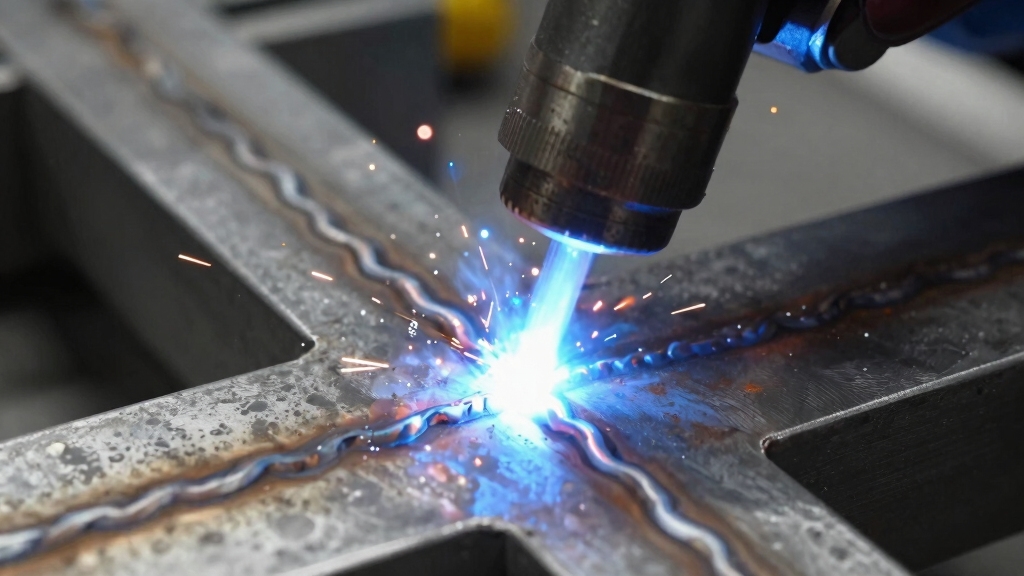
You’ll find laser welding delivers superior strength compared to TIG and MIG, thanks to deep penetration that guarantees full fusion up to 10 mm thick.
Its focused energy input minimizes heat-affected zones, reducing distortion and preserving base material integrity.
The weld throat size correlates directly with load capacity, and laser welds consistently meet or exceed strength benchmarks. Even under high pressures and ultimate loads near 18,000 lbs, laser welding excels.
Exploring its material suitability and heat control reveals why laser welding is ideal for demanding applications.
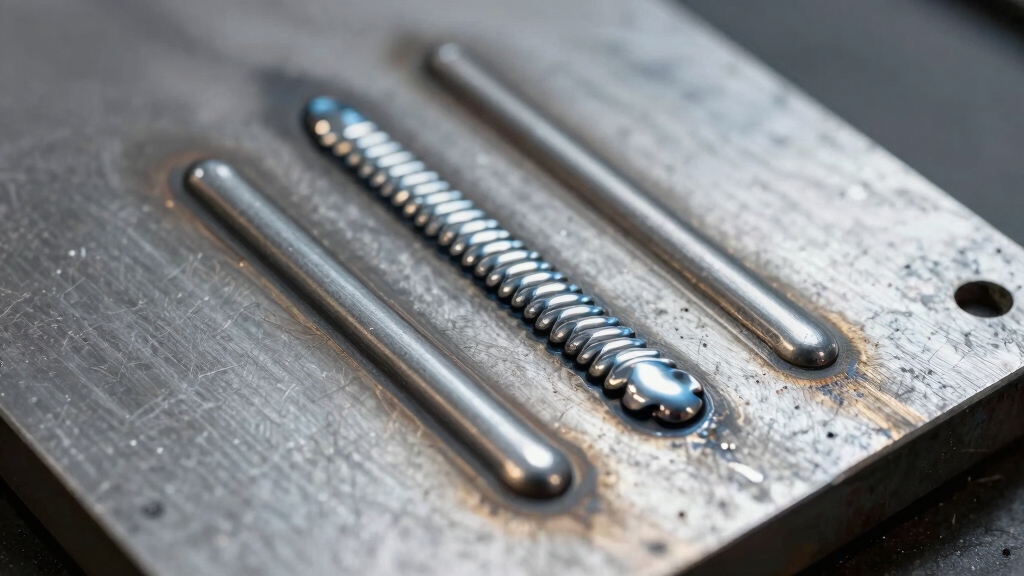
While TIG and MIG welding remain common choices, laser welding often outperforms them in strength across most applications.
Laser welding consistently delivers greater strength than TIG and MIG across various welding applications.
You’ll find laser welds achieve full penetration up to 10mm, ensuring maximum joint integrity.
For titanium, laser welds match parent metal strength, a feat TIG and MIG rarely accomplish.
When you compare high-strength steel welds, laser welding produces a heat-affected zone (HAZ) ten times narrower than MIG, markedly reducing embrittlement risks.
Handheld laser welds demonstrate ultimate loads near 18,000 lbs, evidencing their robustness.
This superior strength arises from deep penetration and precise energy delivery, which you won’t get with traditional arc methods.
Precise focusing and controlled welding modes allow laser welding to minimize distortion and produce consistent, high-quality joints with minimal post-processing requirements, thanks to advanced beam parameters control.
Because laser welding delivers energy with high density yet lower overall heat input than TIG or MIG, it markedly enhances weld quality.
You’ll notice the focused heat minimizes distortion and internal stresses, preserving the base material’s integrity. This precision reduces the heat-affected zone, limiting embrittlement and maintaining strength near the weld.
When controlling heat input, you gain:
Similar to plasma welding, laser welding benefits from precise control over heat input to maintain superior weld quality and minimize distortion.
You’ll notice that laser welding uses a lot less heat compared to traditional methods. This is key because it directly limits the size of the heat-affected zone, or HAZ for short.
A narrower HAZ means fewer microstructural changes, which is great because it helps minimize internal stresses that can lead to distortion or even embrittlement.
Plus, by controlling the heat distribution so precisely, laser welding really does a fantastic job of preserving the integrity of the base material. This not only helps maintain its quality but also enhances the overall strength of the weld.
It’s pretty impressive how much of a difference that makes! Using pulsed laser modes can further minimize thermal input and limit heat diffusion into surrounding material, enhancing these benefits.
Since laser welding delivers energy with exceptional focus and density, it markedly reduces the heat input compared to traditional arc welding methods like TIG and MIG.
This precise energy application limits thermal diffusion, minimizing heat loss to the surrounding material and reducing heat-affected zone (HAZ) embrittlement.
By controlling heat input, laser welding lowers internal stresses and distortion, enhancing weld integrity.
You’ll appreciate these benefits:
Additionally, the use of inert shielding gas in laser welding helps prevent oxidation and contamination, further improving weld quality.
Minimizing the heat-affected zone (HAZ) stands as a critical advantage of laser welding, directly influencing weld strength and material integrity.
Laser welding’s high energy density concentrates heat precisely, resulting in a HAZ up to ten times narrower than conventional methods like MIG.
This focused heat input limits thermal diffusion, reducing microstructural changes and embrittlement risks around the weld.
The narrow HAZ preserves the parent metal’s mechanical properties and minimizes grain growth, essential for maintaining strength.
By controlling the HAZ, laser welding avoids weakening effects common in arc welding, ensuring a robust joint.
This precise thermal management also reduces distortion and allows for higher-quality welds, especially in high-strength steels, where maintaining material integrity near the weld is paramount for overall performance.
In addition, advanced welding technologies such as inverter welding machines allow for rapid current adjustments that further enhance heat input control and weld precision.
Beyond controlling the heat-affected zone, laser welding also reduces internal stresses that can compromise weld integrity. By concentrating energy in a small area and minimizing heat input, laser welding limits thermal gradients that typically cause distortion and residual stress. This precision protects the weld’s mechanical properties and dimensional stability.
You’ll appreciate these key benefits:
Laser welding’s focused heat input and rapid cooling minimize internal stress development. This ensures stronger, more reliable joints compared to traditional arc welding methods. This makes laser welding ideal for applications demanding high precision and structural integrity.
Additionally, unlike conventional welding power supplies that rely on constant current control, laser welding provides greater stability in heat input and arc characteristics, further enhancing weld quality.
Although laser welds often appear narrow on the surface, their deep penetration is the key factor that markedly enhances joint strength.
This deep seam guarantees full sheet connection across the thickness, creating a robust metallurgical bond that outperforms wider but shallower welds.
As you increase laser power, penetration depth grows, allowing welds to reach up to 10mm in thickness with complete fusion.
This thorough joining eliminates weak interfaces and reduces the risk of incomplete fusion defects.
Because the weld throat corresponds directly to load-bearing capacity, deep penetration maximizes structural integrity despite the weld’s slender profile.
Ultimately, this focused energy input produces high-strength joints by fusing materials fully through their cross-section.
This makes laser welding superior in strength to arc-based methods that rely on broader, shallower weld beads.
Adjusting heat input by balancing amperage and voltage is essential in arc welding to optimize penetration and bead quality, highlighting laser welding’s advantage in deep fusion.
When you consider weld durability, the throat size of a laser weld plays a crucial role in determining its load-bearing capacity. The throat acts as the critical cross-sectional area that resists mechanical stresses. This directly influences joint strength. A larger throat size increases the weld’s ability to absorb load without failure.
Here’s why throat size matters for durability:
Proper control of heat input and penetration is essential to avoid defects such as lack of fusion that can compromise weld strength and durability.
If you want ideal results from laser welding, selecting the right materials is critical. Laser welding performs best within specific thickness ranges and metallurgical characteristics.
You’ll find that metals like stainless steel, carbon steel, aluminum, and titanium respond exceptionally well due to their thermal conductivity and melting points. These materials maintain weld integrity, minimizing heat-affected zones and distortion.
| Material | Best Thickness (mm) | Emotional Impact |
|---|---|---|
| Stainless Steel | 4–5 | Confidence in strength |
| Aluminum | 3–5 | Assurance of precision |
| Carbon Steel | 4–5 | Reliability under stress |
Choosing these metals ensures you leverage laser welding’s precision, strength, and minimal thermal damage for superior, durable joints in your projects. For aluminum specifically, using welding methods with AC current is essential to break the oxide layer and achieve clean, strong welds.
Laser welding really stands out when it comes to speed. By using high energy density, it melts materials quickly, which means it can outpace traditional methods like TIG and MIG welding.
But speed isn’t the only advantage. The strength of laser welding comes from its ability to penetrate deeply. This ensures a full connection between the sheets and maximizes the thickness of the weld throat.
Plus, it does a great job with heat management. By minimizing the heat-affected zone, it reduces internal stress and helps preserve the integrity of the weld. So, not only do you get faster seams, but you also get stronger ones!
Controlling porosity in welding is essential to maintaining this strength, as trapped gas pockets can weaken weld joints.
Consistently outperforming traditional methods, laser welding delivers faster and stronger seams by leveraging its high energy density to rapidly melt metals with precision.
This efficiency translates directly into speed advantages, making it ideal for high-volume production where time and quality are critical.
You benefit from:
Building on laser welding’s speed advantages, its strength primarily comes from deep penetration. This creates a robust bond between metal sheets despite the weld’s narrow surface appearance.
You’ll find that the weld throat depth directly influences strength, increasing as laser power rises. With full penetration achievable up to 10mm, laser welding guarantees complete fusion through the entire material thickness. This is unlike wider, shallower arc welds.
This deep seam connection means you get faster, stronger seams that can outperform TIG and MIG welds in most applications. Additionally, the narrow heat-affected zone reduces embrittlement and distortion, preserving the metal’s mechanical properties.
Managing heat efficiently is essential for achieving faster, stronger laser welds.
Laser welding focuses energy precisely, minimizing heat input and drastically reducing the heat-affected zone (HAZ).
This controlled heat application prevents embrittlement and internal stress, resulting in more reliable seams.
You’ll notice these key benefits:
When you examine real-world tests, laser welds demonstrate exceptional strength and reliability under demanding conditions.
For example, tube connections sustain pressures up to 548 bars, confirming superior joint integrity.
Transverse lap shear tests on 304L stainless steel reveal ultimate loads that surpass those of conventional MIG welds.
Transverse lap shear tests on 304L stainless steel show superior ultimate loads compared to conventional MIG welds.
Fillet weld break tests consistently show laser welds matching or exceeding strength benchmarks, directly correlating with weld throat size and penetration depth.
Handheld laser welds have withstood ultimate loads near 18,000 lbs, highlighting robustness in field applications.
These outcomes stem from laser welding’s full penetration capability—up to 10mm—and minimal heat-affected zone, which limits embrittlement and internal stresses.
Consequently, laser welds exhibit reliable mechanical properties that meet or exceed industry standards in precision and load-bearing scenarios.
Although laser welding offers distinct advantages in strength and precision, you should select it specifically when your application demands deep penetration with minimal heat input to avoid distortion and embrittlement.
Laser welding excels in producing full penetration welds up to 10mm, maintaining parent metal strength with a considerably narrower heat-affected zone (HAZ) than traditional methods.
This makes it ideal for materials sensitive to heat. Consider laser welding when you need:
You’ll need a handheld laser welding system, including a portable fiber laser source delivering 1000-1500W power for effective penetration.
Equip it with a precision laser handpiece featuring a focusing lens to control beam spot size.
Additionally, use a shielding gas supply, often argon, to protect the weld pool.
A cooling unit maintains laser stability, and a control interface lets you adjust parameters for various metals and thicknesses, ensuring high-quality welds.
Laser welding leaves your weld with a narrow, clean seam, contrasting sharply with the wider, rougher appearance typical of MIG or TIG.
This precision comes from its focused energy, which minimizes heat-affected zones and distortion.
You’ll notice a smooth, consistent bead with minimal spatter or discoloration, enhancing aesthetics and structural integrity.
The weld’s slim profile doesn’t compromise strength; it reflects deep penetration and superior fusion, balancing form and function expertly.
You can use laser welding on very thin materials below 0.1mm. However, it requires precise control of laser power and speed to avoid burn-through.
The high energy density lets you weld thin sheets efficiently, minimizing heat input and distortion.
Ultra-thin materials demand exact parameter tuning to maintain weld integrity and prevent vaporization.
With proper settings, laser welding achieves strong, clean joints even on sub-0.1mm thicknesses.
You need to wear proper laser safety goggles matched to the laser wavelength to protect your eyes from direct and scattered beams.
Make certain adequate ventilation to avoid inhaling fumes and particulates generated during welding.
Use protective clothing to shield your skin from ultraviolet radiation and hot spatter.
Always operate lasers within controlled access zones, using warning signs and interlocks to prevent accidental exposure.
Follow manufacturer guidelines rigorously to maintain a safe working environment.
You’ll notice laser welding cuts down on post-weld cleaning and finishing because it produces minimal spatter and a narrow heat-affected zone.
Since it focuses heat precisely, you get cleaner weld seams with less oxidation and distortion.
This means less grinding or polishing afterward.
This precision reduces your finishing time and preserves the base material’s quality.
You can achieve a smoother surface and tighter tolerances without extra rework.
When you choose laser welding, you’re wielding a precision scalpel rather than a blunt instrument.
Its focused heat input and deep penetration forge seams that rival or surpass TIG and MIG strength, minimizing damage like a surgeon preserving healthy tissue.
By controlling throat size and material compatibility, laser welding delivers durability with unmatched efficiency.
In the world of welds, laser welding isn’t just strong; it’s a finely tuned powerhouse engineered for peak performance.