Phone:
(701)814-6992
Physical address:
6296 Donnelly Plaza
Ratkeville, Bahamas.

Phone:
(701)814-6992
Physical address:
6296 Donnelly Plaza
Ratkeville, Bahamas.

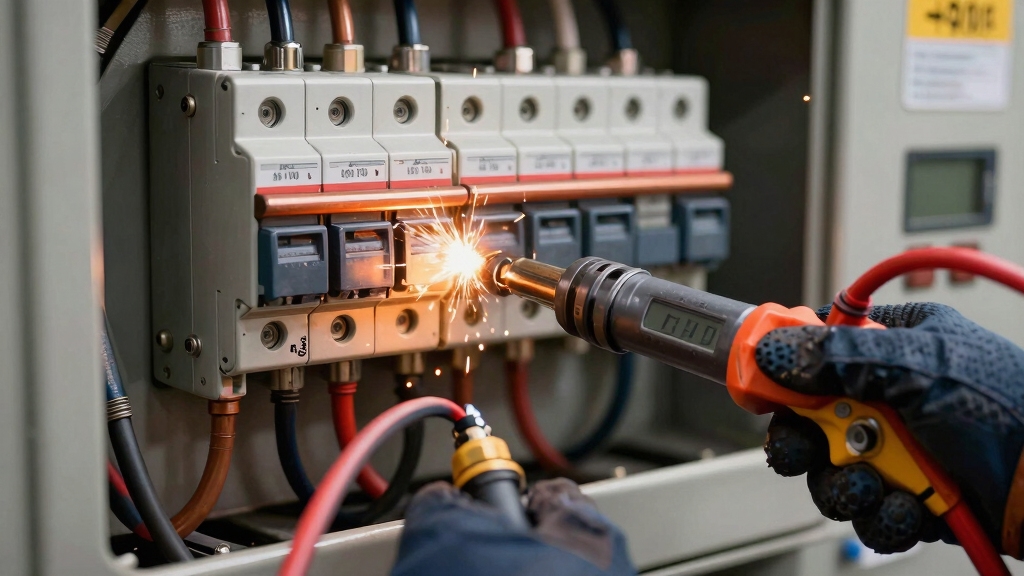
To size a breaker for your welder, start by finding the rated input current on its nameplate. Multiply this by 2 per NEC’s 200% rule to handle surge currents.
Next, apply a duty cycle multiplier (1.3 to 2.0) to prevent nuisance trips. Make certain the breaker size doesn’t exceed your receptacle rating, commonly capped at 50 amps.
Also, match your wire gauge accordingly. Proper breaker sizing protects both equipment and wiring. Exploring duty cycles and KVA ratings will sharpen your sizing accuracy.
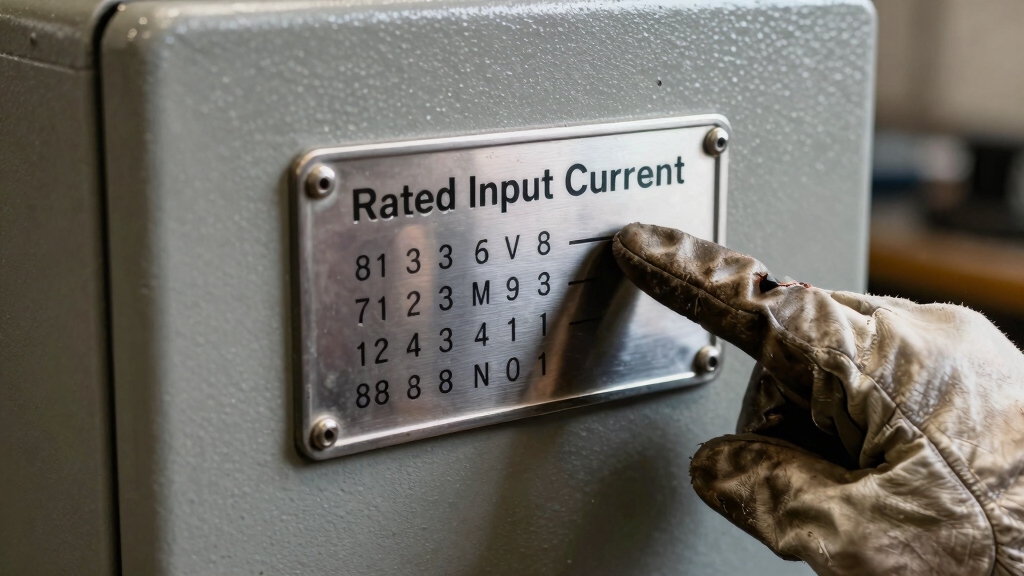
When you need to size a breaker for your welder, the first step is to locate the rated input current on its nameplate. This value forms the basis for all subsequent calculations.
Begin breaker sizing by finding the welder’s rated input current on its nameplate.
The nameplate is typically affixed to the welder’s frame and displays essential electrical ratings, including input amperage, voltage, and frequency.
Look specifically for the “Input Current” or “Rated Amps” entry, which may be listed for AC or DC operation depending on the welder type.
Make sure you note the exact amperage value, as it directly influences breaker sizing and conductor selection.
If your welder lists a KVA rating instead, you’ll convert it to current using voltage.
Accurate identification of this input current is critical to comply with electrical codes and ensure safe, reliable operation.
Always inspect welding machine components and grounding before use to maintain safety and prevent electrical hazards.
Because welders often draw surge currents higher than their rated input, the NEC allows you to size the breaker at up to 200% of the welder’s rated input current.
This rule guarantees the breaker handles transient spikes without nuisance tripping. However, the breaker size must not exceed the receptacle’s rating.
For example, a welder with a 48-amp input lets you calculate:
| Welder Rated Current | 48 Amps |
|---|---|
| NEC 200% Rule | 48A × 2 = 96A |
| Max Breaker Size | 50 Amps |
You size the breaker at 96 amps but cap it at 50 amps to match the receptacle rating.
This method balances safety and operational reliability while complying with NEC standards. Always verify local codes before finalizing breaker size. Matching the wire gauge to breaker ensures proper circuit protection and prevents fire hazards.
Sizing your breaker according to the NEC 200% rule guarantees safety against input surges. However, you must also factor in the welder’s duty cycle to prevent nuisance trips.
The duty cycle, expressed as a percentage, reflects how long the welder operates at full load within a 10-minute interval. For low duty cycles (≤5%), you can size your breaker at approximately 1.3 times the welder’s KVA rating.
Medium duty cycles (>5% and <20%) require about 1.6 times KVA, while high duty cycles (≥20%) demand a breaker sized at twice the KVA to handle continuous current without tripping.
Ignoring duty cycle leads to oversized or undersized breakers, risking safety or frequent interruptions. Always match breaker size to duty cycle to optimize protection and operational reliability.
Additionally, keep in mind that 120V MIG welders often have limited output due to machine derating, which can influence the maximum breaker size needed for safe operation.
Although breaker sizing often starts with the welder’s rated input current, calculating breaker size using the transformer’s KVA rating provides a more accurate assessment of current demands based on duty cycle.
You multiply the KVA by a factor reflecting the duty cycle: 1.3 for low, 1.6 for medium, and 2 for high. This guarantees the breaker accommodates peak loads without nuisance tripping.
| Duty Cycle | Multiplier | Breaker Size Calculation (A) |
|---|---|---|
| Low | 1.3 | KVA × 1.3 |
| Medium | 1.6 | KVA × 1.6 |
| High | 2.0 | KVA × 2 |
| Example | – | 10 KVA × 1.6 = 16 A |
Use this method to tailor breaker size precisely to your welder’s operational profile. Proper sizing also ensures safe operation within the welder’s duty cycle limitations, preventing overheating and equipment damage.
When selecting a breaker for your welder, you must make sure it doesn’t exceed the receptacle’s current rating to maintain compliance and safety.
For example, even if your welder’s calculated breaker size is 96 amps per NEC’s 200% rule, you can’t install a breaker larger than the receptacle rating.
Typically, this rating is 50 amps for a NEMA 6-50. This prevents overloading and guarantees proper protection.
Always verify the receptacle’s amp rating on its label or documentation before finalizing breaker size. The breaker must coordinate with the receptacle to avoid nuisance trips or electrical hazards.
Matching these ratings maintains NEC compliance and protects both equipment and personnel. Never bypass this essential step when sizing your welder’s circuit breaker.
Additionally, including an appropriate safety margin for power surges and startup peaks is critical to prevent breaker trips and ensure stable welding performance.
Choosing the correct wire gauge is crucial for guaranteeing your welder operates safely and efficiently. Undersized wiring can cause overheating, voltage drops, and equipment damage.
Start by checking your welder’s rated current and duty cycle. Then, select wire capable of handling the maximum continuous load without excessive heat.
For example, a 50-amp circuit typically requires #10 AWG wire, while lower currents may use #12 AWG. Always follow NEC guidelines and local codes to ensure compliance.
| Circuit Amps | Recommended Wire Gauge | Typical Application |
|---|---|---|
| Up to 30 A | #12 AWG | Small welders, light duty |
| 31–50 A | #10 AWG | Medium welders, standard use |
| Over 50 A | #8 AWG or larger | High duty, industrial welders |
Keep in mind that longer cable runs and higher duty cycles may require upsizing the wire gauge to maintain ampacity and minimize voltage drop.
Since breaker sizing depends heavily on your welder’s rated input current and duty cycle, applying these principles to popular welder types guarantees safety and code compliance.
For example, a 48-amp 208V welder typically requires a 50-amp breaker, capped by the receptacle rating, despite a calculated max of 96 amps (48A x 200%).
In contrast, a 225-amp stick welder with a 20% duty cycle draws about 50 amps input and also pairs with a 50-amp breaker and NEMA 6-50 receptacle.
For lower output settings or DC operation with reduced input current, a 30-amp breaker may suffice.
Always verify the welder’s nameplate for rated amps and duty cycle.
Then size your breaker accordingly, ensuring conductor and breaker ratings comply with NEC and local codes to prevent overloads and maintain peak protection.
Properly setting the wire feed speed and voltage can also help optimize welder performance and reduce electrical load fluctuations.
To avoid those pesky nuisance breaker trips, it’s super important to size your breaker based on your welder’s duty cycle.
If you’re working with a low duty cycle, you can get away with a smaller breaker. But when you’re dealing with a high duty cycle, you’ll definitely need a larger breaker to handle that sustained current without tripping.
Inverter welding machines offer precise current control, which helps maintain stable arcs and can influence the breaker sizing requirements.
Although breaker sizing often starts with the welder’s rated input current, you must adjust the breaker capacity based on the duty cycle to prevent nuisance trips.
Use the welder’s KVA rating multiplied by a factor reflecting duty cycle: 1.3 for low (≤5%), 1.6 for medium (>5%), and 2.0 for high duty cycles.
This guarantees the breaker accommodates the welder’s average current draw without unnecessary trips. Remember, the breaker size can’t exceed the receptacle rating per NEC guidelines, typically capping at 50 amps for many welders.
Also, confirm the conductor size matches the breaker to maintain safety and code compliance.
Properly sizing the breaker based on duty cycle optimizes protection and operational reliability for your welding setup.
Because CC and CV welding power supplies have different current behaviors, understanding the current regulation characteristics can help ensure appropriate breaker selection.
Preventing nuisance trips requires selecting a breaker size that aligns accurately with your welder’s duty cycle and current demands.
Breakers sized too close to the rated input current will trip under typical welding loads, especially at higher duty cycles.
You need to apply the NEC 200% rule but also factor in duty cycle multipliers: multiply your welder’s KVA by 1.3 for low, 1.6 for medium, and 2.0 for high duty cycles.
This guarantees the breaker handles the average current without nuisance trips.
Additionally, never exceed the receptacle’s amp rating, which caps breaker size.
Matching conductor size is critical; use #10 AWG for 50-amp circuits.
Always ensure your welding machine’s power cable linkage is properly connected to maintain safe and consistent performance.
Before you size a breaker for your welder, you need to examine the nameplate carefully, as it holds critical electrical specifications.
First, identify the rated input current in amps; this is your baseline for breaker sizing.
Note the voltage rating and confirm the type of current (AC or DC).
Check the welder’s KVA rating, which helps determine the appropriate breaker size based on duty cycle multipliers.
Pay close attention to the duty cycle percentage; it influences whether you apply a factor of 1.3, 1.6, or 2 to the KVA for sizing.
Verify the maximum receptacle rating to ensure your breaker doesn’t exceed it.
Finally, confirm the maximum open-circuit voltage and any other manufacturer instructions to comply with NEC guidelines and avoid oversizing.
You generally shouldn’t use a GFCI breaker for your welder circuit because welders produce electrical noise and transient currents that can cause nuisance trips.
The National Electrical Code doesn’t require GFCI protection on welders, except in specific wet or damp locations.
If you must install one, make certain it’s specifically rated for industrial equipment and consult local codes.
Otherwise, use a standard breaker sized correctly for your welder’s input current and duty cycle.
You should inspect welder breakers as regularly as clockwork, ideally every 6 months, to guarantee reliable operation and safety.
Over time, breakers can wear like a well-used tool, losing trip sensitivity or developing faults.
Replace them immediately if you notice frequent trips, visible damage, or corrosion.
Regular testing under load conditions confirms performance, preventing unexpected shutdowns and protecting your welder and electrical system from severe damage or fire hazards.
Yes, multi-operator welding setups require special breakers sized to handle combined loads without nuisance tripping.
You’ll need to calculate total input current by summing each welder’s rated amps. Then apply NEC’s 200% rule cautiously.
Breakers must match receptacle ratings and accommodate duty cycles for all machines.
Also, make certain conductors and interrupting ratings can handle maximum fault currents.
Always consult local codes for additional multi-operator installation requirements.
If you undersize a welder breaker, you risk frequent nuisance trips that interrupt your work and reduce productivity.
The breaker may trip during normal surge currents, especially with high-duty cycles, causing downtime and potential damage to the welder’s electronics.
Undersized breakers also risk overheating wiring, increasing fire hazards.
Always size breakers according to the welder’s rated input and NEC guidelines to guarantee safe, reliable operation without unnecessary interruptions.
Yes, breaker size can affect welding performance quality.
If your breaker is undersized, it may trip frequently during welding, causing interruptions and inconsistent heat input.
This leads to poor weld bead formation and weak joints.
Conversely, an oversized breaker won’t protect your equipment properly, risking damage.
Choosing the right breaker for your welder is like fitting the perfect tire on a race car. Too small, and you risk overheating; too large, and you lose precision.
Remember, the NEC 200% rule and duty cycle are your pit crew, ensuring safety and performance. Always check your welder’s nameplate for rated input current and match your breaker and wire gauge accordingly.
This precision prevents trips and keeps your welding running smoothly and safely.