Phone:
(701)814-6992
Physical address:
6296 Donnelly Plaza
Ratkeville, Bahamas.

Phone:
(701)814-6992
Physical address:
6296 Donnelly Plaza
Ratkeville, Bahamas.

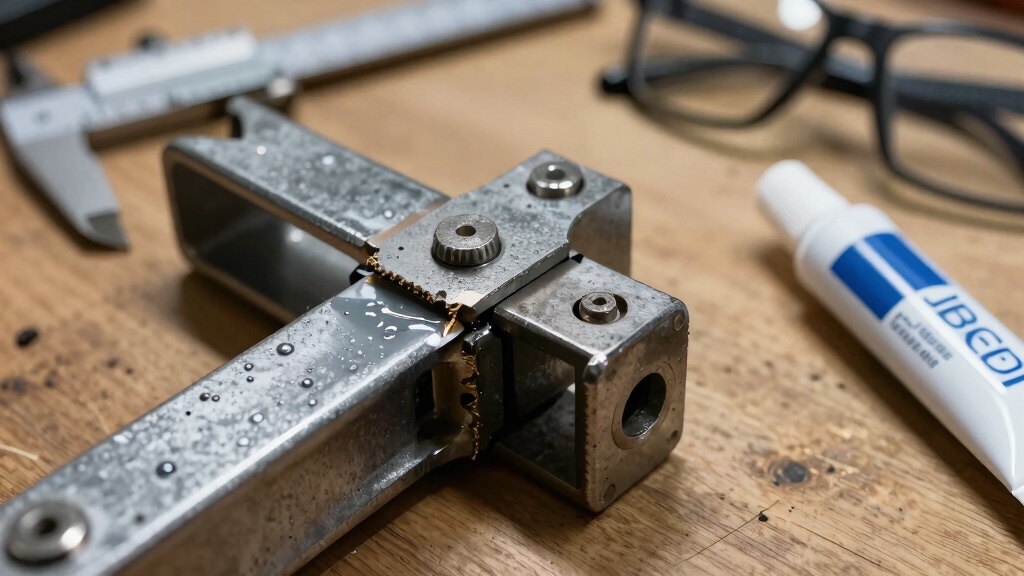
You can expect JB Weld to set in about 4 to 6 hours, providing enough strength to handle light stress.
Full curing typically takes 15 to 24 hours, depending on the specific formula and environmental factors like temperature and humidity.
Proper mixing greatly influences drying time and bond strength. If you want to optimize the process and troubleshoot common curing issues, understanding the variables involved will provide deeper insight into achieving the best results.
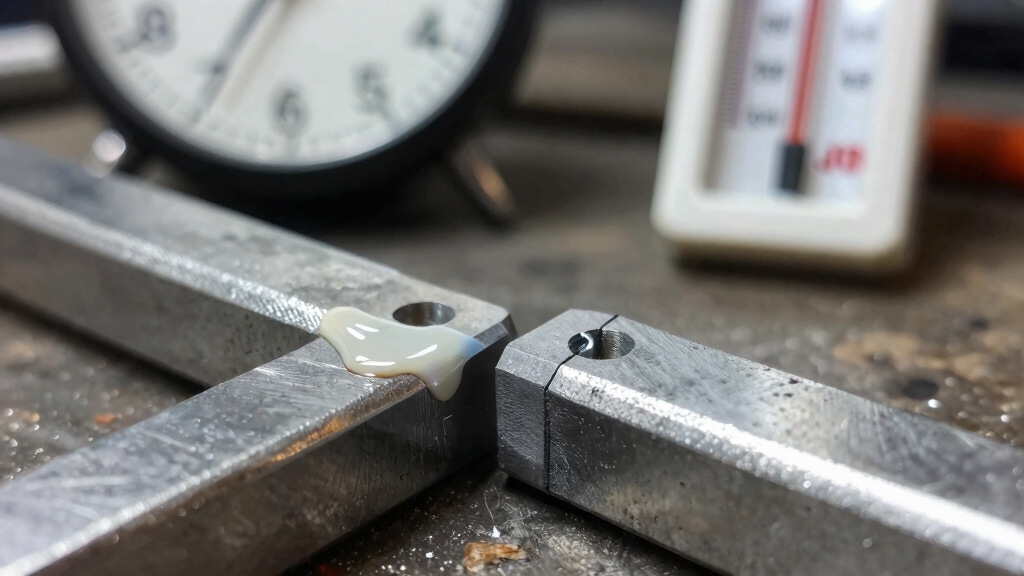
Understanding how long JB Weld takes to set and fully cure is essential for planning repairs effectively. When you mix the resin and hardener, the chemical reaction begins immediately, initiating the setting phase.
For the Standard Twin Tube formula, expect an initial set time of 4-6 hours, during which the bond hardens to a dark gray state. You should avoid handling the repaired item until this set time elapses.
Full curing, which yields maximum tensile strength up to 6220 PSI, completes within 15-24 hours. This requires you to wait before putting the object back into use.
Precise 1:1 mixing and environmental factors like temperature influence these times. Ensure accurate ratios and stable conditions to achieve a robust, durable bond.
Proper surface preparation, including cleaning and roughening, is crucial to ensure optimal adhesion and durability of the repair.
Although the drying and curing times vary across JB Weld’s product range, each formula follows a defined chemical process triggered upon mixing resin and hardener.
You’ll notice the Original Formula sets in 20-25 minutes but requires 15-24 hours to fully cure.
The Standard Twin Tube sets slower, 4-6 hours, with full cure at 15-24 hours, delivering a tensile strength of 6220 PSI.
ClearWeld Syringe sets fastest, in 5 minutes, and cures in just 1 hour, though its strength is lower at 3900 PSI.
Consider these key points:
Proper surface preparation and curing conditions significantly enhance the bond strength and longevity of the epoxy.
The curing times and final strength of JB Weld products depend heavily on the surrounding temperature, which influences the chemical reaction rate between resin and hardener. Higher temperatures accelerate the reaction, reducing set and cure times.
Lower temperatures slow them down. For example, ClearWeld sets in 5 minutes at room temperature but requires longer when below 40°F.
Cold conditions can prolong curing for Original Formula and Twin Tube variants, necessitating adjustments like adding more hardener to maintain curing speed.
Excessive heat speeds curing but may require less hardener to avoid brittleness. Regardless of formula, temperature fluctuations directly affect polymerization kinetics, impacting bond strength and work time.
To guarantee peak results, you must consider ambient temperature when planning application and curing duration.
Proper surface preparation, including cleaning and roughening, is crucial to ensure optimal bonding, especially when temperatures affect curing speed and strength, as detailed in surface preparation.
Since JB Weld relies on a chemical reaction between resin and hardener, proper mixing is critical to initiate and sustain curing.
If you don’t mix the components evenly, the reaction won’t complete, leaving uncured, sticky spots that weaken the bond and extend drying time.
To guarantee optimal curing, focus on these key steps:
Additionally, ensure the repair is applied on a clean, sanded surface to maximize adhesion and curing effectiveness.
Getting the mixing right sets the stage, but you can still run into curing problems with JB Weld that affect bond strength and drying time. One common issue is uneven mixing, which leaves sticky, uncured spots.
To fix this, make certain a thorough 1:1 ratio mix, scraping sides and bottom. Another problem is applying excessive thickness, slowing the cure. Apply thinner layers for faster, more complete curing.
Temperature also plays a role; cold environments prolong curing, so work in warmer conditions or adjust the hardener amount accordingly.
Ultimately, high humidity can delay drying. Use a controlled environment when possible.
Additionally, maintaining proper curing time of 15–24 hours is essential to achieve maximum tensile strength and avoid weak bonds.
To speed up JB Weld drying safely, it’s a good idea to create a warm, stable environment. This helps the chemical reaction along and gets things moving quicker.
Just remember, when mixing the resin and hardener, stick to that precise 1:1 ratio. If you don’t, you might end up with some sticky spots or incomplete curing—definitely not what you want!
Also, think about applying a thinner layer. It really helps reduce the curing time because it allows the heat to dissipate evenly, letting the compound set faster.
Ensuring the surface is thoroughly clean and dry before application is critical to avoid adhesion failure and achieve the best bond strength.
When working with JB Weld, controlling the temperature can markedly influence the drying and curing times. Ideal temperature accelerates the chemical reaction between resin and hardener, reducing set and cure durations without compromising bond strength.
You should maintain an environment between 70°F and 85°F for best results. Avoid temperatures below 40°F, as they prolong curing, especially for ClearWeld.
To optimize temperature conditions safely:
Additionally, working in wet or damp conditions can affect the curing process and increase safety risks, so ensure the workspace is dry and well-ventilated.
Maintaining ideal temperature is only part of achieving a reliable JB Weld cure. Equally important is ensuring the resin and hardener mix thoroughly and in the correct proportions.
You must combine equal parts 1:1 by volume. Any deviation disrupts the chemical reaction, resulting in incomplete curing or sticky, uncured spots.
Mix the components vigorously until you achieve a uniform consistency with no streaks or lumps. Poor mixing extends drying time and weakens bond strength, preventing the epoxy from reaching its maximum tensile strength of 6220 PSI.
Use a clean surface and appropriate tools to avoid contamination. Proper mixing accelerates the exothermic reaction that generates heat, promoting faster setting and curing within the expected 4-6 hour set time and 15-24 hour full cure window.
Ensuring proper surface preparation before application is crucial to maximize adhesion and overall bond performance.
Apply JB Weld in thin layers to accelerate the drying and curing process effectively. Thicker layers extend curing time due to slower heat dissipation and incomplete chemical reactions.
When you apply thinner layers, you optimize the surface area-to-volume ratio, which enhances the curing kinetics. To speed drying safely:
Proper curing kinetics are essential to ensure a strong and durable bond in adhesive applications.
Although JB Weld begins to set relatively quickly, you shouldn’t handle the repaired object until it reaches sufficient hardness to avoid compromising the bond.
Handling too early risks weakening the adhesion and reducing tensile strength. Typically, you can handle the object after 4-6 hours when the epoxy is set but must wait 15-24 hours for full cure before use.
Proper curing conditions, including avoiding excessive moisture and ensuring thorough drying, are essential for achieving optimal bond strength and durability. This is similar to the importance of proper drying in maintaining the integrity of protective materials.
| JB Weld Variant | Set Time |
|---|---|
| Standard Twin Tube | 4-6 hours |
| Original Formula | 20-25 minutes |
| WaterWeld Variant | Few hours |
| ClearWeld Syringe | 5 minutes |
| Full Cure (General) | 15-24 hours |
Confirm readiness by hardness and absence of tackiness before using the repaired item.
Yes, you can use JB Weld underwater or in wet conditions, but you need to prepare the surface properly.
WaterWeld, a variant, is specifically designed to cure underwater or on wet surfaces. It requires thorough mixing and can cure in 8-24 hours depending on conditions.
Make certain the area is as clean as possible, and apply the epoxy firmly. Poor mixing or excessive moisture can prevent full curing and reduce bond strength.
No, JB Weld isn’t food safe after curing. It contains epoxy resins and hardeners that can leach harmful chemicals when in contact with food or drink.
You shouldn’t use it on surfaces that touch consumables directly. If you need a food-safe adhesive, look for FDA-approved epoxies specifically designed for food contact.
Always verify manufacturer specifications before applying any adhesive on items related to food or beverages.
Once cured, JB Weld can last practically forever, like a superhero’s unbreakable shield, under normal conditions.
You’ll get a bond with a tensile strength up to 6,220 PSI, maintaining integrity against heat up to 550°F.
Its durability depends on proper mixing, curing time, and environmental factors.
But once fully set, it resists wear, moisture, and chemicals.
With correct application, you can confidently expect it to last years without failing.
Yes, you can paint and sand JB Weld after it’s fully cured. Once the epoxy reaches complete hardness, typically after 15-24 hours, it becomes sandable and paintable.
Make sure the surface is thoroughly dry and fully cured to avoid adhesion issues. For best results, sand the area to create a rough texture that enhances paint bonding.
Paint selected should be compatible with epoxy surfaces for peak durability and finish.
Think of JB Weld as a tiny forge; you’re handling a chemical fire that bonds metals. Always wear gloves and eye protection to shield your skin and eyes from irritants.
Work in a well-ventilated area to avoid inhaling fumes. Mix equal parts precisely to prevent sticky, uncured patches.
Avoid ingestion and prolonged skin contact. Clean spills immediately and keep away from children and pets to guarantee safety throughout your repair process.
Just like a fine drink needs time to reach its full flavor, JB Weld requires patience to achieve its maximum strength. Rushing the drying or curing process compromises the bond’s integrity, much like haste undermines craftsmanship.
By mixing thoroughly, monitoring temperature, and allowing proper curing time, you guarantee a durable repair. Remember, precision in preparation and timing transforms JB Weld from a quick fix into a lasting solution you can rely on.