Phone:
(701)814-6992
Physical address:
6296 Donnelly Plaza
Ratkeville, Bahamas.

Phone:
(701)814-6992
Physical address:
6296 Donnelly Plaza
Ratkeville, Bahamas.

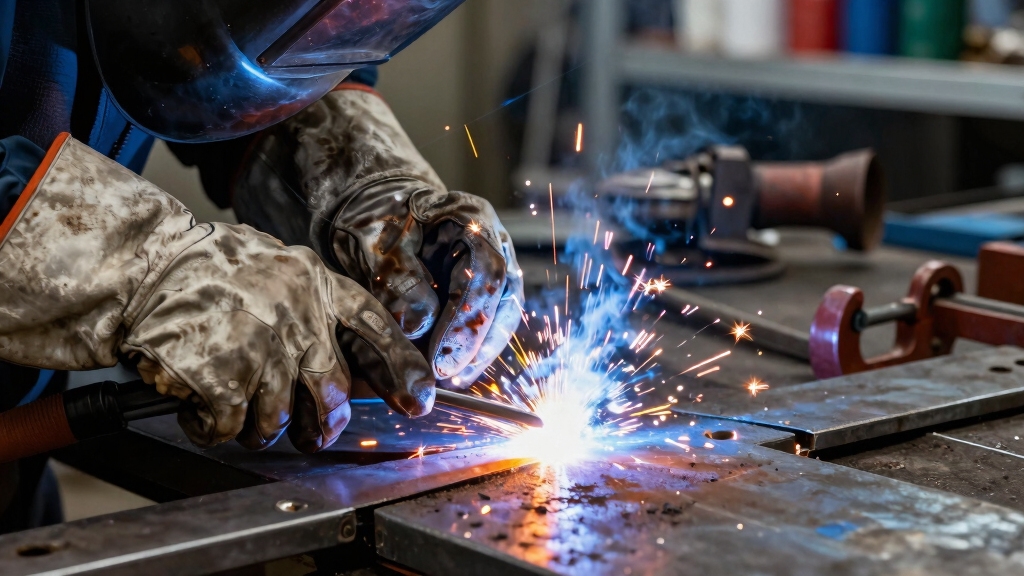
You need strong physical skills like steady hands, good vision, and endurance to handle equipment and control the torch precisely.
Mastering technical knowledge in metallurgy, welding processes, and equipment setup guarantees quality welds.
Accurate measurement and blueprint reading help you position and inspect welds correctly.
Safety skills protect you from burns and fumes, while problem-solving lets you adapt parameters and fix defects.
Developing these skills sets a solid foundation to excel and tackle complex welding challenges effectively.
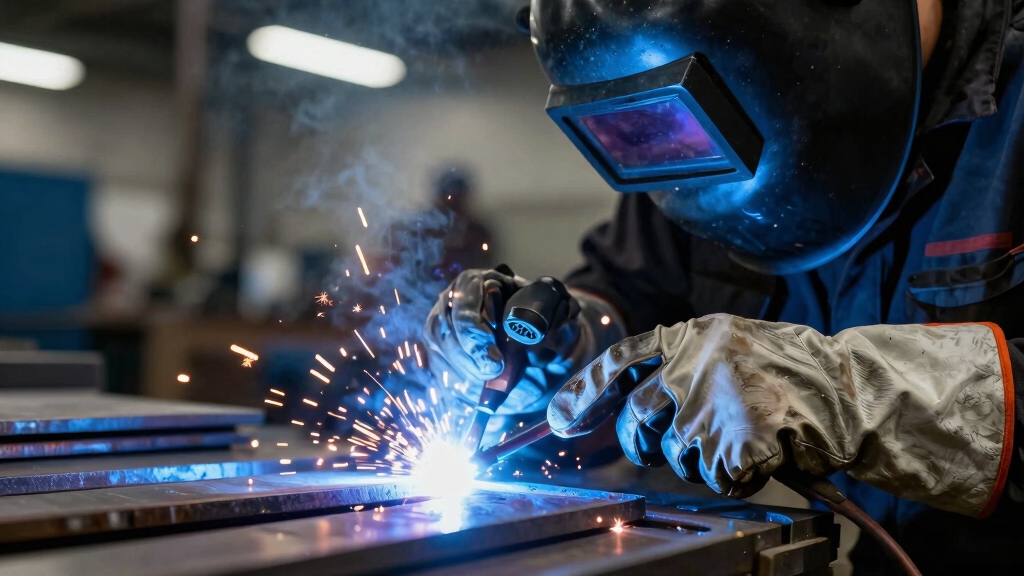
Mastering welding demands that you develop key physical skills to perform with accuracy and safety.
Mastering welding requires developing essential physical skills to ensure precision and safety.
You’ll need substantial physical strength to handle heavy metal pieces and equipment routinely.
Endurance is critical, as welding often requires standing or working in extreme temperatures for extended periods.
Your hand-eye coordination must be finely tuned to guide the welding torch precisely along joints.
Dexterity and steady hands are indispensable for controlling the tools and ensuring consistent weld beads.
Additionally, you must maintain good vision and mobility to position yourself accurately and inspect weld quality.
These physical capabilities combine to enhance your efficiency and reduce errors, forming the foundation necessary before applying technical knowledge or mathematical calculations in welding tasks.
Proper Personal Protective Equipment is essential to protect these physical skills and ensure safety during welding.
You really need strong spatial reasoning to interpret 2D and 3D diagrams accurately for precise weld placement. It’s all about visualizing how those shapes fit together, right? Mastering geometry is super helpful here. It allows you to calculate angles and layouts that are crucial for joint designs.
And let’s not forget about accurate measurement skills. They’re essential! When you measure correctly, you can ensure that your welds meet the exact specifications without any errors. It all ties together to make sure your welding is spot on. Additionally, understanding the importance of proper machine setup is critical to avoid defects and achieve strong welds.
Although welding primarily involves hands-on skills, spatial reasoning plays a critical role in ensuring accuracy and quality. You need to visualize the position and orientation of parts in three-dimensional space before and during welding.
This ability helps you interpret complex 2D and 3D diagrams, anticipate how components fit together, and understand the spatial relationships of joints and welds. Strong spatial reasoning allows you to manipulate and align materials correctly, minimizing errors and rework.
It also aids in planning the welding process, ensuring proper access and movement around the workpiece. Without this skill, even precise manual techniques can result in misaligned or structurally unsound welds.
Developing your spatial reasoning sharpens your overall proficiency and contributes greatly to producing consistent, high-quality welds. Additionally, precise blueprint interpretation and welding symbols recognition are essential components of mastering spatial reasoning in welding.
When working with complex welds, understanding geometry and measurements becomes essential to achieving accuracy and structural integrity. You’ll need to apply geometric principles to determine precise angles, layouts, and joint designs.
Mastering fractions, decimals, and trigonometry allows you to calculate exact dimensions, ensuring components fit perfectly. Accurate measurement interpretation from blueprints and sketches guides your weld placement and alignment.
Without this mathematical precision, welds risk weak connections or structural failure. Developing these skills helps you maintain consistency across repetitive tasks and complex assemblies.
Ultimately, your ability to integrate geometry and precise measurement directly impacts weld quality, safety, and compliance with engineering standards. Consistent practice refining these mathematical skills will elevate your welding proficiency and reliability on any project.
Additionally, knowing how to measure and verify fillet weld size precisely ensures your welds meet required strength and code specifications.
Since welding involves joining various metals under different conditions, having essential technical knowledge is vital to guarantee strong, durable, and safe welds.
You need a solid grasp of metallurgy to understand how metals like carbon steel, stainless steel, and aluminum react to heat and stress.
Knowing metal properties such as melting points and tensile strength helps you select appropriate welding techniques and parameters.
Mastery of welding symbols and codes from the American Welding Society secures you interpret blueprints accurately and follow industry standards.
Additionally, you must be proficient in various welding methods like MIG, TIG, and Stick welding to adapt to different project requirements.
This technical foundation enables you to execute precise welds that meet structural and safety specifications consistently.
Understanding the role of WPS and PQR documents is crucial for ensuring weld quality and compliance with industry standards.
Getting a firm grip on welding equipment and tools is essential for executing high-quality welds efficiently. You must understand the operation and setup of welding machines, such as MIG, TIG, and Stick welders, to optimize performance.
Familiarity with hand tools, grinders, and metal finishers guarantees precise material preparation and finishing. Proper selection and maintenance of equipment prevent downtime and defects.
Master these critical aspects:
Mastering these skills improves weld quality and operational reliability. Additionally, understanding the role of the wire feed mechanism and its integration with the welding gun is crucial for maintaining a stable arc and consistent weld quality.
You really need to get a solid grip on safety procedures to keep accidents at bay and ensure a safe work environment. It’s crucial. Plus, staying compliant with industry regulations not only keeps you within the law but also ensures your welding meets the necessary quality standards.
And don’t forget about regular inspections! Taking the time to check your work for any flaws can make a huge difference. It helps you catch defects early on, which protects both the integrity of your project and your own safety. It’s all about being proactive!
Regular training and personal protective equipment usage are essential to significantly reduce the risk of injuries on the job.
Although welding demands skill and precision, understanding safety procedures is equally critical to protect yourself and maintain a secure work environment. You must consistently apply safety measures to prevent hazards such as burns, electric shocks, and exposure to harmful fumes.
Here are four essential safety procedures you need to master:
Additionally, ensure that all equipment is properly grounded and cables are intact to prevent electrical hazards and ensure electrical safety.
Mastering these procedures minimizes risks and guarantees a safe, productive welding environment.
You must understand and apply codes set by organizations like the American Welding Society (AWS) and OSHA. This includes adhering to protocols for personal protective equipment, ventilation, and fire prevention.
You’ll also need to keep updated on changes to standards and make certain your procedures align with them. Documenting compliance through proper record-keeping is essential for audits and liability protection.
When you rigorously follow these regulations, you minimize risks such as exposure to toxic fumes, electrical hazards, and structural failures.
Mastering this skill not only safeguards health and safety but also ensures your welding meets contractual and legal requirements. This maintains industry credibility and project integrity.
Additionally, strict adherence to Welding Procedure Specification and process controls helps prevent defects and enhances weld quality.
Detecting flaws in welded joints is critical to ensuring structural integrity and safety throughout a project’s lifespan.
When inspecting your welds, you need a methodical approach to identify defects that could compromise performance.
Focus on these key areas:
Understanding common weld defects and causes helps you recognize issues early and apply appropriate corrective measures.
Mastering attention to detail directly improves the quality and durability of your welds by guaranteeing every joint is executed with precision.
When you focus on minute aspects such as bead consistency, proper penetration, and correct alignment, you prevent defects like porosity, cracks, or weak joints.
This vigilance allows you to maintain strict adherence to welding codes and specifications, guaranteeing structural integrity.
Additionally, by closely monitoring parameters like heat input and travel speed, you optimize metallurgical properties to enhance strength and corrosion resistance.
Attention to detail also helps you detect subtle surface irregularities early, enabling timely corrections.
Fundamentally, your meticulous approach minimizes rework, reduces material waste, and ensures safety compliance.
Ultimately, it produces welds that meet or exceed industry standards and perform reliably under stress.
When welding challenges arise, you need effective problem-solving techniques to identify root causes and implement corrective actions quickly.
You’ll analyze weld defects by systematically examining variables like material type, equipment settings, and environmental factors. Use these steps to handle common welding problems:
Consistently honing your soft skills can markedly enhance your effectiveness and opportunities as a welder.
Continuously improving your soft skills significantly boosts your success and career growth in welding.
Attention to detail guarantees your welds meet exact specifications, preventing costly errors and rework.
Developing strong problem-solving skills helps you quickly diagnose issues and adapt techniques under varying conditions.
Basic computer proficiency allows you to interpret digital blueprints and track project progress efficiently.
Project management capabilities enable you to organize tasks, meet deadlines, and coordinate with team members.
Additionally, cultivating a positive attitude makes you more trainable and resilient in a physically demanding and evolving trade.
Although welding demands a diverse set of skills, you can systematically build and improve them through targeted practice and ongoing education.
Focus on refining your physical dexterity and hand-eye coordination by performing repetitive welding exercises under varied conditions.
Enhance your technical knowledge by studying metallurgy and welding codes to understand material behavior and compliance requirements.
Develop your mathematical abilities to interpret blueprints and calculate precise measurements for complex joints.
Finally, master equipment handling by regularly setting up, maintaining, and troubleshooting welding machines.
To become a professional welder, you’ll need certifications like the AWS Certified Welder from the American Welding Society. This certification verifies your skills through practical tests.
Depending on your specialty, you might also pursue certifications in specific welding techniques such as MIG, TIG, or Stick welding. Additionally, OSHA safety certifications are essential for complying with workplace safety standards.
These credentials demonstrate your technical proficiency and commitment to industry regulations.
Learning welding skills effectively can take anywhere from a few weeks to several months.
While you might grasp basic techniques quickly, mastering precision, safety protocols, and complex equipment handling demands sustained practice and study.
You’ll balance physical strength with fine motor control and blend hands-on training with understanding metallurgy, blueprints, and safety codes.
Consistent effort accelerates your progress, but true proficiency develops through experience and ongoing learning.
You’ll find the best welding careers in industries like aerospace, automotive manufacturing, shipbuilding, and construction, where precision and advanced techniques are vital.
Oil and gas pipelines, power plants, and heavy machinery sectors also offer strong opportunities due to their demand for skilled welders.
Specializing in underwater welding or robotic welding can further boost your career. This combination of technical skills offers high earning potential and job stability in these specialized fields.
Welding can feel like taming fire’s breath, but you’ve got to respect its environmental and health impacts.
You’ll encounter fumes and gases that affect air quality and worker health, requiring proper ventilation and protective gear.
Energy consumption and metal waste impact the environment, so you’ll need to follow eco-friendly practices.
You can expect welders to earn a median wage around $44,000 annually.
However, skilled welders in specialized fields can make $60,000 or more.
The job outlook is positive, with a projected growth rate of about 6% over the next decade.
This growth is driven by demand in manufacturing, construction, and infrastructure projects.
Your ability to adapt to new welding technologies and maintain certifications will enhance your career prospects markedly.
As you sharpen your welding skills, think of yourself as forging a blade. Each skill you master strengthens your craft.
Physical dexterity, precise math, technical know-how, and safety awareness form the foundation. Problem-solving and attention to detail refine your work.
Don’t overlook soft skills; they’re the sparks that ignite career growth. Keep practicing and learning consistently, and you’ll weld not just metal but a future built on expertise and reliability.